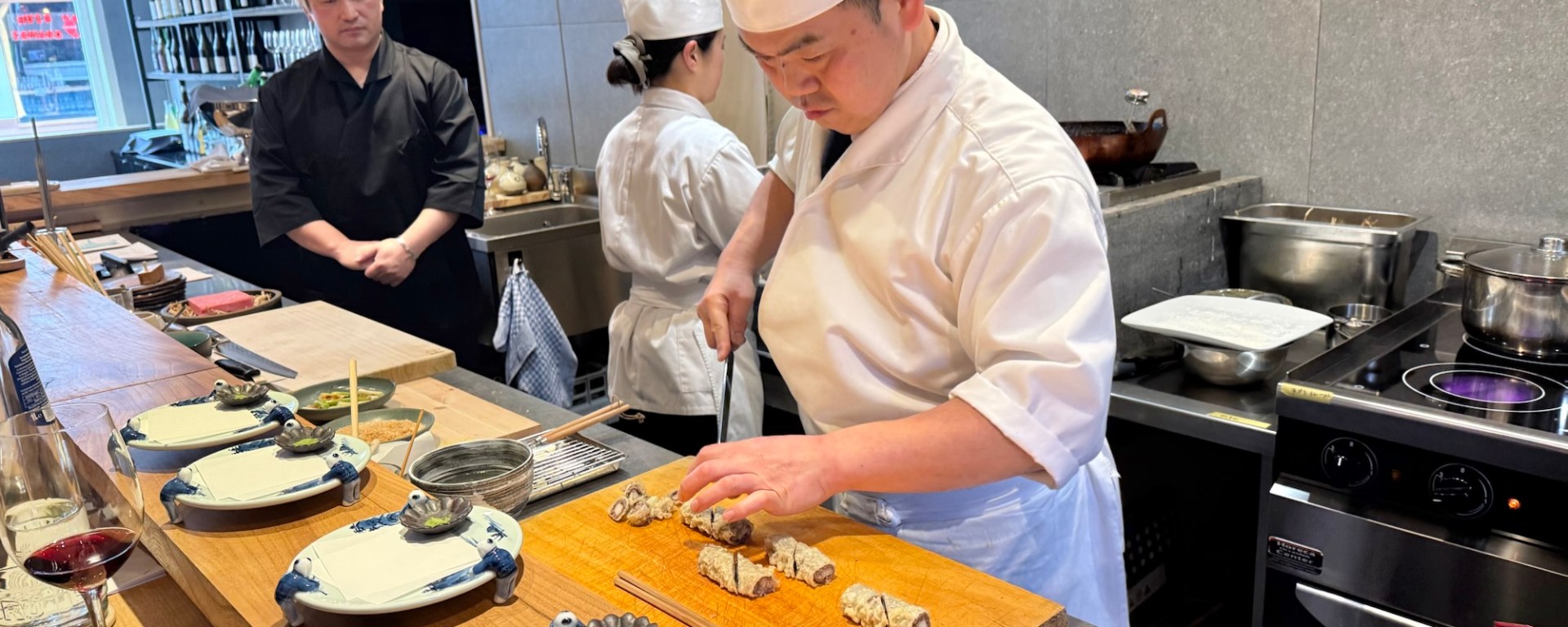
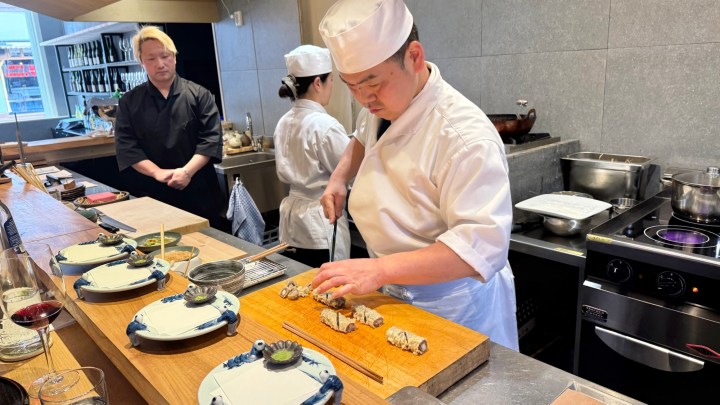
Opening on February 17, 2026, Tsunarié is a new Japanese counter-style Kappo restaurant in Amsterdam, located just a stone’s throw from its sibling sushi restaurant, Tewatashi. I was invited to a preview for a small group from the culinary and creative community two days ahead of the official launch. The concept centers on three tiers of omakase menus that highlight sushi and premium Wagyu beef. Operating for dinner only, the intimate space currently offers just 10 seats across two sittings, with a larger communal table for eight expected to open this summer. For this preview, we experienced the 10-course omakase priced at 125 euros.
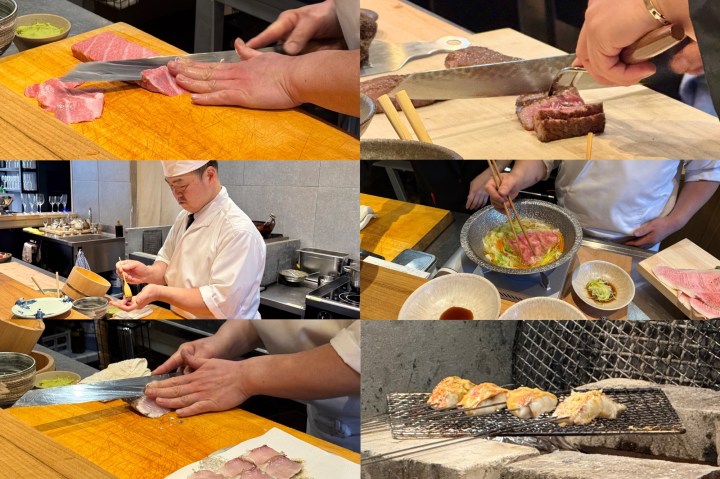
The essence of counter-style kappo is immediacy; every dish is prepared directly in front of the guest and served at its absolute peak. While the pacing is synchronized, the experience remains personal as the chefs finish and hand each portion to you individually.
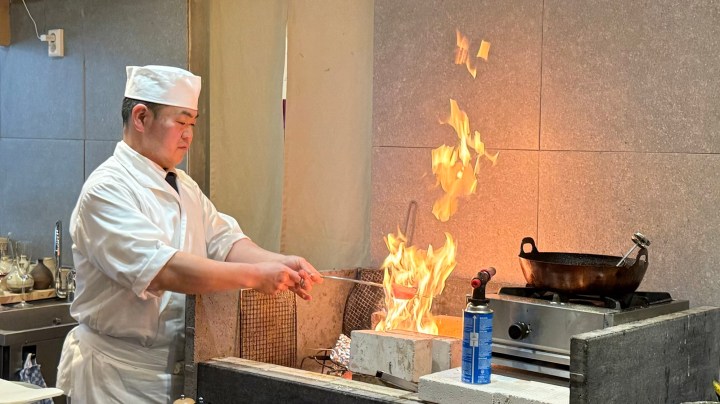
The kitchen is led by two specialists—one dedicated to sushi and the other to Wagyu—with many dishes prepared over charcoal or open flames.
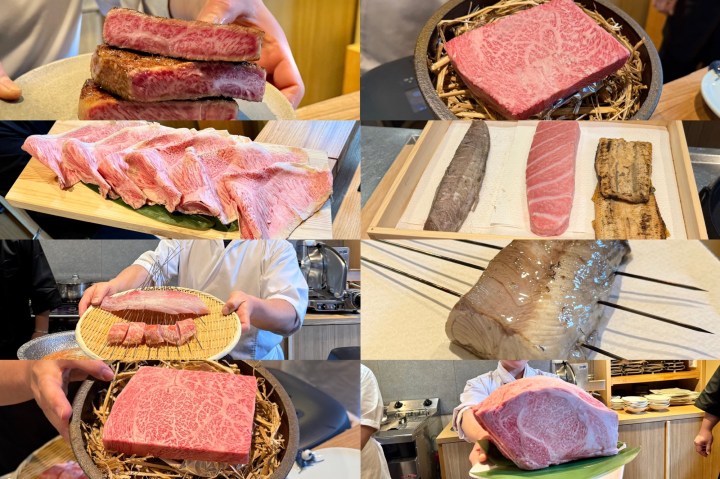
The commitment to quality is evident in the sourcing, featuring Japanese Wagyu with A5 ratings and BMS scores of 11 or 12. While the beef is imported, the seafood is sourced locally to ensure maximum freshness, taking advantage of the high-quality supply available in Amsterdam.
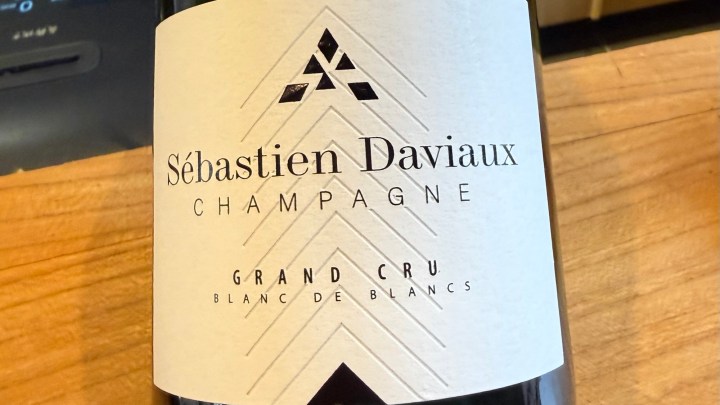
The beverage list was limited for the preview, though I expect the selection of wine and sake to expand soon. The current offering included a Champagne, two whites, a red, and a sake, all available by the glass or bottle and fairly priced for the local market. We began the evening with an elegant Grand Cru Blanc de Blancs Champagne.
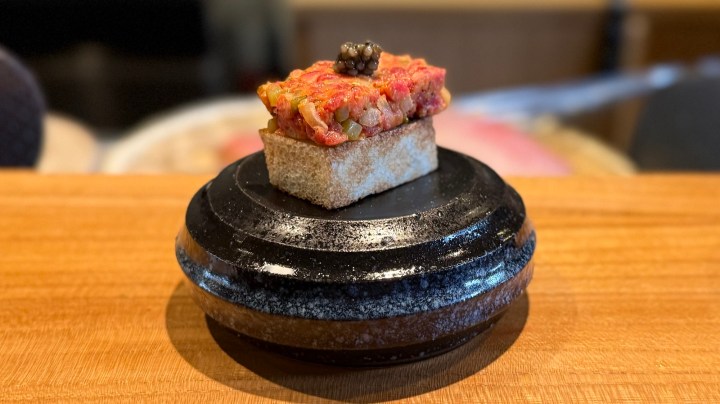
The first course featured a Wagyu tartare sourced from the Shintama cut (sirloin tip). This was served atop a perfectly crispy piece of toast and finished with a bit of caviar. The inherent creaminess of the high-grade Wagyu was expertly balanced by a bright, fresh dressing.
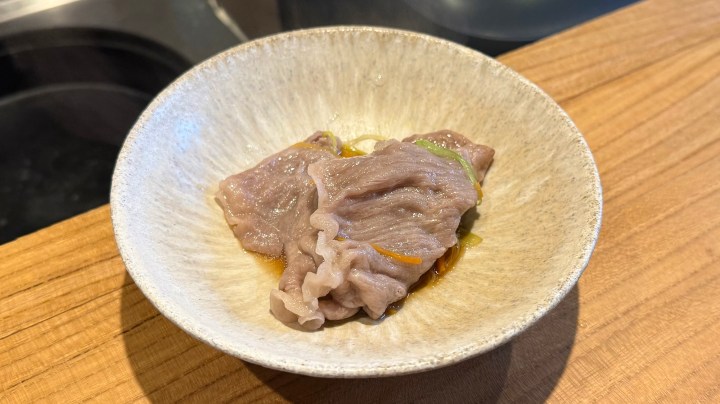
We continued with Shabu Shabu featuring Wagyu sirloin, served with a ponzu sauce, cabbage, and carrot. The beef was remarkably creamy and tender, its richness cut by the bright acidity of the ponzu.
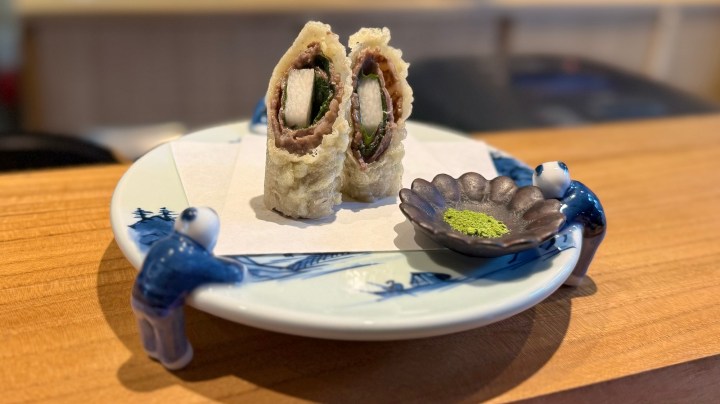
The next course was a piece of taro wrapped in thinly sliced Wagyu—again from the Shintama cut—with an umeboshi salted plum sauce, prepared as tempura and served with matcha salt. The tempura coating was exceptionally delicate. While the matcha salt was a thoughtful addition, it felt somewhat redundant as the umeboshi already provided a full, seasoned profile.
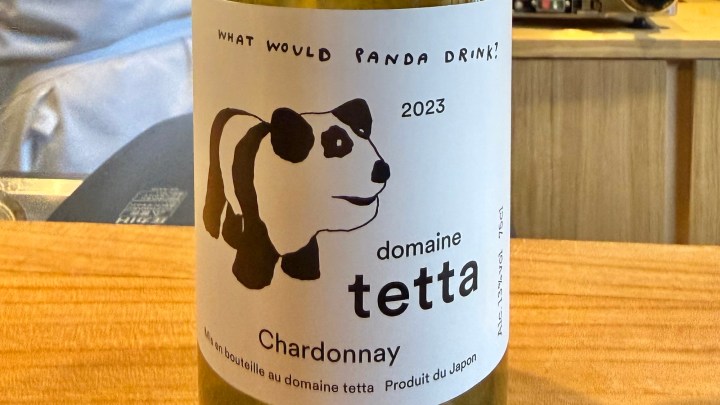
I was curious to try a Japanese Chardonnay offered by the glass, despite my general reservations about natural wine. It proved to be a pleasant surprise with a fresh, mineral profile and high yet well-balanced acidity. It served as an effective palate cleanser for the yakitori.
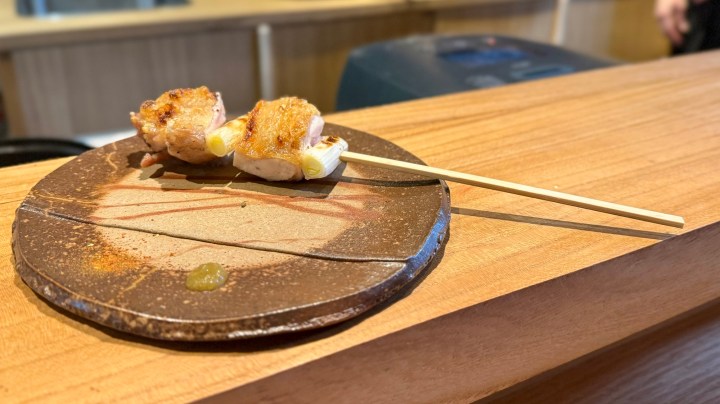
The chicken yakitori was seasoned simply with salt and pepper, foregoing any teriyaki glaze, and was exceptionally tender and juicy with perfectly crispy skin. We observed the technique: the chicken was first slowly grilled in larger pieces before being sliced, skewered with scallions, and finished over charcoal. Yakitori is a staple of Japanese street food, and here its characteristic simplicity was executed to perfection. The chicken was served with a bit of Japanese chilli flakes as well as some yuzu sauce.
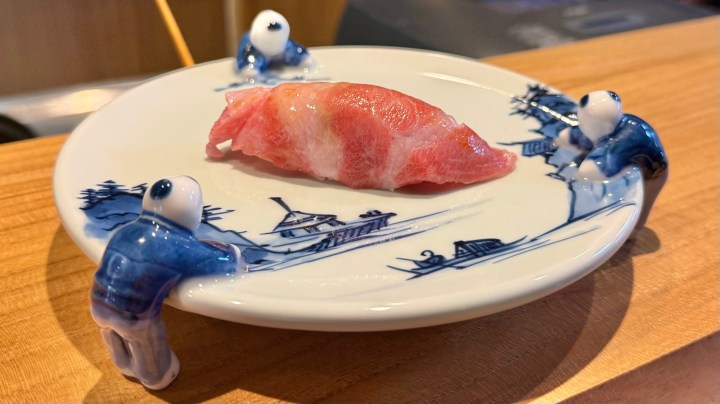
The next course featured three types of nigiri, served individually. The first was toro, the highly prized fatty belly of the tuna. Each piece was lightly seasoned with soy sauce by the chef and a generous touch of wasabi, though only after he confirmed the heat tolerance of the guests. Every sushi chef possesses a distinct style; Chef Takatoku’s rice was notably loose, served slightly warm, and only delicately seasoned. It was impressive to watch him shape each piece with the fluid, practiced gestures of someone with thirty years of experience.
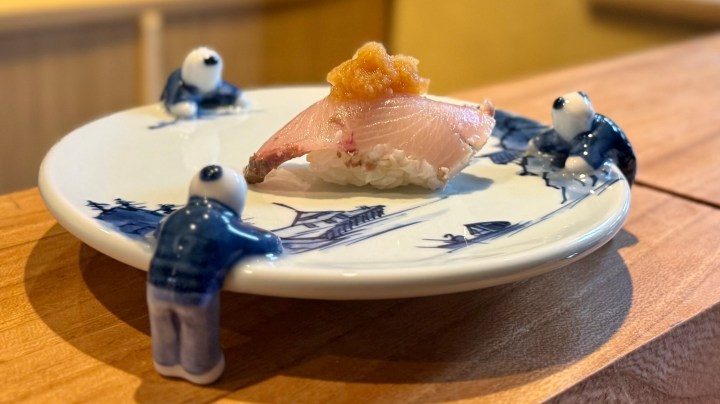
The second nigiri was hamachi, which had been flame-grilled to add a subtle smoky note and was topped with something pickled.
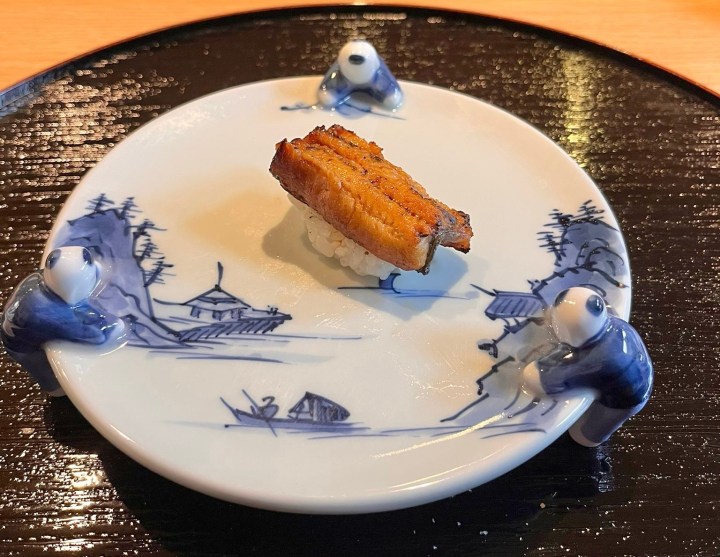
The final piece was unagi (eel), which proved more tender and creamy than any I have encountered previously, presented with a more restrained application of the glossy eel sauce than I’m used to.
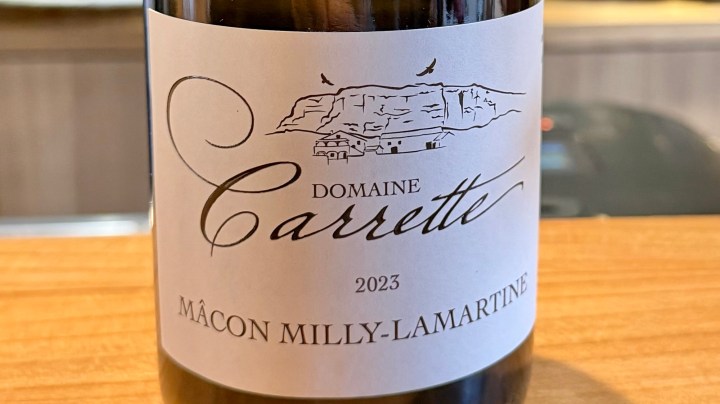
We decided to try the other white wine, a Chardonnay from Mâcon in southern Burgundy, which featured pleasant fruit aromas and a creamy texture from nine months of aging on the lees. The sommelier, whose expertise likely leans more towards sake than wine, suggested it had been aged in oak, which was not the case and is generally atypical for the Mâcon region.
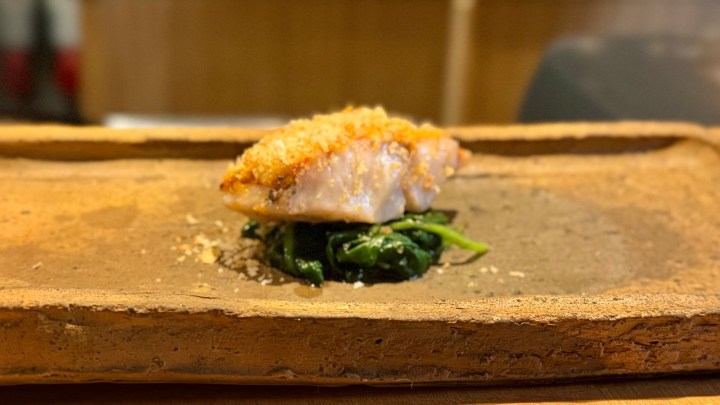
The next course provided another demonstration of kitchen technique: red mullet cooked to a perfect tenderness and juiciness that is notoriously difficult to achieve. It was finished with a topping of white miso and panko and served over wilted fuki (Japanese butterbur). The greens were served at room temperature, which created an unexpected sensation against the warmth of the fish (I think I would have preferred it warm). The red mullet itself was delicious.
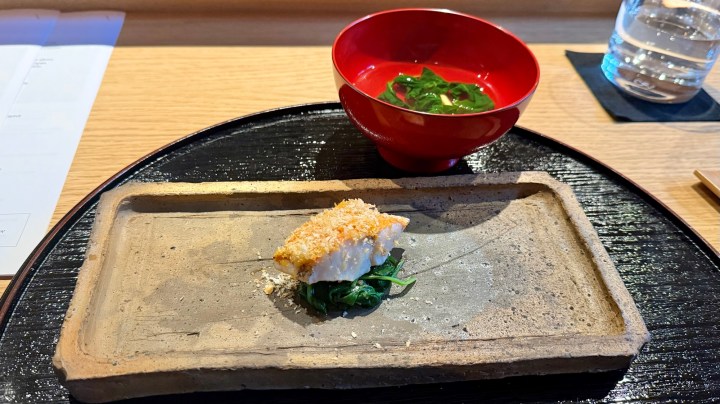
Although listed as two separate courses, the clear dashi soup with seasonal vegetables—enoki mushroom and more greens—was served alongside the red mullet. The dashi possessed an elegant, refined flavor, though the yuzu was so subtle that it was difficult to detect.
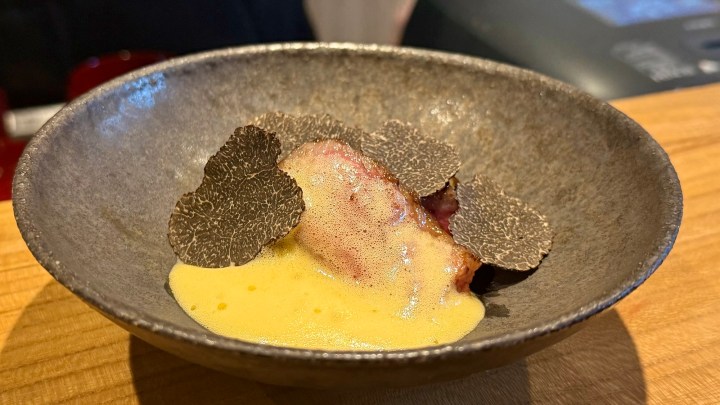
We had planned to order a glass of red wine with the main course, but as the menu progressed more quickly than anticipated, we had not yet finished the Chardonnay and decided to skip the red. Without having tried the red Burgundy, I suspect the Chardonnay was the superior pairing regardless, given the richness of the egg sauce and the sweetness of the soy-based sauce included in the dish.
The main course featured Wagyu rib-eye with egg sauce, sliced black truffle, and a slightly sweet soy-based sauce at the base of the plate. Slightly sticky steamed Japanese rice was served separately to maintain the presentation, though we were instructed to add the rice to the beef and mix everything together.
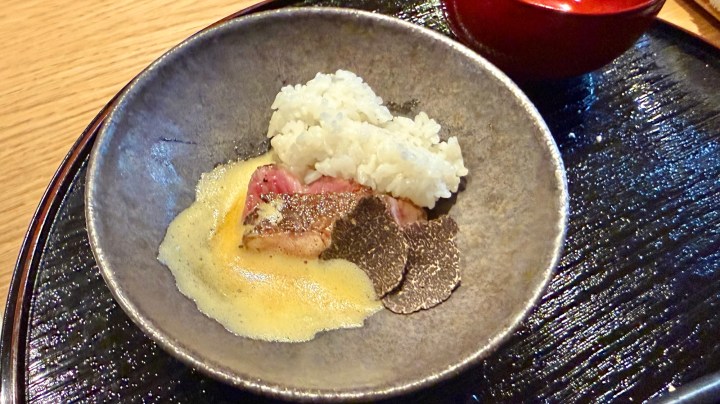
This proved to be excellent advice, as the soy-based sauce was essential for seasoning the entire dish. The Wagyu was exceptionally tender and creamy as well as perfectly medium rare, yet despite being cooked over charcoal, it lacked a pronounced smoky sear that could have elevated the dish even further. I also think the dish could have been served slightly more hot, perhaps aided by using a preheated bowl.
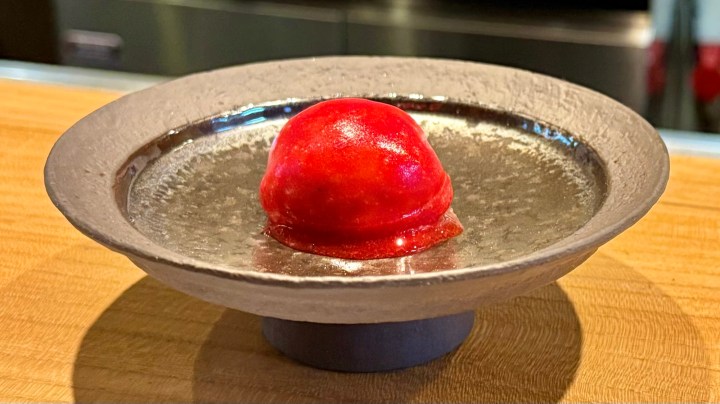
Dessert was a yuzu ice cream with a raspberry coating—not too sweet and pleasantly refreshing as a palate cleanser.
Tsunarié is an excellent addition to the Amsterdam restaurant scene, where new Japanese openings are currently a notable trend. The focus on both sushi and Wagyu is a compelling combination for enthusiasts of the cuisine. With high-quality ingredients and clearly experienced chefs, the execution is impressive. Although the staff mentioned some nerves during this first pre-opening sitting, the meal progressed smoothly. Service was attentive, and the team spoke good English, particularly by Japanese standards.
The culinary style is authentically Japanese, often characterized by delicate and elegant flavors. The level of seasoning varied significantly between courses; while the yakitori was robustly seasoned, the application of soy sauce on the toro nigiri was almost imperceptible. Throughout the meal, the technical execution was impeccable, especially regarding the precision of the cooking. Given the exceptional quality of the ingredients, the tasting menu price of 125 euros is very reasonable.
At present, with the counter-style seating, Tsunarié is an ideal choice for parties of two who enjoy watching the chefs at work. Once the communal table becomes available, it will likely be equally suited for groups of up to eight looking to enjoy excellent food in a social setting. I look forward to returning to see how the restaurant evolves, especially as the wine and sake offerings expand. A dedicated pairing could certainly elevate the experience even further.


Absolutely fascinating in its very Japanese simplicity and purity. But with the quality of food served and the staff needed and the small number of diners served . . . does it have long-term financial feasibility? The price asked seems terribly low for the number of dishes with such premier ingredients. Love the dishes and plating – the wagyu tartare looks like a perfect sculpture! Seems the alcohol side still has to be worked out – rather understandably!
LikeLiked by 1 person
Love the idea of watching every dish being prepared right at the counter, and that Wagyu menu sounds next-level.
LikeLiked by 1 person
This looks like an incredible experience and how lovely that they choose you to attend. The food looks wonderful too. If we ever find ourselves back in Amsterdam, we will definitely try this place.
LikeLiked by 1 person