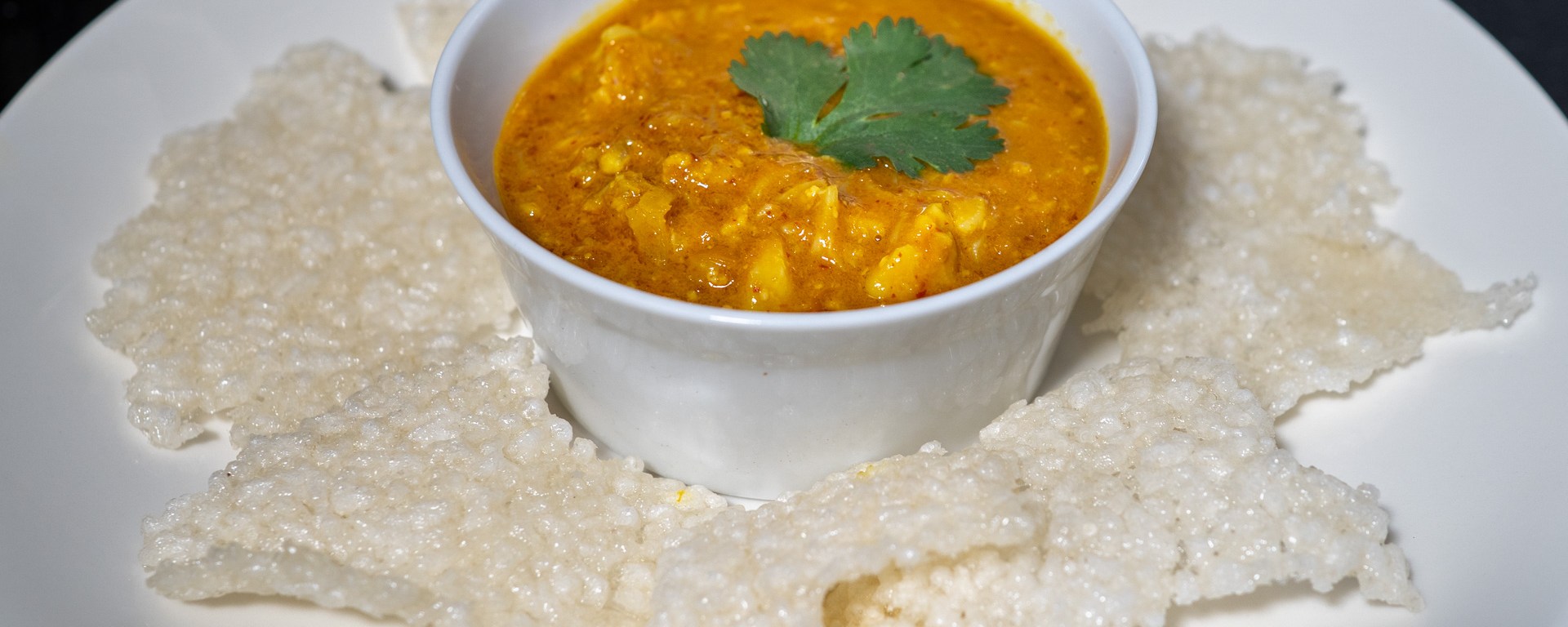
At Bucha Gallery and Restaurant, we enjoyed a wonderful bowl of Kaeng Poo, a Southern Thai yellow crab curry served with crispy Khao Tang rice crackers for dipping. The savory crab curry was warm and creamy, offering a deep yet balanced flavor. The rice crackers, made from leftover rice that is dried and deep-fried until crunchy, provided a great contrast.
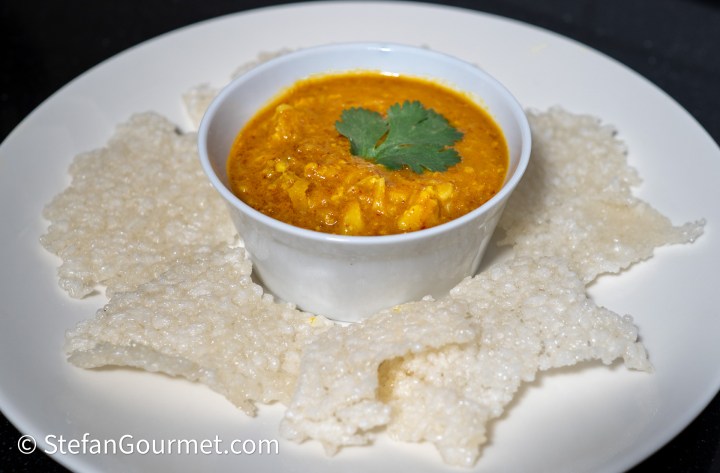
My first attempt to recreate this dish at home was very successful, so I am sharing my recipe with you. I used local North Sea crab and added a reduced stock made from the shells to the curry to deepen the crab flavor. Instead of rice crackers, the curry can also be served with thin rice noodles (Khanom Jeen) or steamed jasmine rice.
Ingredients
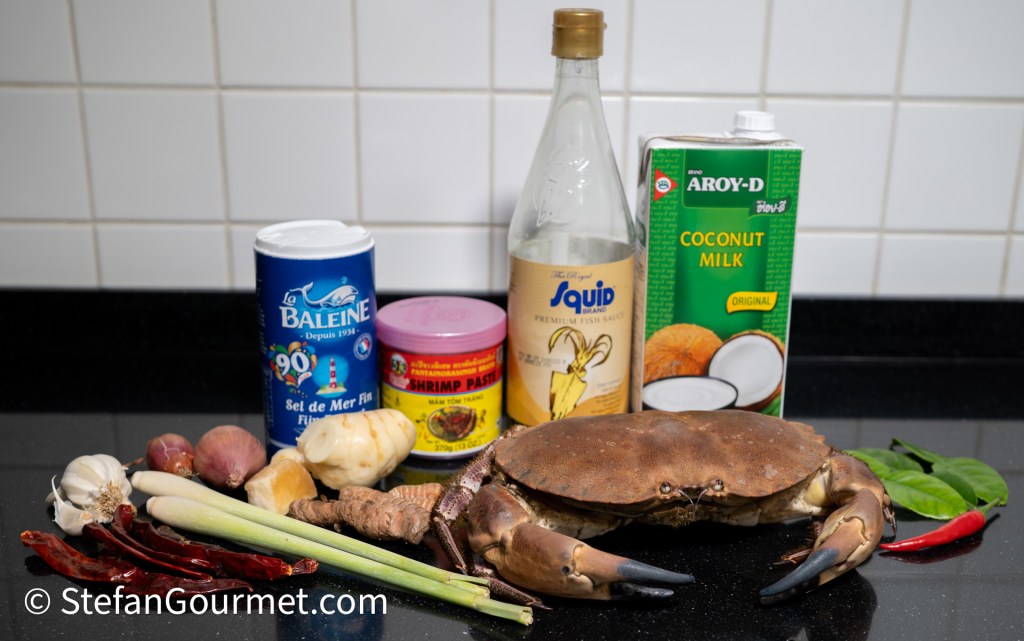
Serves 4 as an appetizer
- 6 dried large red chilies
- 2 stalks lemongrass, thinly sliced
- 1 Tbsp galangal, minced
- 2 Tbsp turmeric, fresh and minced
- 3 Tbsp shallots, chopped
- 2 Tbsp garlic, chopped
- 1 tsp shrimp paste (Kapi)
- 1 live crab of about 1 kilo (2.2 lbs)
- 500 ml (2 cups) coconut milk, divided
- 2 Tbsp palm sugar
- 2 Tbsp fish sauce
- 6 makrut lime leaves
- 200 grams (1 cup) jasmin rice
- salt
- oil for deep frying
Instructions
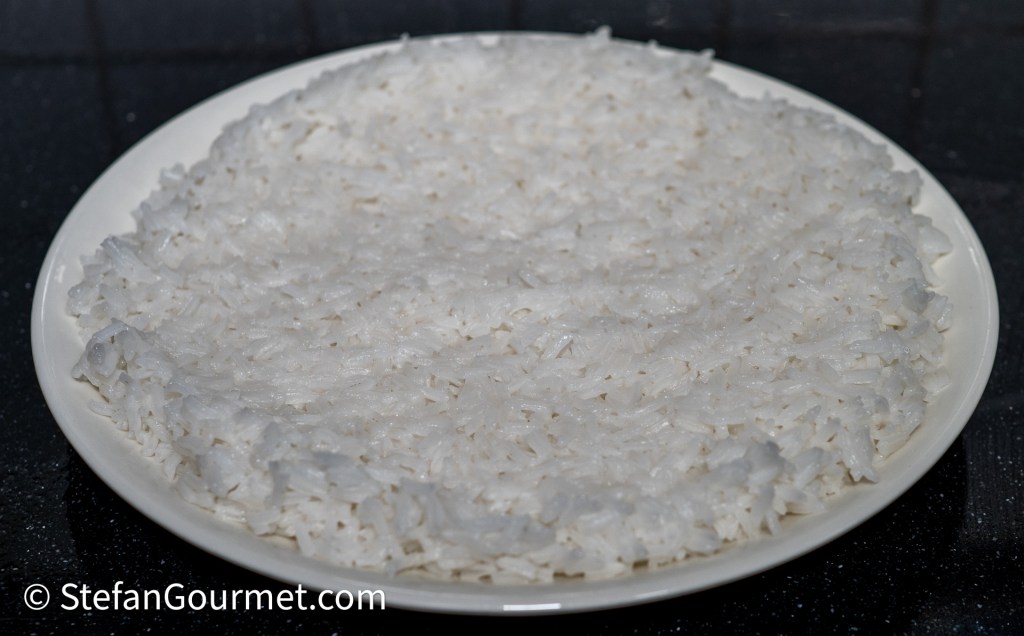
If you do not have leftover rice, steam 200 grams (1 cup) of jasmin rice, spread it out on a plate in a thin layer, and allow to cool.
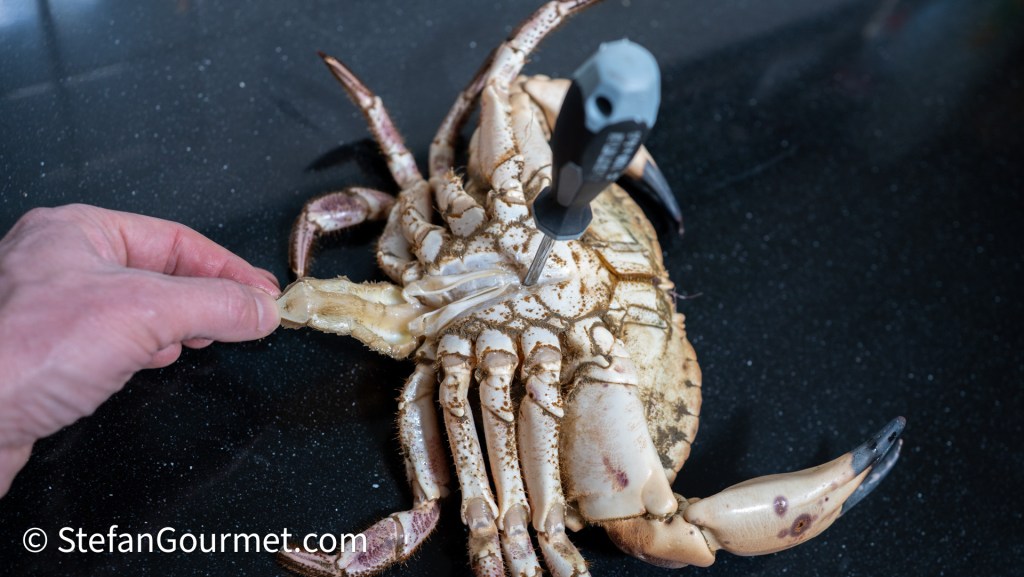
Ensure the crab is still alive, as it spoils rapidly after death and can cause serious food poisoning. You should kill the crab just before boiling; otherwise, a panic reaction may cause it to shed its legs, which negatively impacts the cooking process. The method for killing the crab is called pithing, which requires a screwdriver to instantly destroy the two main nerve centers (ganglia). This ensures the crab does not feel pain or cast its legs during boiling. For the first point, place the crab on its back and lift the apron, the flap on the underside. Position the tip of the screwdriver in the small depression in the center and plunge it about halfway into the body.
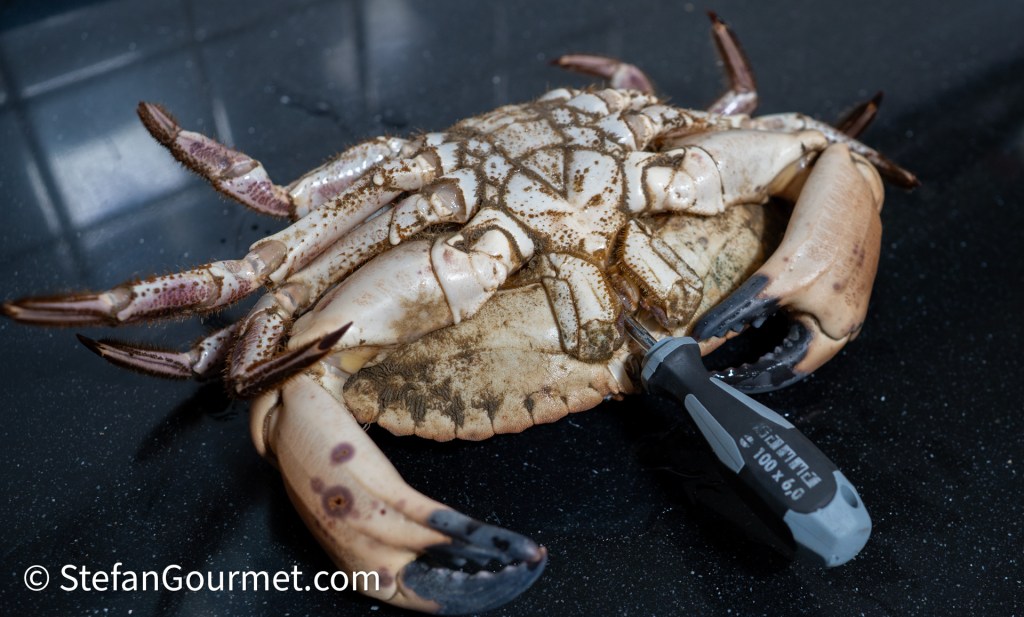
The second point is located at the small hole or depression just below the mouthparts and between the eyes. Insert the screwdriver here as well, angled slightly toward the back of the shell. You may still notice some twitching after completing this operation, but this is merely a muscular reflex.
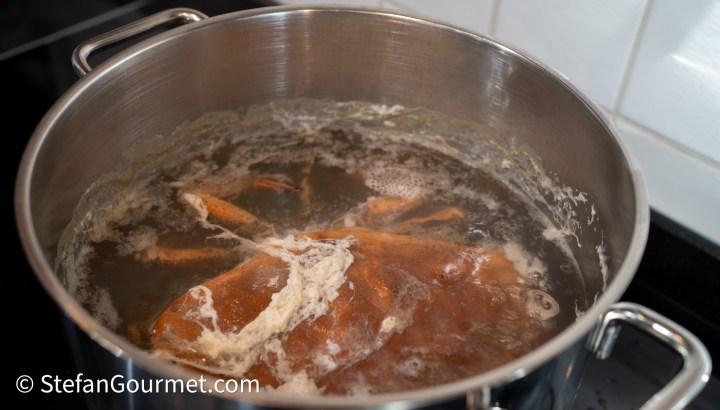
Bring a pot of water to a boil that is large enough and contains enough water to cover the crab by 5 cm (2 inches). Submerge the crab in the boiling water, cover, and simmer for 15 minutes (the cooking time will be longer or shorter if your crab is larger or smaller than 1 kilo). Do not add salt to this water, to avoid making the reduced crab stock we are going to make later too salty.
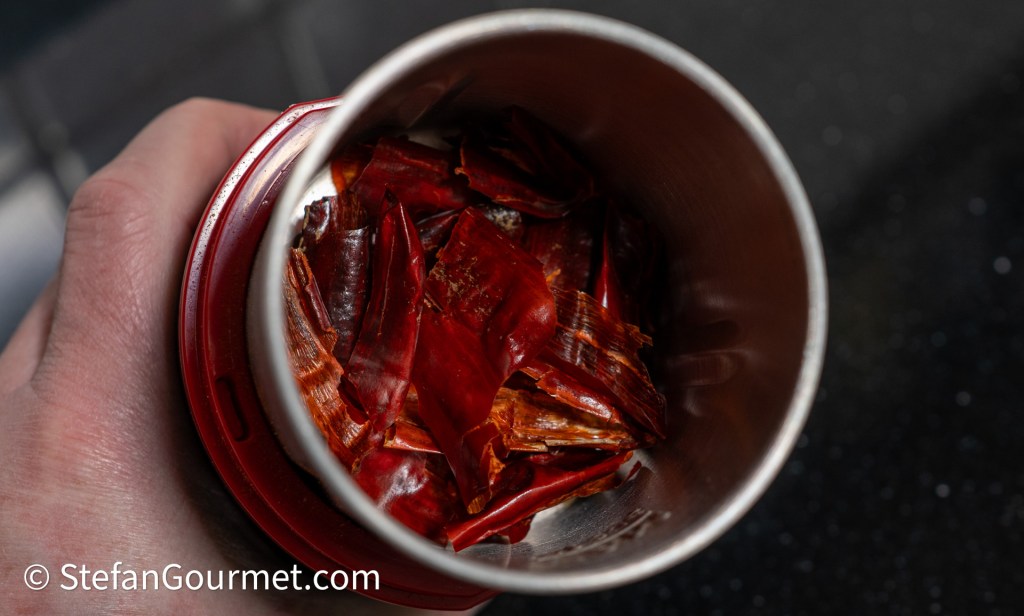
Make the curry paste while the crab is simmering. Remove the stems from 6 large dried red chillies, break them into pieces (or use scissors), and shake out the seeds. I use large Thai red chillies that are medium spicy. If your chillies are milder or you want more heat, add some small hot dried chillies.
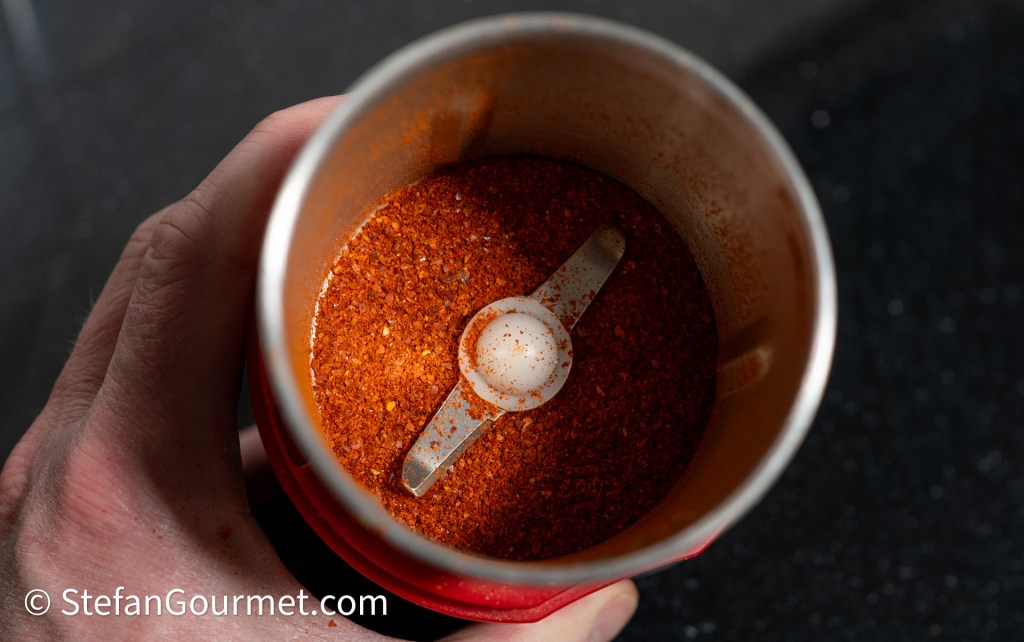
Place the cleaned chillies in a spice grinder and grind them into a fine powder.
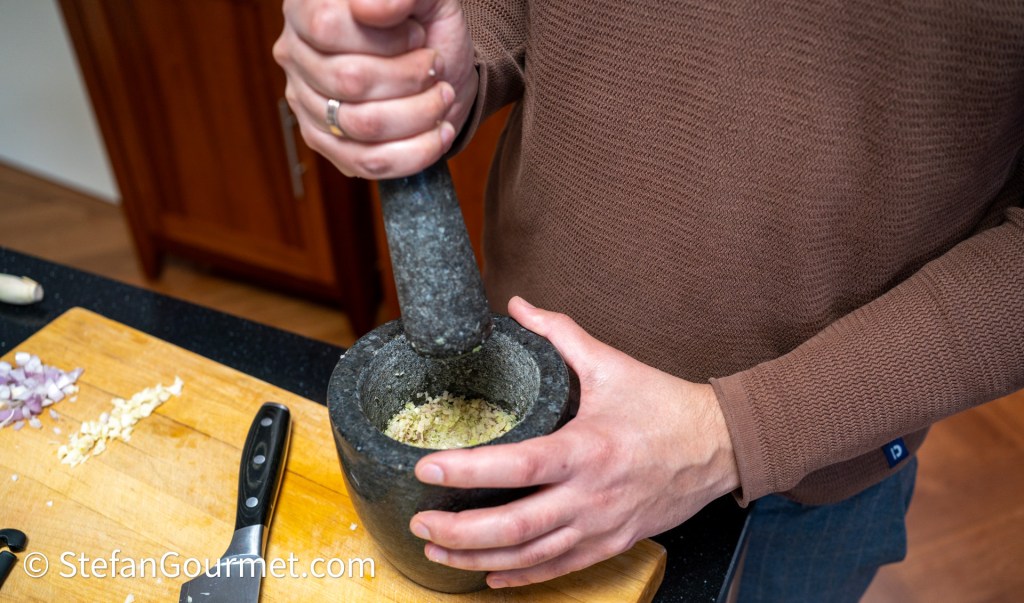
Place 2 stalks thinly sliced lemongrass (bottom half only, reserve the top half for the stock), 1 Tbsp minced galangal,2 Tbsp minced fresh turmeric, 3 Tbsp chopped shallots, 2 Tbsp chopped garlic, and 1 tsp coarse salt in a mortar and pound into a paste with a pestle.
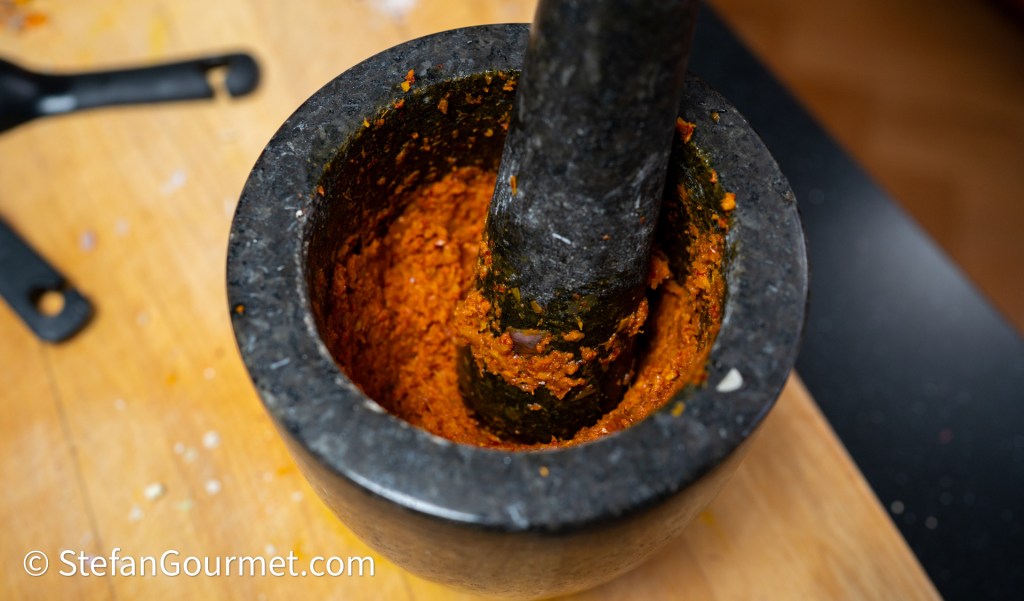
Add 1 teaspoon of Thai shrimp paste and the ground chillies, and pound until well mixed.
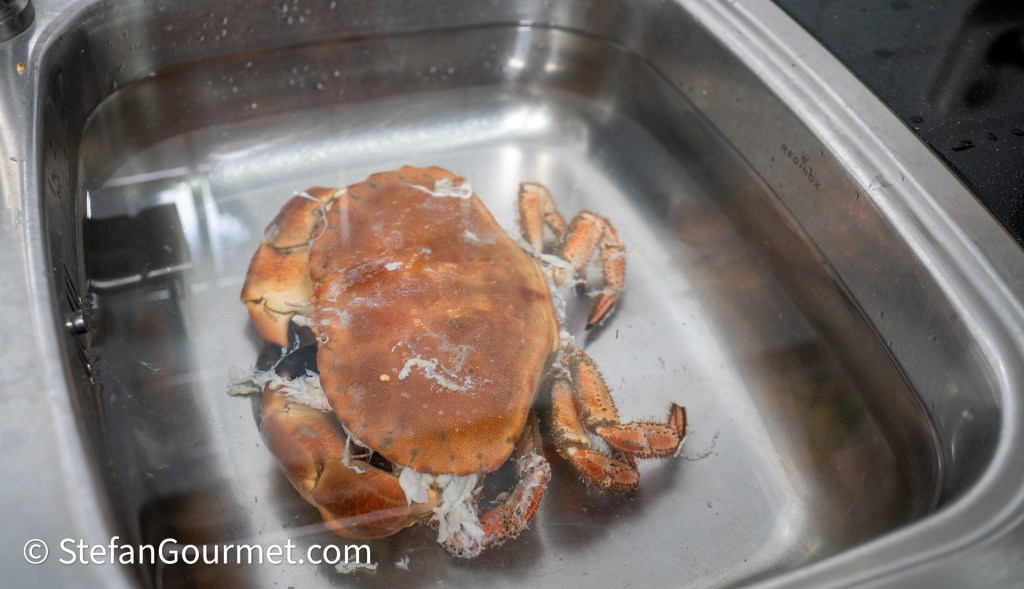
When the crab has simmered for 15 minutes, place it in cold water to cool.
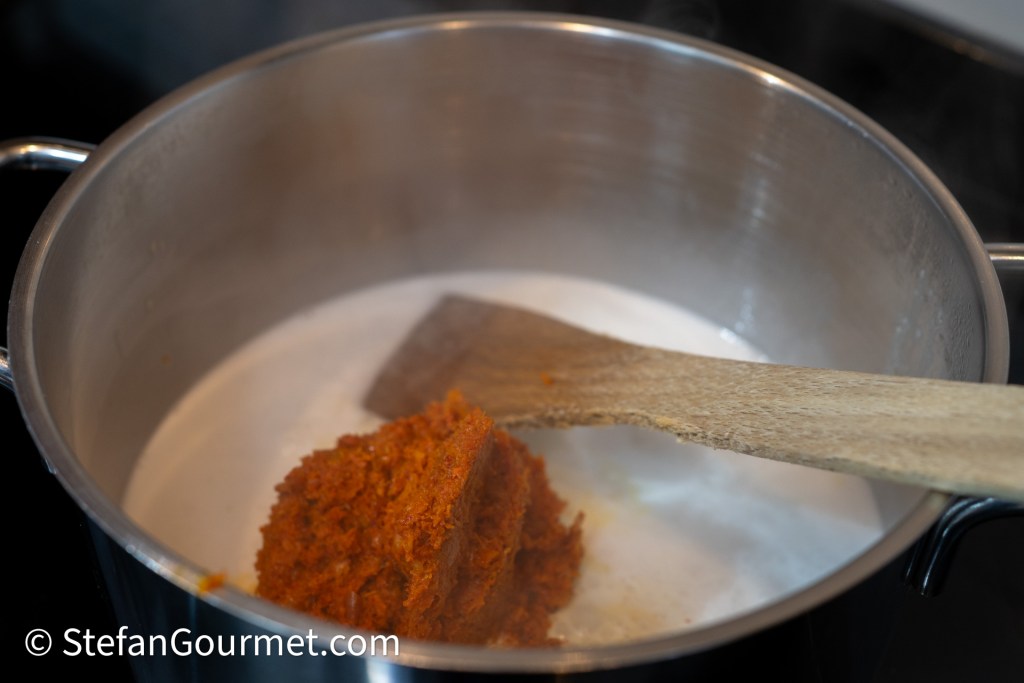
Place the coconut cream that floats on top of the coconut milk in a saucepan, and add the curry paste.
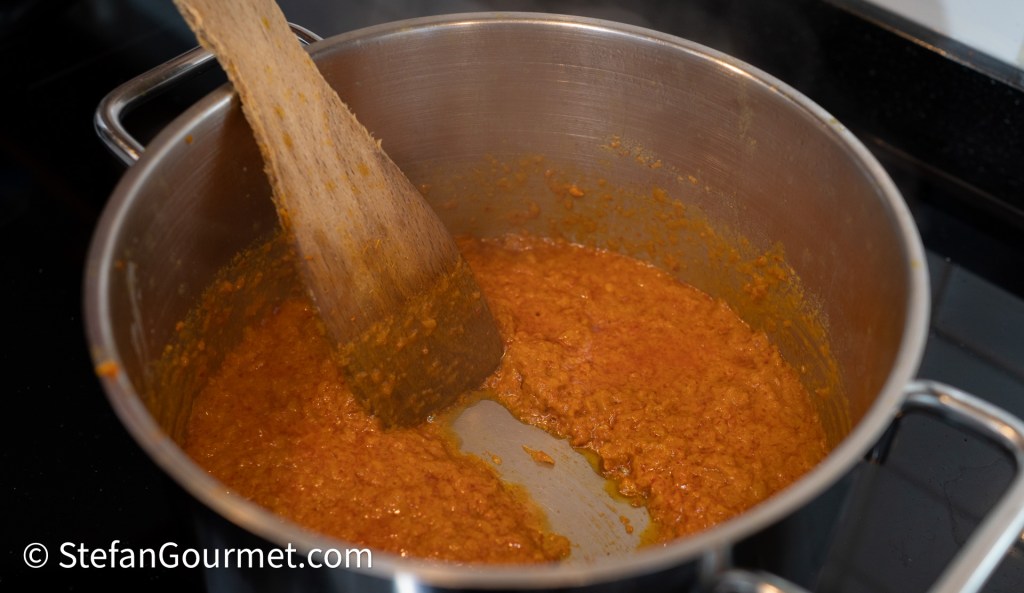
Cook over medium-high heat, stirring constantly, until the coconut cream splits. You will see yellowish oil separate from the curry, signaling that enough water has evaporated to effectively sauté the paste and fully develop its flavors.
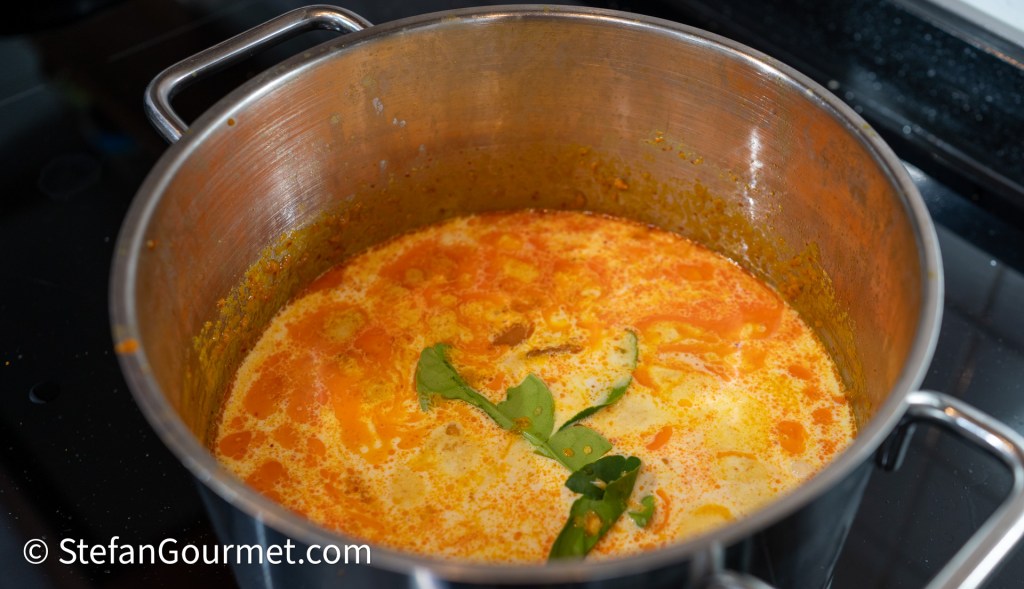
When that happens, add the remaining coconut milk, 1 Tbsp fish sauce, 2 Tbsp palm sugar, and 6 makrut lime leaves, slightly torn to release their flavor. Simmer the curry like this until it thickens.
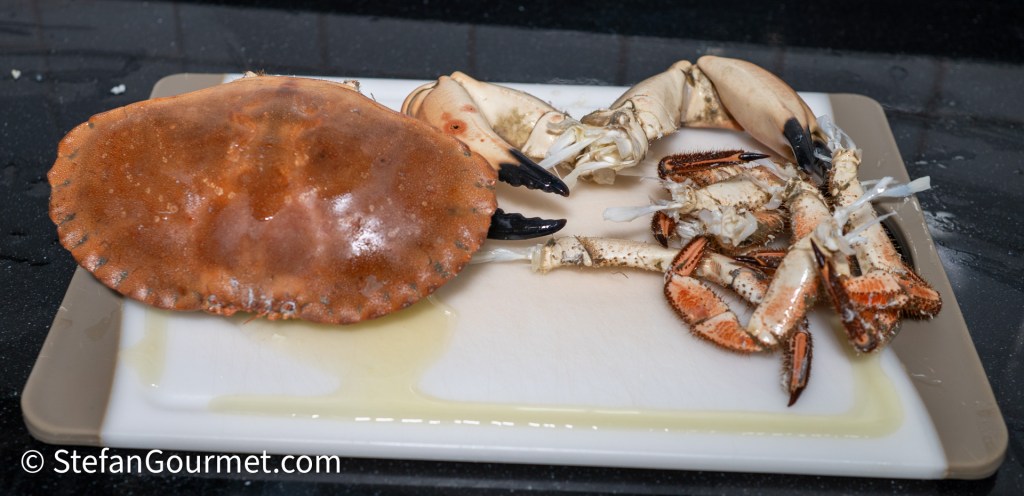
While the curry is simmering, pick the crab meat out of the shell. Pull off the small flap (the apron) on the underside and discard. Twist off the legs and claws.
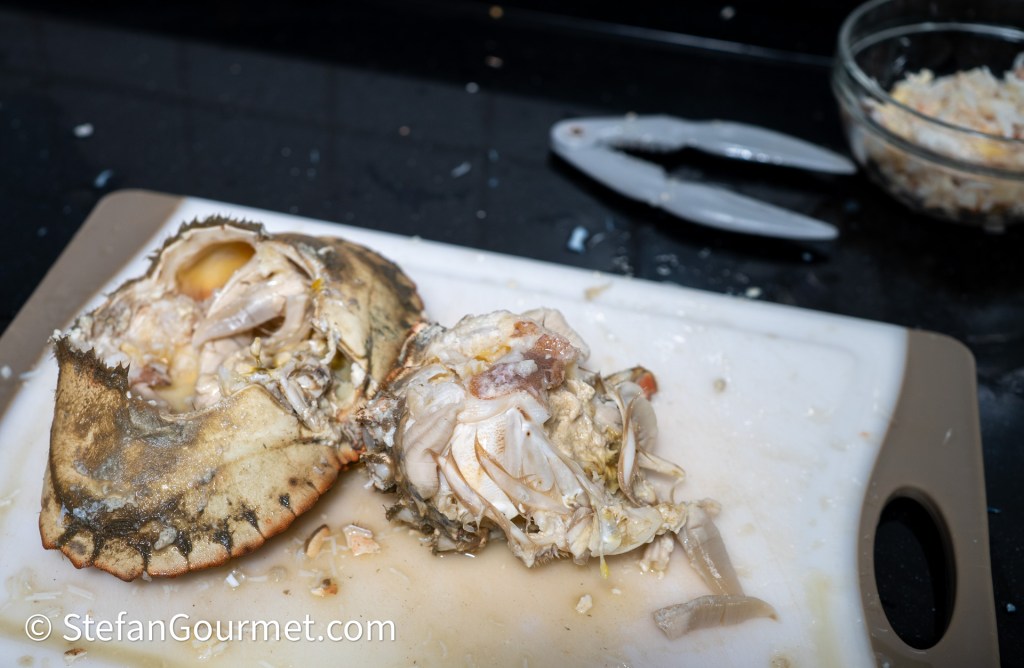
Place your thumbs near the back of the crab and push the body up and out of the main top shell. Remove the gills (the grey, feathery bits). They are called dead man’s fingers and don’t have a pleasant taste. Cut the main body into quarters. Use a small pick or a lobster fork to get the sweet white meat out of the “honeycomb” chambers. Give the claws and legs a firm whack with the back of a heavy knife or a cracker. Reserve all the shells (but discard the dead man’s fingers).
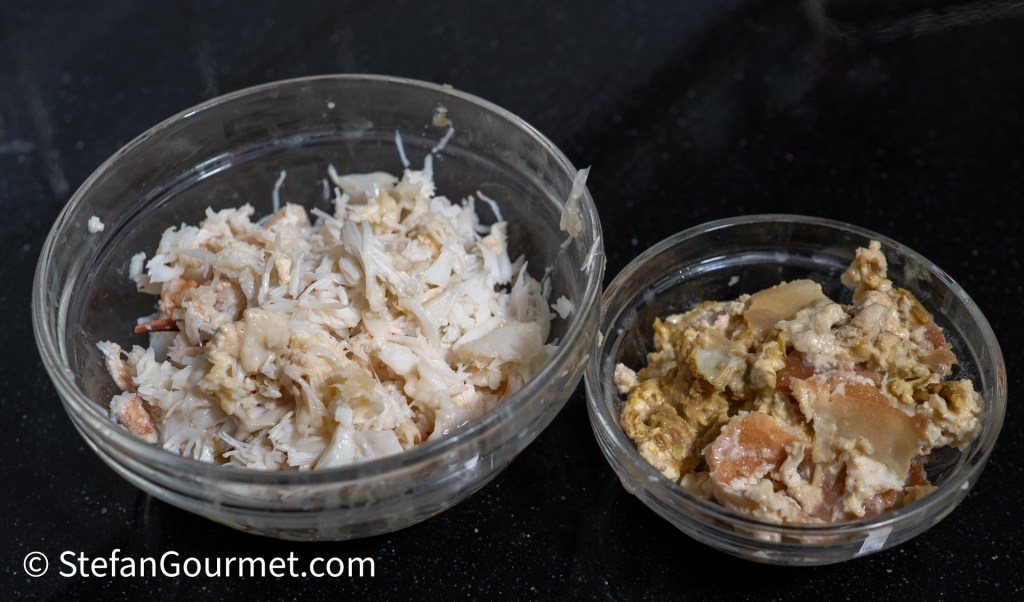
Make sure to get both the white and the brown meat, but keep them separate.
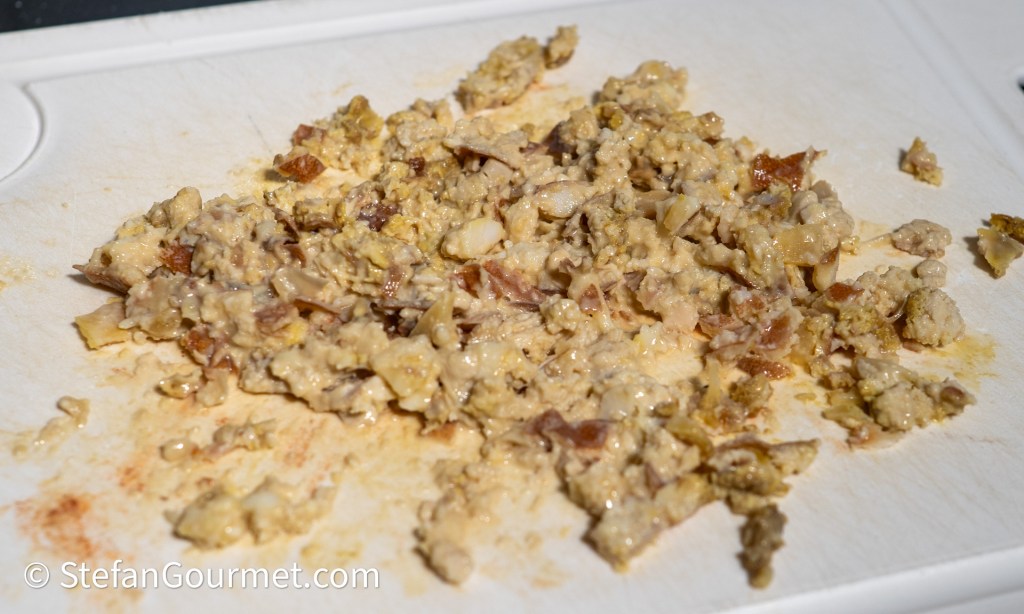
The white meat doesn’t require chopping as it falls apart by itself, but the brown meat consists of larger pieces and membranes, so you should chop it. Reserve the crab meat in the refrigerator.
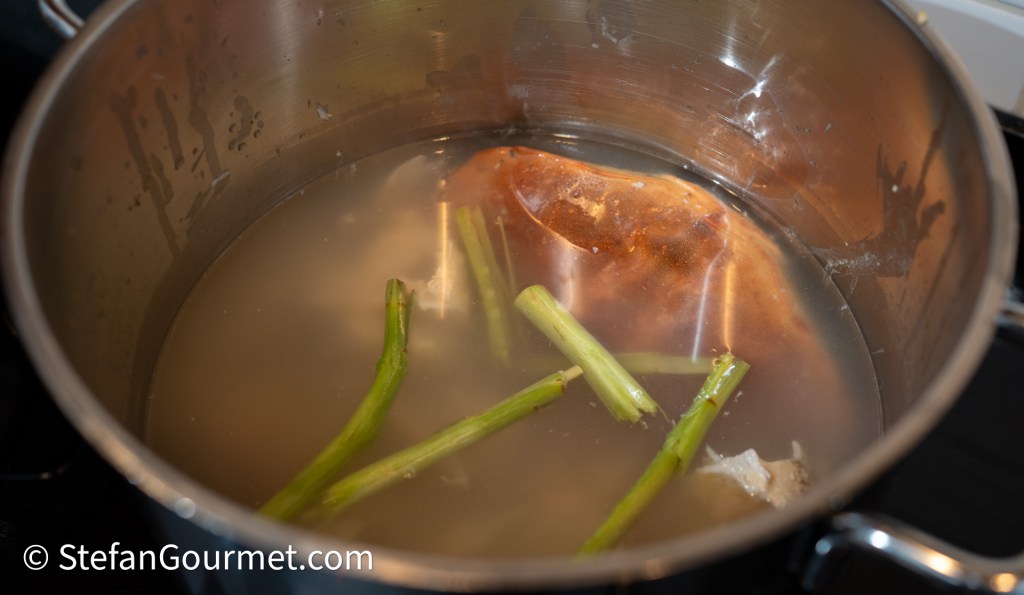
Place the crab shells in a stockpot together with the bruised top halfs of lemongrass. Bring to a boil, then simmer for 30 minutes only.
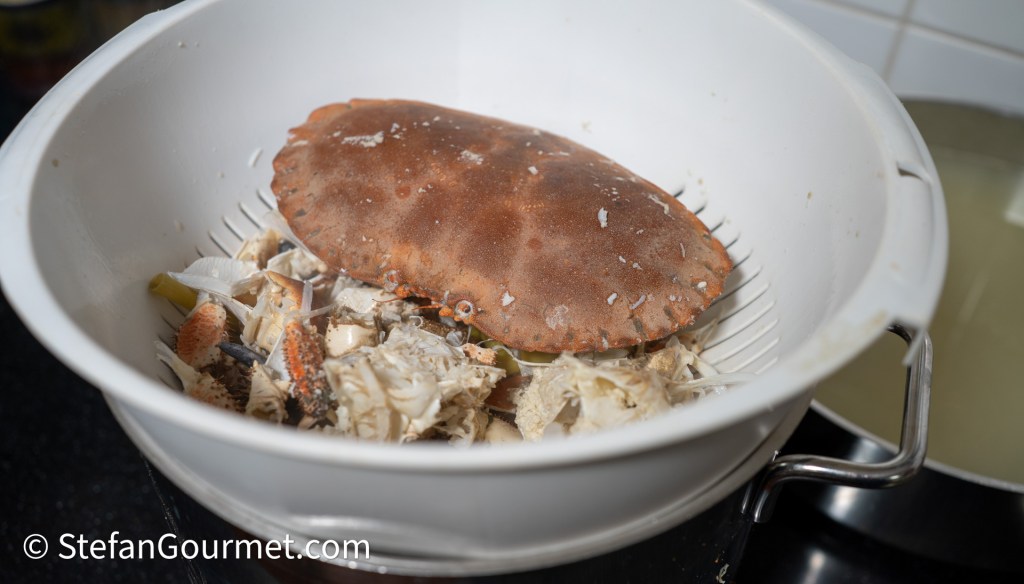
Strain the stock, first through a colander, and then through a fine sieve.
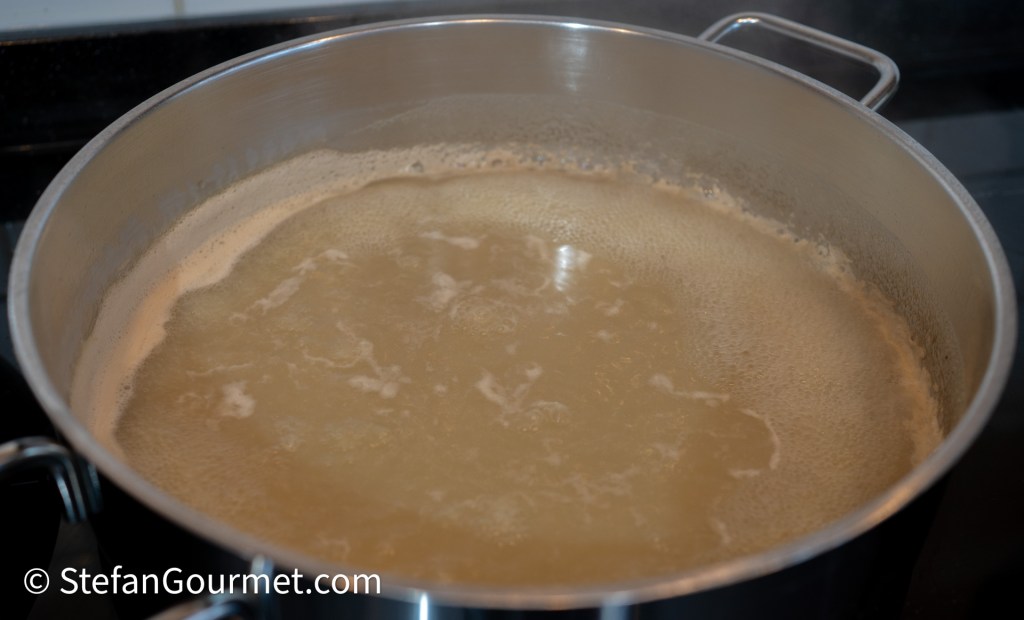
Pour the crab stock into a wide shallow pan, bring to a boil, and reduce to about 250 ml (1 cup).
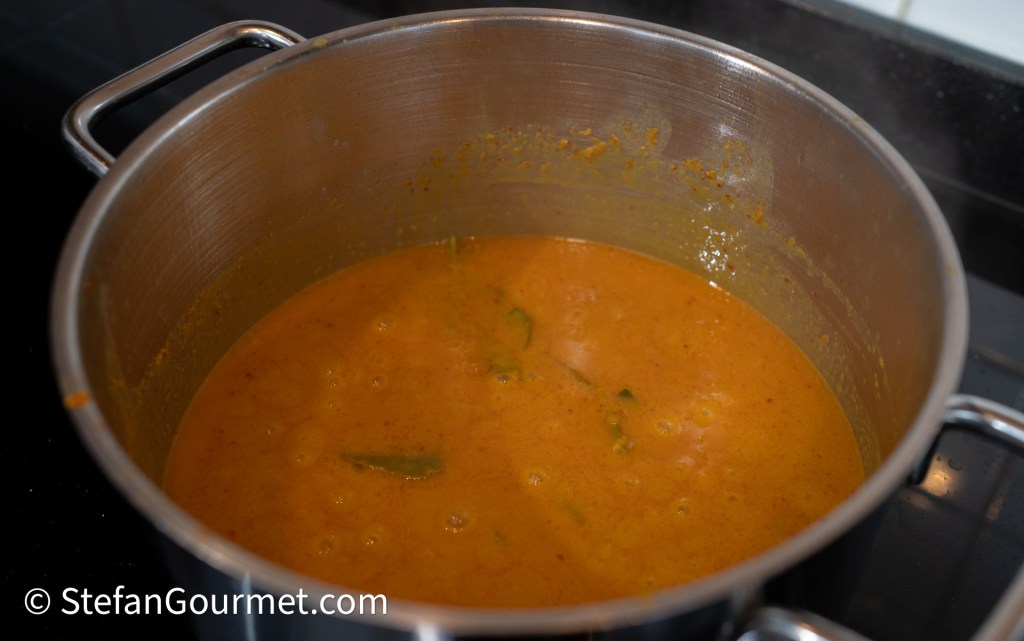
Taste the reduced crab stock to ensure it is not too salty before adding it to the curry. If it is salty, try adding only a portion first. Taste the curry again after incorporating the crab stock and add more fish sauce if needed. The curry can be prepared in advance up to this point.
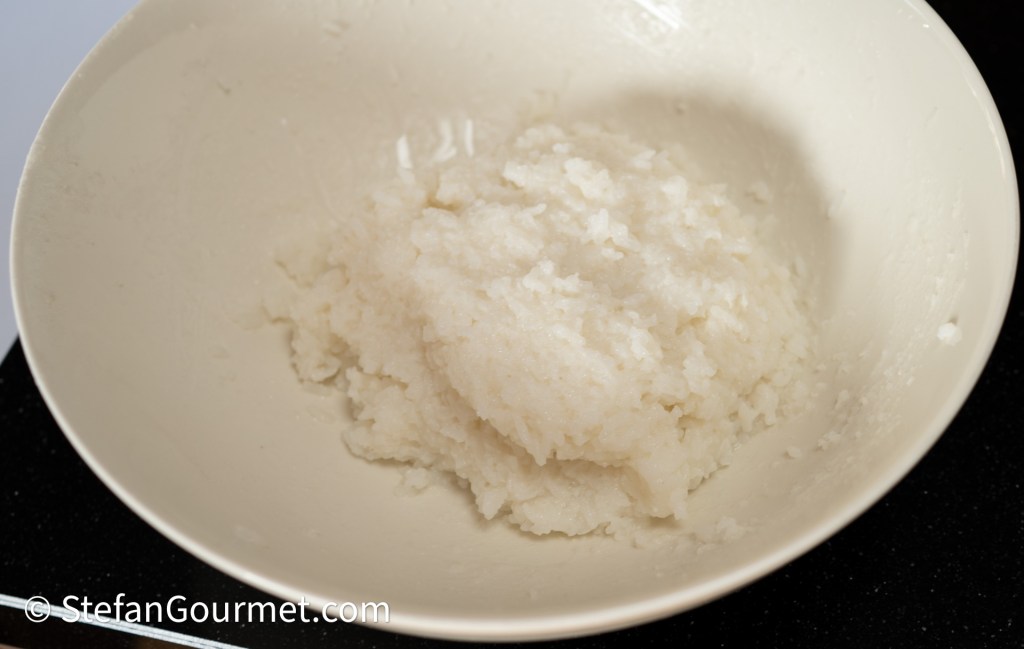
To make the rice crackers, place the cooked rice in a large bowl, season with salt, and knead it gently with your hands so the grains start to adhere to each other. Wet your hands slightly to prevent sticking.
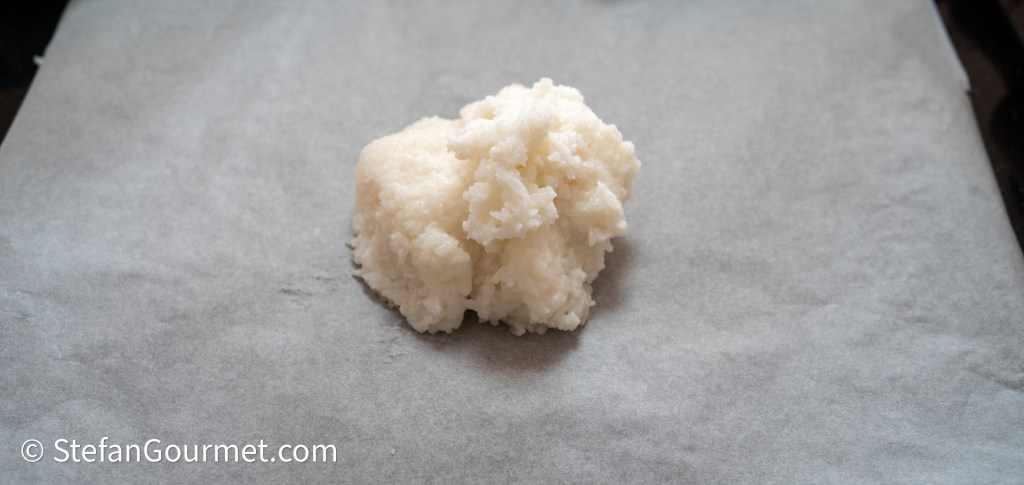
Place the kneaded rice on a piece of oven paper that has the size of your baking tray, about 30 x 40 cm (12 x 16 inches).
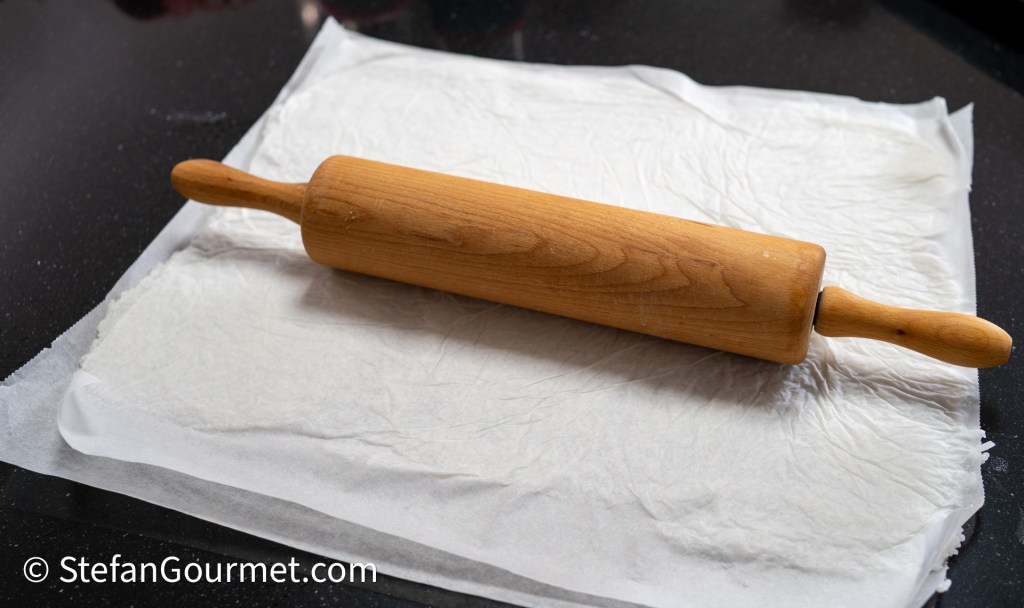
Place another piece of oven paper on top, flatten the rice with your hands first, and then roll it out to a uniform thickness with a rolling pin, covering the entire piece of oven paper.
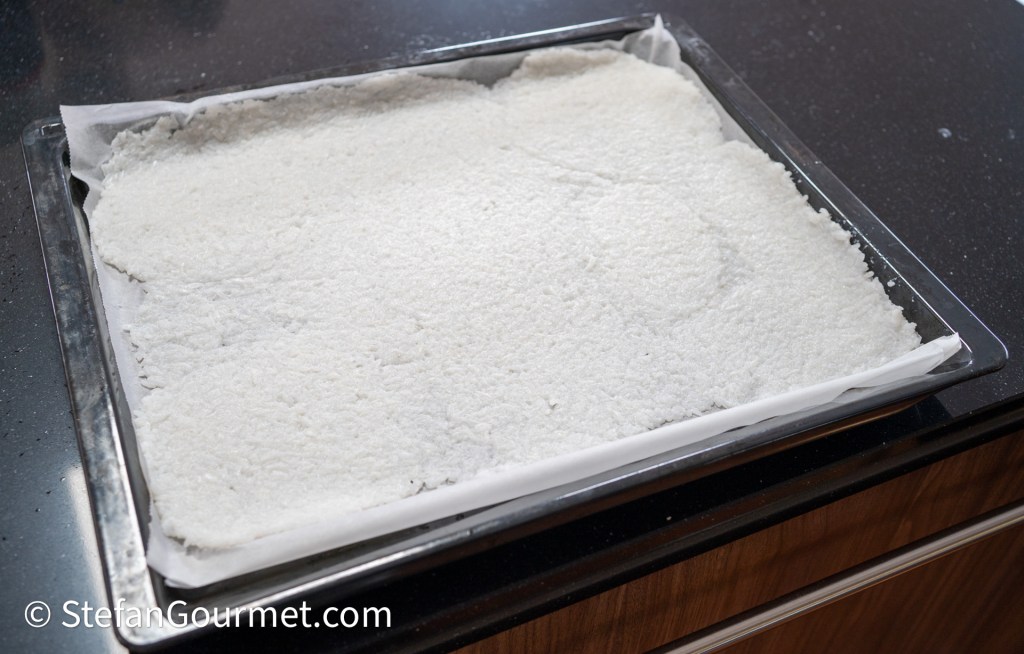
Remove the oven paper on top.
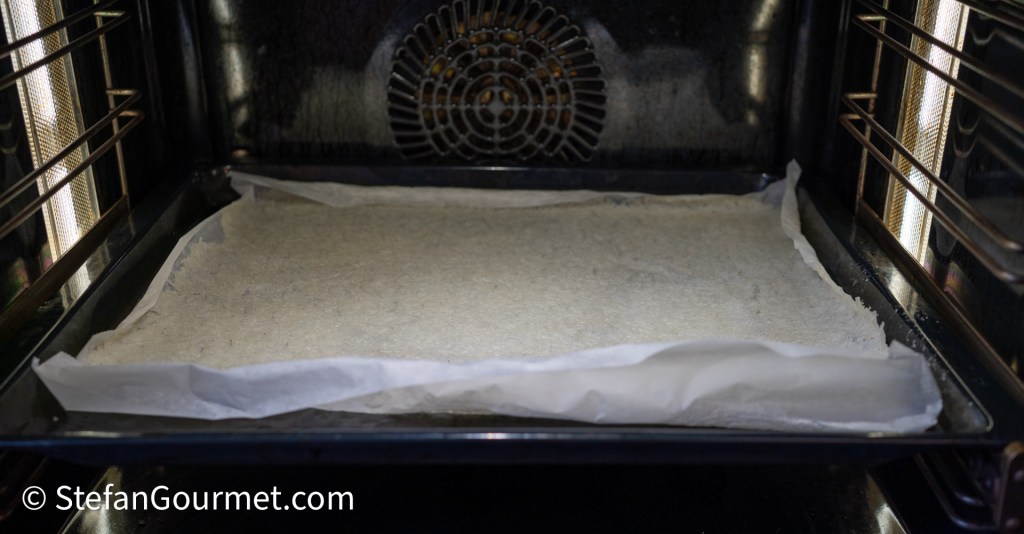
Dry the rice in the oven with fan at 80C/175F until the top feels dry, about 2 hours.
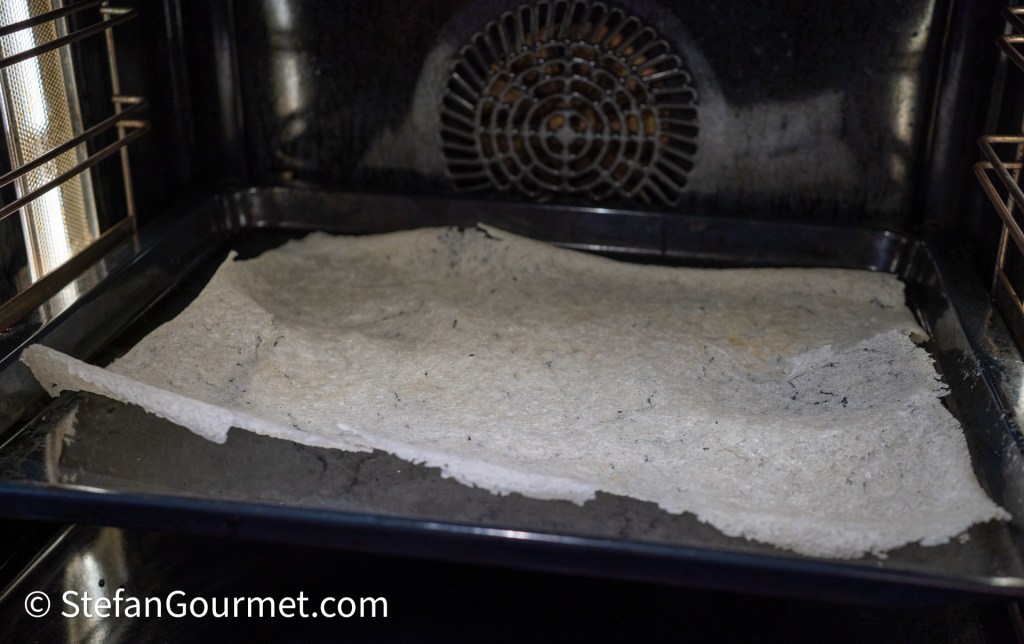
Turn the sheet of rice and remove the oven paper that is now on top. Continue drying at 80C/175F until both sides are dry, about another hour.
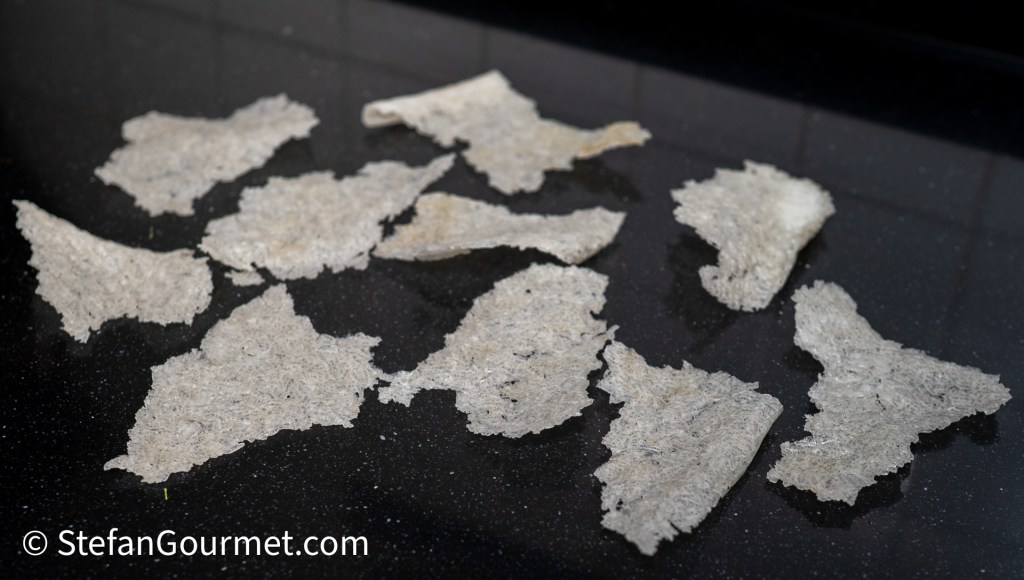
Break the sheet of rice into irregular shapes (good luck trying to get them in regular shapes).
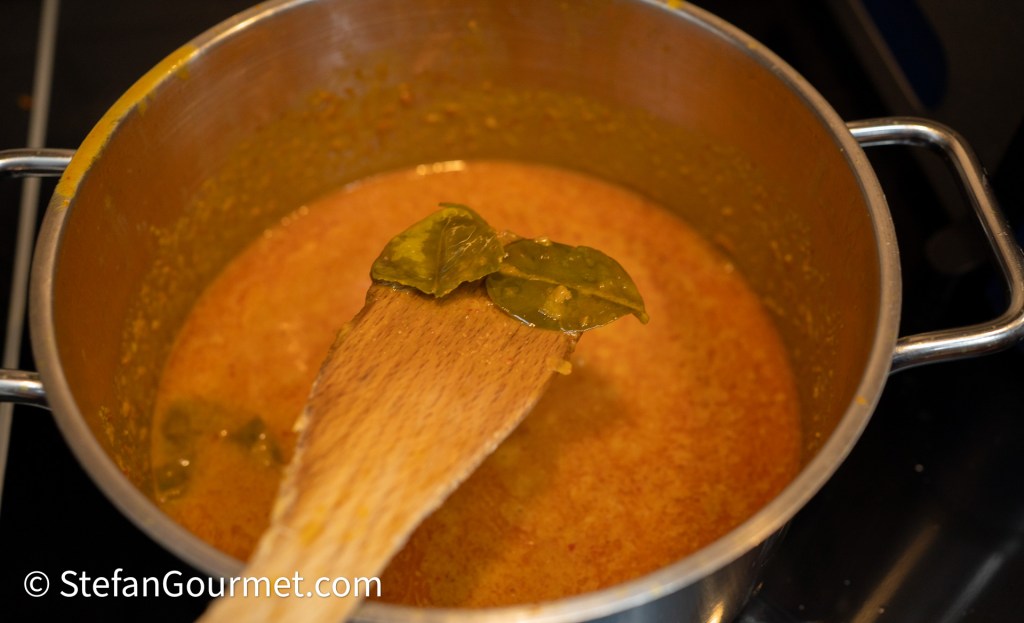
To finish the dish, reheat the curry and remove the lime leaves. Heat oil for deep frying to 180C/350F.
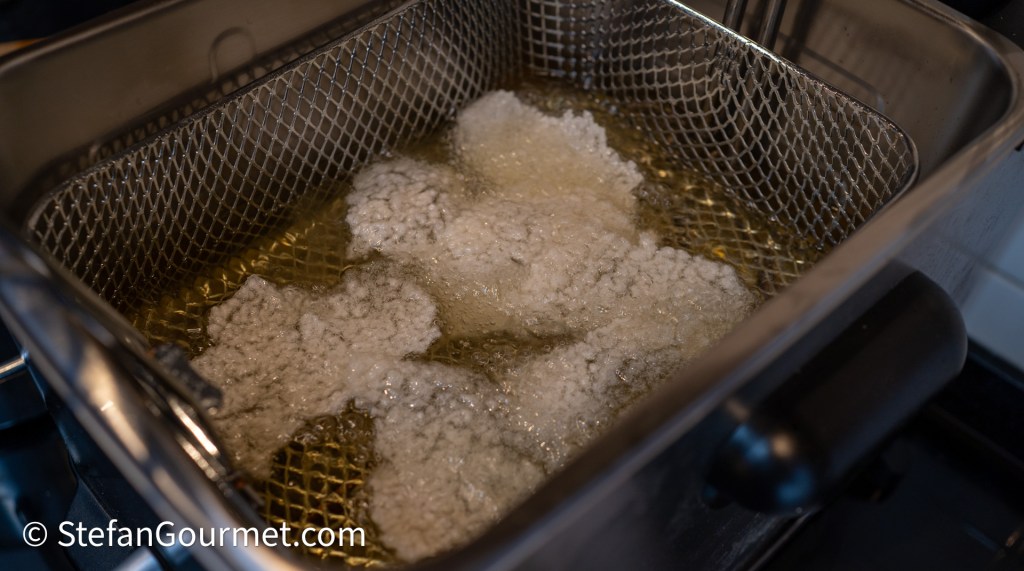
Deep fry the rice crackers until crispy and only slightly golden. This only takes 1 or perhaps 2 minutes.
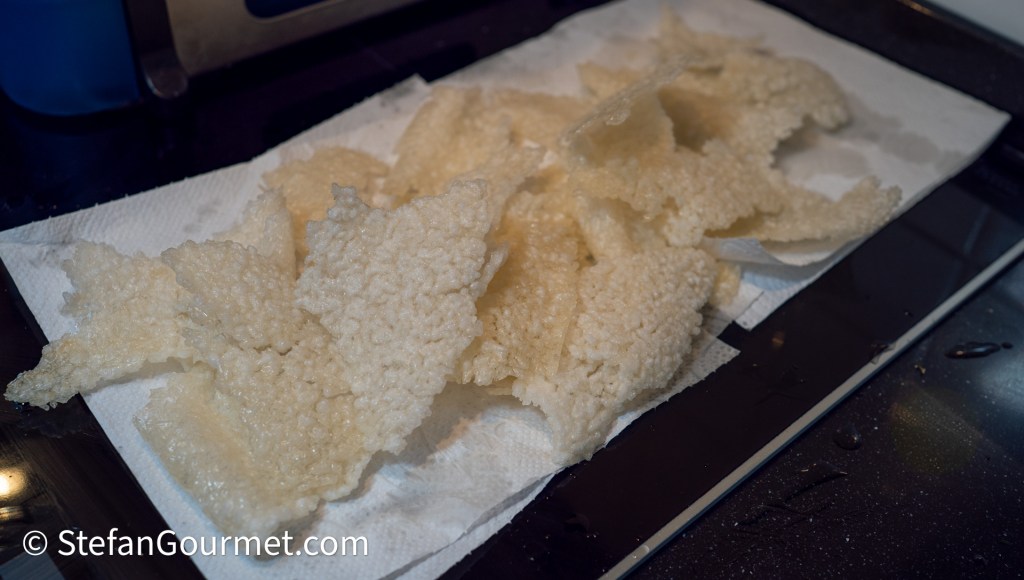
Let the rice crackers drain on paper towels, turning them to allow the oil to drip from both sides.
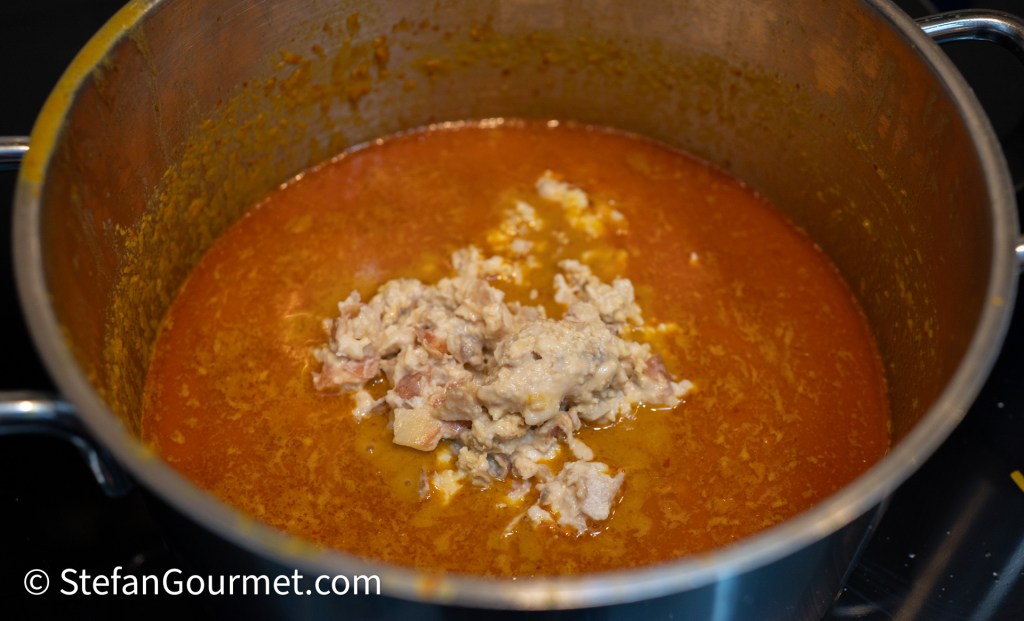
Stir in the brown meat when the curry is simmering.
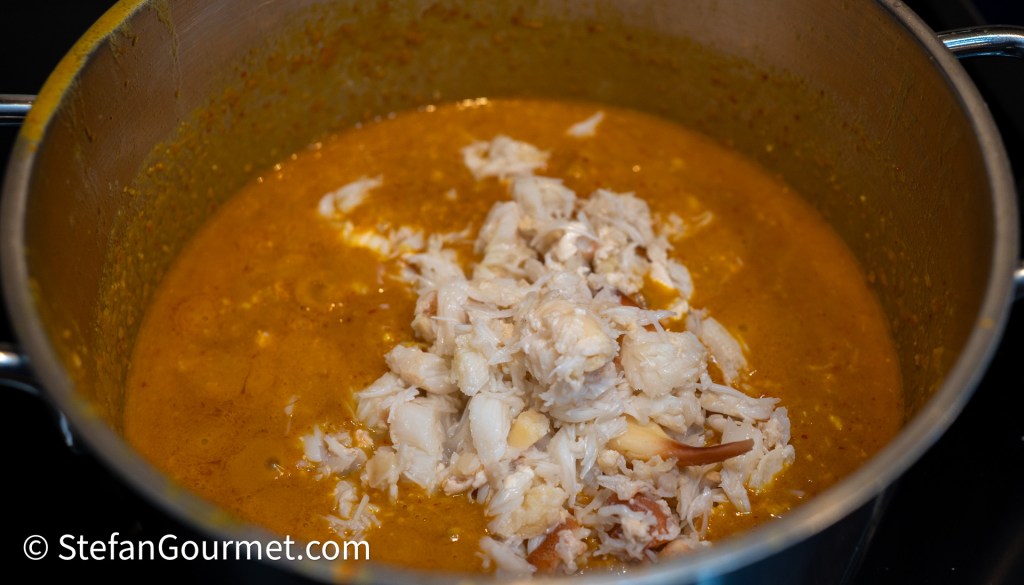
Then stir in the white meat, and turn off the heat.
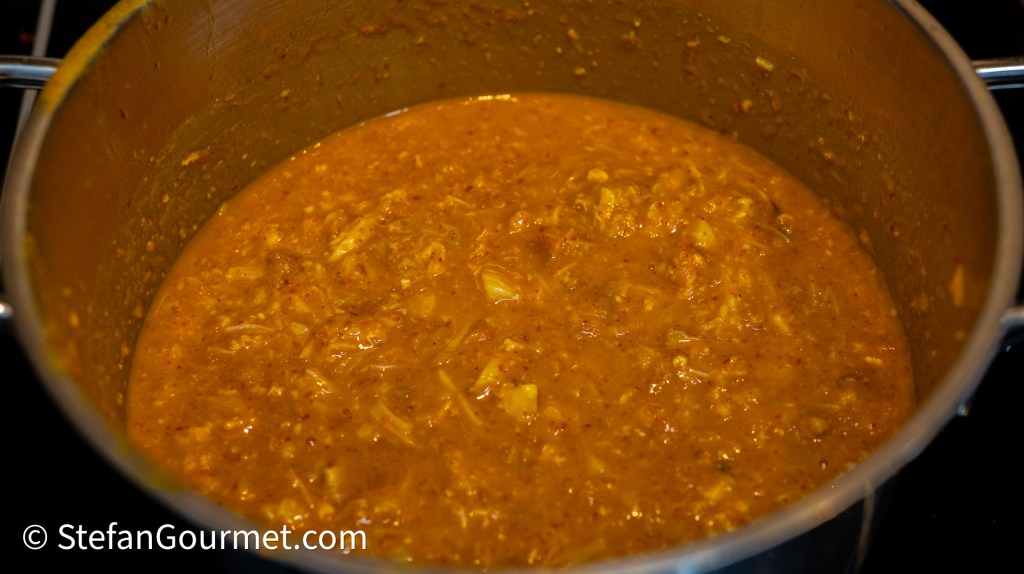
The curry should have a creamy consistency, not soupy, but not too thick either.
Serve the curry in bowl with the rice crackers for dipping.
Wine pairing
This works well with a full-bodied aromatic white wine with low to medium acidity, such as a Gewurztraminer from Alto Adige in Italy or Alsace in France, or with a full-bodied Viognier like Condrieu. A touch of residual sugar in the wine works well because of the palm sugar in the curry.


A delightful twin lesson to be a Thai curry cook and a humane veterinary surgeon 🙂 ! I lived for some 6-7 years in the Northern Rivers area of NSW in Oz – we forever had curry pots in the local river hoping some curious Queensland mud crabs would come visiting. They often did. Hmm – I must regretfully admit I lacked the knowledge to be quite as humane as you 😦 ! A very inviting recipe to be put aside and a rather interesting way to get fresh rice crackers – thank you! And – am quite proud of myself ’cause, whilst reading, I thought of Gewurtstraminer myself !
LikeLike