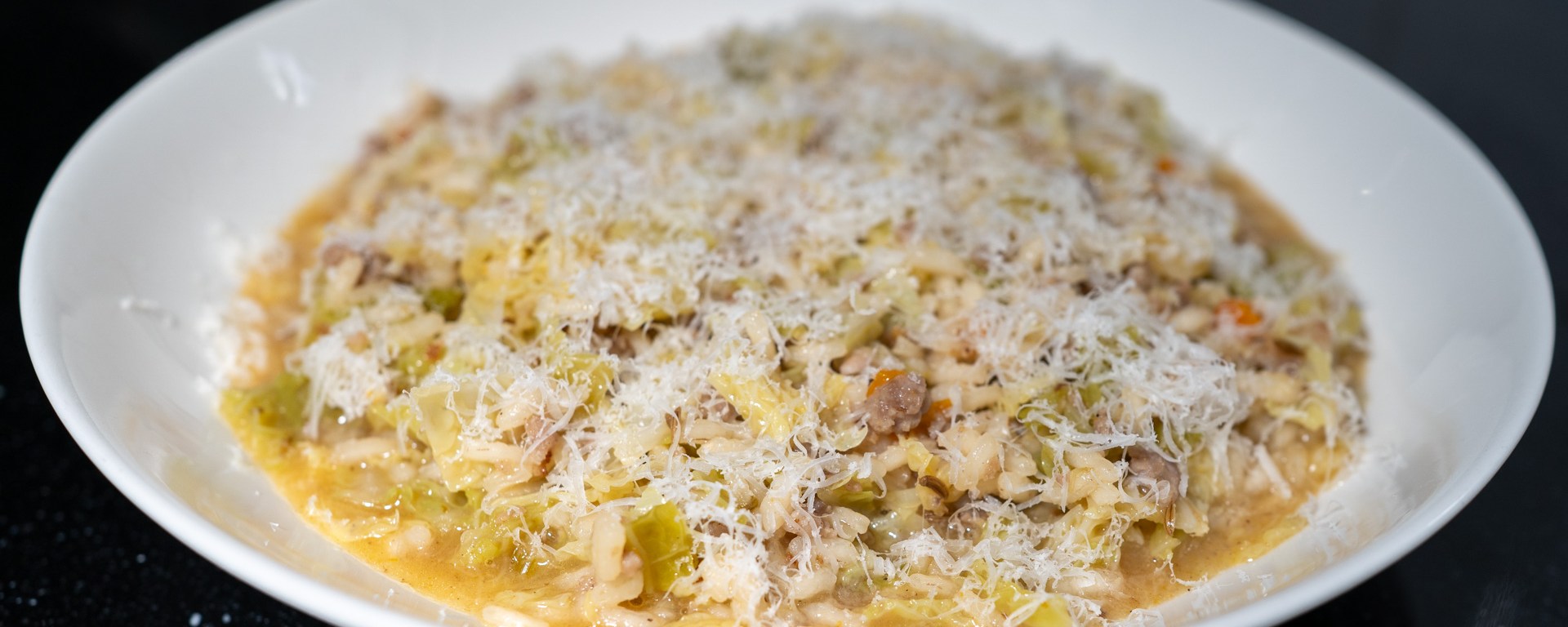
Risotto is the ultimate comfort food—not just when you eat it, but also while you make it. The gentle, rhythmic stirring isn’t complicated and can be a relaxing ritual, especially with good company or a glass of wine in hand.
The combination of savoy cabbage, Italian sausage, and fennel seeds creates a harmonious, deeply savory flavor that feels like one unified taste rather than separate elements.
A great risotto starts with great stock. Store-bought bouillon cubes are mostly salt and lack depth (though the quality is somewhat better in Italy), so making your own stock is worth the effort. For this recipe, use brodo di carne, a traditional mixed stock of beef and chicken. Click here for the recipe.
If you’re preparing it for tortellini in brodo, clarity is essential. But for risotto, you can maximize yield by pressing as much liquid as possible from the solids after straining. This will make the stock cloudy, but that doesn’t matter for risotto. In fact, you can reserve the clear portion for tortellini and squeeze the remaining solids into a second container for risotto—getting about 50% more stock from the same ingredients.
Ingredients
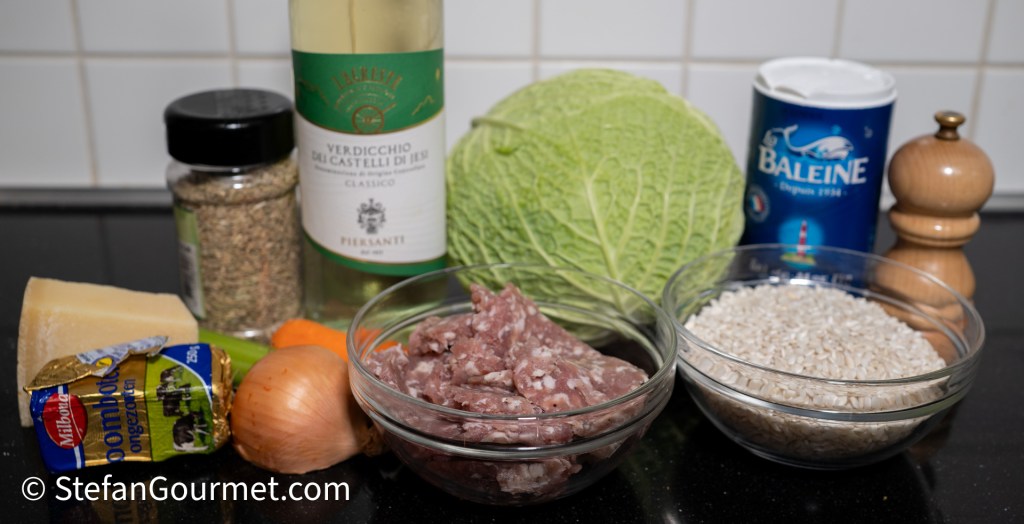
For 4 servings
- 300 g (1 ½ cups) risotto rice (Carnaroli preferred, Arborio also works)
- 400 g (.9 lb) shredded savoy cabbage (remove tough core and ribs)
- 300 g (.66 lb) Italian pork sausage, taken out of its casings
- 50 g each of finely diced carrot, onion, and celery
- About 1.2 litres (5 cups) meat stock (brodo di carne, made with beef and chicken)
- ½ Tbsp fennel seeds
- 120 ml (½ cup) dry white wine
- 50 g freshly grated Parmigiano Reggiano
- 70 g (5 Tbsp) butter
- Salt and freshly ground black pepper
Instructions
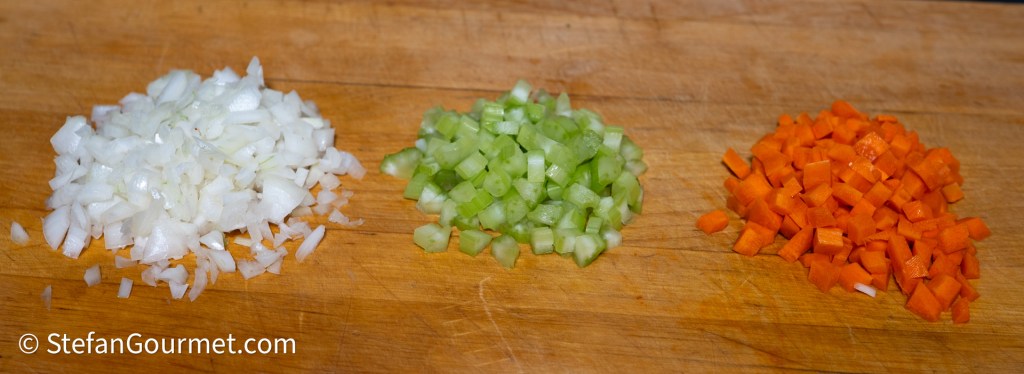
Finely dice 50 grams of onion, celery, and carrot.
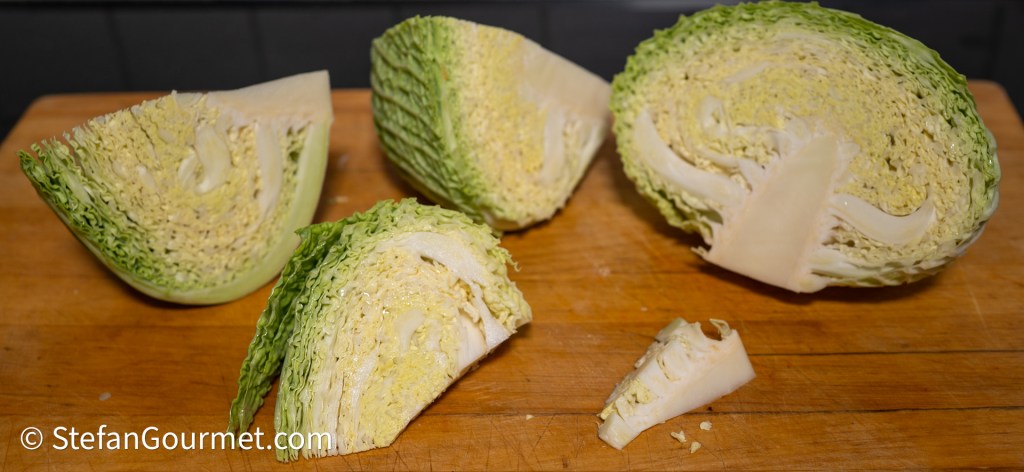
Remove the tough, fibrous parts from the savoy cabbage before shredding. Start by cutting the cabbage into eight wedges; this makes it easy to trim out the central core. Next, separate the outer leaves with thick ribs and slice those ribs away. Finally, shred the remaining cabbage finely for even cooking.
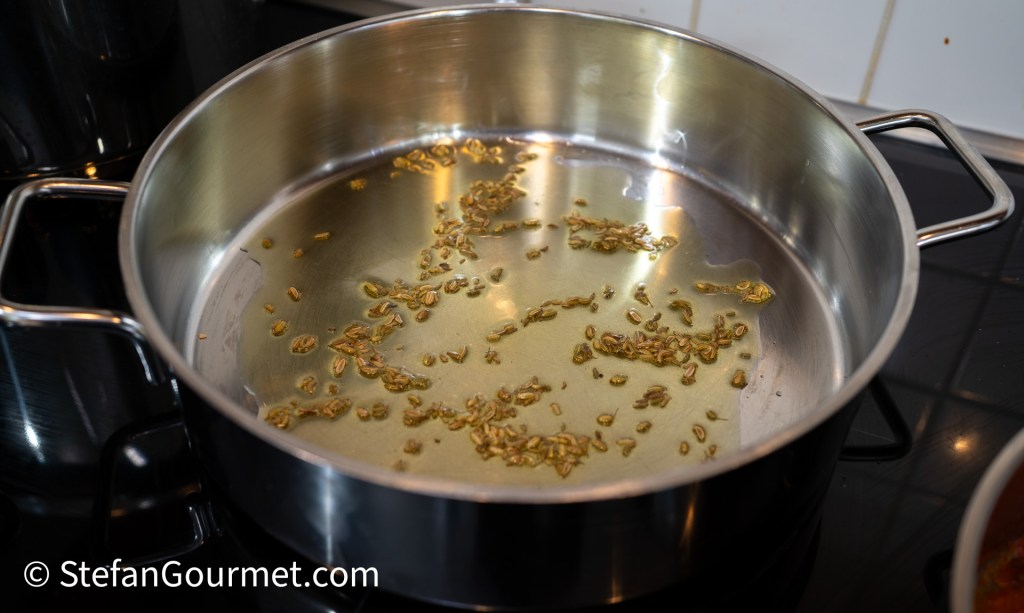
Use a large, wide pan with a thick bottom for even heat distribution—essential for risotto. For this recipe, choose an extra-large pan to accommodate the initial volume of cabbage, which will shrink as it cooks.
Heat the stock in a separate saucepan and keep it at a gentle simmer, just below boiling, throughout the cooking process.
Melt 2 tablespoons (30 g) of butter over medium heat, then add ½ tablespoon of fennel seeds. Toast the seeds, stirring constantly, for about 1 minute until fragrant.
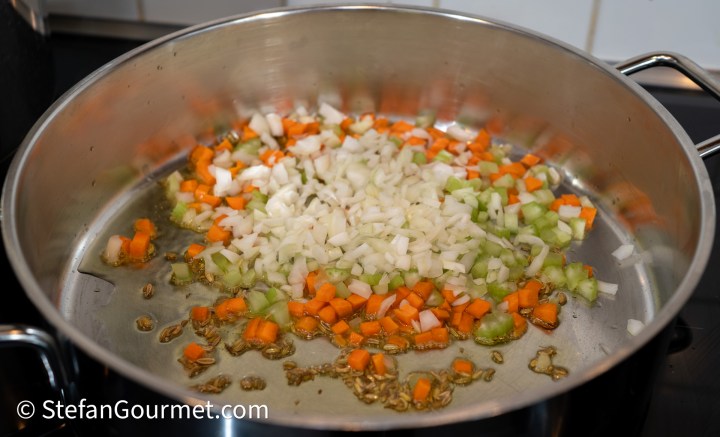
Add the minced carrot, onion, and celery.
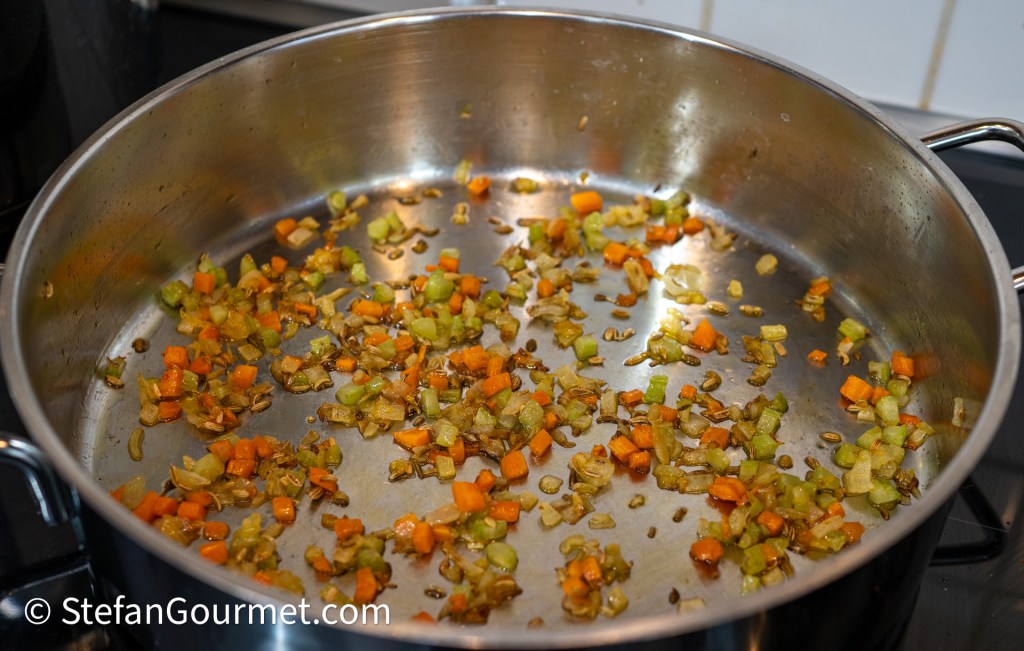
Cook over medium heat, stirring occasionally, until the vegetables begin to soften and develop a light golden color.
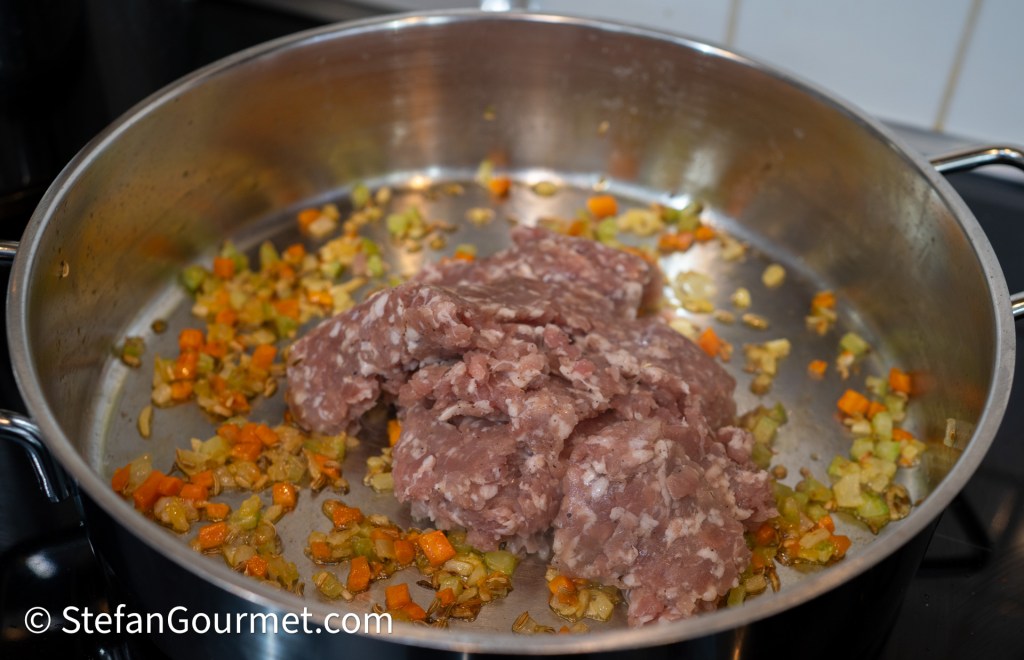
Add the sausage meat and increase the heat to medium-high.
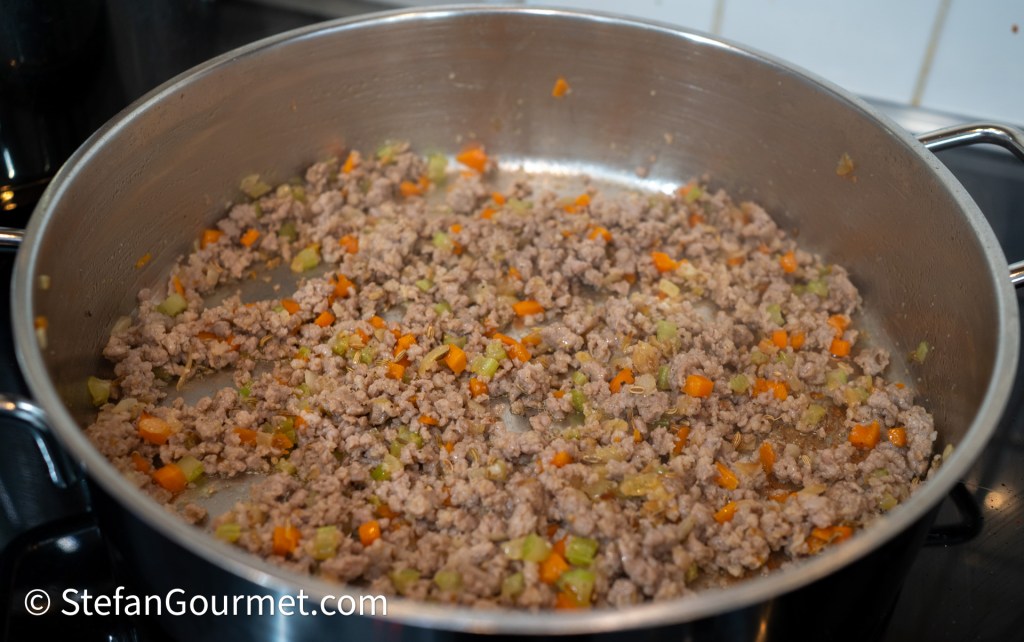
Stir and break it up with a wooden spatula until the meat is crumbled, sizzling, and starting to turn golden brown.

Lower the heat to medium and add the rice. Stir until the grains are well coated with the sausage mixture.
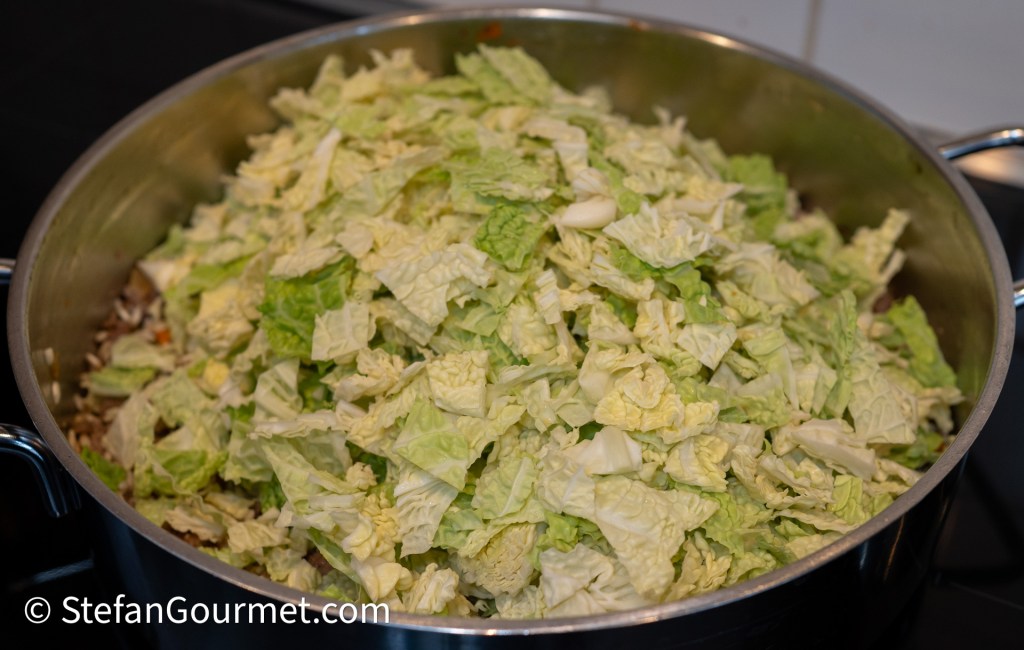
Add the shredded cabbage and mix thoroughly.
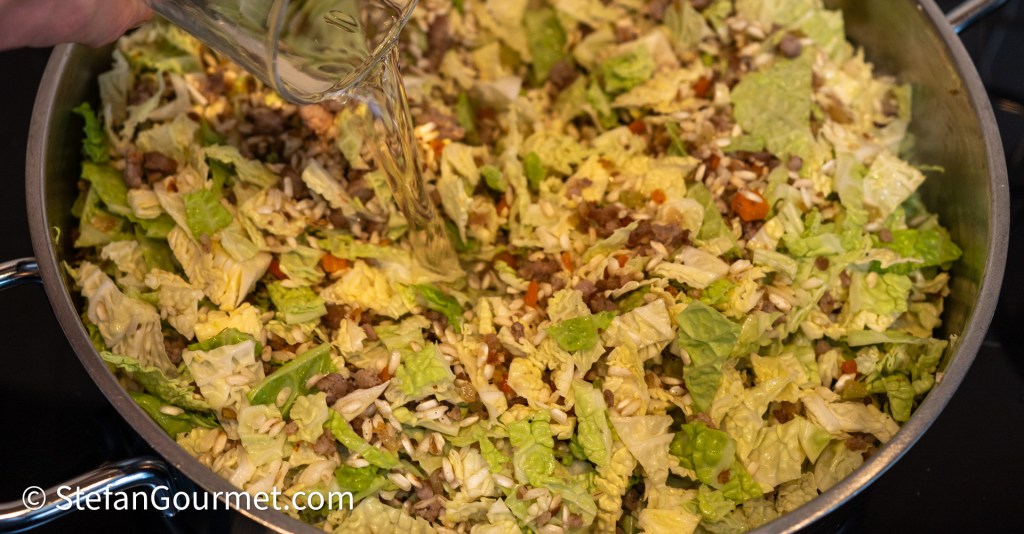
Deglaze with 120 ml of white wine and cook, stirring, until the wine has evaporated. Season with salt.
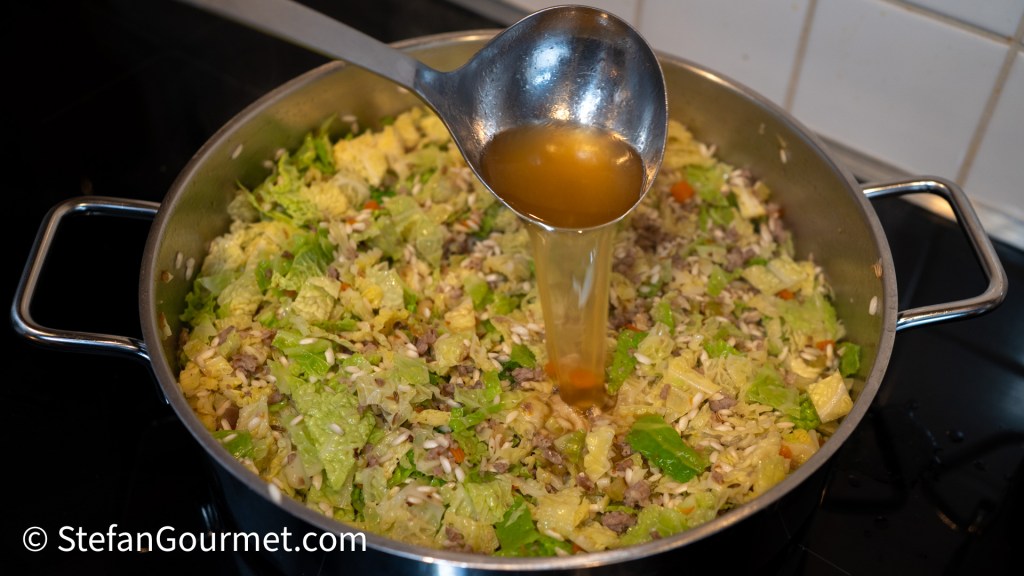
Add a large ladle of hot stock and stir until fully absorbed. While stirring, make sure no grains stick to the sides of the pan—they will stay raw and create hard bits in the risotto. Also scrape the bottom thoroughly to prevent sticking and ensure even cooking.
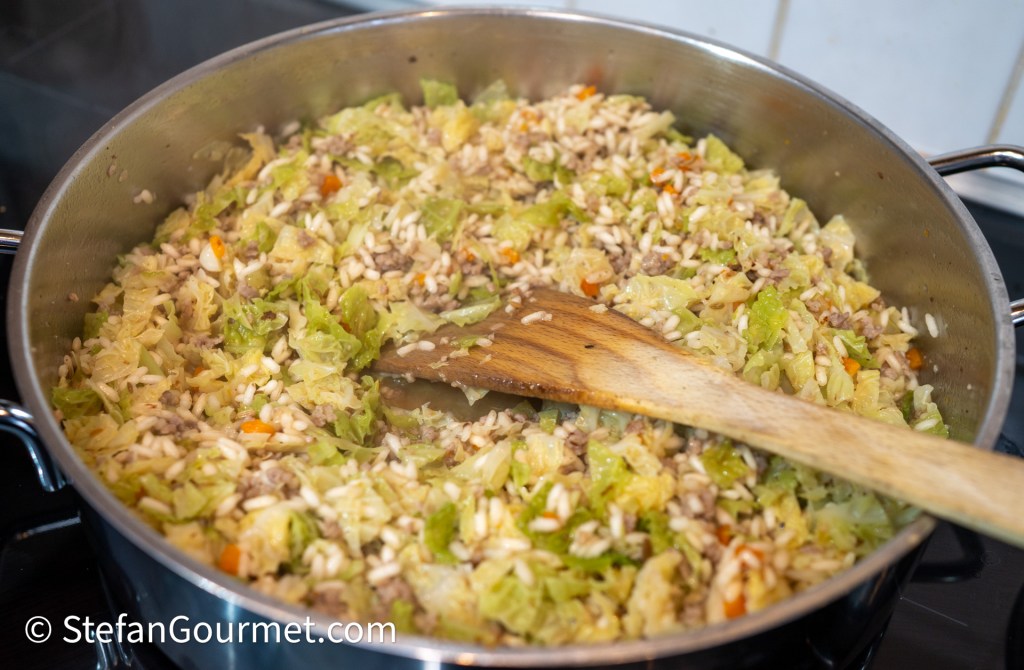
Continue adding stock one ladle at a time, stirring well before each addition. This is when the rice releases starch, which gives risotto its creamy texture, and when sticking is most likely. If you prefer not to stir constantly, focus on stirring thoroughly at these key moments.
Start tasting after 15–16 minutes. The rice should be tender yet firm to the bite, with no hard centers.
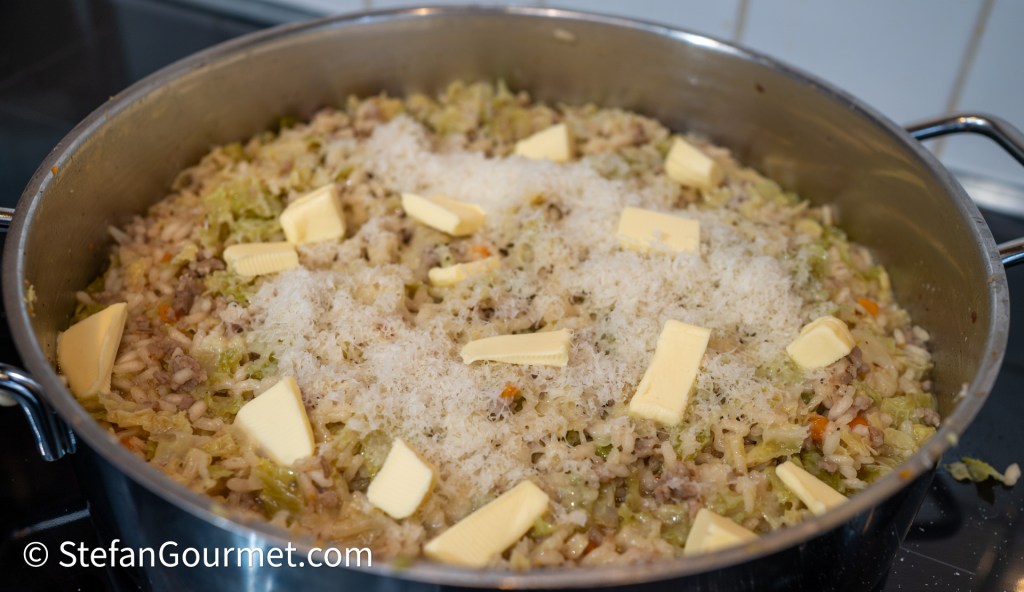
When done, add one final ladle of stock, stir, and turn off the heat. Incorporate 50 g of freshly grated Parmigiano Reggiano and the remaining 40 g of butter, cut into small pieces. Stir until melted—this step, called mantecare, creates the rich, creamy texture by combining butter, cheese, and starch.
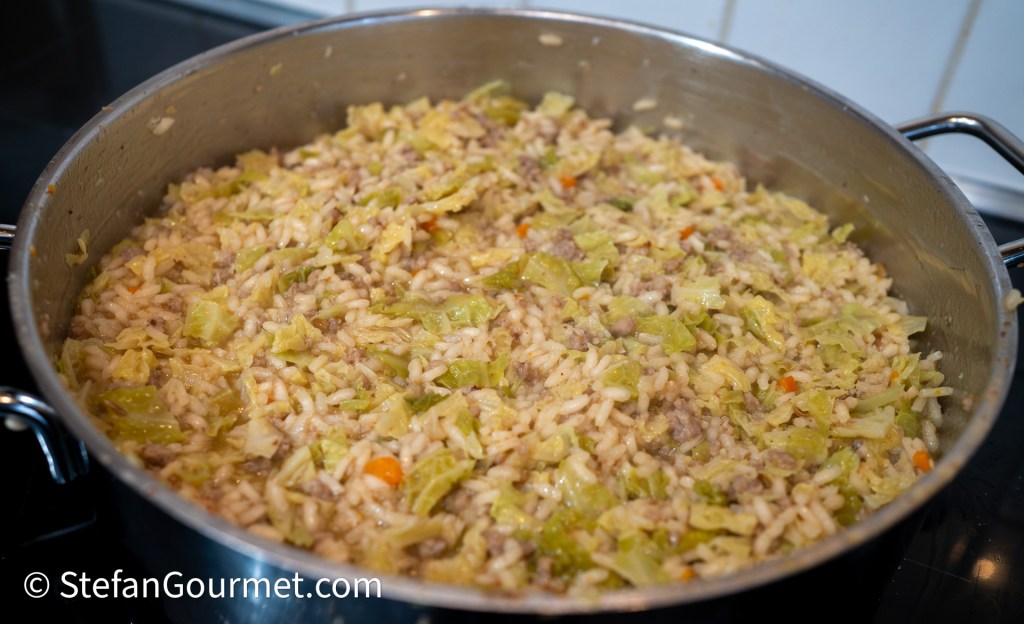
Taste and adjust seasoning with salt and freshly ground black pepper, remembering that Parmigiano adds saltiness. Let the risotto rest for a few minutes before serving.
Plate on preheated dishes and finish with a sprinkle of freshly grated Parmigiano.
Risotto should have a flowing, slightly creamy texture—known in Italian as all’onda—not dry or soupy. If yours turns out too dry, make a note to add a little more stock next time before the mantecatura (the final step of stirring in butter and cheese).
Wine pairing
This dish pairs beautifully with either a rich, creamy full-bodied white wine or a smooth, medium-bodied red. Examples are Verdicchio Riserva, Fiano di Avellino, Chardonnay from Alto Adige or Friuli, Barbera, or Delcetto.


We very much agree on the relaxing aspect of stirring the dish, staring out of the window, sipping the ‘other glass’ of wine and almost daydreaming 🙂 ! Love the making and the eating tho’ don’t remember using cabbage – so something learnt again. Like it fairly creamy also . .. have made so many methinks they know how they are meant to turn out . . . love Verdicchio, well it does come from Down Under . . .
LikeLiked by 1 person
A very nice recipe!!!
LikeLiked by 1 person
I completely agree: stirring risotto while drinking a glass of wine (or vice versa) is one of the most enjoyable moments in the kitchen.
LikeLiked by 2 people
This sounds very hearty and delicious.
LikeLiked by 1 person
Super italiano! Grazie!
LikeLiked by 1 person