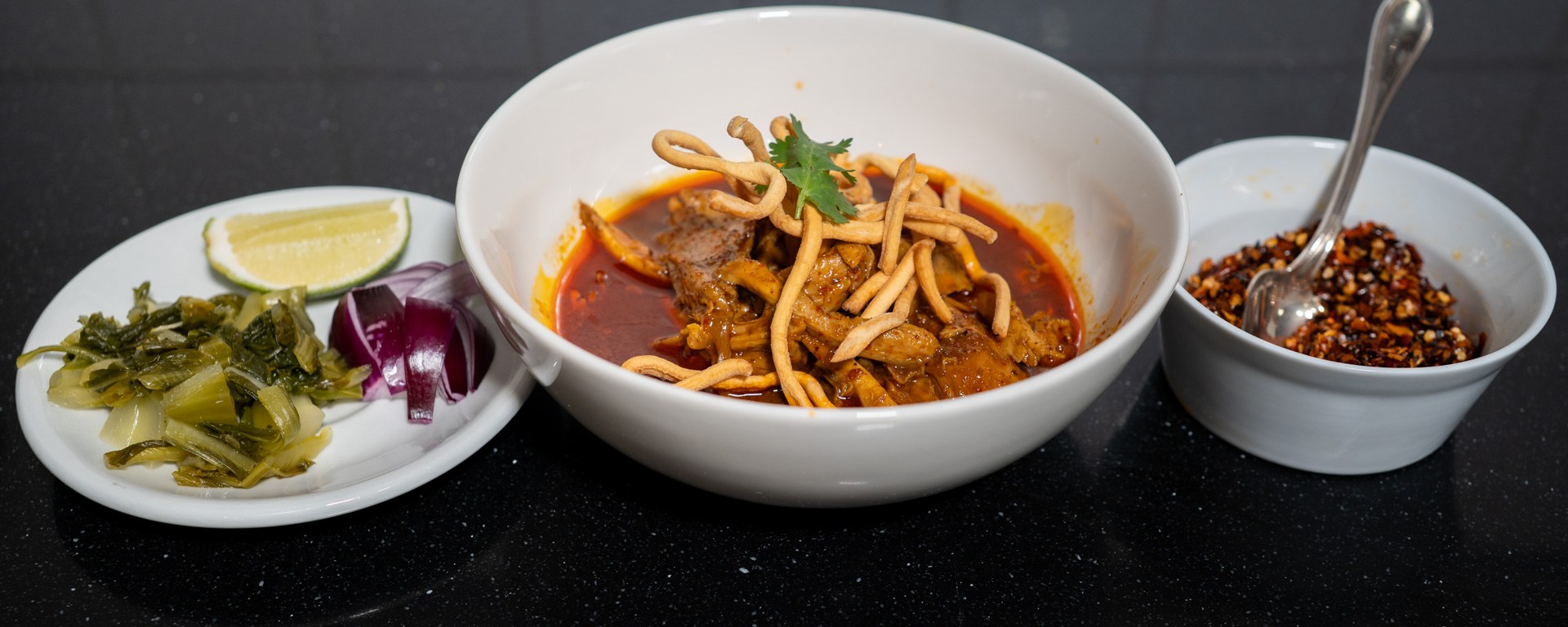
One of Northern Thailand’s most iconic dishes is Khao Soi, a rich curry noodle soup made with chicken, fresh egg noodles, coconut milk, and a mild curry paste. It’s topped with crispy deep-fried noodles for added crunch. To increase the heat, sprinkle on the fried chili flakes served on the side. Other traditional accompaniments include pickled mustard greens, raw red onion, and a wedge of lime, along with fish sauce, soy sauce, and sometimes sugar, so you can adjust the flavor to your taste. Please note that this recipe is for the Chiang Mai version of Khao Soi. I noticed that in Chiang Rai it is sweeter and has a strong aroma of cinnamon and star anise. I like the Chiang Mai version much better.
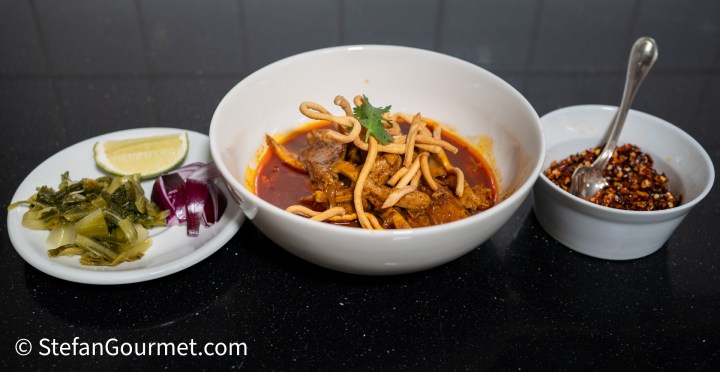
The first time I had Khao Soi was at my friend Melvin’s place, where we made it together using the recipe from Hot Thai Kitchen, before I had ever been to Thailand. Now that I’m here for the second time and have tried Khao Soi at several spots in Chiang Mai, I thought it was the perfect moment to share my version. It includes one key change to Pai Lin’s recipe, plus an optional step to boost the flavor.
Pai Lin uses 360 ml (1½ cups) coconut milk and 600 ml (2½ cups) water. I noticed that the best Khao Soi I tasted in Chiang Mai was creamier and more flavorful, thanks to a higher proportion of coconut milk. So I adjusted my recipe accordingly.
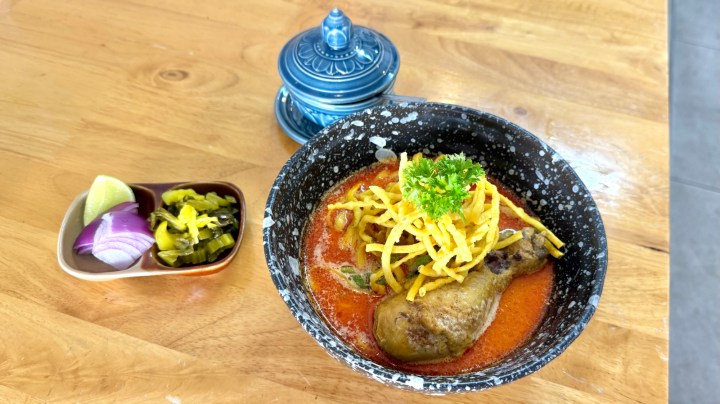
In Thailand, Khao Soi is most often served with a bone-in chicken drumstick. This can be tricky to eat, especially since you’re only given a spoon and fork (or sometimes chopsticks), never a knife. For easier eating and deeper flavor, my optional step is to remove the meat from the bones, then make a stock from the bones and skin. Reduce the stock as needed and add it to the curry broth. This enriches both the chicken flavor and the creaminess of the soup.
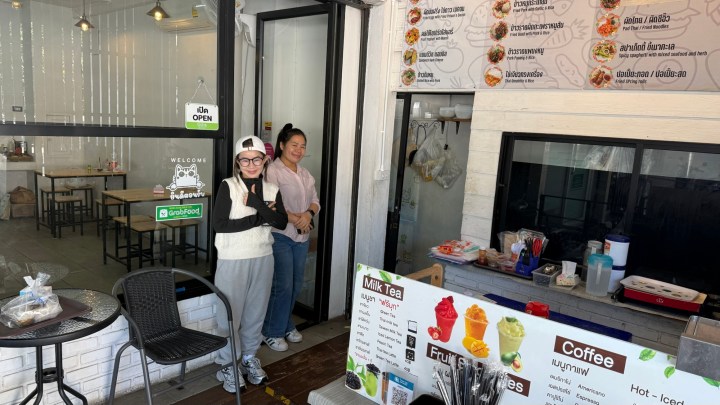
Before I go to the recipe, let me share a great place to have Khao Soi in Chiang Mai that I discovered: U Khao Soi Chang Phueak (Google Maps). It is quite typical for a restaurant to specialize in Khao Soi and include the dish in its name. Some good places are recommended in guidebooks like the Michelin Guide or Lonely Planet, and as a result you often have to wait in line to get a table. I didn’t feel like waiting and chose this spot because it was closest to the gym where I had just worked out, just north of Chiang Mai’s historical center. It had 4.9 stars on Google Maps, and the Khao Soi was at least as good as at the recommended places—without any waiting.
The two women who run the place are very friendly and speak enough English. The Khao Soi had a rich, creamy flavor with a perfect balance of spicy, sweet, and sour, tender fall-off-the-bone chicken, crispy fried noodles on top, and noodles with just the right texture (not too soft). The price is the same as elsewhere: THB 60 (less than 2 euros). I strongly recommend going here instead of waiting in line.
Ingredients
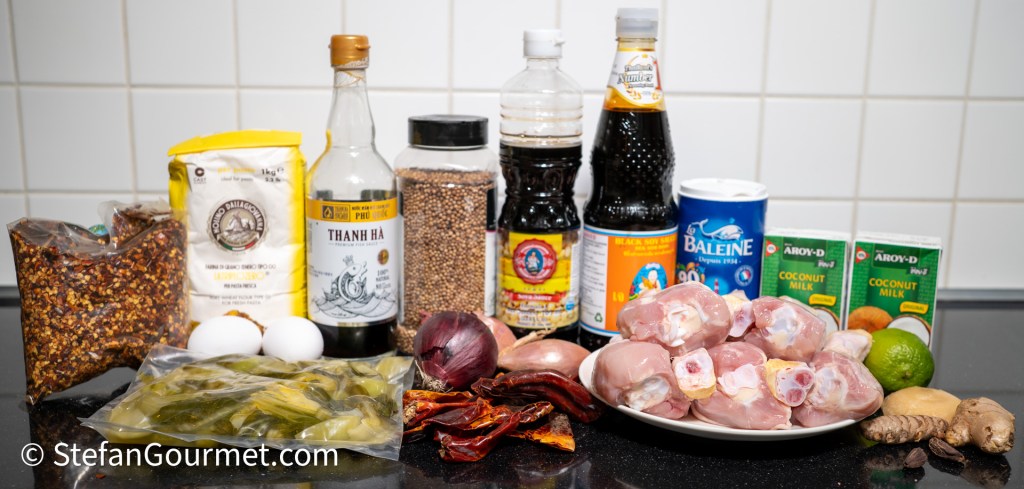
For 4-8 servings
For the curry paste
- 2 black cardamom
- 1 1/2 Tbsp coriander seeds
- 20 g ginger, thinly sliced
- 5 g fresh turmeric, thinly sliced
- 60 g sliced shallots
- 20 g mild dried chilies
- 1 tsp coarse salt
For the curry noodle soup
- 500 ml (2 cups) coconut milk
- 8 chicken drumsticks
- water as needed
- 3 Tbsp Thai soy sauce
- 1 Tbsp Thai black soy sauce
- 2-3 tsp fish sauce
- 1 Tbsp minced palm sugar
- fresh pasta dough from 3 eggs and 300 grams flour
For the condiments
- lime wedges
- sliced red onion
- pickled mustard greens
- chilli flakes and neutral oil to fry them in
- cilantro or green onion for garnish
Instructions
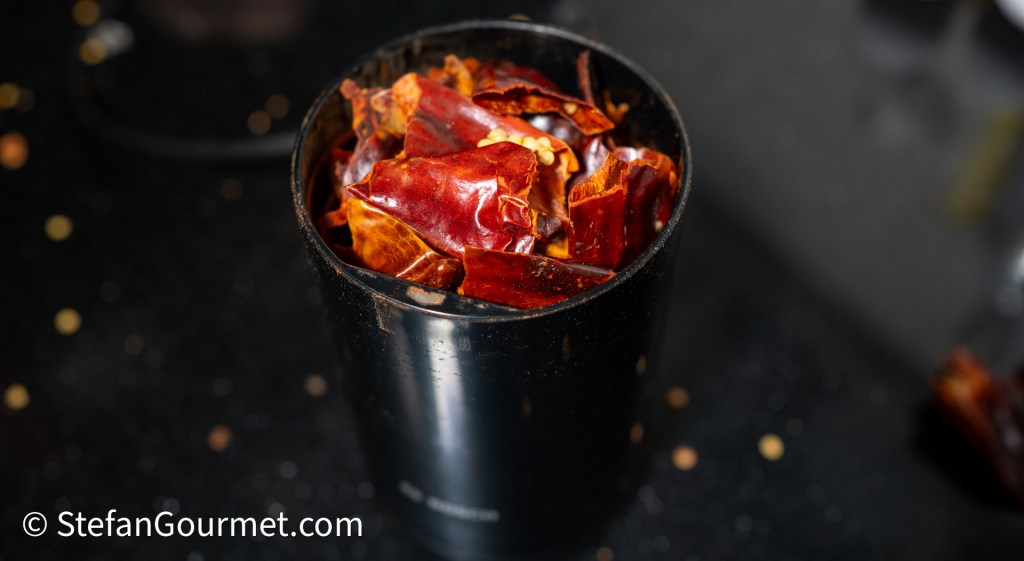
Remove the stems and (most of the) seeds from 20 grams of mild dried chillies, and cut them into pieces. Place them in a spice grinder…
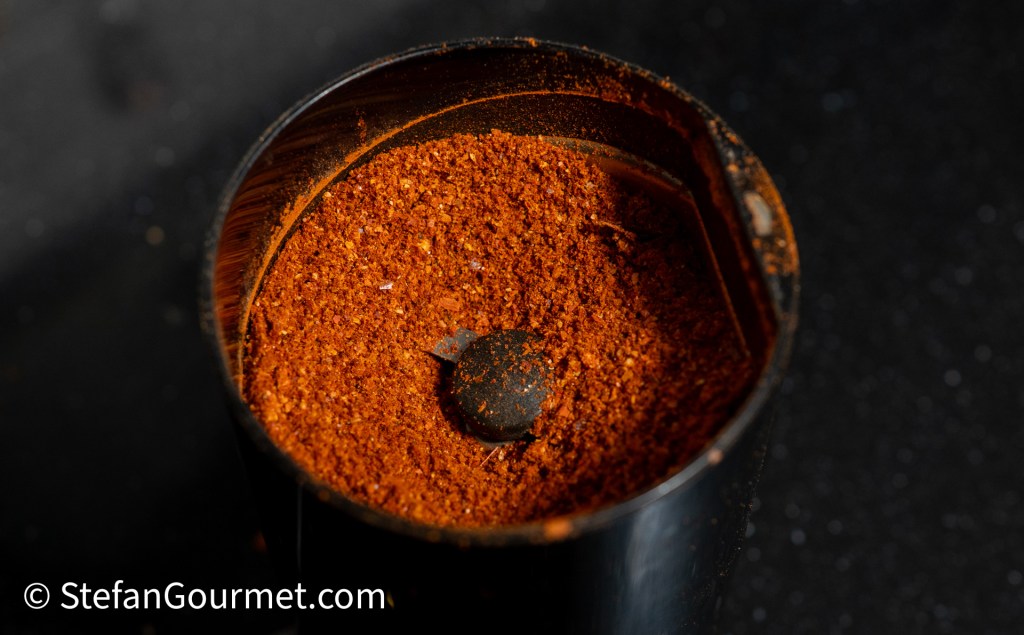
…and grind into a fine powder.
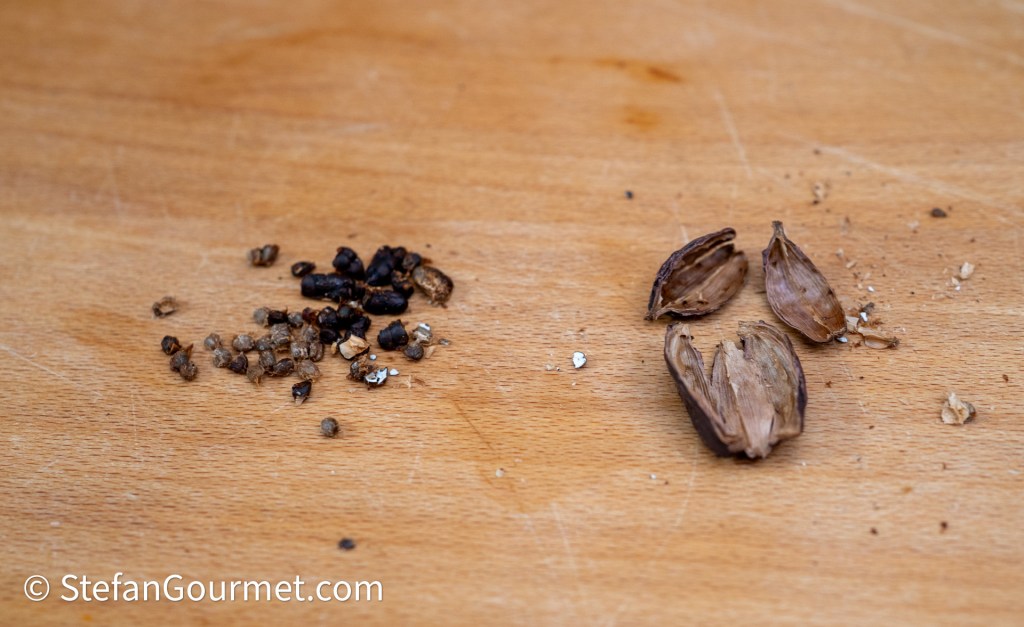
Take the seeds out of 2 pods of black cardamom.
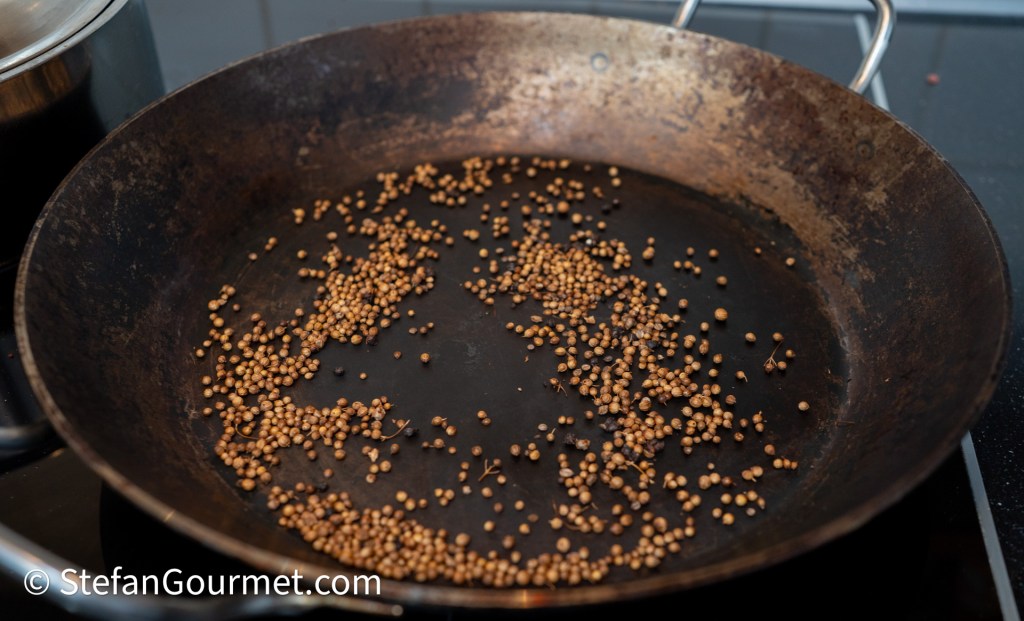
Toast the cardamom seeds and 1 1/2 Tbsp of coriander seeds in a dry frying pan until fragrant.
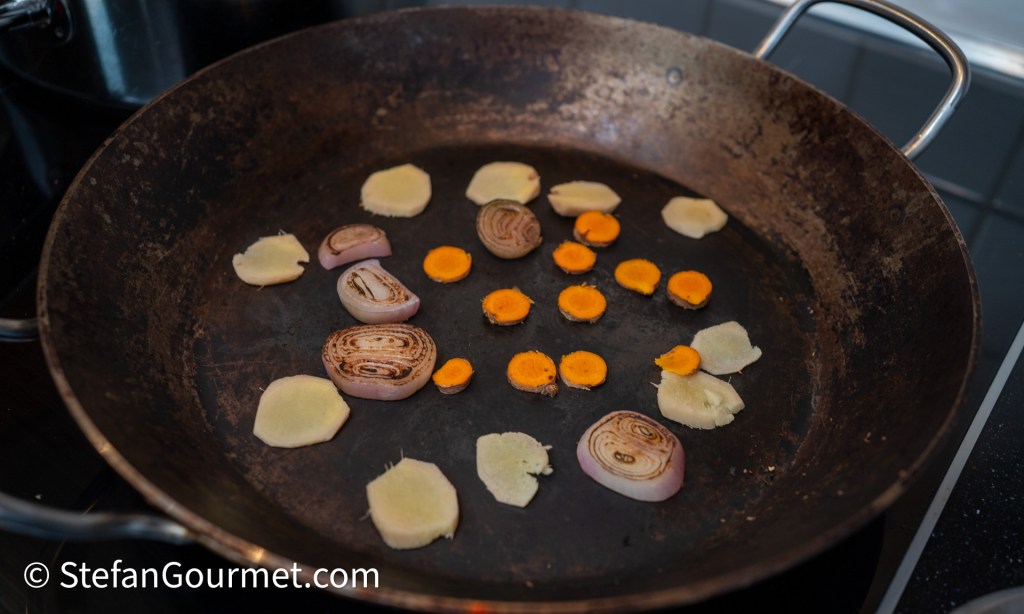
Toast 20 grams of sliced fresh ginger, 5 grams of sliced fresh turmeric, and 60 grams of sliced shallots in a dry frying pan until charred but not burnt on both sides.
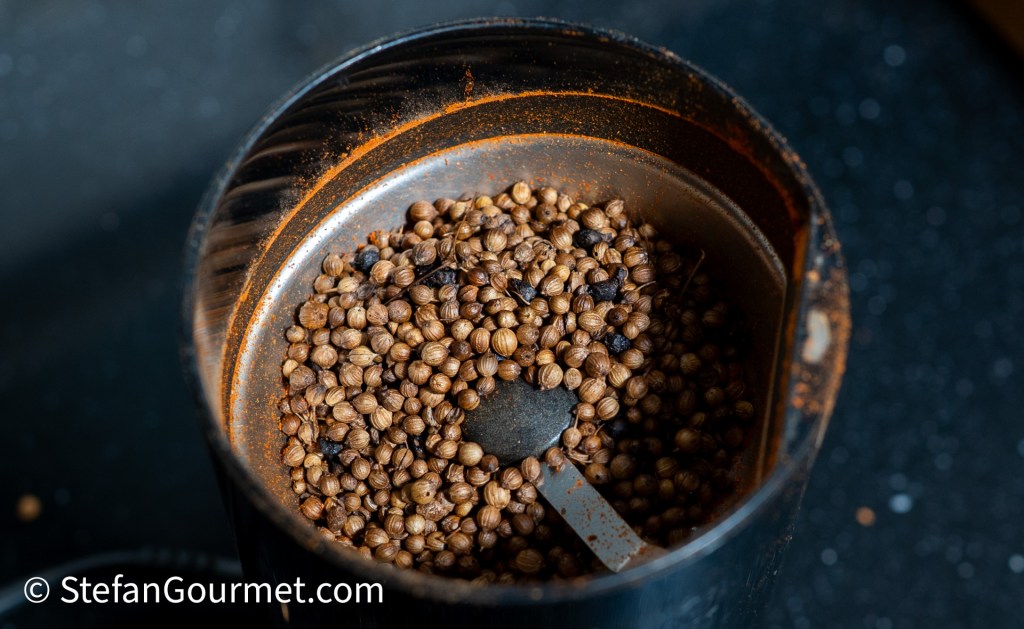
Place the coriander and cardamom seeds in a spice grinder…
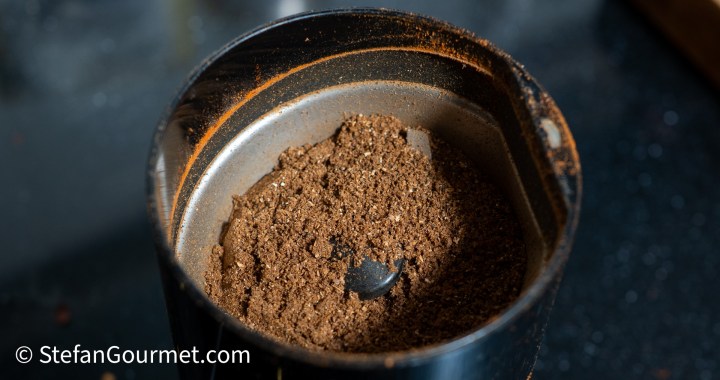
…and grind into a fine powder.
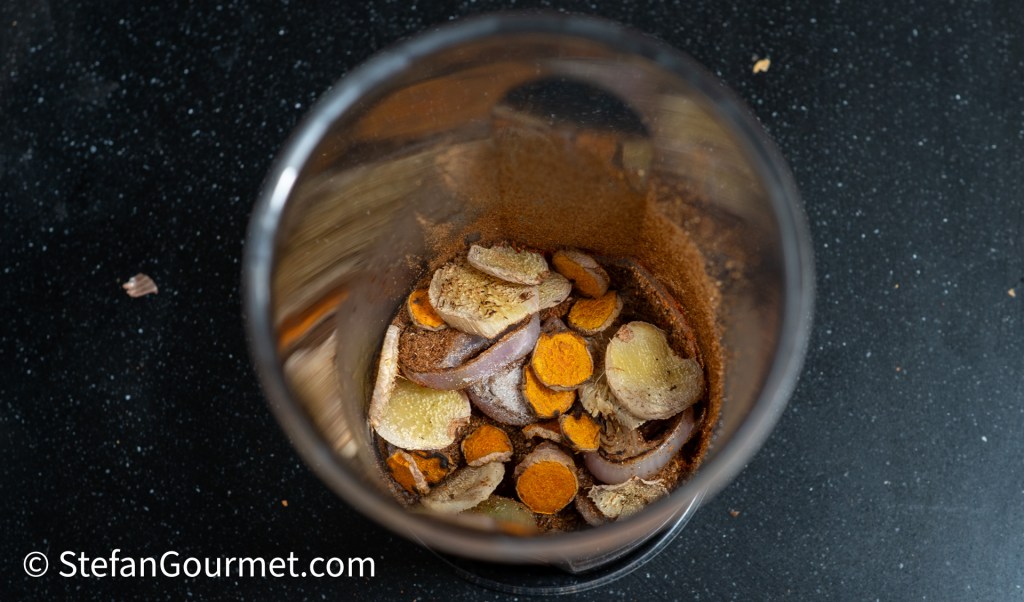
You can use either a small blender or a mortar and pestle to make the chili paste. Combine the ground chilies, ground cardamom, ground coriander seeds, toasted shallots, turmeric, ginger, and 1 teaspoon of coarse salt in the blender or mortar.
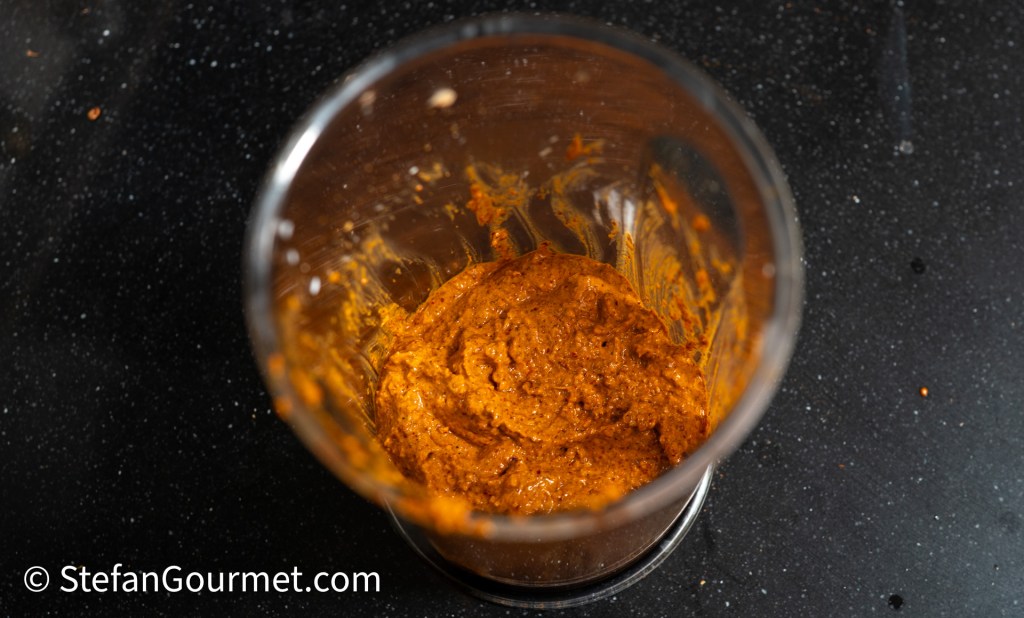
Blend or pound until smooth. Because of the small quantity, a mortar and pestle might be easier if your blender isn’t very small.
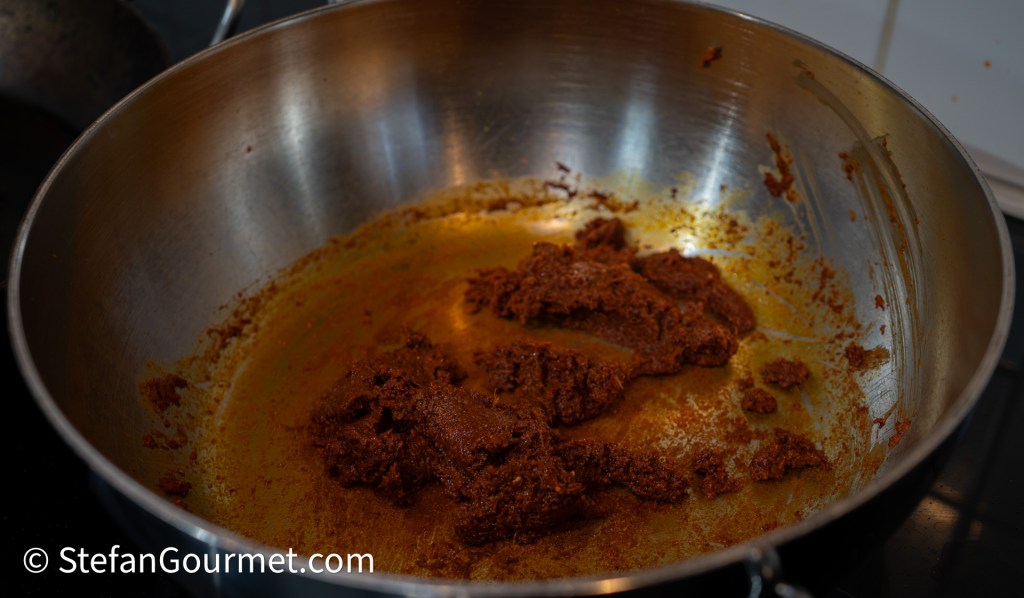
Scoop the thick cream from the top of the coconut milk (don’t shake the can before doing this) and heat it in a casserole with the curry paste. Stir over medium heat until it sizzles and the paste becomes fragrant. Select a casserole in which the drumsticks fit snugly in a single layer.
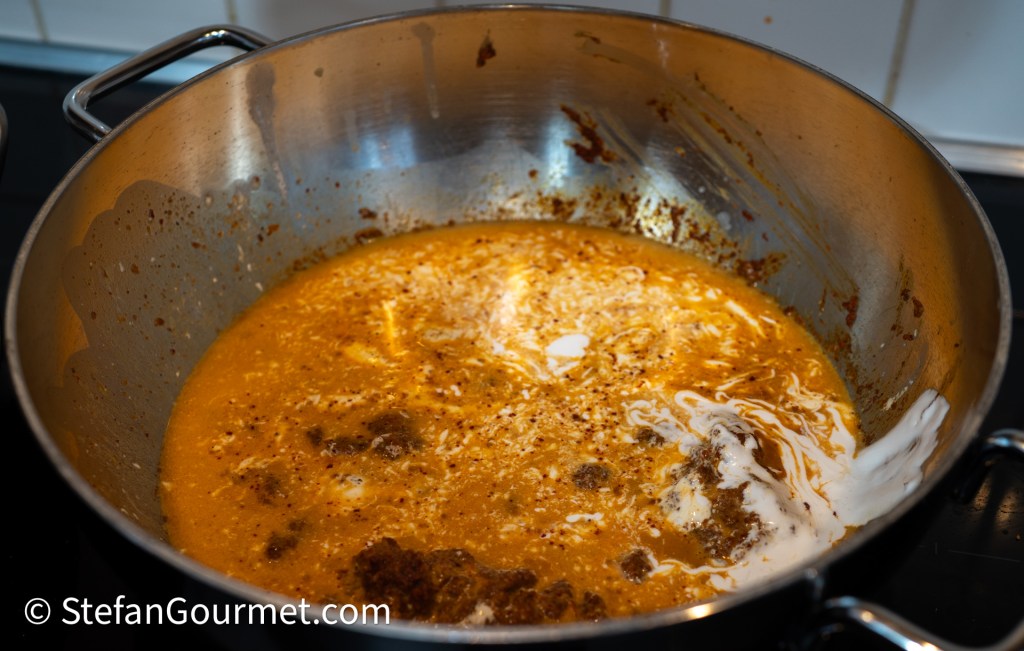
Add the remaining coconut milk and stir until the curry paste has dissolved.
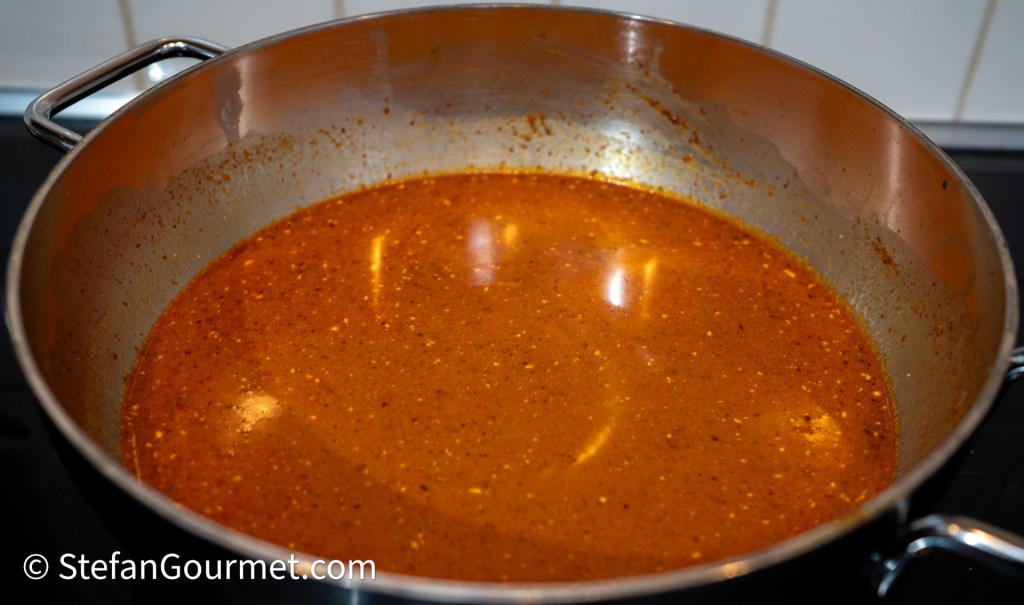
Add the drumsticks along with 3 tablespoons soy sauce, 1 tablespoon black soy sauce, 1 tablespoon minced palm sugar, and 2 teaspoons fish sauce. Pour in just enough water to cover the drumsticks.
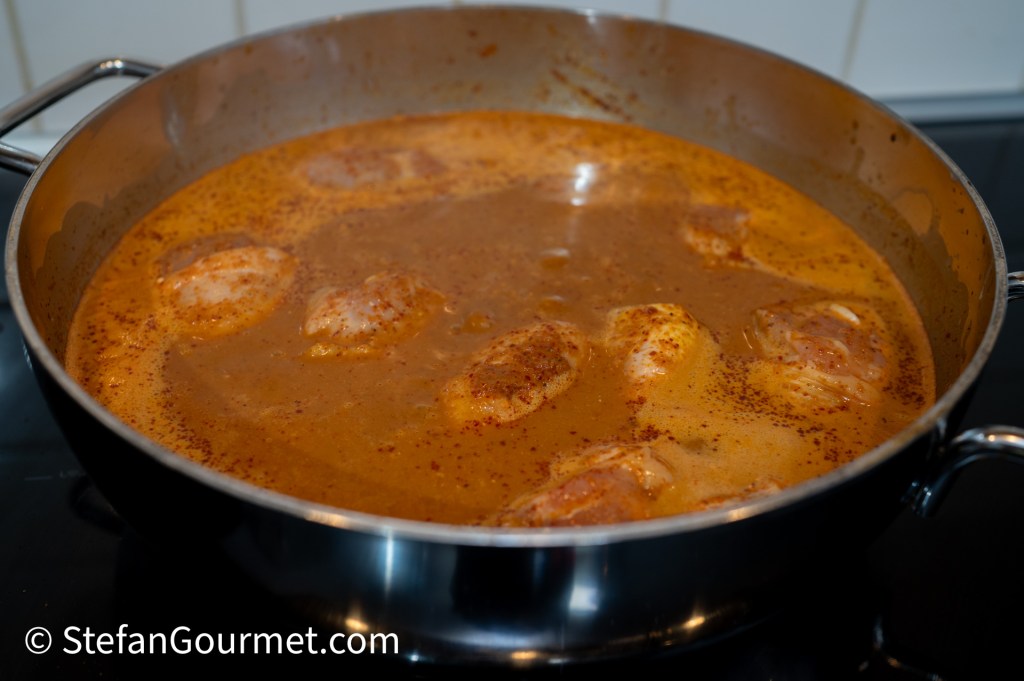
Cover and bring to a boil, then simmer until the chicken is tender and almost falling off the bone, about 1 hour.
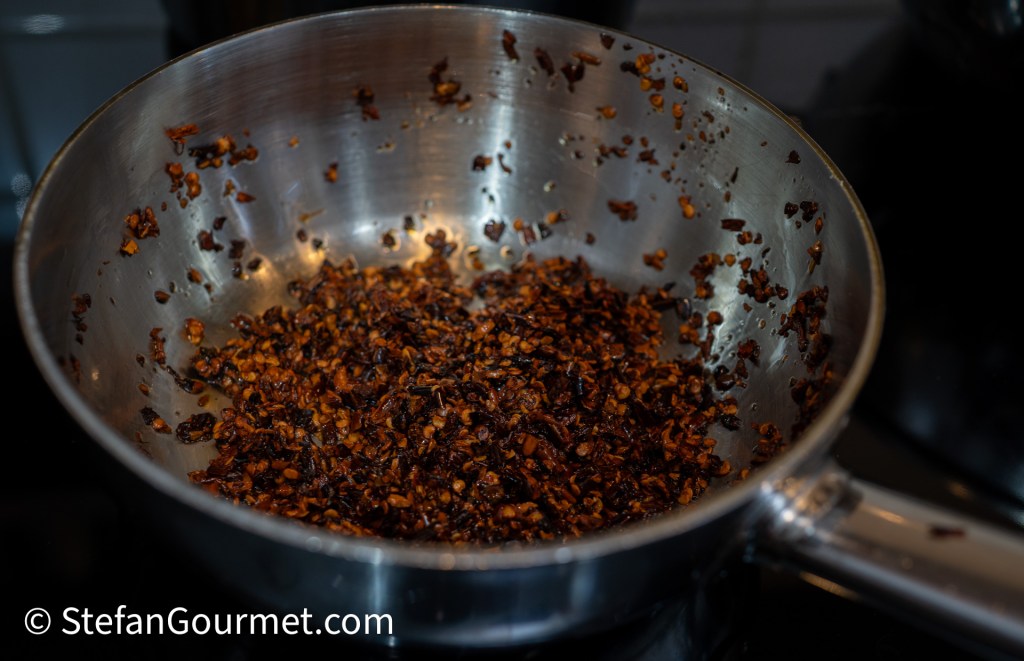
In the meantime, place chili flakes in a small pan and add just enough neutral oil to moisten them. Stir over medium heat until the chili flakes darken and release a smoky aroma, taking care not to burn them.
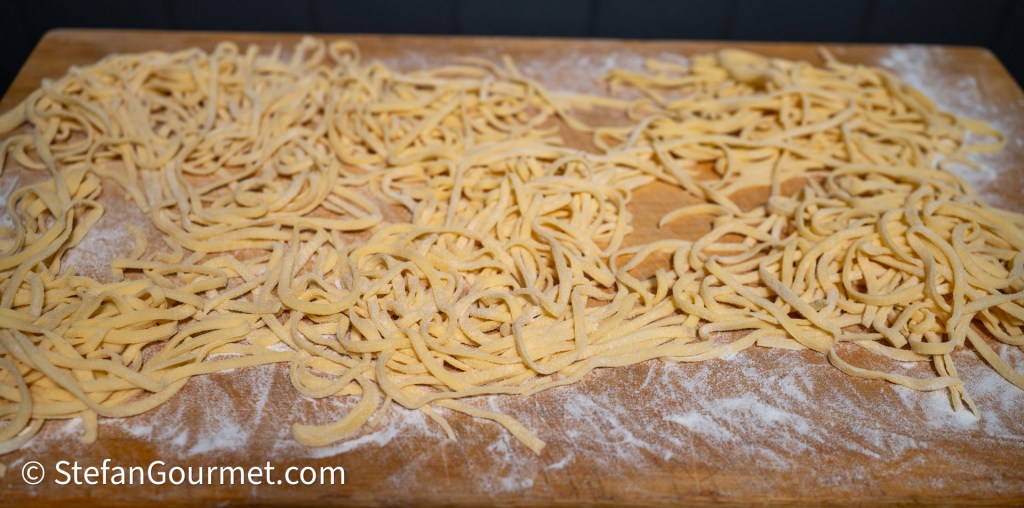
While the chicken is cooking, make the fresh egg noodles. They are exactly the same as Italian tagliolini and so you can use my instructions for fresh pasta dough, allow the dough to rest for half an hour in the refrigerator, and then roll out the dough thinly and slice it into quite narrow noodles.
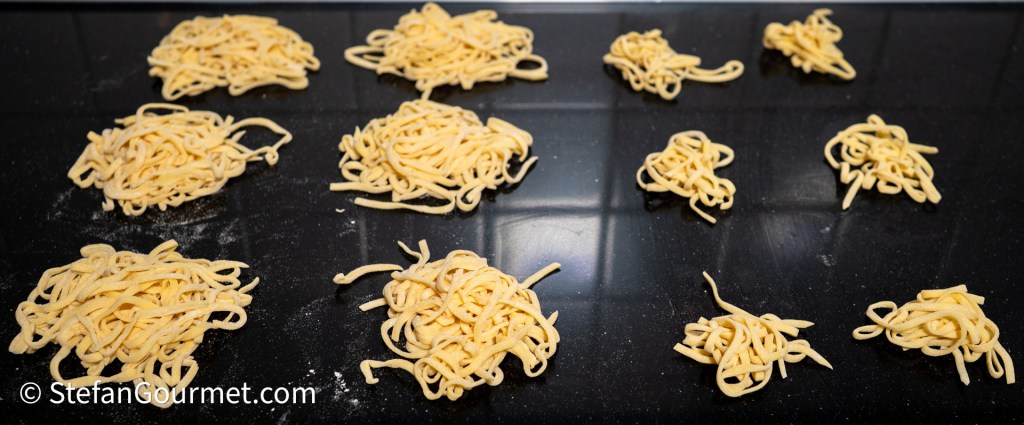
Separate the noodles into individual portions; using a scale is the easiest way. Make two portions per serving: three-quarters for the soup and one-quarter for the crispy fried noodles.
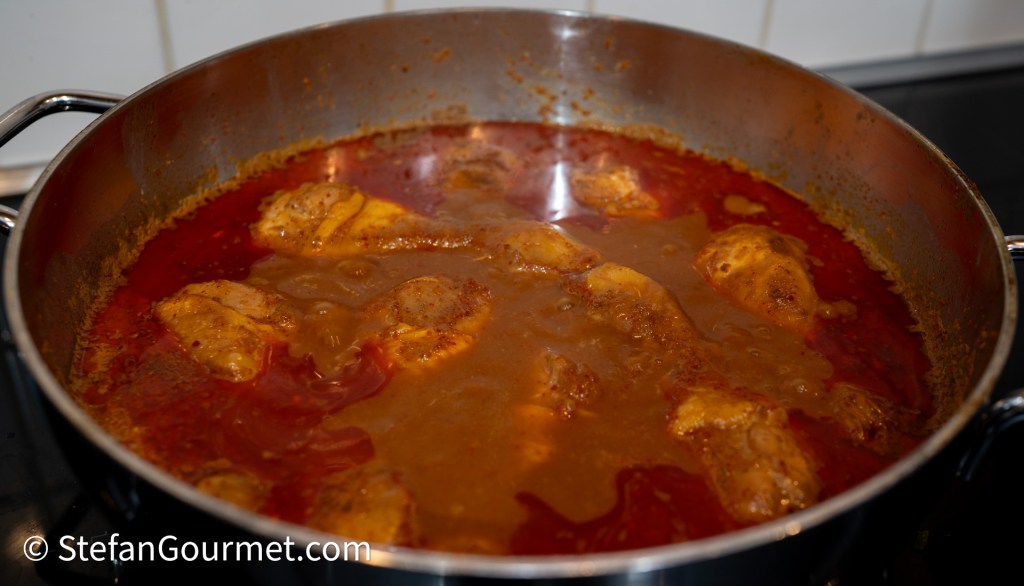
When the chicken is done, remove it from the broth.
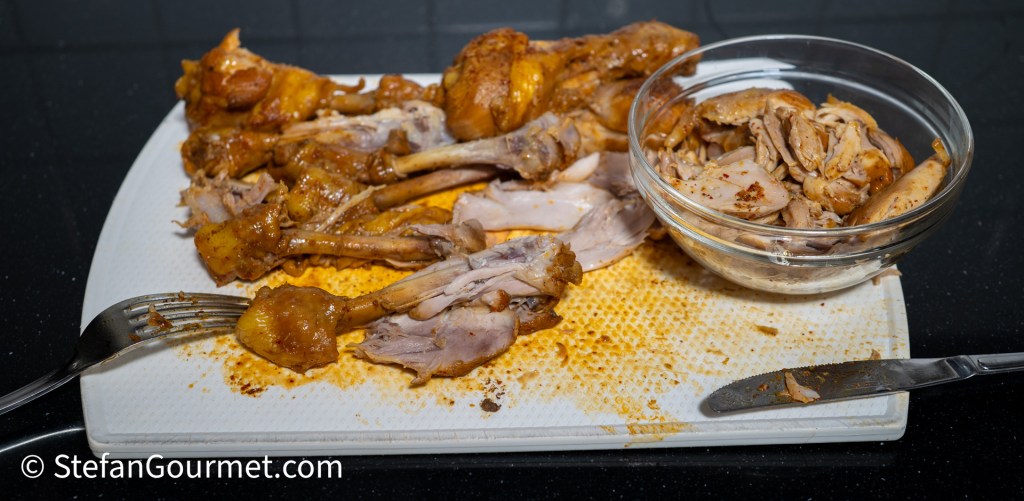
Take the meat off the bones and chop it into bite-sized pieces; set aside. Break the bones in half to release the marrow (use a cleaver if needed, though most chicken bones can be broken by hand).
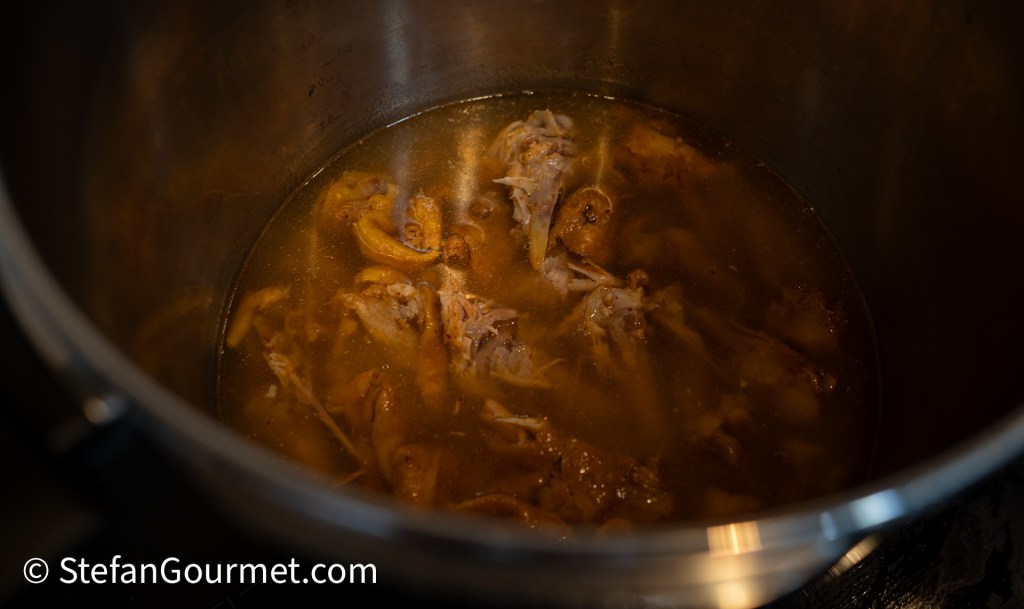
Here comes my optional step to enhance the flavor by using all of the flavor from the chicken. Place the bones, skin, and cartilage in a stockpot or pressure cooker and barely cover with water. Cover the stockpot and bring to a boil, then lower the heat and simmer for 1–2 hours. Or close the pressure cooker, bring to pressure, and cook for an hour.
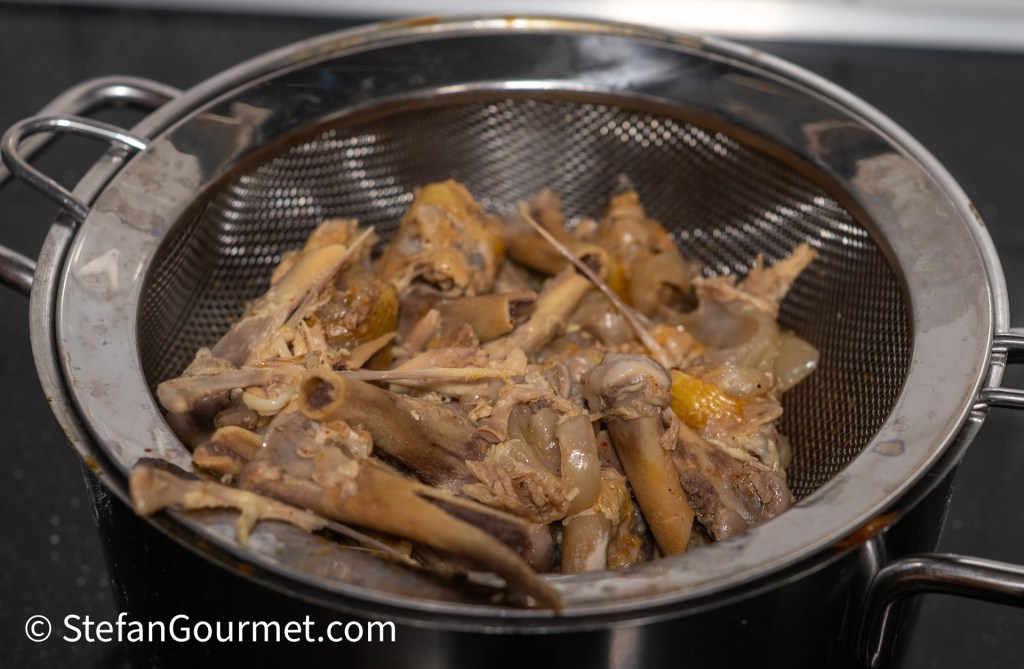
Afterwards, strain the chicken stock through a sieve.
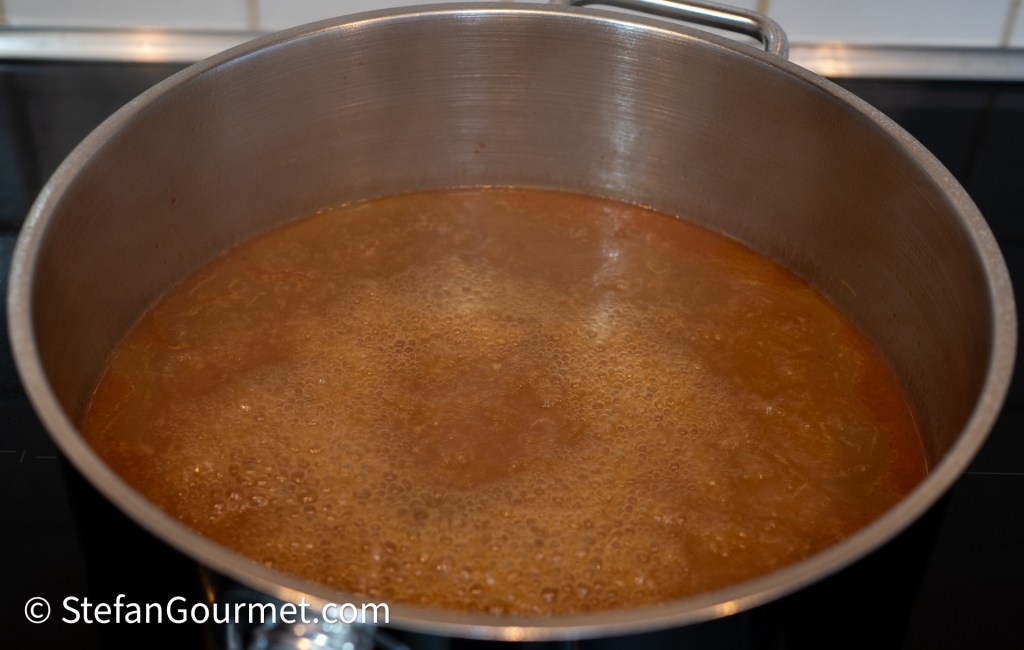
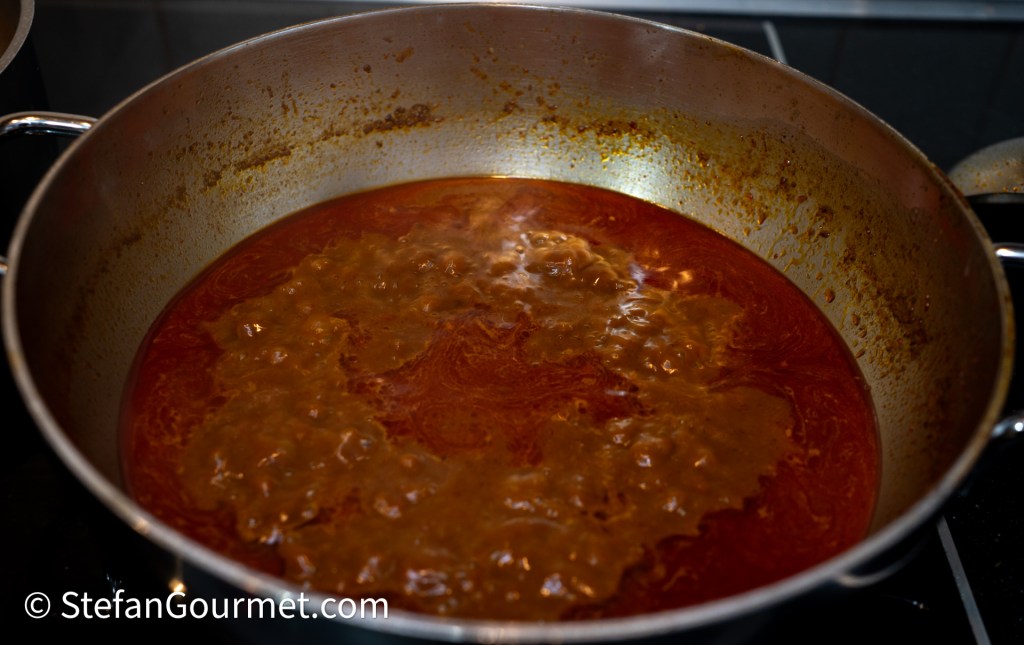
You may wish to reduce this stock before adding it to the broth, depending on how much water evaporated during cooking. Taste the curry broth: if the flavor is very strong, you can add the stock without reducing it first; otherwise, reduce it as needed by simmering in a wide, shallow pan before adding it to the curry broth.
Bring a pot with at least 1 litre (1 quart) of water to a boil for the noodles.
Bring the broth to a boil after adding the chicken stock (if using) and keep the broth warm over very low heat. Adjust the seasoning by adding fish sauce and/or palm sugar. Taste for salt first and add fish sauce as needed, then taste for sweetness and add palm sugar as needed, because fish sauce also contains some sugar.
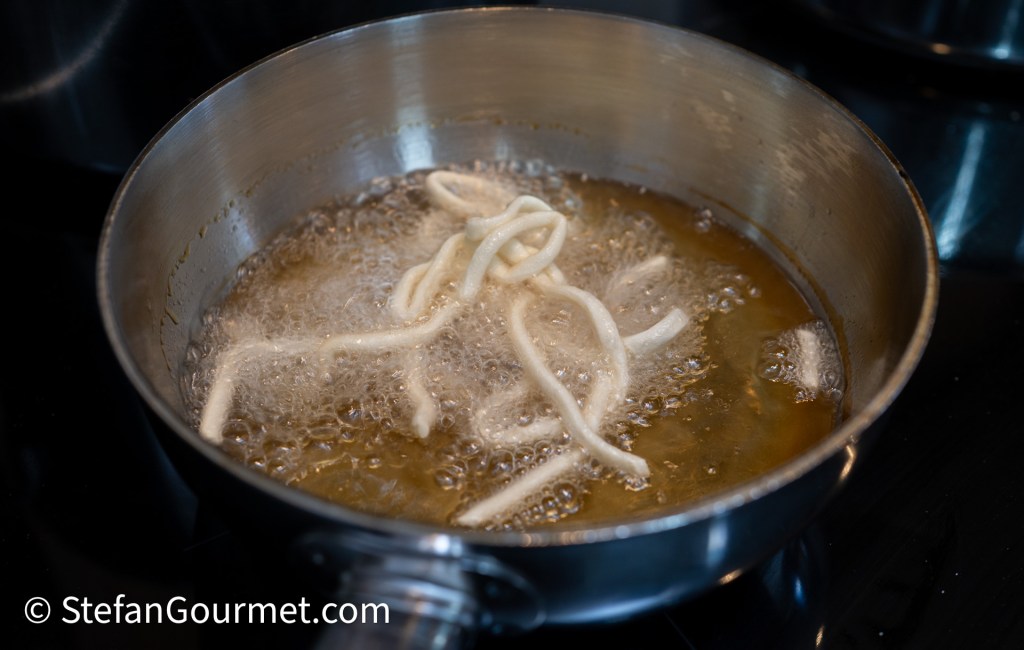
Deep fry the noodles in individual portions just before serving, as they lose their crispiness quickly. You’ll need about 250 ml (1 cup) of neutral oil for frying. Heat the oil to 180 °C (350 °F) and fry the noodles until golden, which will only take about a minute.
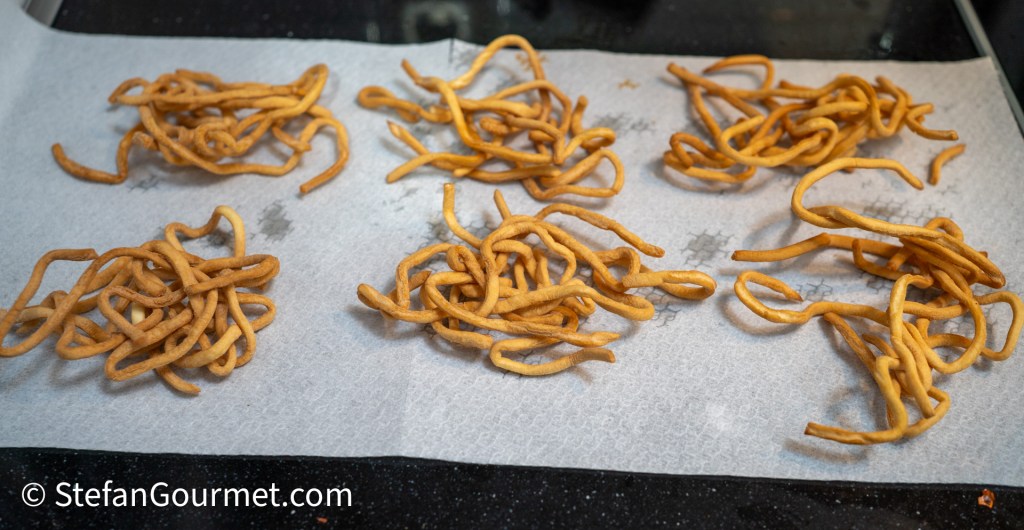
Drain the fried noodles on kitchen paper.
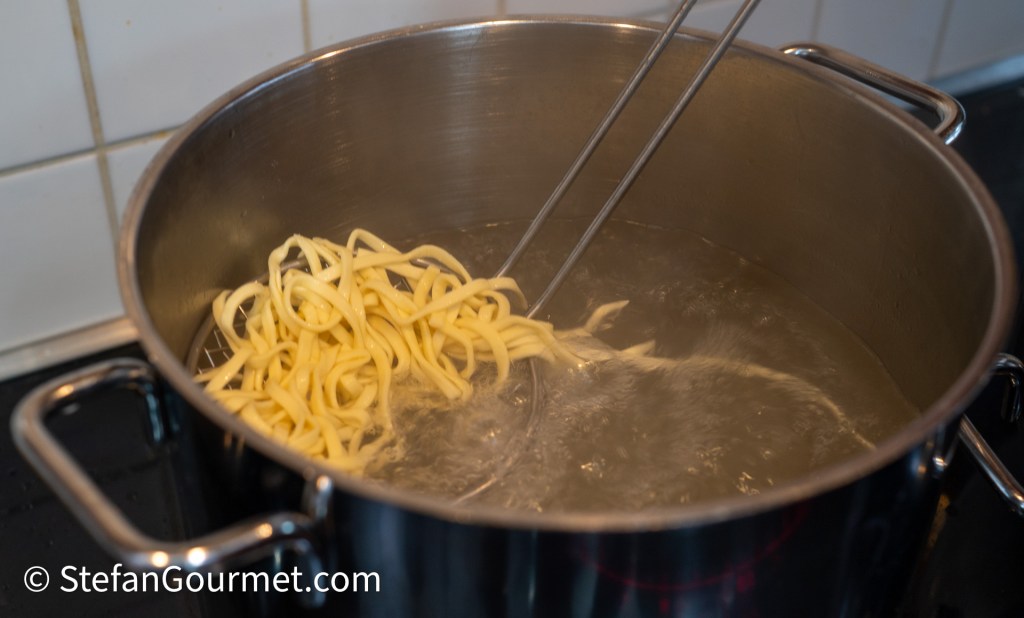
Boil the individual portions of noodles in rapidly boiling water for about 30 seconds to avoid overcooking.
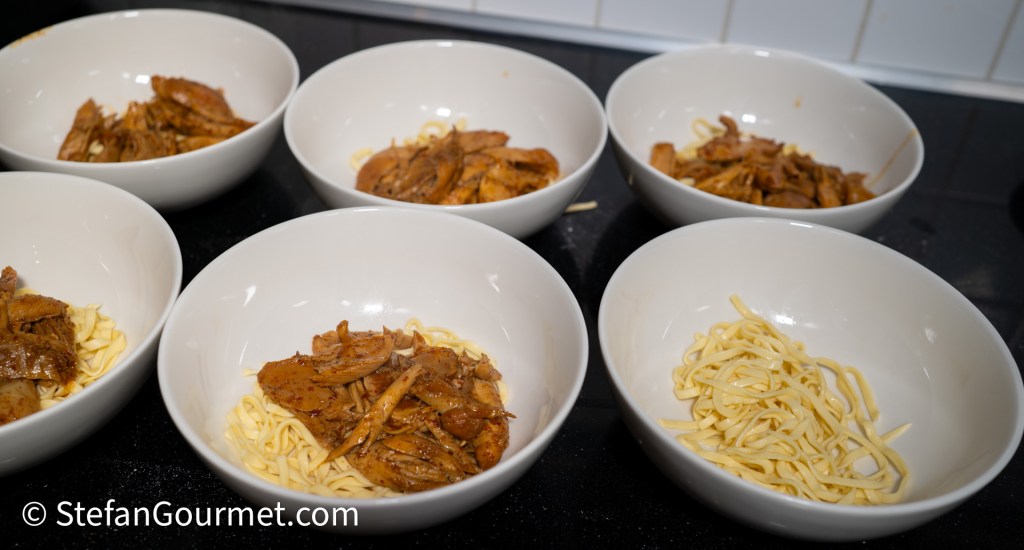
Take the noodles out of the boiling water with a strainer and place them in a bowl. Add the reserved chicken on top. Repeat with the remaining bowls.
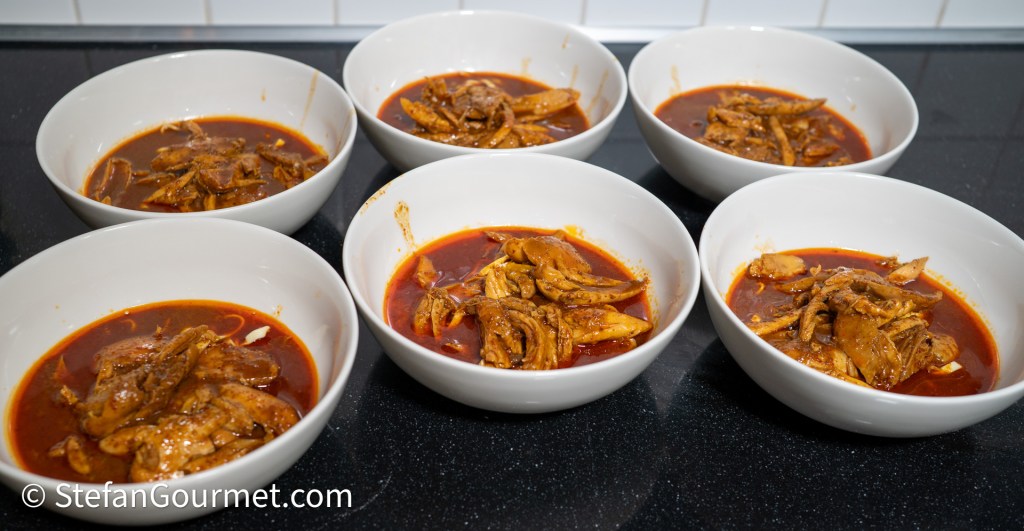
Cover the noodles and chicken with the curry broth, dividing it evenly among the bowls.
Top with crispy fried noodles and serve with the condiments: pickled mustard greens, sliced red onions, a lime wedge, and fried chili flakes.
Wine pairing
Although Khao Soi restaurants in Thailand do not serve wine, we enjoyed a Viognier-dominated white Côtes-du-Rhône with Khao Soi in the Netherlands. A Condrieu (100% Viognier from the steep granite banks of the Rhône) would be even better. This full-bodied wine can handle the rich, creamy flavor of the curry noodle soup. If you pick a Viognier with higher acidity, adding a bit more lime juice to your Khao Soi will help balance the pairing.


You should see my smile – altho’ I have just finished dinner I would love nothing more than to be able to reach into the screen, taste, finish the bowl in record time and no doubt clap! Altho’ I have not prepared the soup for quite e few years, it well and truly always has been one of my favourite Thai offerings. Your recipe will be kept and passed on . . . I don’t remember having whole chicken legs in the broth – perchance mine was not as accurate a recipe than the one with which you began 🙂 ! Oh, you must have made the day and the month and the year for the ladies whose offering pleased . . . trust you two are really enjoying being back in Northern Thailand . . . best . . .
LikeLiked by 1 person
Dag Stefan
Nog bedankt voor je het delen van je culinaire creaties ervaringen en natuurlijk je sous vide “liefde” die ik met je deel In veel contexten een mooie oplossing. Mijn ervarting met “klappermelk” uit blik en pak is meestal een miss . IK zie dat jij Aroy-D cocnut milk gebruikt. Ik neem aan dat het aan jouw hoge kwaliteit s eisen voldoet?
Ben echt blij dat het lijkt dat jullie beiden van het leven genieten 🙂 Daar is uiteindelijk het leven voor.
Vriendlijke groeten Kyrill A Goossef
LikeLiked by 1 person
Hoi Kyrill,
Dank voor je leuke reactie. Aroy-D is volgens mij het beste wat je in NL kunt krijgen. Het is natuurlijk beter om zelf je eigen kokosmelk te maken, maar dat is een ontzettend gepruts.
We zitten inderdaad deze tijd van het jaar ergens waar het (qua weer en aantal uren daglicht) een stuk makkelijker is om te genieten dan in NL…
Hartelijke groet,
Stefan
LikeLike
PS vergat dit te vermelden maar ik weet niet hoe ernstig het is. Verborgen additief E435 (polysorbaat 60)
De meest vernietigende kritiek op Aroy-D heeft betrekking op de transparantie van de ingrediënten. Een Franse foodblogger ontdekte dat op de Amerikaanse verpakking weliswaar ‘100% kokosmelk’ staat vermeld, maar dat op de Europese etikettering de werkelijke ingrediënten worden vermeld: kokosnootextract (70%), water en emulgator E435 (polysorbaat 60). De blogger verwijderde fysiek een Franse etikettensticker van een verpakking en vond daaronder het Amerikaanse etiket “100% kokosmelk”, waarmee hij aantoonde dat hetzelfde product afhankelijk van de regio op verschillende manieren op de markt wordt gebracht. Op de verpakking van de standaard Aroy-D kokosmelk die in Nederland en andere EU-landen wordt verkocht, staat duidelijk vermeld: “Kokos-extract 70%, water, emulgator E435“. + reviews from Tjinstoko.eu:
“Heel lekkere kokosmelk. Voor mij heel belangrijk dat er ook geen chemische toevoegingen in zitten. Deze kan ik aanbevelen.” (March 2023)
“Biologische kokosmelk met een perfecte smaak en structuur. Was al dol op de normale versie, maar nu dus ook de biologische variant! Perfect.” (March 2020)
Deze positieve beoordelingen hebben echter specifiek betrekking op de biologische variant, die andere ingrediënten bevat: alleen water en kokosnootextract (35%) – geen emulgatoren. De niet-biologische versie bevat E435.
Een Nederlandse foodblogger van Eatpurelove.nl beoordeelde Aroy-D aanvankelijk als favoriet vanwege het “pure product zonder toevoegingen”, maar voegde later een belangrijke update toe over dierenwelzijnskwesties, waarbij hij opmerkte dat Albert Heijn Aroy-D-producten uit de schappen had gehaald.
Controverse over apenarbeid Er ontstond grote bezorgdheid over ethische kwesties toen uit onderzoek van PETA Asia bleek dat Aroy-D betrokken is bij gedwongen apenarbeid in de kokosindustrie in Thailand: Bedreigde pigtailmakaken worden geketend, getraind door middel van mishandeling en gedwongen om in bomen te klimmen om kokosnoten te plukken. Meerdere onderzoeken van PETA tussen 2019 en 2024 bevestigden dat deze praktijk nog steeds plaatsvindt.
Grote retailers, waaronder Albert Heijn, Tesco, Sainsbury’s, Asda, Boots en Walgreens, hebben Aroy-D-producten uit hun assortiment gehaald.
Het Nederlandse consumentenprogramma AVRO TROS Radar bevestigde in 2021 dat Nederlandse supermarkten Thaise kokosmelkmerken, waaronder Aroy-D, hebben verboden. Ondanks de “aapvrije” certificeringsprogramma’s van de Thaise overheid, concludeerden PETA-onderzoekers dat deze certificaten onbetrouwbare marketingtrucs zijn.
Pfff, wat nu?
Hele vriendelijk groeten Kyrill A. Gooseff
LikeLike
A lovely bowl of comfort! Who doesn’t love a noodle dish!
LikeLiked by 1 person