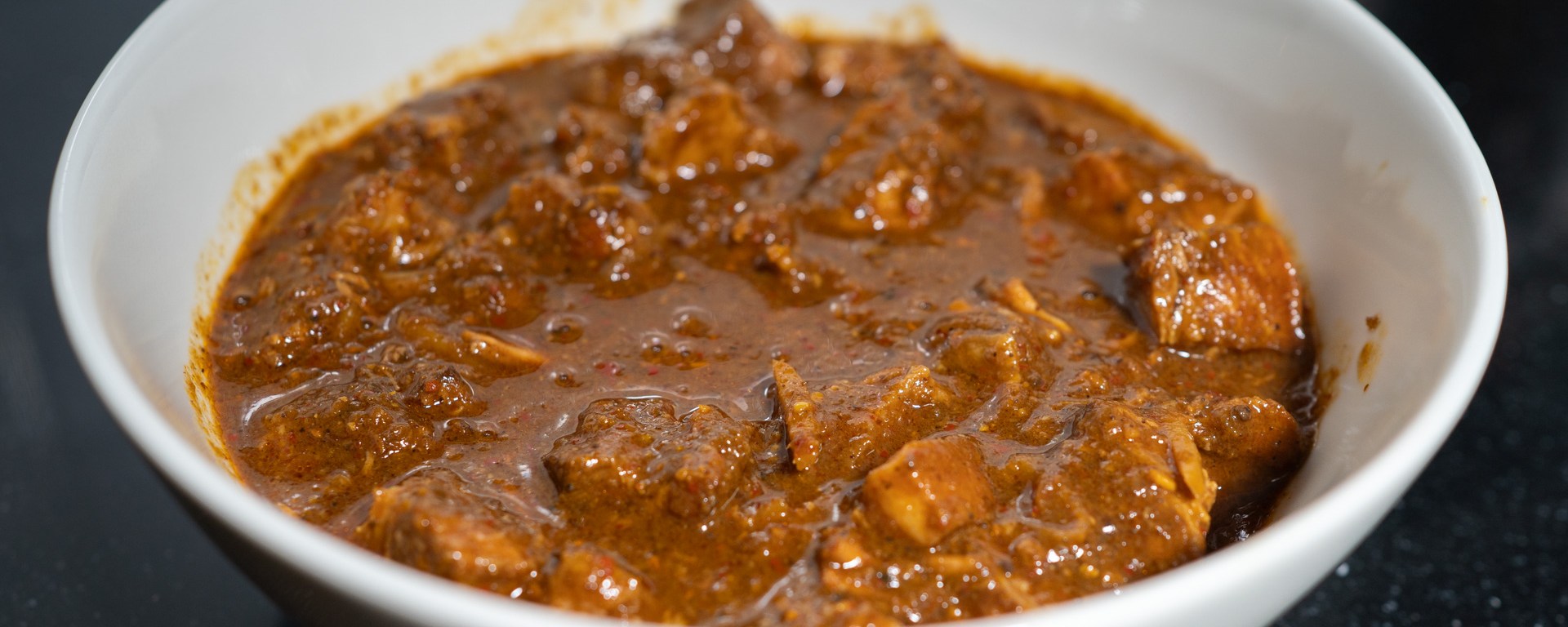
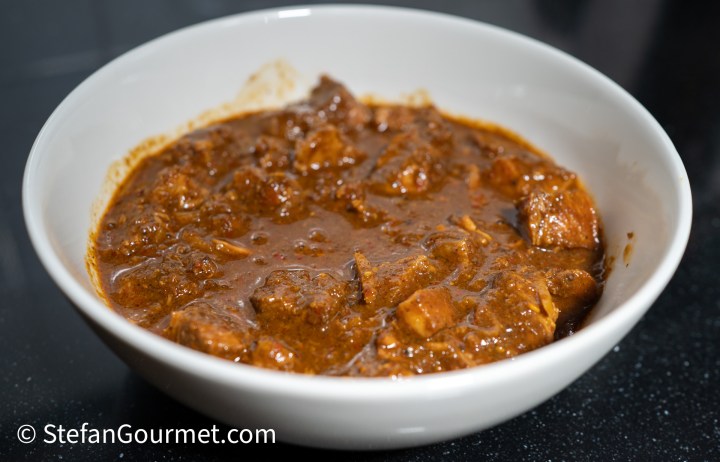
Gaeng Hung Lay (แกงฮังเล) is the best-known curry from Northern Thailand. It contains more spices than other Thai curries and is sweeter, yet much less spicy in terms of chili heat, and it has no coconut milk. Most of its mild spiciness comes from ginger rather than the mild red chilies used. This makes it a great choice for those who don’t enjoy intense chili heat.
Unlike Khao Soi, which varies depending on where you are in Northern Thailand, I’ve found Gaeng Hung Lay to be consistent in Chiang Rai and Chiang Mai. If you’ve been following me for a while, it won’t surprise you that I used sous vide to prepare this pork curry. As with all stews, the quality of the meat is crucial. It should be well-marbled for the best texture and flavor. In Thailand, I’ve seen Gaeng Hung Lay made with pork ribs and pork belly, but pork neck (confusingly called pork butt in the US) works well too.
An interesting detail is that this curry originates from Burma (Myanmar), where it traditionally doesn’t include peanuts. However, every Gaeng Hung Lay I’ve had in Northern Thailand did contain peanuts, which seems to be a typical Thai addition. I based my version on Hot Thai Kitchen’s recipe, and Pai Lin doesn’t use peanuts. That’s why you don’t see any in the photos—I left them out when I made this after returning from my first trip to Northern Thailand earlier this year. Now that I’m back in Northern Thailand and have enjoyed Gaeng Hung Lay several more times, I’ve noticed peanuts are always present and remembered they were included during my previous visit as well.
I like using sous vide for stews because it requires no monitoring and guarantees tender, juicy results every time. You can certainly make this in the oven or on the stovetop, but that involves stirring and keeping an eye on it, and there’s a greater risk of the meat turning out tough or dry compared to sous vide.
I like to make a large batch—about 3 kilos (6.6 lbs) of meat, with the recipe quadrupled except for the curry powder, which is already scaled for that amount. The advantage is that you can cook all the meat sous vide at once in individually bagged portions, so you only need to run the sous vide for 48 hours once. Then you can freeze the portions and reheat them straight from the freezer in one hour using sous vide, making it easy to serve this flavorful stew on a weekday with no effort.
Ingredients
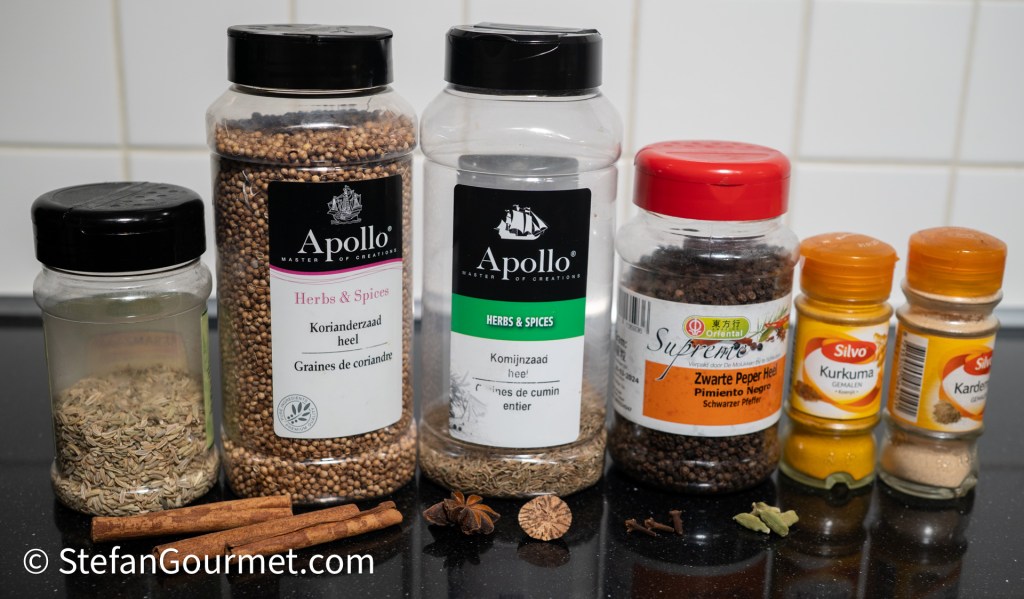
For the curry powder (makes 8 tablespoons, sufficient for 3 kilos (6.6 lbs) of boneless meat)
- 20 cm (8 inches) of cinnamon stick
- 2 tsp black peppercorns
- 2 tsp turmeric powder
- 1 tsp ground cardamom
- 2 Tbsp cumin seeds
- 2 Tbsp coriander seeds
- 1 star anise
- 3 cloves
- ½ tsp freshly grated nutmeg
- 2 tsp fennel seed
- 5 white cardamom pods
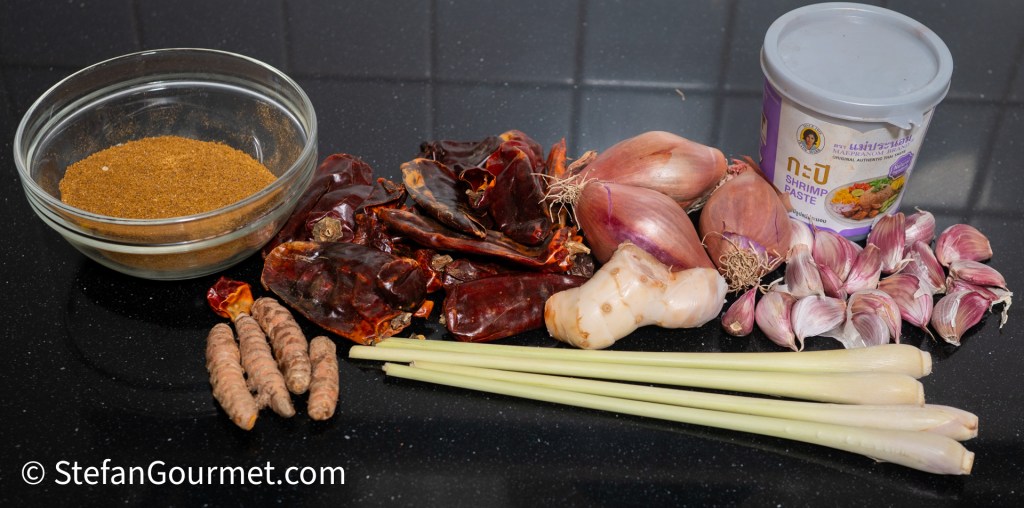
For the curry paste, sufficient for 750 grams (1.7 lbs) of boneless meat
- 8-10 grams dried mild red chilies
- 1 dried small spicy red chili (optional)
- 5 cloves garlic
- 1 stalk lemongrass, bottom half only, chopped
- 5 slices galangal
- 5 cm (2″) turmeric root
- 2 Tbsp hung lay curry powder (from above)
- 1 teaspoon Thai fermented shrimp paste
- 45 grams (1/3 cup) sliced shallots
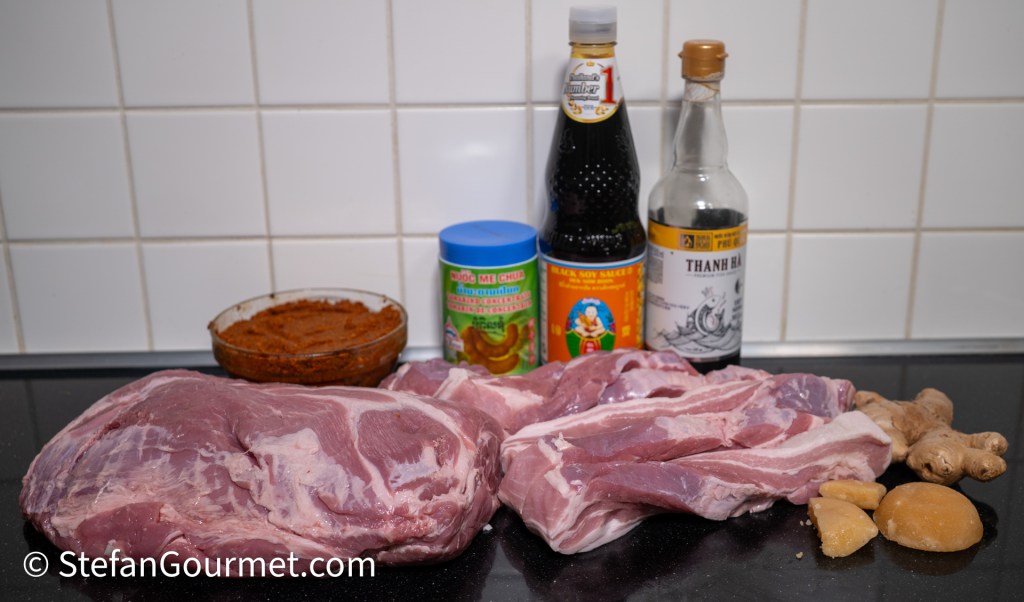
For 750 grams of boneless meat, serves 4
- 450 grams pork belly
- 450 grams pork ribs, or 300 grams pork neck (aka pork butt)
- ¼ cup Thai tamarind paste
- 2 Tbsp palm sugar
- 1-2 tsp black soy sauce
- 1 ½ – 2 Tbsp fish sauce
- 35 grams (1/3 cup) julienned ginger
- 1 Tbsp unsalted, lightly roasted peanuts (optional)
Instructions
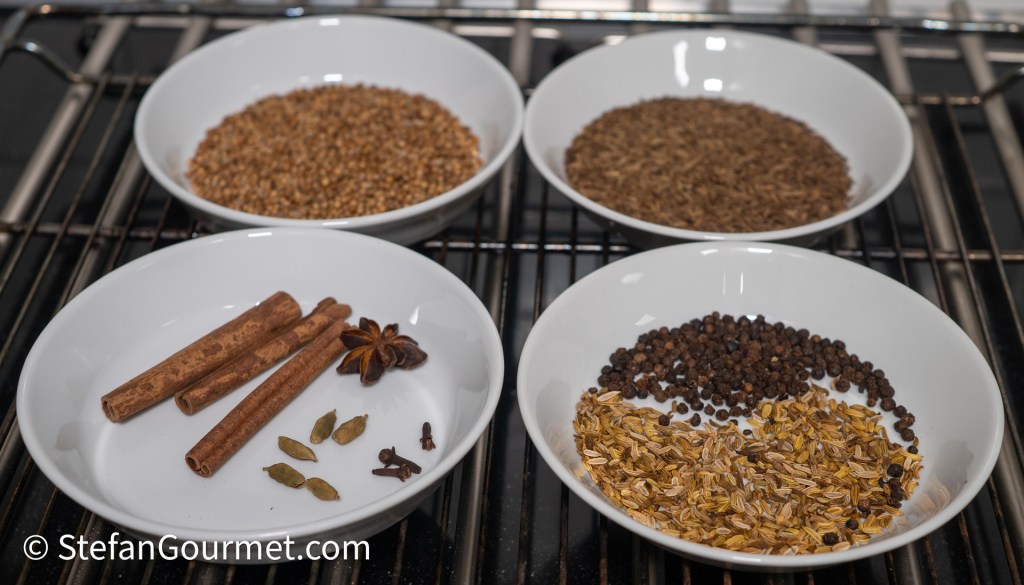
Preheat the oven to 180 °C (350 °F). Place 20 cm (8 inches) of cinnamon stick, 2 tsp black peppercorns, 2 Tbsp cumin seeds, 2 Tbsp coriander seeds, 1 star anise, 3 cloves, 2 tsp fennel seeds, and 5 white cardamom pods in an ovenproof dish. Toast for 8 minutes at 180 °C (350 °F).
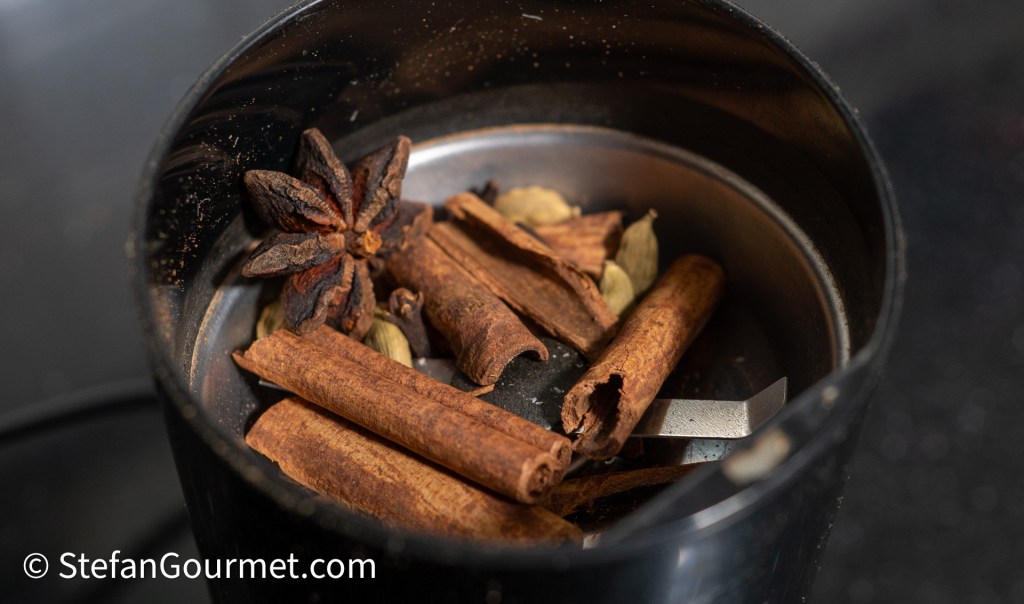
Transfer the toasted spices to a spice grinder…
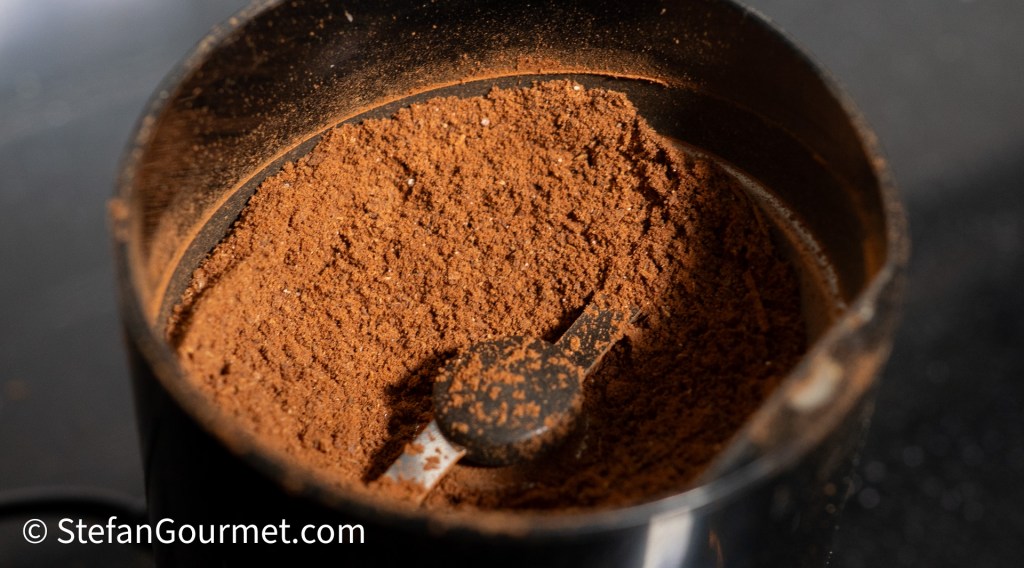
…and grind to a fine powder.
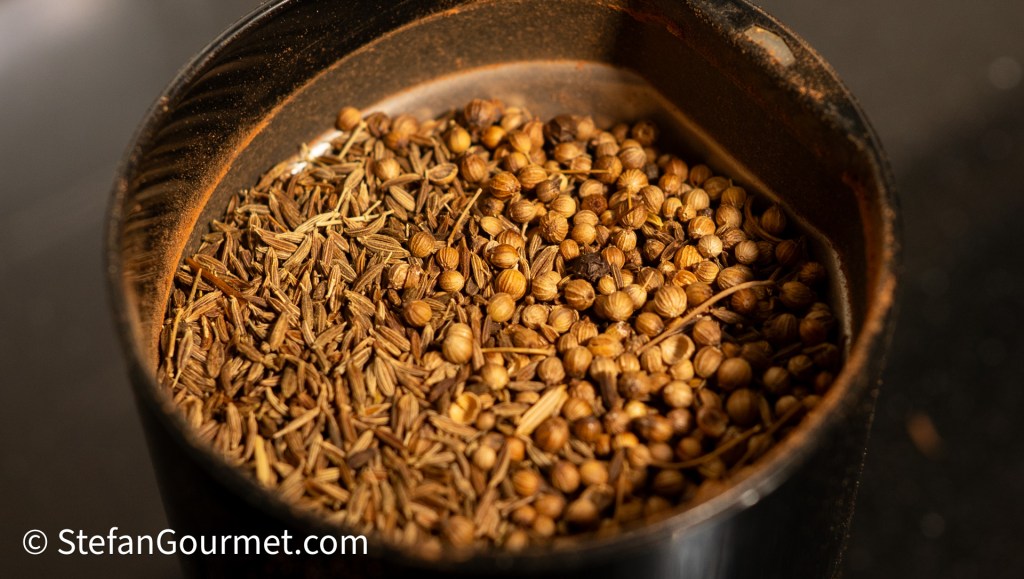
I did this in batches because of the amount and the different sizes.
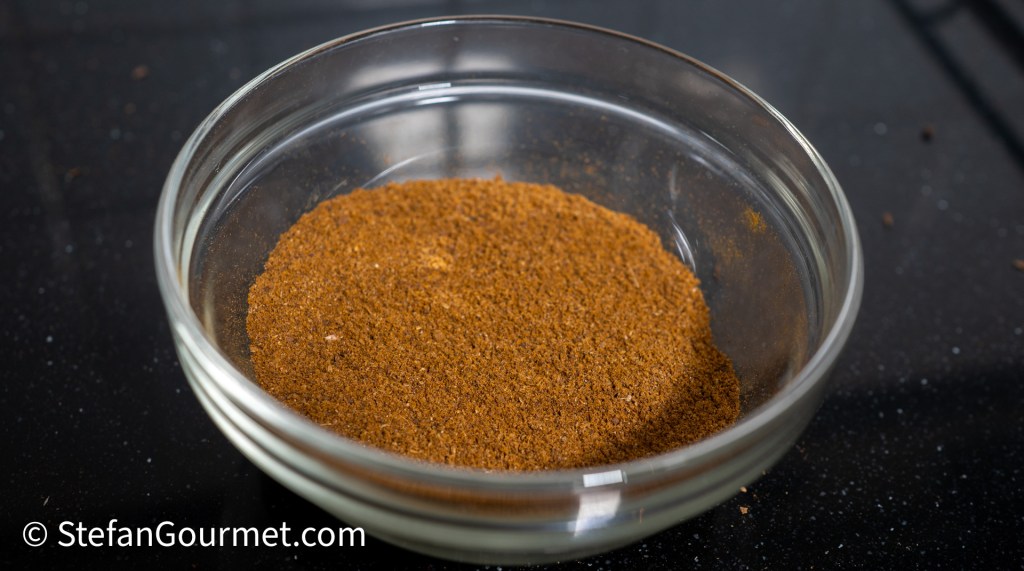
Place the powder in a bowl and add 2 tsp turmeric powder, 1 tsp ground cardamom, and ½ tsp freshly grated nutmeg. Stir to combine. This yields 8 tablespoons of curry powder. For 4 servings, use 2 tablespoons and store the remainder in an airtight container for next time.
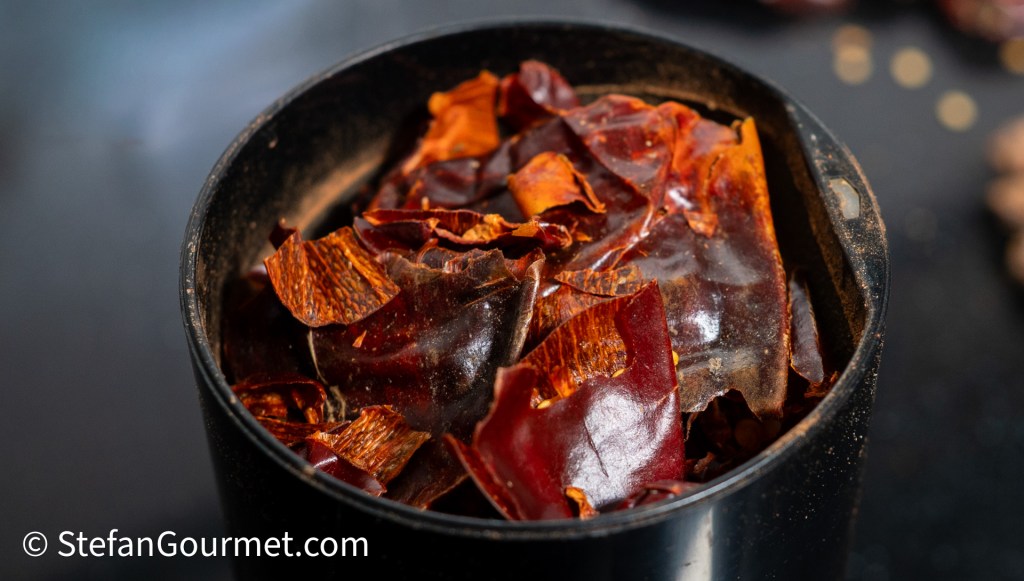
To make the curry paste, start by removing the seeds and stems from the dried red chilies, then cut or tear them into pieces. Place the pieces in a spice grinder…
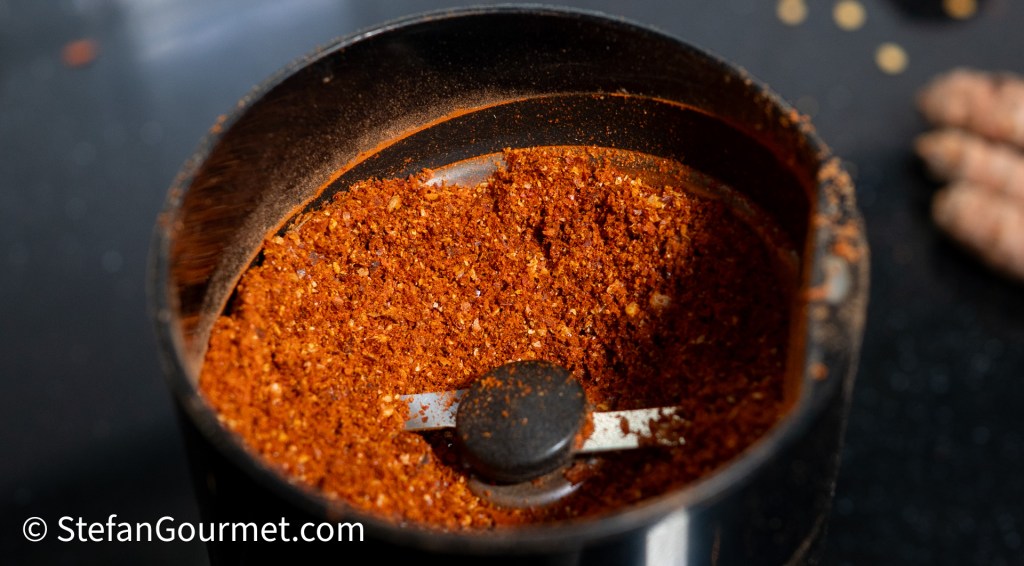
…and grind them into a fine powder.
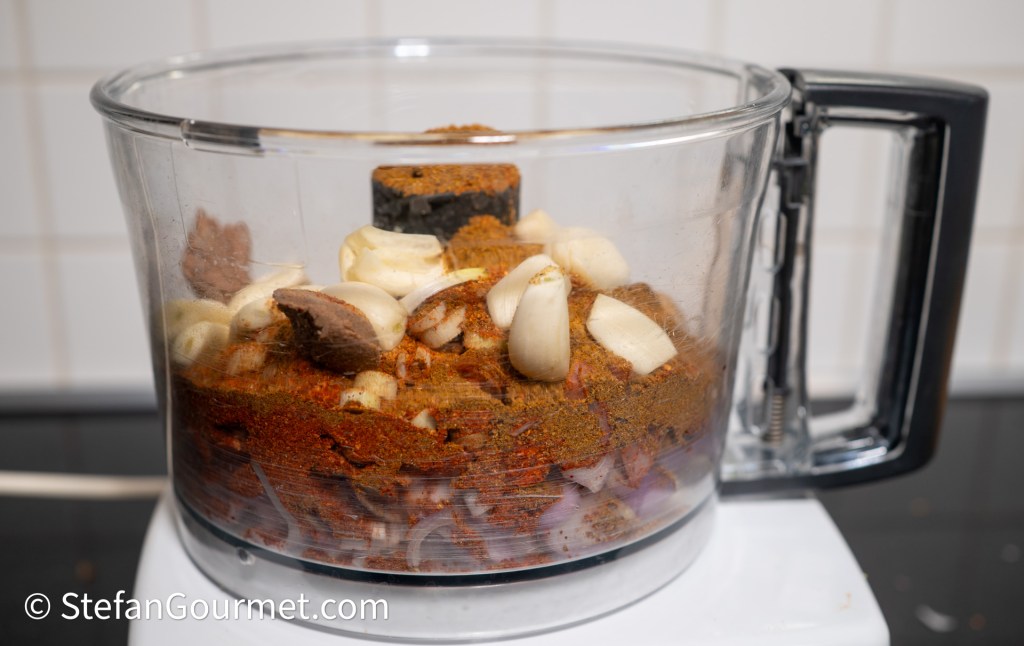
Now use a mortar and pestle or a blender to make the curry paste. I started with a food processor…
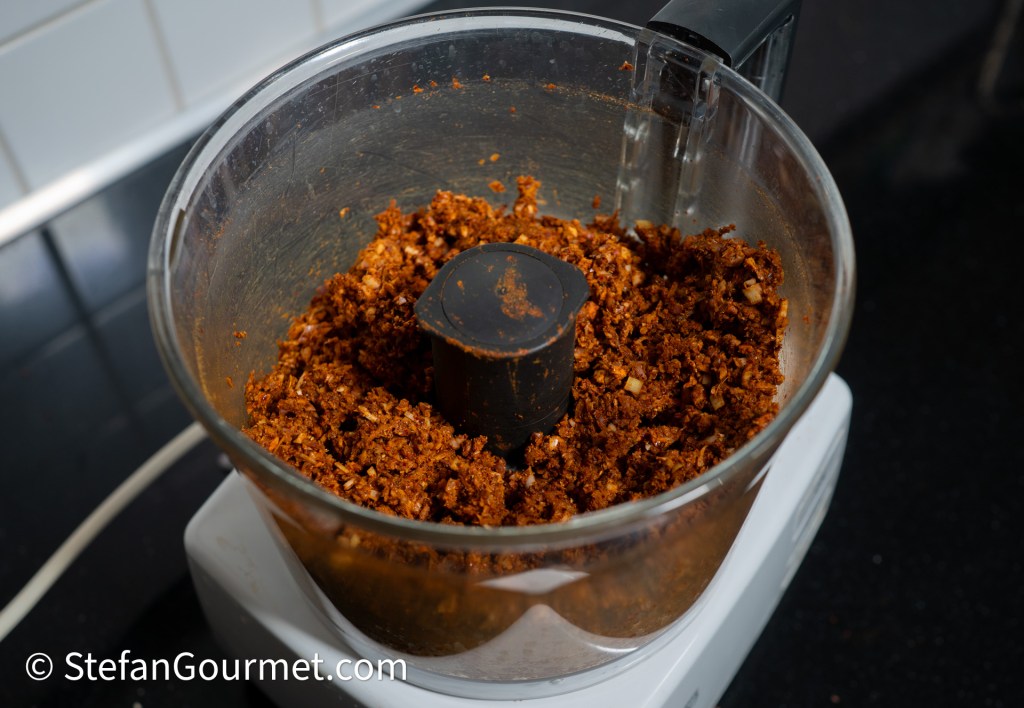
…to grind everything coarsely…
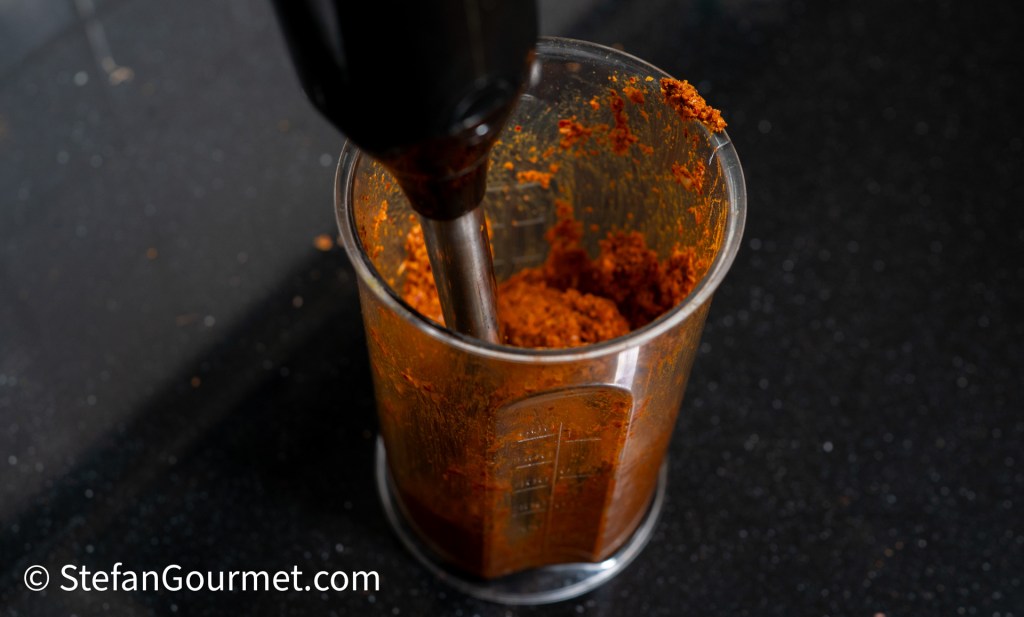
…then switched to an immersion blender for a finer texture. The method doesn’t matter—what matters is achieving a smooth paste from the following:
- 5 cloves garlic
- 1 stalk lemongrass (bottom half only), thinly sliced
- 5 slices galangal
- 5 cm (2 inches) turmeric root
- 1 tsp Thai fermented shrimp paste
- 45 g (⅓ cup) sliced shallots
- 2 Tbsp hung lay curry powder
- the ground chilies
Adjust quantities proportionally if you’re making a larger batch.
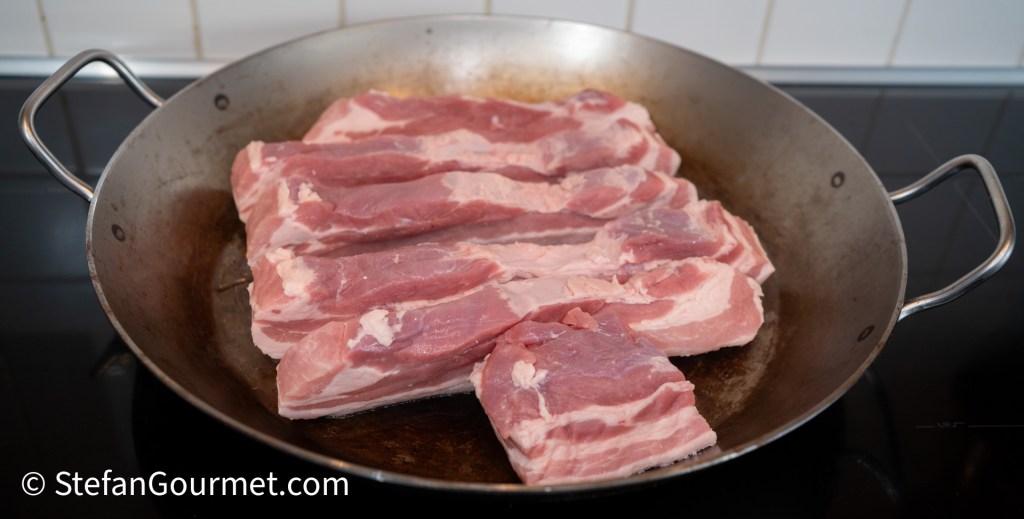
To brown the meat, start with the pork belly, placing the fat side down in a dry frying pan. Sear over medium-high heat until the fat side is golden brown…
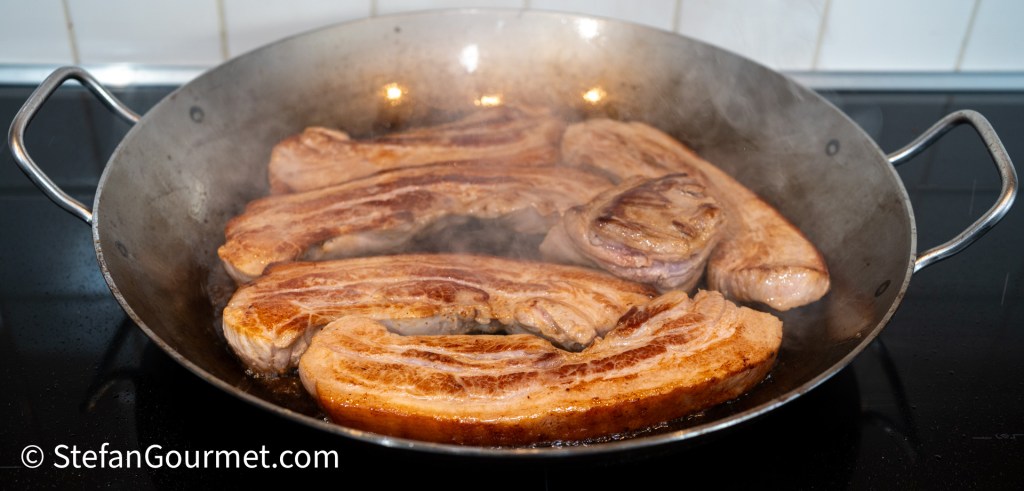
…then turn over the meat.
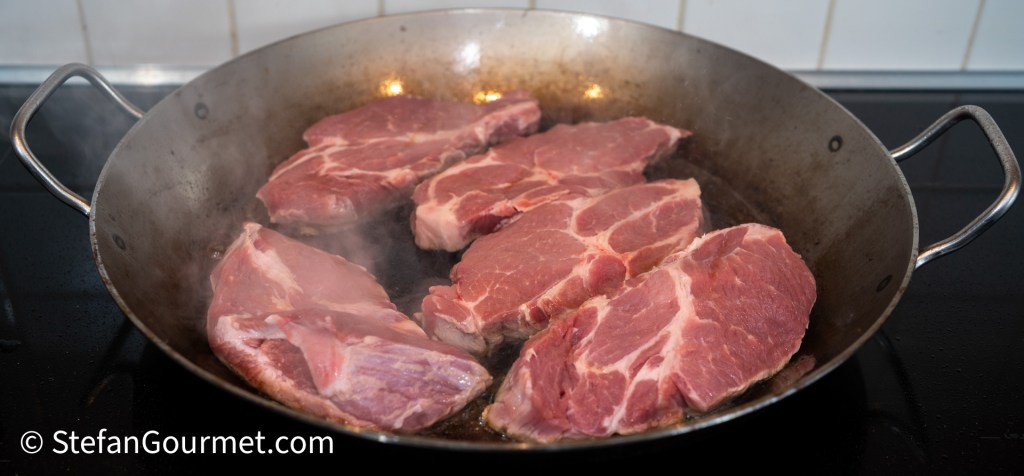
The rendered fat will be enough to finish browning the other side of the pork belly as well as the remaining pork.
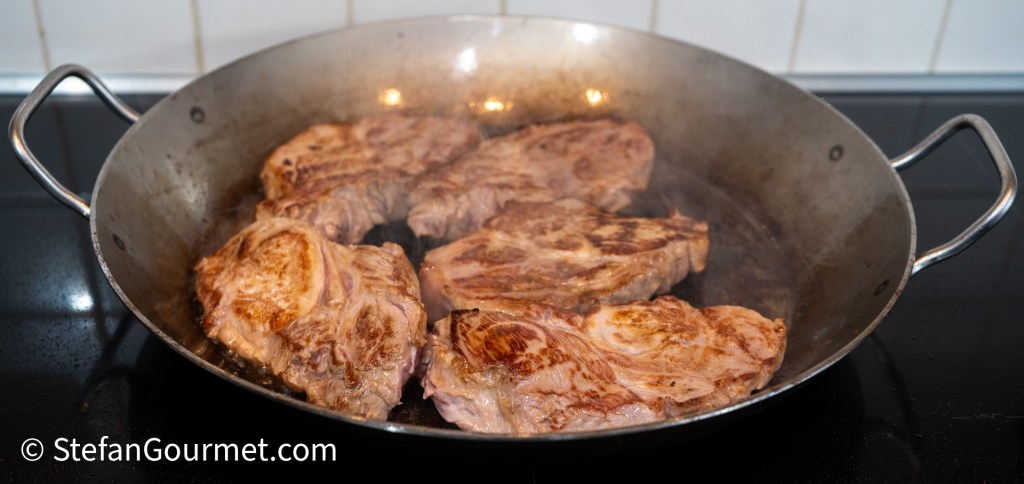
It’s easier to slice the meat into thick slices rather than cubes, brown the slices first, and then cut them into cubes after browning.
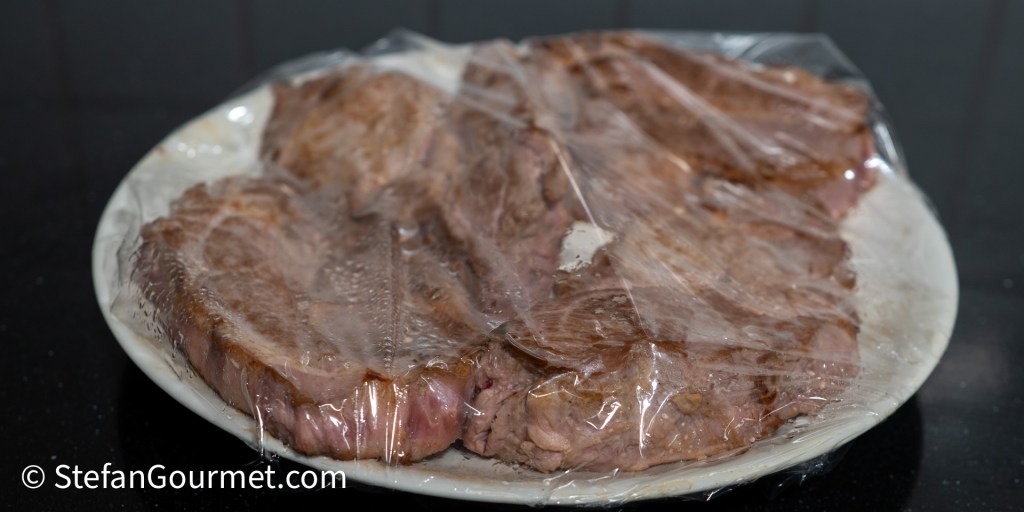
Take the meat out of the pan and let it cool to room temperature. Cover with plastic wrap and chill in the refrigerator until completely cold. The meat should be fully chilled before vacuum sealing for sous vide cooking.
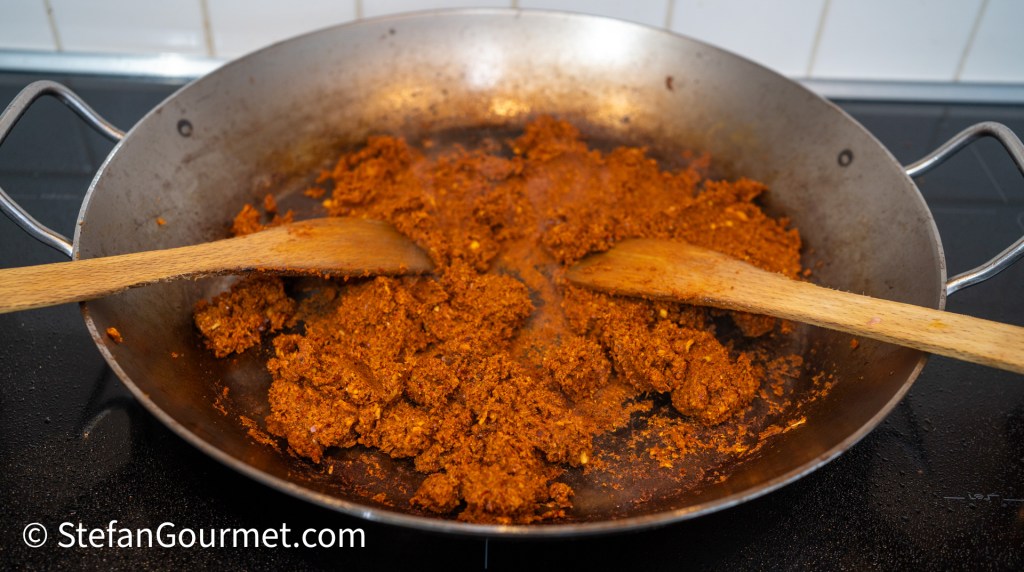
Add the curry paste to the pan with the pork drippings and stir-fry over medium-high heat until fragrant and fully cooked. Since the meat will be cooked sous vide at 68 °C (155 °F), which isn’t hot enough to properly cook the vegetables in the curry paste, this step is essential.
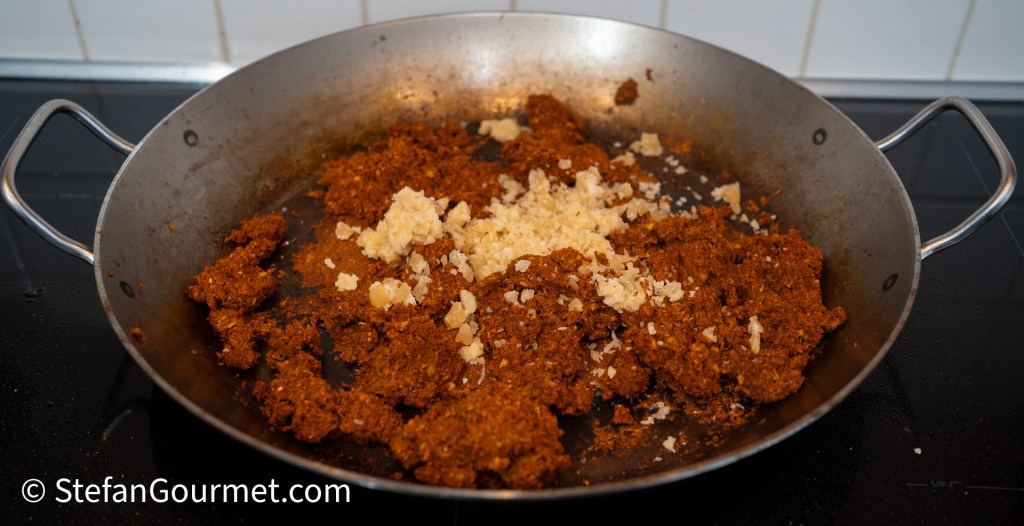
Add 2 Tbsp palm sugar…
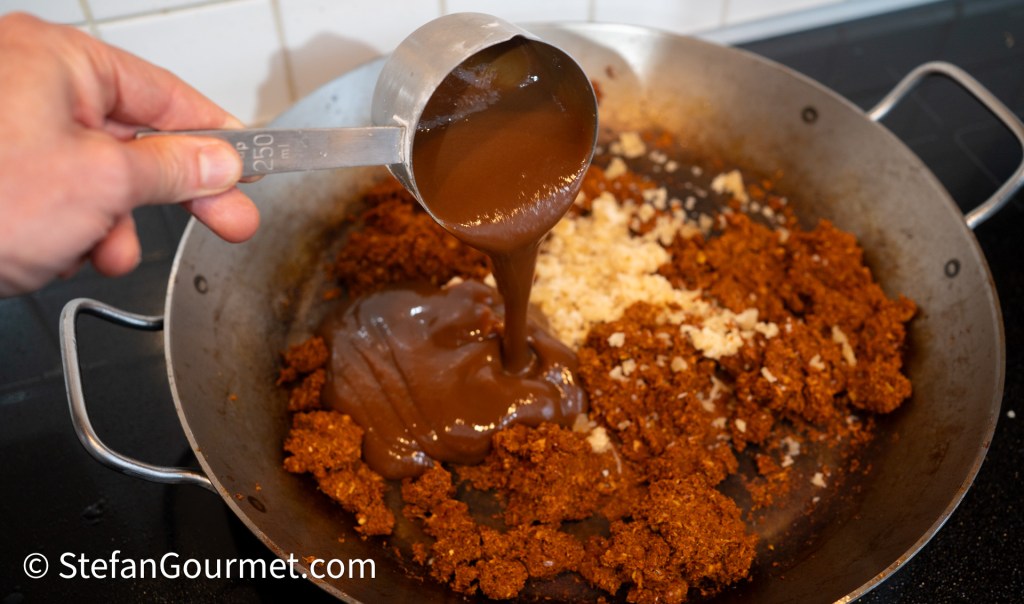
…¼ cup Thai tamarind paste…
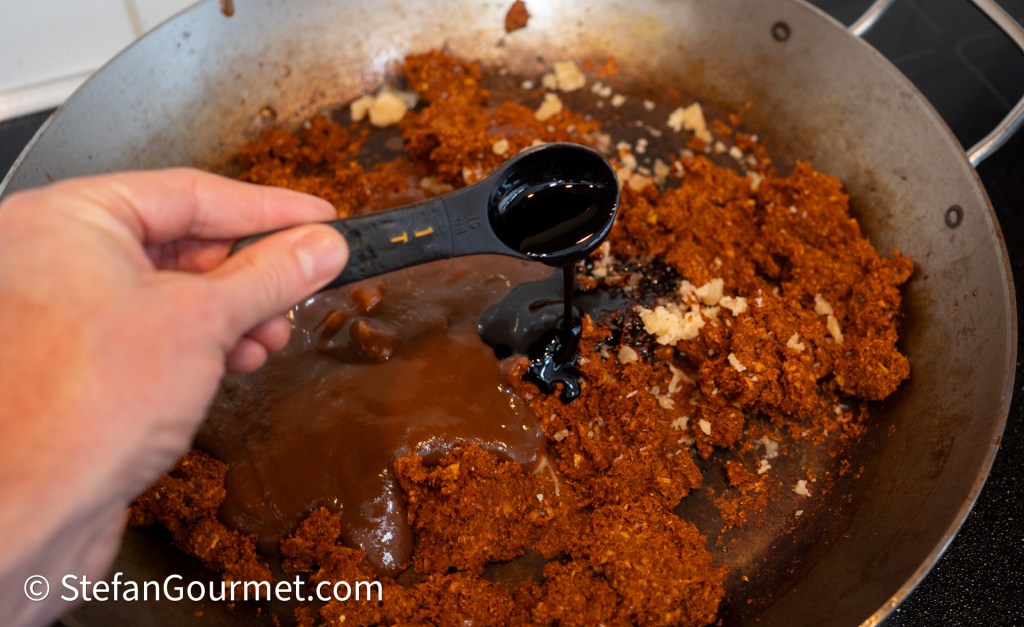
…1-2 tsp black soy sauce…
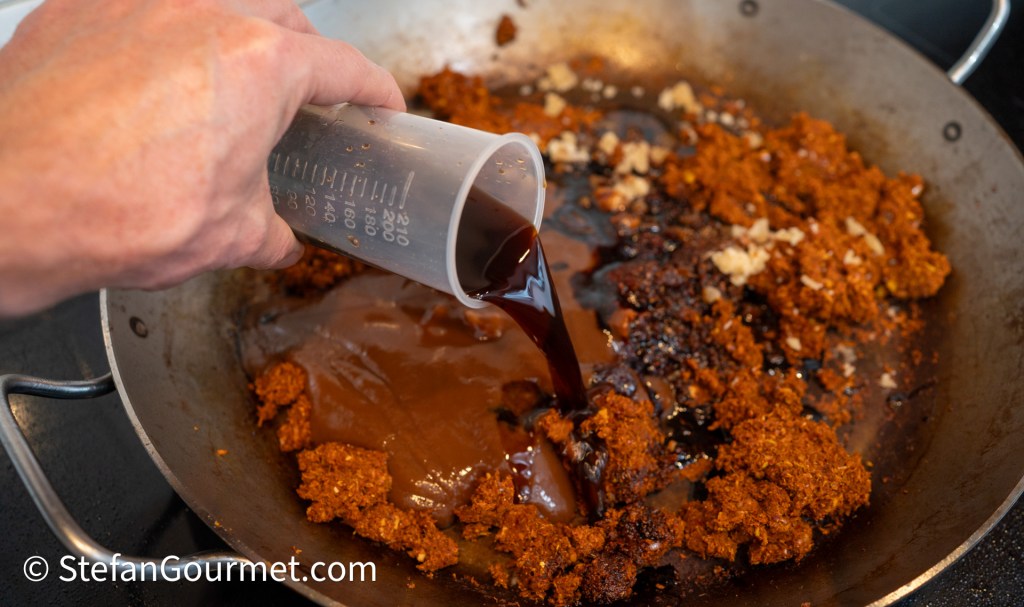
…1 ½ – 2 Tbsp fish sauce…
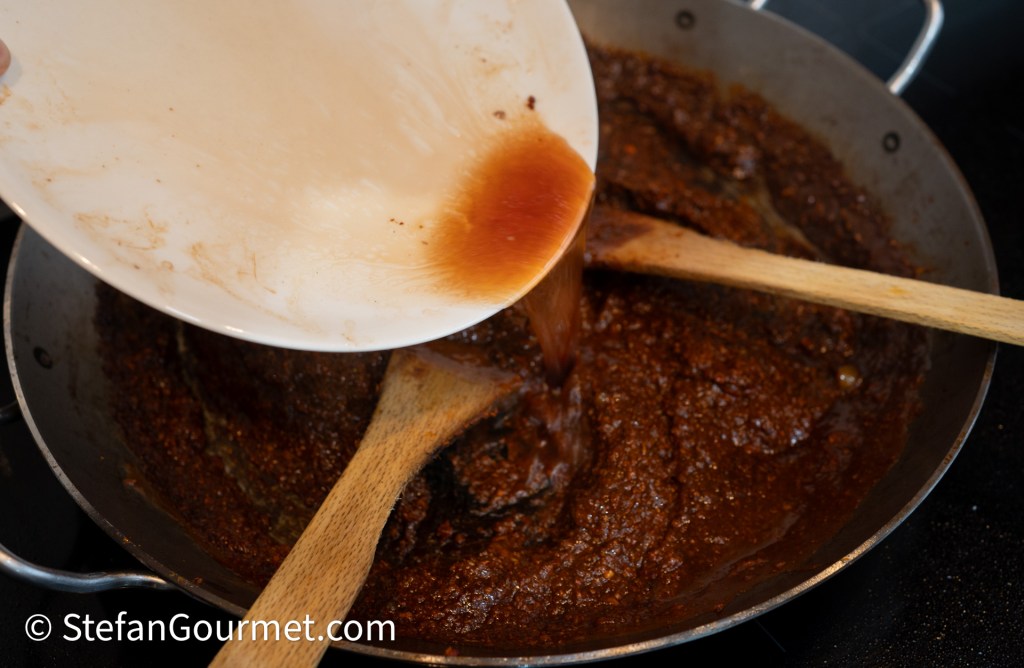
…and any juices that leaked out of the pork after browning, as we don’t want any flavor to go to waste. Add a tablespoon of lightly toasted peanuts, if using. (Remember to multiple the amounts accordingly if you’re making a larger batch.)
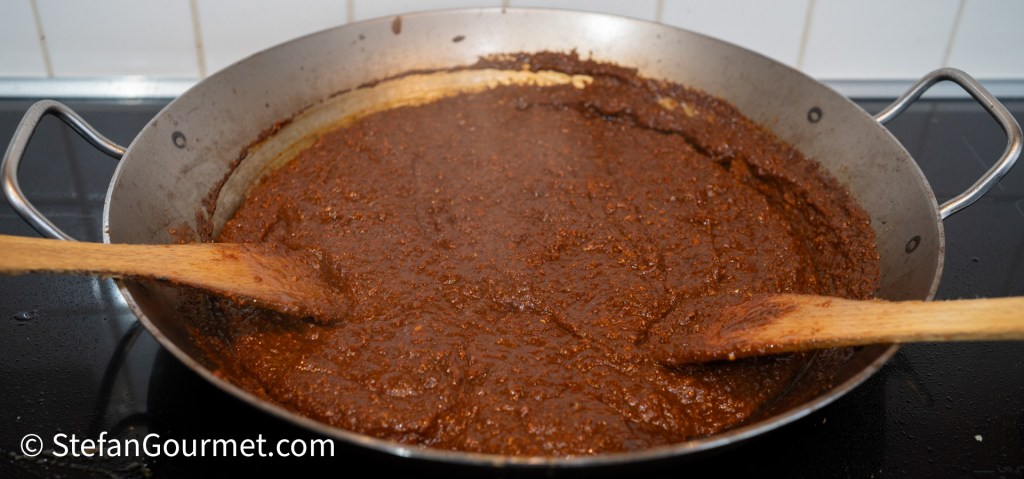
Stir until everything is well combined and the sugar has melted. Use gentle heat if necessary, but avoid heating more than needed because the next step is to let the mixture cool completely.
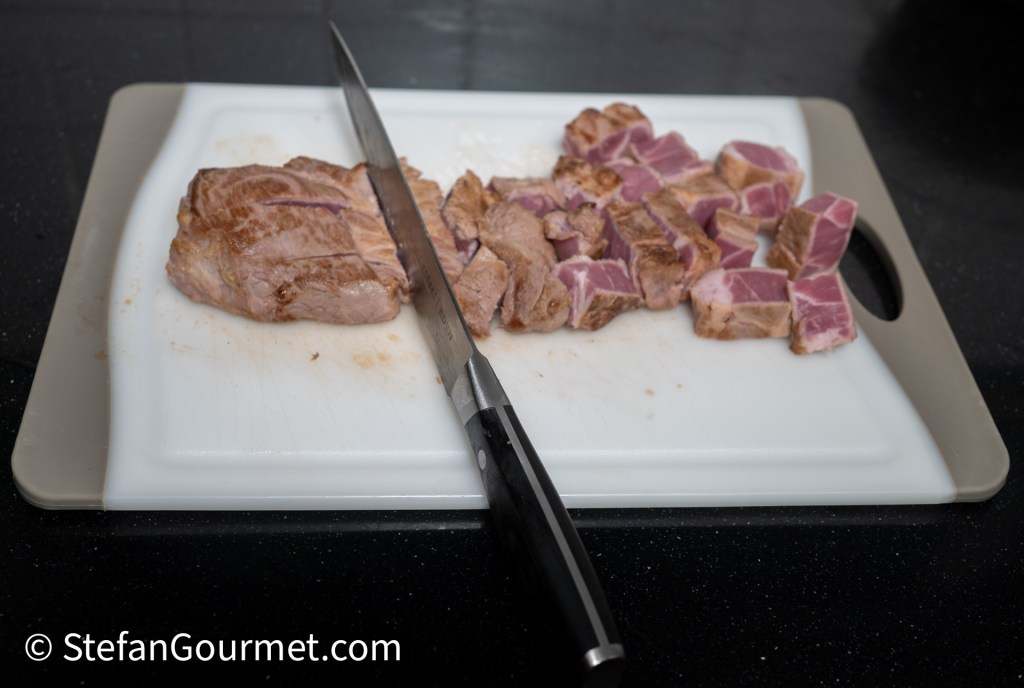
Once the meat has chilled, cut it into cubes. It should still be raw on the inside, as we will be cooking it carefully sous vide.
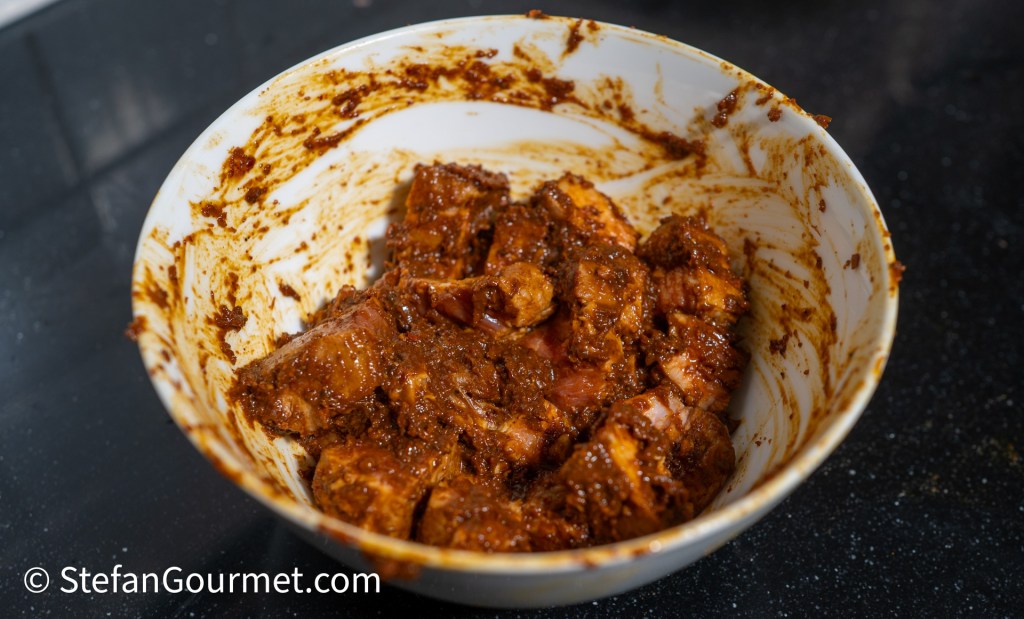
When the curry paste mixture is cold, mix it with the meat until the pieces are thoroughly coated. To ensure the meat and sauce were evenly distributed, I divided both into portions and mixed each portion individually in a bowl before vacuum sealing.
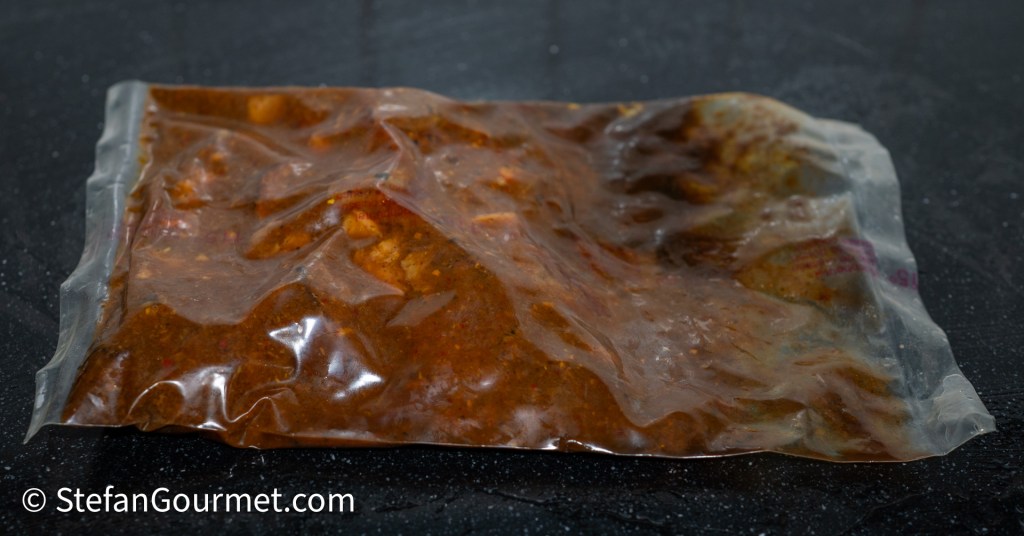
Vacuum-seal the meat in portions. Since the sauce is thick and chilled, you should be able to vacuum-seal successfully even with an external sealer.
Cook sous vide for 48 hours at 68 °C (155 °F).
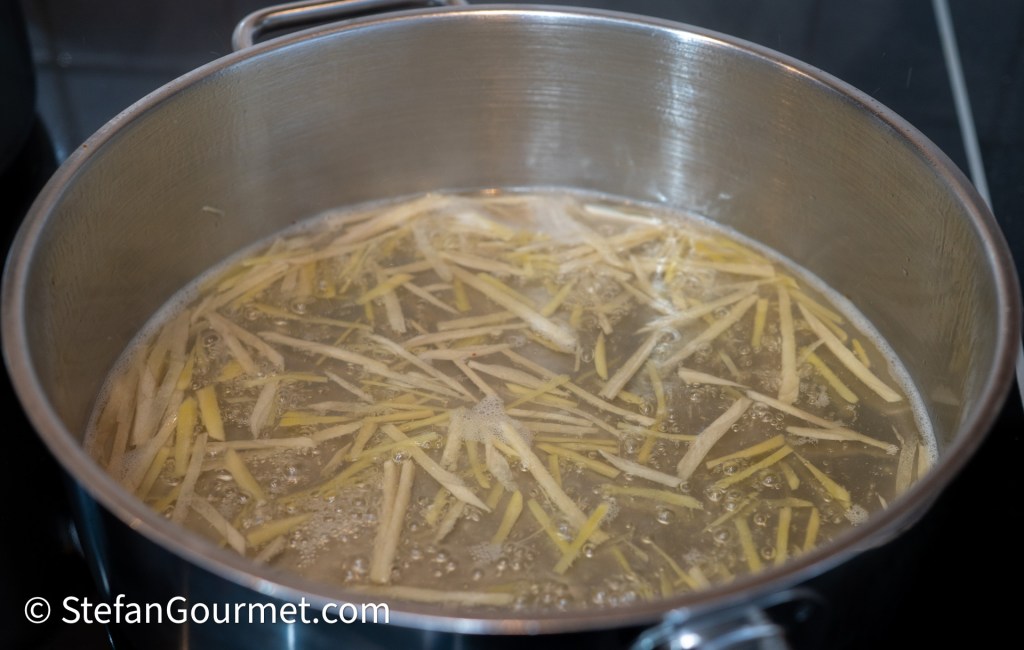
To finish the dish, place 35 grams (⅓ cup) julienned ginger in a pot and cover with water. Bring to a boil…
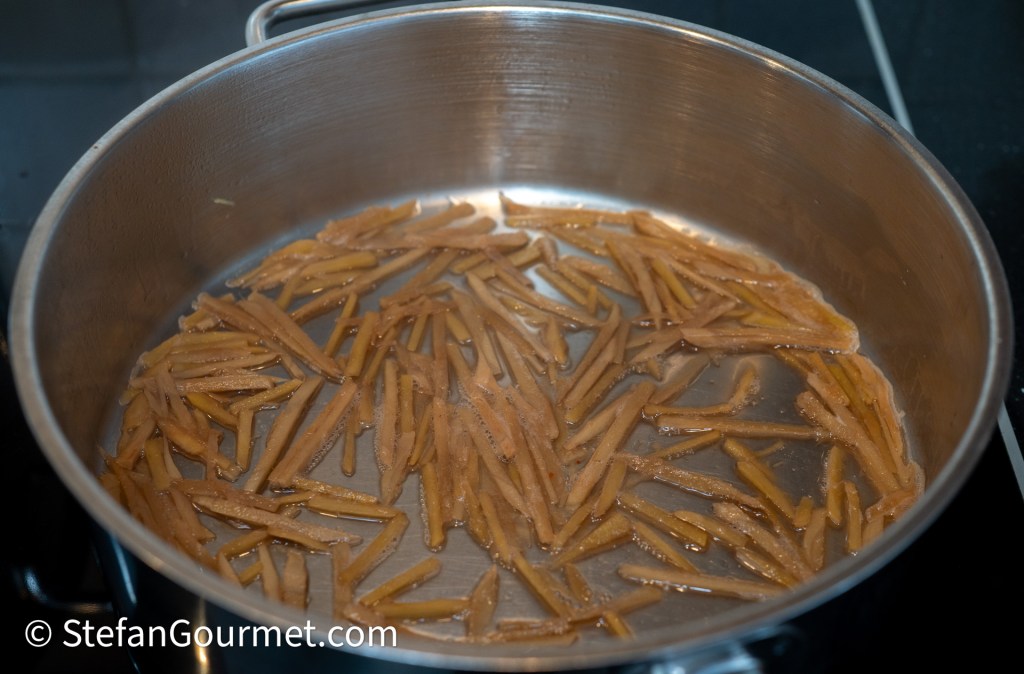
…then simmer until the ginger is tender but still firm to the bite, about 15 minutes.
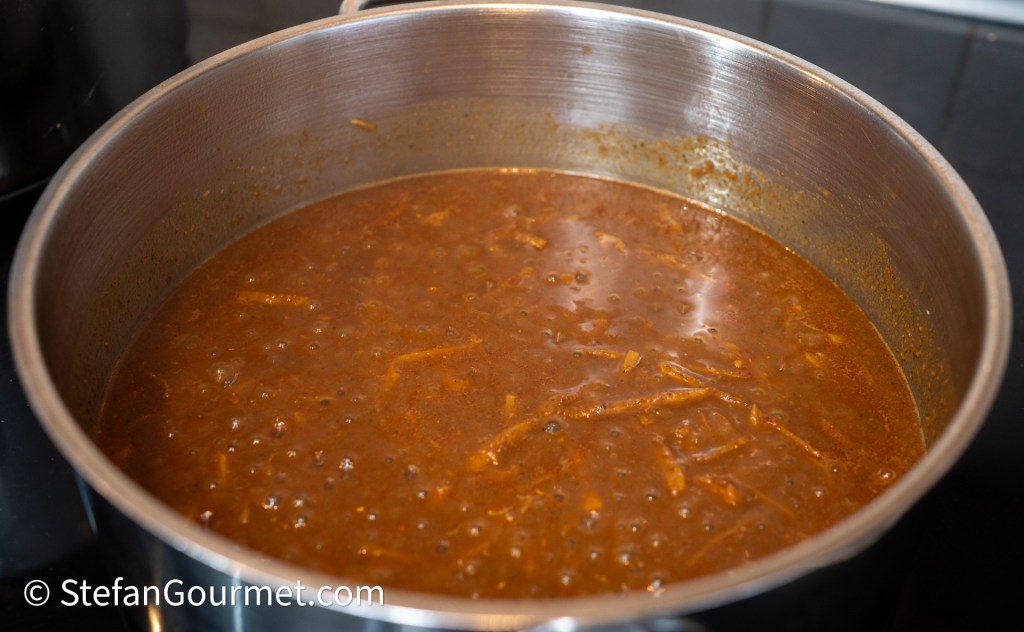
Cut open a sous vide bag with cooked stew, pour the liquid into the pan with the ginger, and bring it to a boil.
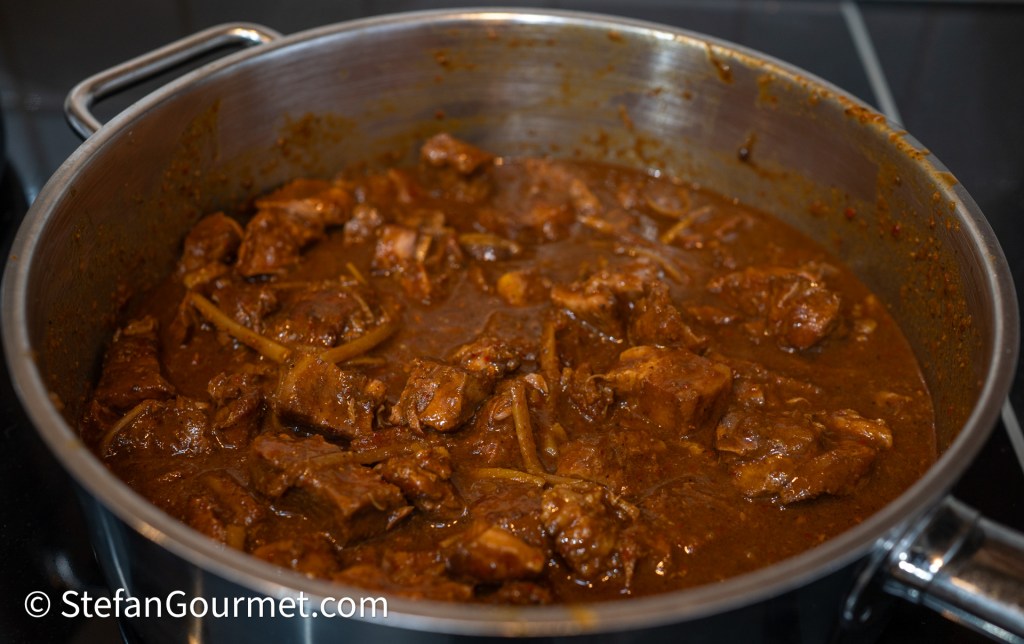
Add the remaining contents of the bag, then turn off the heat and stir until everything is well combined.
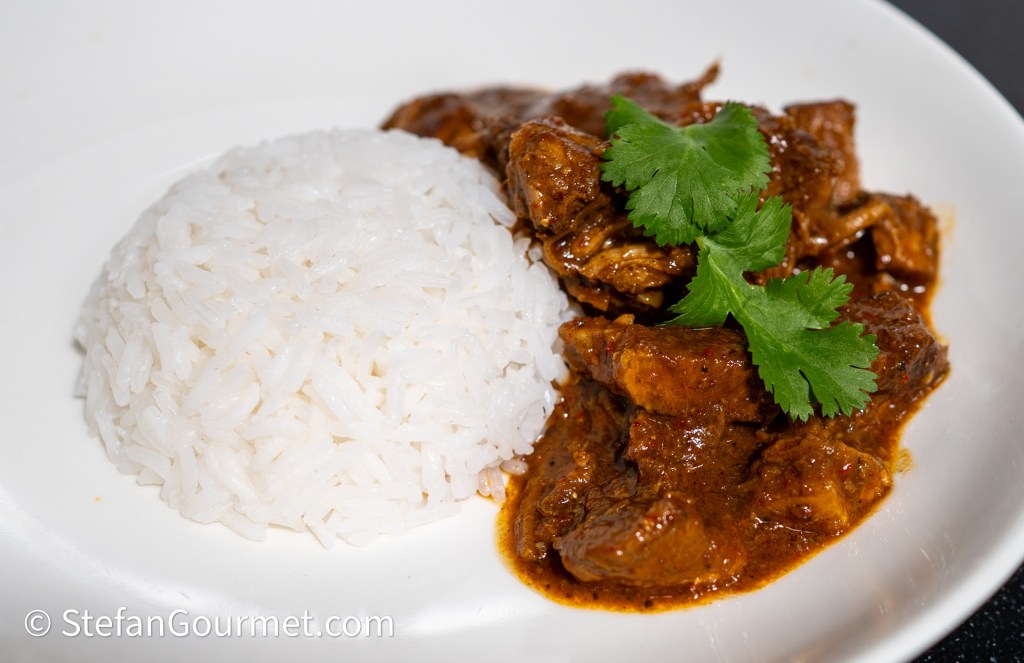
Serve the stew with steamed jasmine rice. Traditionally, Thai meals feature rice shaped into a dome on a plate, with the stew served separately in a bowl, alongside several other dishes. For a weekday meal, I simply reheat a sous vide bag of Gaeng Hung Lay from the freezer and serve it with rice.


What a fabulous recipe to arrive right amidst Friday afternoon work which somehow should have been managed in the morning! I have looked at your ingredients and like what I see. It will take a few comparisons for me to take all your nuances in – thank you! I very much like what I see of both paste and powder preparation . . . a pretty time-consuming effort but, making enough for a fair few offerings – oh what a difference to buying from the store . . . a big thank you from me and others who will see . . . am guessing where you posted . . . on the plane back home 🙂 ?
LikeLiked by 1 person
No posted from Koh Tao, we’re in Thailand for two more weeks 😎
LikeLiked by 1 person
My apologies – I just remembered the word ‘penultimate’ but that must have related to place and not country 🙂 ! Lucky, lucky ducks you . . . hope you will have time for another post or two in ‘my time zone’ !!! Be well, both of you . . . (looking up Koh Tao next!)
LikeLiked by 1 person
Penultimate was indeed in reference to Phuket, not Thailand as a whole. We’re having another chef’s table dinner tonight, so…
LikeLiked by 1 person
If you do enjoy . . . and if you can somehow find the time . . . pretty please . . . !
LikeLiked by 1 person
So, you are on ‘Turtle Island’ and today is showery 🙂 ? Lovely temps at 29 degrees – hope you may be diving . . . you see where five minutes of talking to Mr Google takes one !
LikeLiked by 2 people
Just snorkeling. The day started very showery but starting to clear up now.
LikeLiked by 2 people
ENJOY !!!
LikeLiked by 1 person