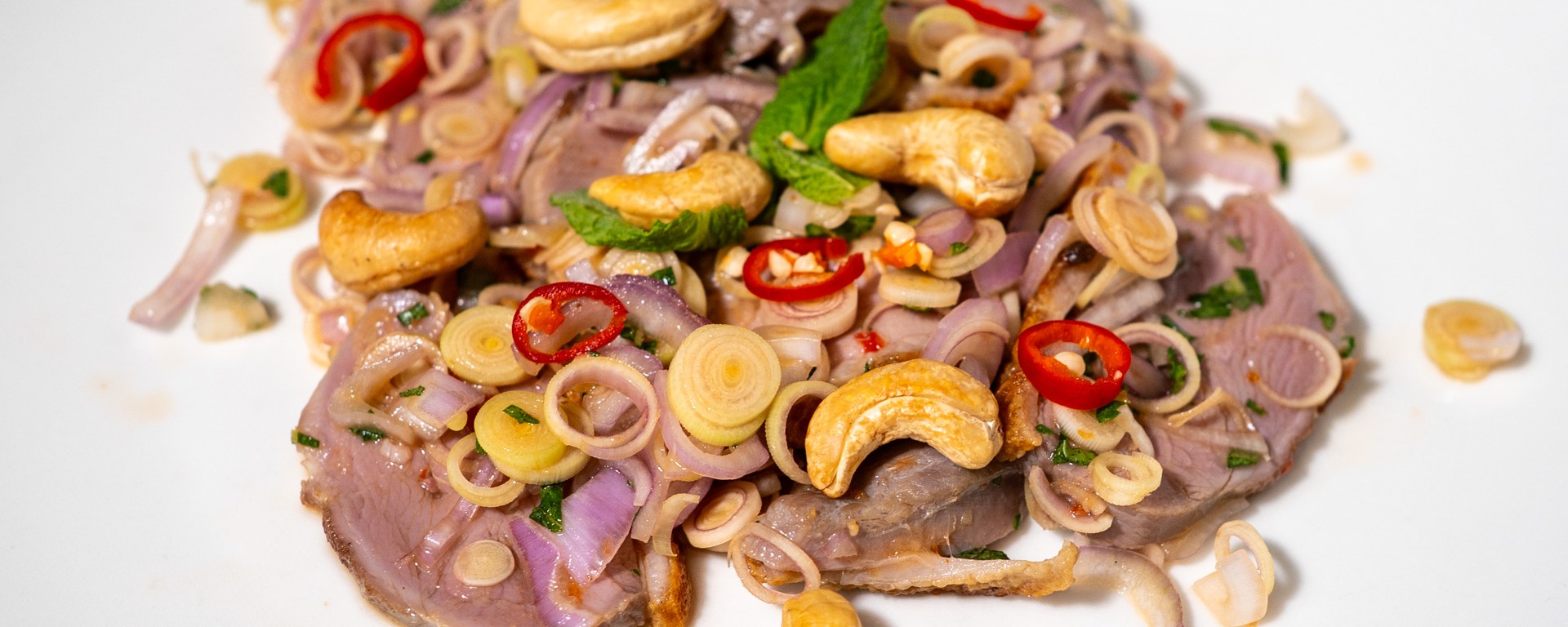
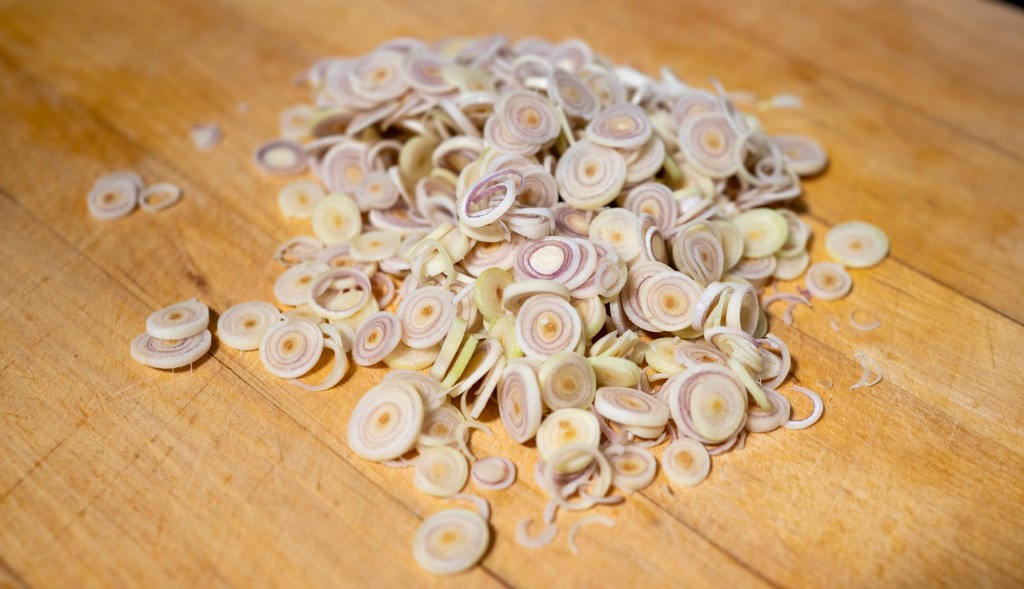
Another favorite dish at Bucha Gallery and Restaurant was the lemongrass and duck salad. You read that correctly: lemongrass is not just an ingredient for curry paste or flavoring broth, but can be enjoyed as a crunchy, fragrant salad. The key is slicing it very thinly.
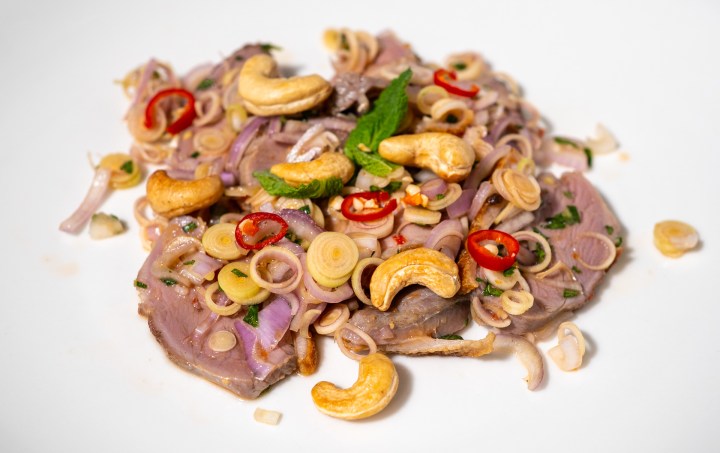
The Thai name, ยำเป็ดตะไคร้ (Yum Ped Takhrai), is straightforward: Yum means salad, Ped means duck, and Takhrai means lemongrass.
The secret to my version is cooking the duck sous vide. This ensures the meat is extremely tender and juicy while allowing for a perfectly crispy skin. While the process takes time, most of it is idle, offering excellent value for the effort involved. The combination of the crunchy salad, succulent duck, and balanced flavors is simply wonderful.
Ingredients
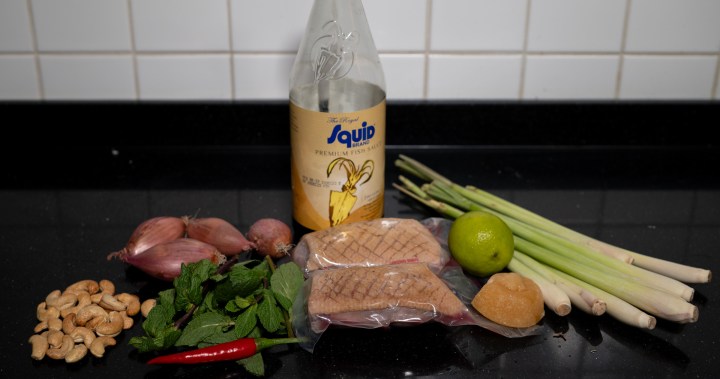
For 4 servings as an appetizer
- 2 duck breast halves, about 400 grams (.9 lbs)
- 1/2 tsp salt
- 50 grams (1/2 cup) thinly sliced lemongrass (from bottom half only)
- 70 grams (1/2 cup) sliced shallots
- 30 grams unsalted cashews
- 1 tsp palm sugar
- 1.5 Tbsp fish sauce
- 2 Tbsp freshly squeezed lime juice
- 2 fresh red Thai bird’s eye chillies
- 1 Tbsp chopped fresh mint leaves + more for garnish
Instructions
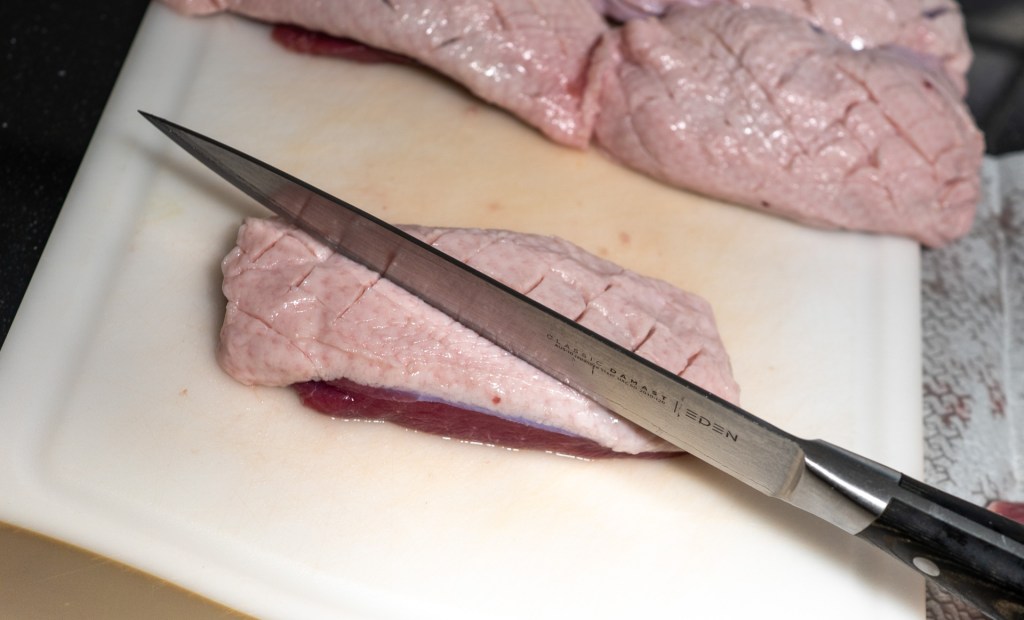
Begin by scoring the skin of the duck breasts in a lattice pattern. Aim to slice only the skin, avoiding the meat to prevent juices from escaping during rendering. This technique is essential for two reasons. First, it facilitates fat rendering; without these channels, fat remains trapped, leaving the skin flabby and greasy rather than thin and crispy. Second, the lattice acts as a set of expansion joints, preventing the shrinking skin from squeezing moisture out of the muscle fibers.
Once scored, rub each side of the duck with 1/8 teaspoon of table salt. Let the salt penetrate for at least an hour; this seasons the meat deeply and helps it retain its juices during cooking.
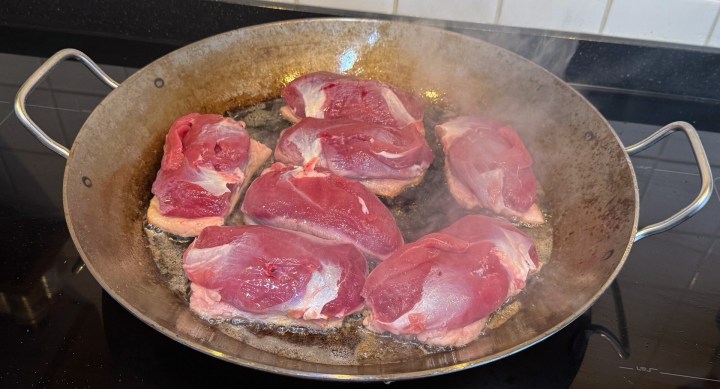
Preheat a dry frying pan over medium-high heat. Place the duck breasts skin-side down without adding any oil. The goal is a temperature high enough to render the fat and crisp the skin without burning it or overcooking the meat. This step removes a significant amount of fat and develops a golden-brown, crispy texture. Once the skin is ready, flip the breasts and sear the flesh side for just 30 seconds.
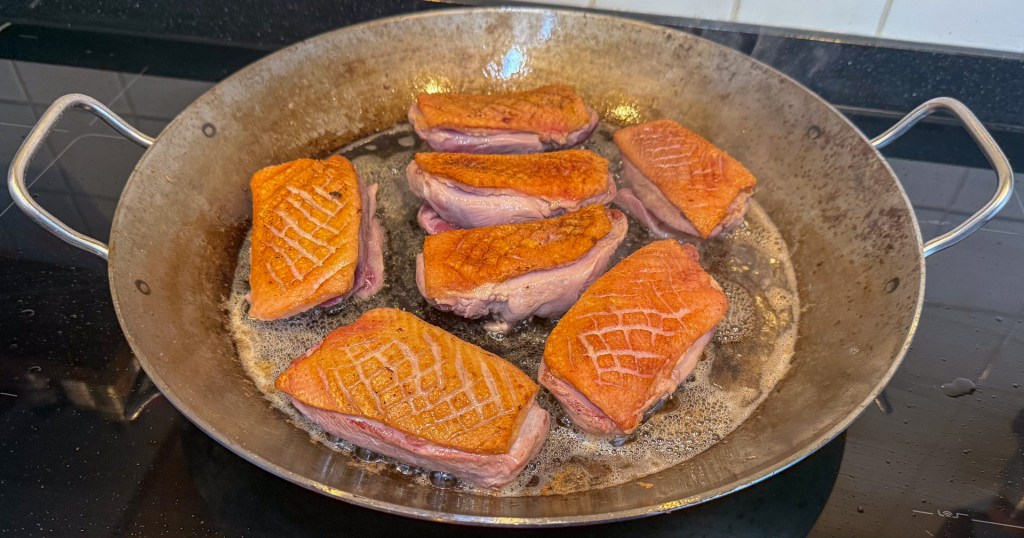
Remove the duck from the pan and allow it to cool completely, first at room temperature and then in the refrigerator. Once thoroughly chilled, vacuum-seal the breasts and cook sous vide at 57°C/135°F for two hours.
I often prepare a large batch this way to keep in the freezer. They only require 45 minutes at 55°C/131°F to defrost and warm through. A very brief final sear in reserved duck fat will restore the skin’s crunch without overcooking the interior. Rendering the fat before the sous vide bath is the only way to achieve a perfect result. Attempting to render the fat after sous vide without chilling first leads to an overcooked center. If you chill the duck after sous vide and then attempt to render the fat, you will either serve the meat cold in the middle or ruin the edge-to-edge uniformity of the cook.
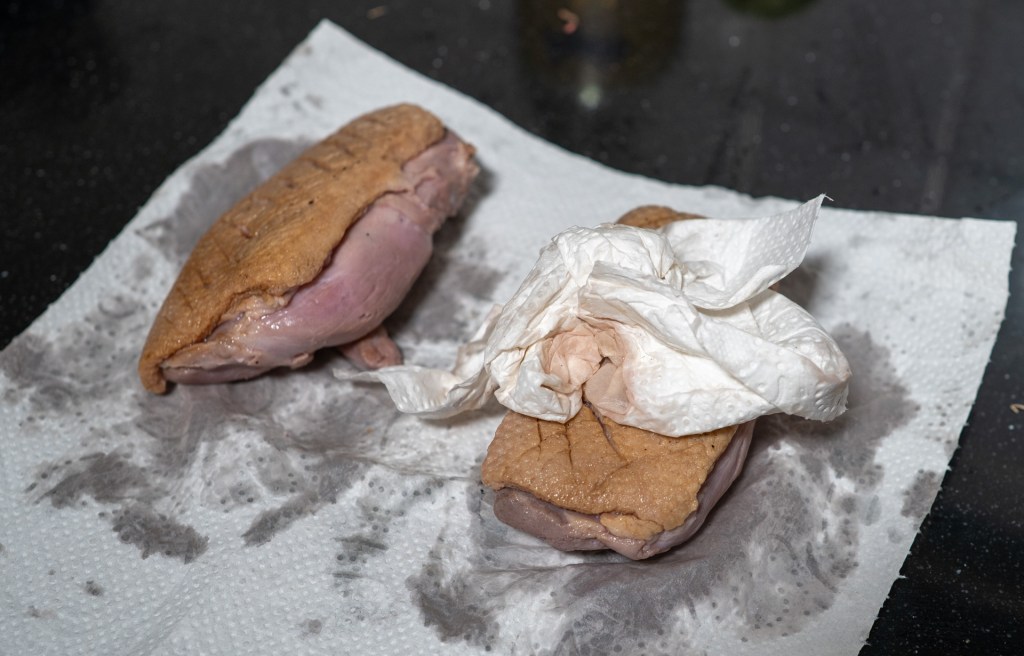
Remove the duck from the bag and pat it thoroughly dry with paper towels, paying close attention to the scored areas.
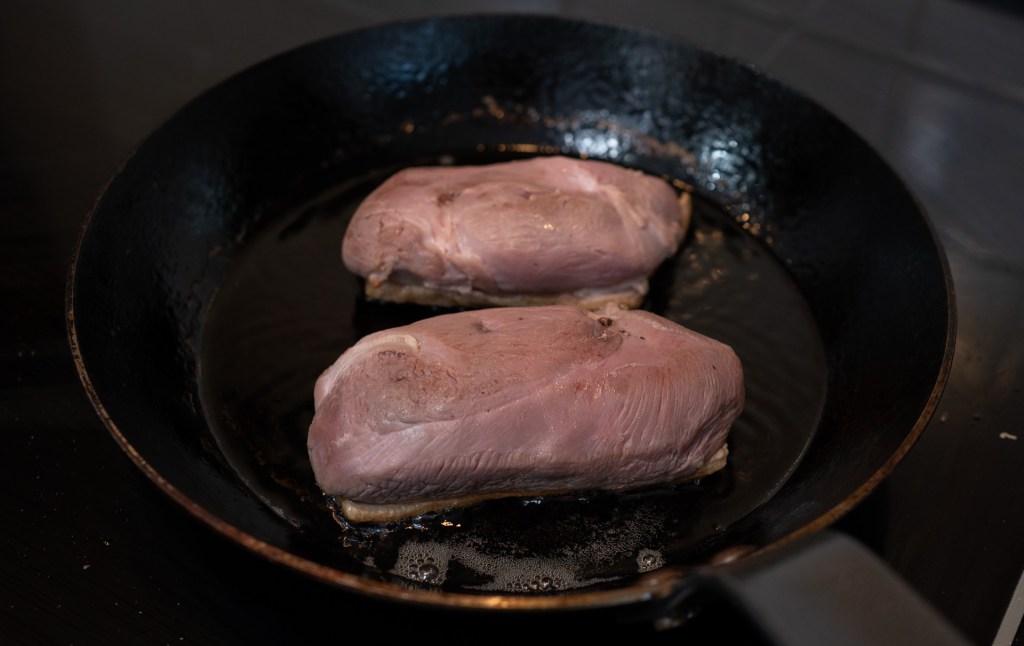
Heat a frying pan with some of the reserved duck fat and sear the breasts briefly on both sides. This restores the crispy finish that softens during its time in the vacuum bag.
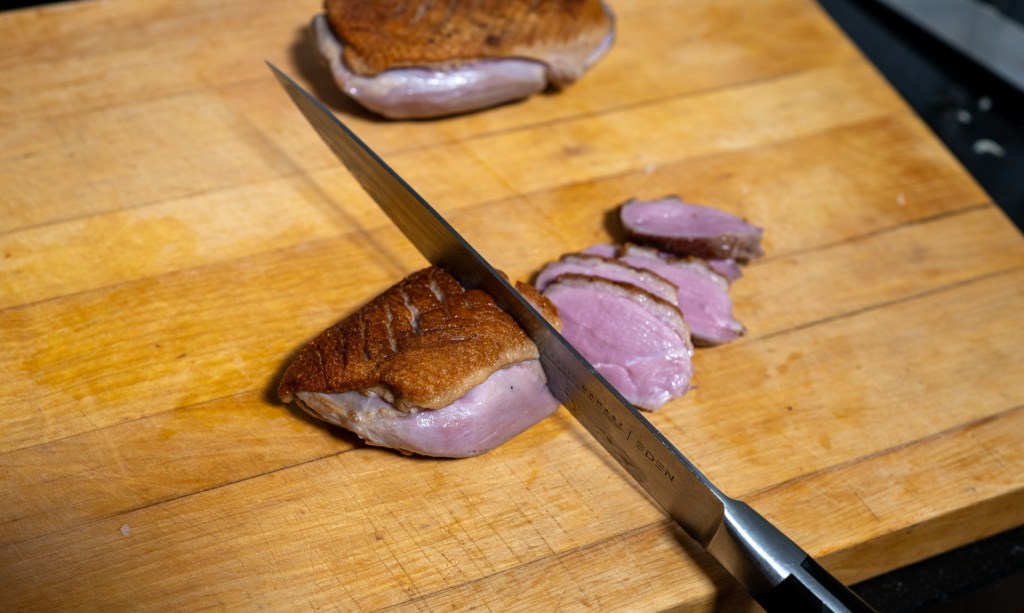
Let the duck rest and cool slightly, then slice it thinly.
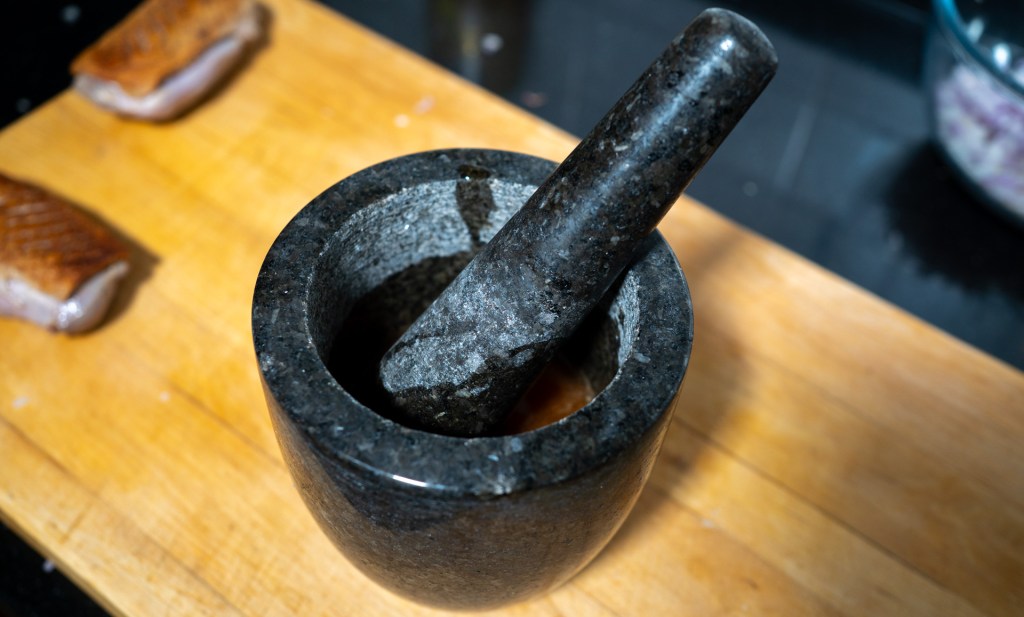
Roast 30 grams of unsalted cashews in the oven at 180C/350F until golden brown, about 10 minutes.
To make the dressing, pound one chopped red fresh bird’s eye chilli with a teaspoon of palm sugar until you have a smooth paste. Then add 2 tablespoons of lime juice, 1.5 tablespoons of fish sauce, and stir to incorporate.
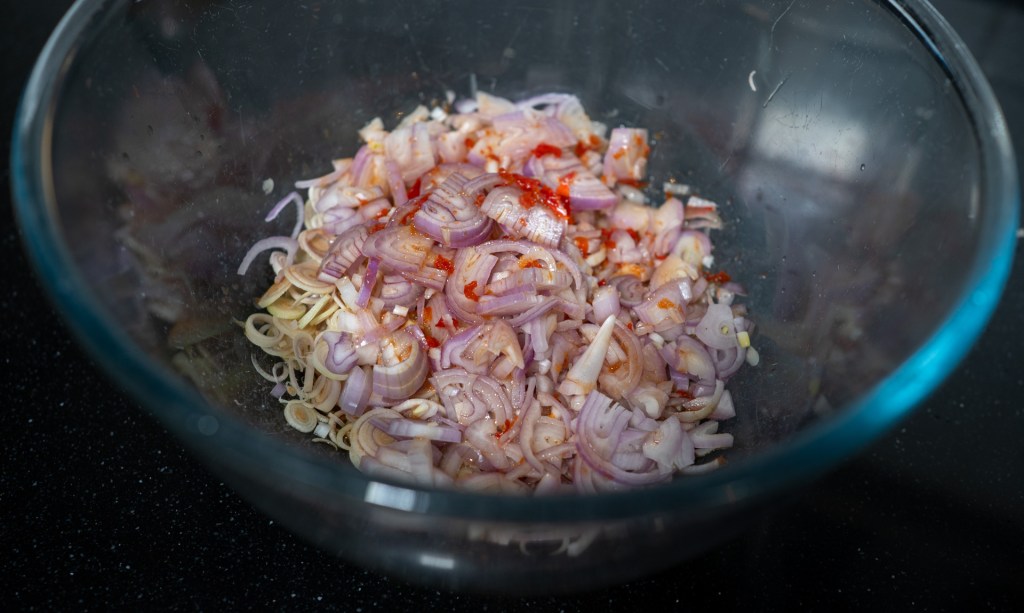
Combine 50 grams of thinly sliced lemongrass and 70 grams of sliced shallots in a large bowl. Add the dressing, one tablespoon of minced mint, and the sliced duck, then toss until well combined.
Garnish with the roasted cashews, sliced chilli, and a few mint leaves, then serve at once.
Wine pairing
This is great with a Condrieu, a full-bodied Viognier from the Rhône Valley. Another full-bodied white wine with medium-low acidity would also work well, such as a Malvasia from Sicily or a Pecorello from Calabria.


Stefan – I had never heard this name or eaten anything resembling it. Do not recall ever having had duck as a first course or used lemongrass thus. So it is very interesting trying to ‘taste’, reading the ingredients 🙂 ! Cashews, mint together! Thank you also for the advice in cooking the actual duck. Useful for other uses also . . .
LikeLiked by 1 person
That’s interesting. Is the lemongrass pleasant to eat this way? Did you remove the outer tough layers? I’ve never thought of using sliced raw lemongrass.
LikeLiked by 1 person
Very pleasant to eat. I did remove one outer layer as I usully do with lemongrass. I never thought of it before having this in Thailand.
LikeLike
Thanks, Stefan. Will try it as soon as possible. Great inspiration!
LikeLiked by 1 person
The salad looks wonderful. I never would have thought of using duck in a salad.
LikeLiked by 1 person
I’ve seen and prepared western salads with duck in it, but the ratio of duck to greens and vegetables is lower. Thai also has laab (or larb), which is a ground pork salad with herbs!
LikeLike
Fascinating – thanks for the info.
LikeLiked by 1 person
I’ve never had or prepared lemongrass like this – this is eye opening for me. Wow! Cant wait to try. This is such a decadent salad with all those flavors and textures – phenomenal!
LikeLiked by 1 person
What a great time saver to prepare the the in bulk for a quick and easy dinner. I do the same for many things. The flavours sound and comforting. We love Thai food so I can guarantee we would love this dish.
LikeLiked by 1 person