The Italian guide Gambero Rosso awards one, two, or three gamberi to rate trattorie in Italy. In the 2026 guide, only 49 trattorie were honored with the highest rating of tre gamberi. Due to the rich food culture, a large proportion of these are in the region of Emilia-Romagna, with its main city Bologna as the food capital of Italy. Whenever I am in Italy, I always try to eat at as many trattorie with tre gamberi as I can. Over the years, I have had the pleasure of trying 16 out of the current list of 49.
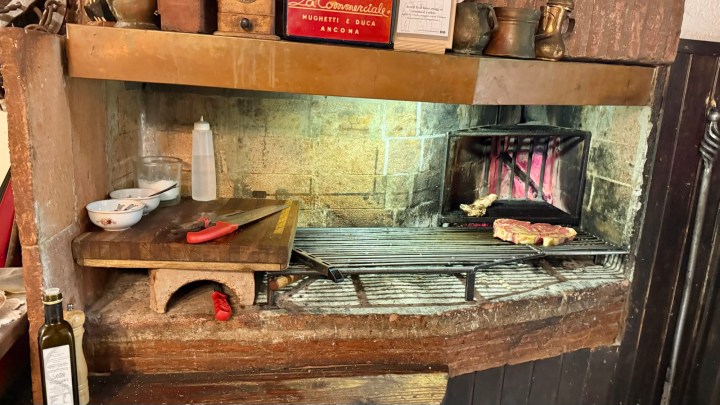
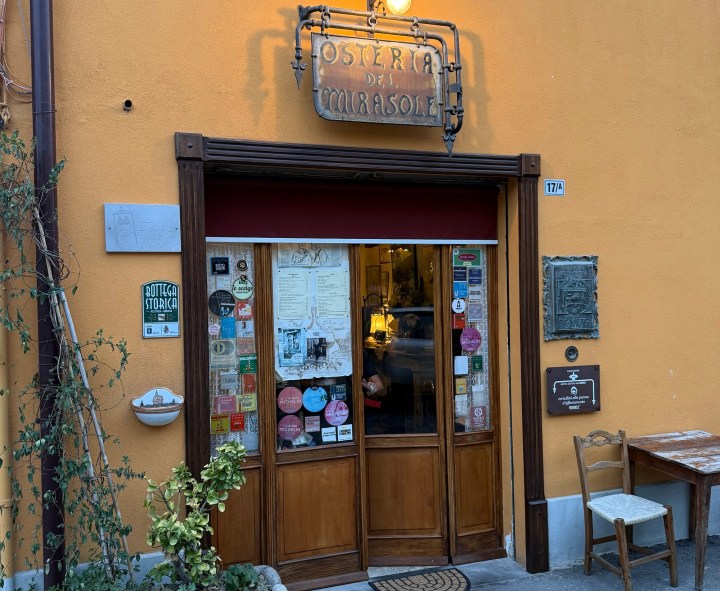
Unfortunately, I did not manage to get a reservation for All’Osteria Bottega in Bologna, but I did visit Antica Osteria del Mirasole in the town of San Giovanni in Persiceto, just outside of Bologna. It is widely considered one of the finest expressions of traditional Emilian cuisine in Italy and was also ranked 2nd in the 50 Top Italy 2026. It is run by chef Franco Cimini and his wife Anna Caretti. The decor is very rustic, and you can see the chef at work preparing meat over the fire.
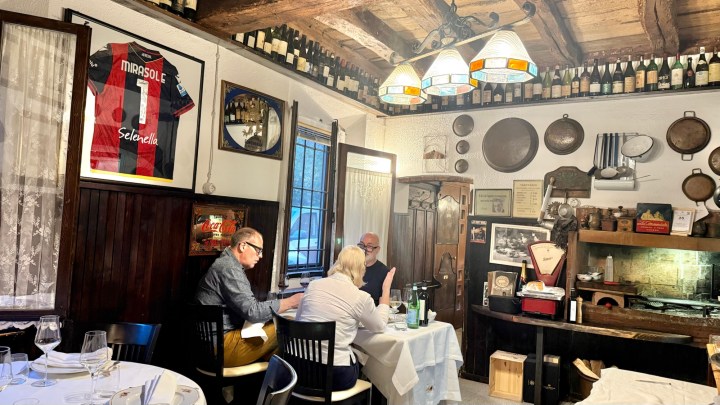
They offer two tasting menus: the Great Classics of the Past (85 euros) and the Great Classics of Mirasole (90 euros). There is also an extensive a la carte menu. There is no wine pairing, but there is a wine list with a large selection of moderately priced bottles.
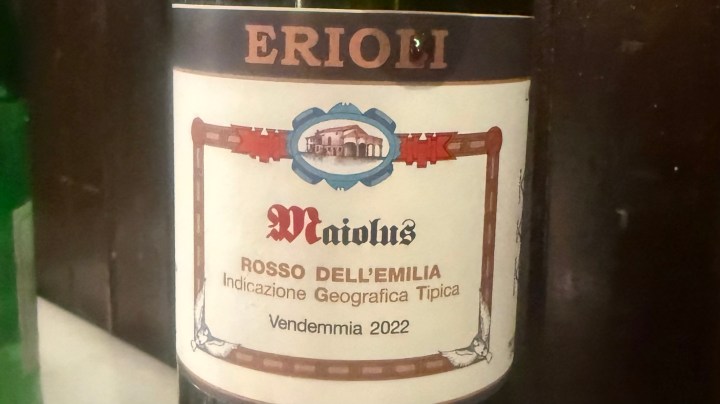
We wanted to drink something local and opted for a field blend of Barbera and Negretto, a rare and almost forgotten grape variety. The wine offered a complex bouquet of dark fruits and earthy notes, and was dry and fresh with persistent tannins that worked well with the rich food.
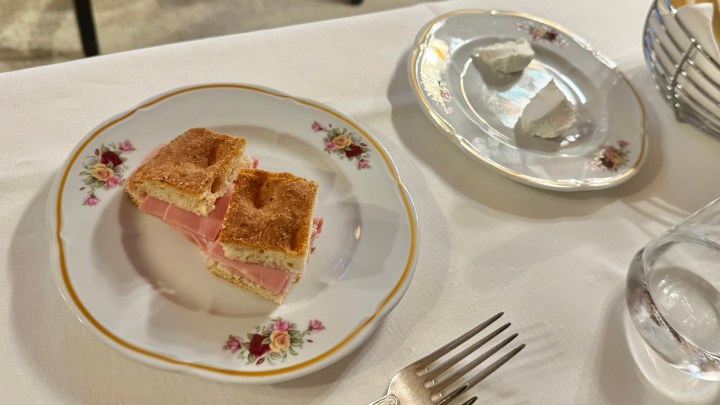
The meal started with mortadella on bread and some excellent fresh ricotta.
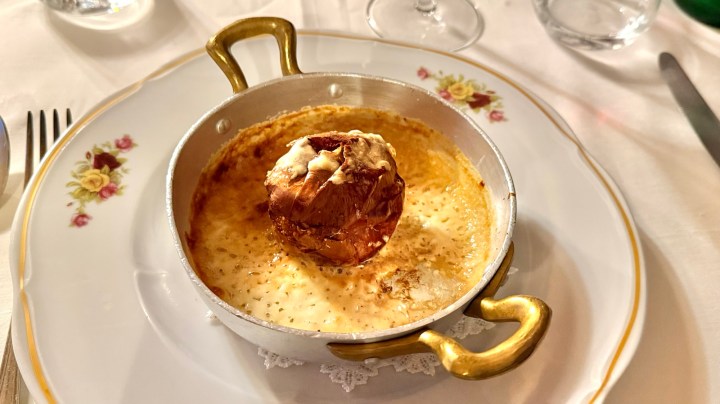
The antipasto was a baked onion stuffed with rabbit liver and melted cheese. The onion was very soft and sweet and balanced out the liver flavor very nicely.
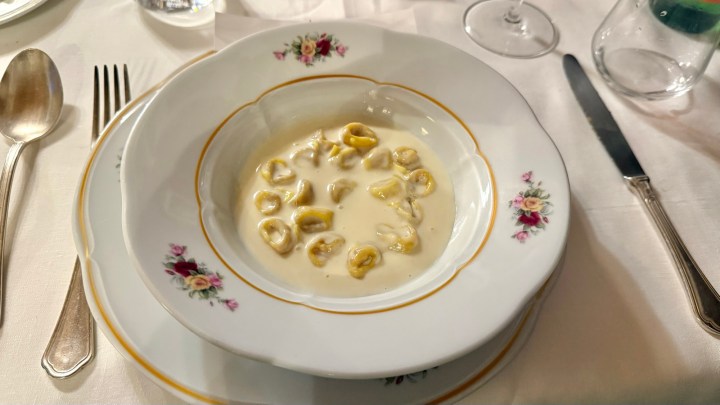
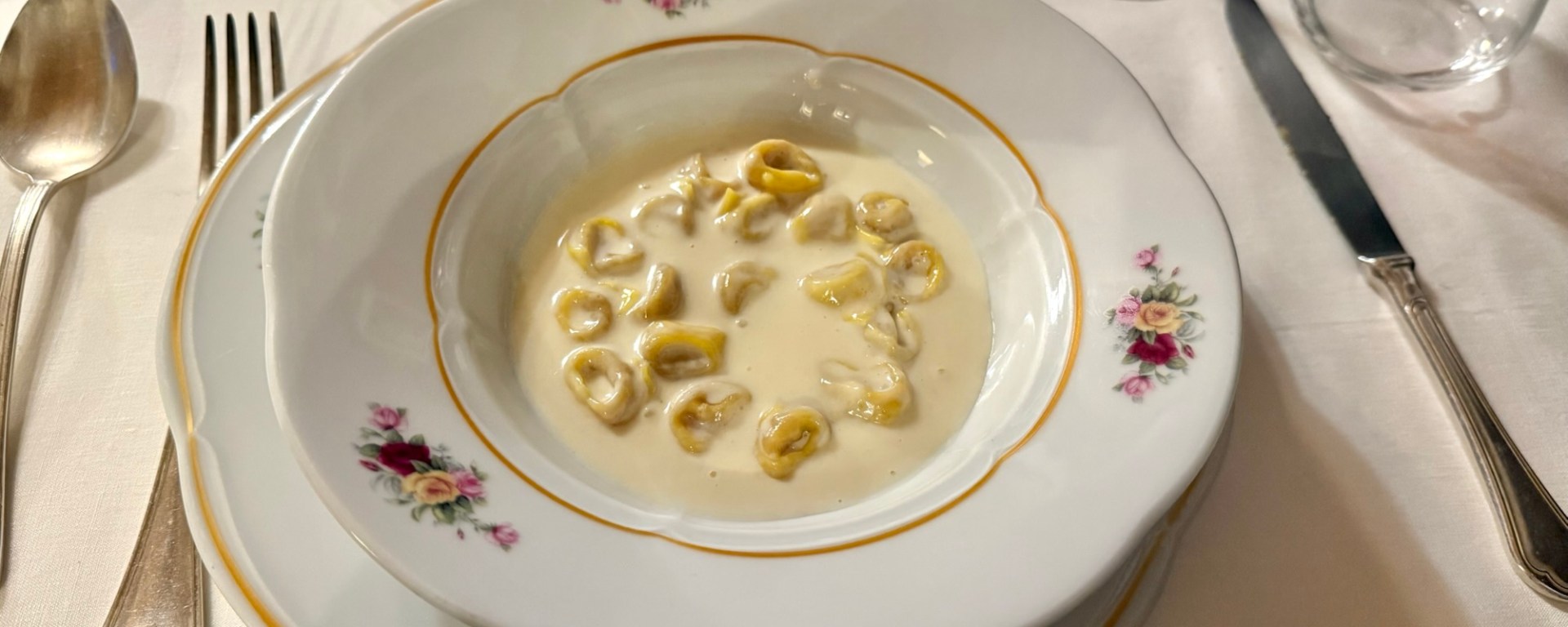
The first primo was the most famous dish of the restaurant and features in both tasting menus: tortellini with the restaurant’s own cream, panna d’affioramento. The restaurant translates it as “outcrop cream,” but I think something closer to the Italian, such as “rising cream”, better describes how the cream naturally rises to the top of the milk rather than being centrifuged out industrially. It is sourced from Anna Caretti’s family farm and is silkier and more floral than regular cream. It was outstanding, the highlight of the meal, and I can see why it has become a cult dish.
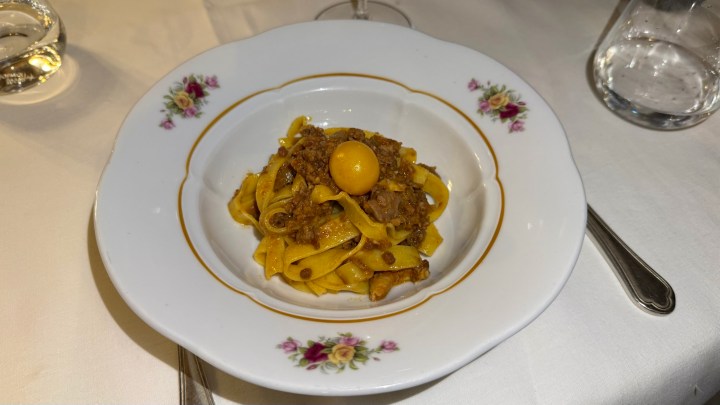
The second primo was another famous dish of the restaurant: tagliatelle with “courtyard” ragù. Rather than the city version from Bologna that uses prized cuts of meat, this is made from the offal of courtyard animals—chickens, rabbit, and guinea fowl—using gizzards, hearts, and livers. The ragù had a very deep meaty flavor that was perhaps even better than the city versions I have tasted so far. A salted egg yolk was served on top to further enhance the courtyard element of the dish.
Counting dishes in Italian tasting menus can be confusing, because the primo (first) dish is actually served second, after the antipasto. In this case there were two primi, so the third dish in the menu was the second primo.
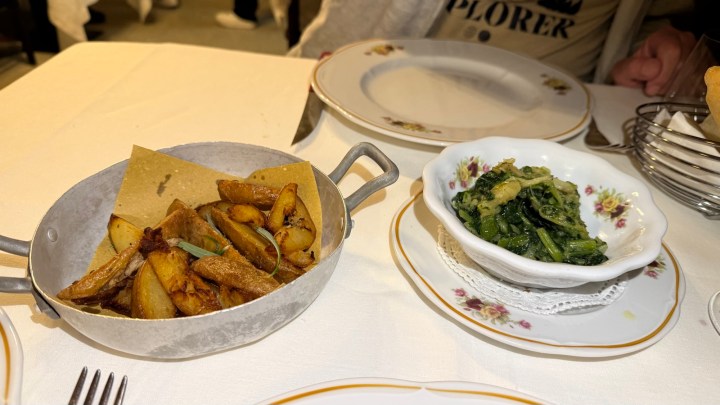
The two secondi were however served at the same time, together with the contorni (sides): potatoes roasted in lard and chicory sautéed in olive oil with garlic.
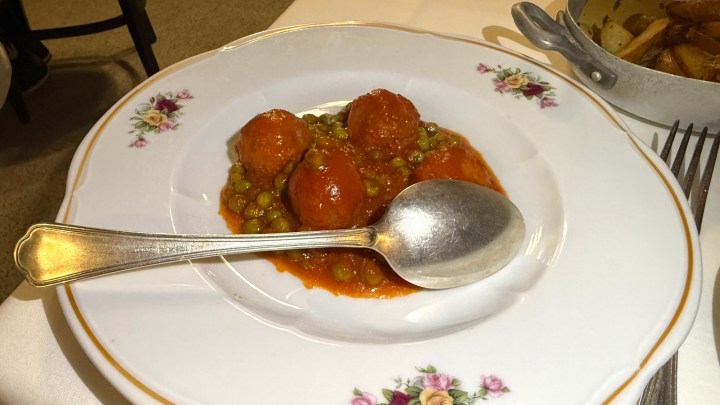
The veal and mortadella meatballs stewed in tomato sauce with new peas were excellent.
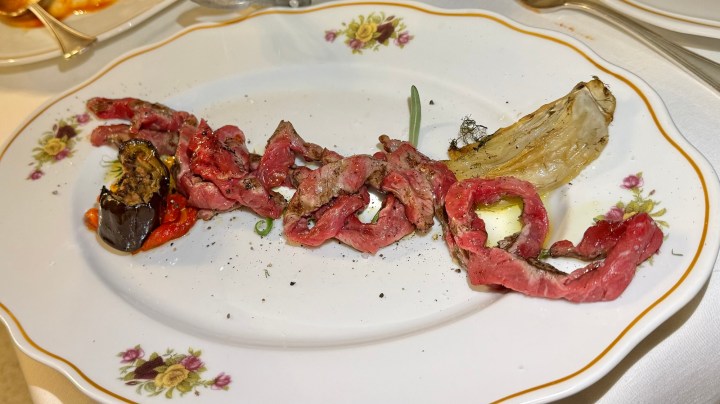
The “old cow neck” was grilled over the fire by the chef and served rare with a slight hint of smoke; it was surprisingly tender for beef from an “old cow”. The beef was served with more flavorful contorni: roasted fennel and roasted peppers.
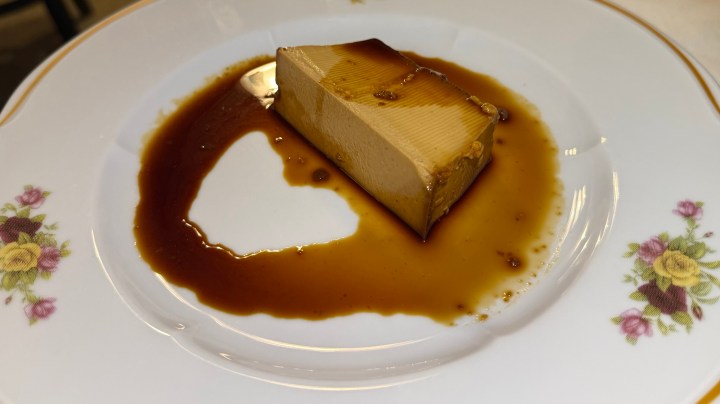
The dessert was a pudding with dark caramel sauce, quite close to the French classic crème caramel, but perhaps a bit richer.
We ordered a rustic menu in a rustic restaurant, and so it was no surprise that the food was also quite rustic. It was, however, of very high quality and extremely flavorful. I strongly prefer this over modern creations that look beautiful and are original but lack flavor. The service was efficient, but no explanation of the dishes was offered, other than a leaflet with an explanation of the cream and a framed explanation of the courtyard ragù on the wall. Although the food and style are certainly that of a trattoria, the prices are not; they are actually about double what most trattorie charge. It was certainly worth it, though.


Oh, I would have loved to have been there . . . no fuss, no bother, no fancy dishes – just (forgive me) obviously bloody good food 🙂 ! The tortellini look fabulous and I am smiling about the ‘old cow’s neck’ looking so appealing ! Slightly a different vibe to the ‘usual’ ones you have shown on your travels . . . but methinks I would have cherished a very comfortable ‘real’ meal 🙂 !
LikeLiked by 1 person
Another amazing meal!
LikeLiked by 1 person
oh dear! I could eat there!!!!
LikeLiked by 1 person
The food looks delicious. Love the tableware!
LikeLiked by 1 person
Credo che ci farò un giretto, grazie!
LikeLiked by 1 person