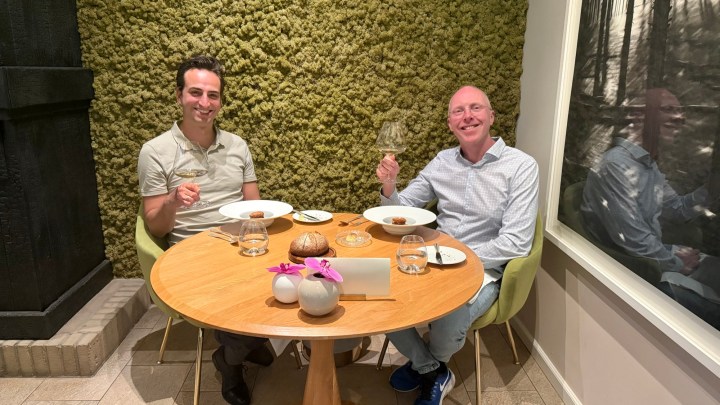
Restaurant Merlet, located in the dune-swept coastal village of Schoorl about an hour north of Amsterdam, has held a Michelin star since 1998. Despite its reputation, I had never visited before, largely because Amsterdam’s vast culinary scene is so easily accessible by public transport, which is a crucial factor when you want to fully enjoy wine pairings. That changed last autumn while I was taking WSET3 classes to qualify for the WSET4 Diploma Course in Wine. As it turned out, Merlet’s maître-sommelier Rein Denneman and sommelier Jeffrey van der Beek were in the exact same class. They told me about their exceptional wine program, and a quick look at their online wine list left me thoroughly impressed. They offer an astonishing 60 wines by the glass, many poured via Coravin. It is not just the sheer quantity that stands out, but the remarkable quality and selection of back vintages. I know of few other restaurants where you can order a 2016 Barolo, a 2017 Pomerol, or a 2020 white Hermitage by the glass, especially at such reasonable prices compared to the rest of the Netherlands. This discovery prompted me to book a table at Merlet to celebrate the birthday of my friend Melvin, with a special word of thanks to our husbands for driving us there and back.
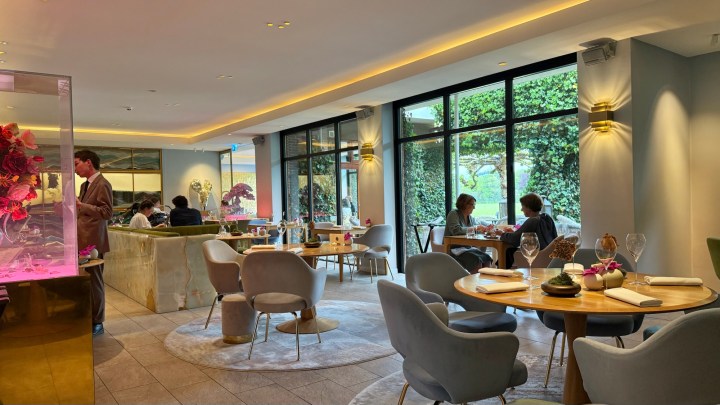
The dining room decor, designed by John Breed, leans toward the eclectic. A striking design feature is the double-glazed panel separating the kitchen from the dining area, which houses a kinetic sand sculpture by Austrian artist Klaus Bosch, famously known as the Sandman. Framed by representations of the sea below and the sky above, the shifting sand and water beautifully evoke the dunes of Schoorl. Every time the panel is rotated, an entirely unique landscape unfolds before your eyes. In summer, weather permitting, outside seating offers a wonderful view of the actual dunes.
The kitchen is led by Marco Helsloot, who was born and raised in the fishing town of Volendam. Helsloot is a familiar face at Merlet, having previously served as its sous-chef. He returned to take the helm as head chef in 2024, following successful stints as sous-chef at two-star establishments Het Nonnetje in Harderwijk and 212 in Amsterdam. The restaurant features a six-course chef’s menu for 185 euros, which can be scaled down to four or five courses, alongside an à la carte selection. While the standard wine pairing is priced at 90 euros, I opted for the premium pairing at 190 euros. This choice perfectly aligns with my personal rule of thumb that, for a truly balanced dining experience, the wine pairing should cost roughly the same as the food menu.
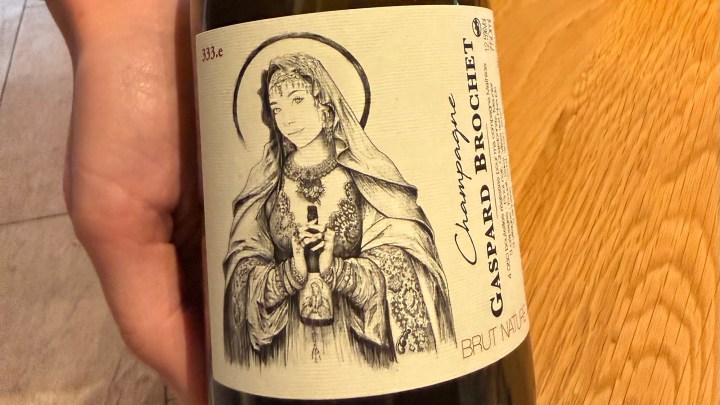
We started with a glass of Champagne by Gaspard Brochet, cuvée 333.e brut nature. The three 3’s indicate that it is a blend of three grapes (Chardonnay, Pinot Noir, Pinot Meunier), three vintages (2019, 2020, and 2021), and three villages. It was aged for 24 months on the lees and was elegant with soft bubbles and notes of bruised apple.
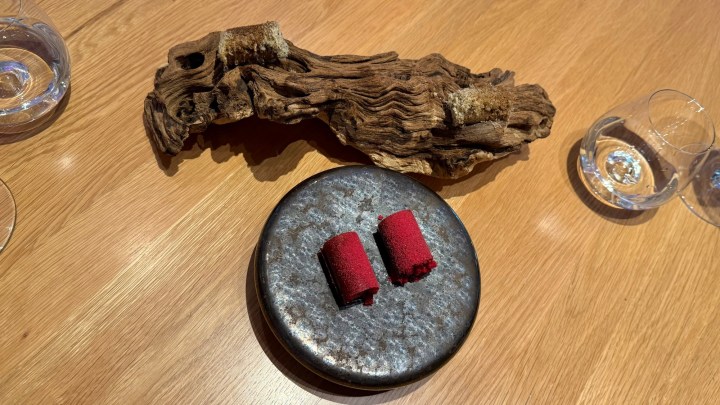
The first bites were a lovely roll of porcini mushroom and local XO-Beemster cheese, alongside a crispy roll of beetroot, raspberry, and smoked almond. The latter really should have come with an instruction to eat it in one bite.
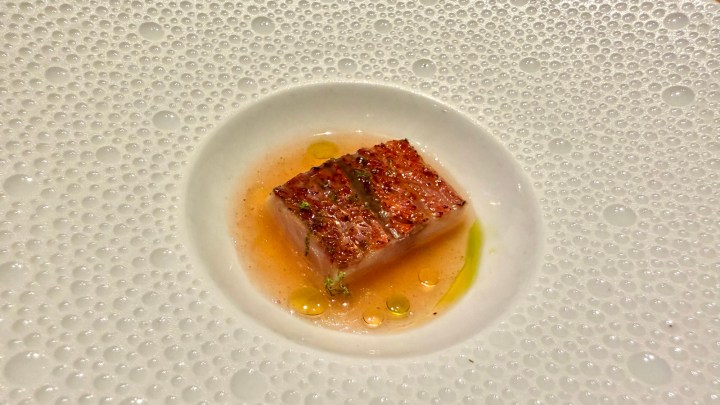
The third bite was barely scorched red mullet with a cream of miso and an escabeche of tomato, strawberry, and lemon verbena. I found the mullet a bit tough, so it probably should have been sliced more thinly or scorched just a little bit longer.
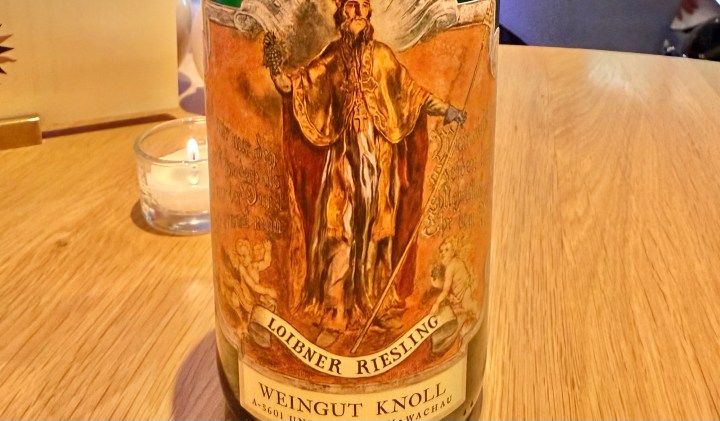
The first wine of the pairing was a Riesling from the Wachau region in Austria, the Loibner Federspiel 2024 by Weingut Knoll. It was elegant and less acidic than Riesling often can be, featuring nice aromas of yellow apple. Jeffrey informed us that he had paired this wine with both the final bite and the first course.
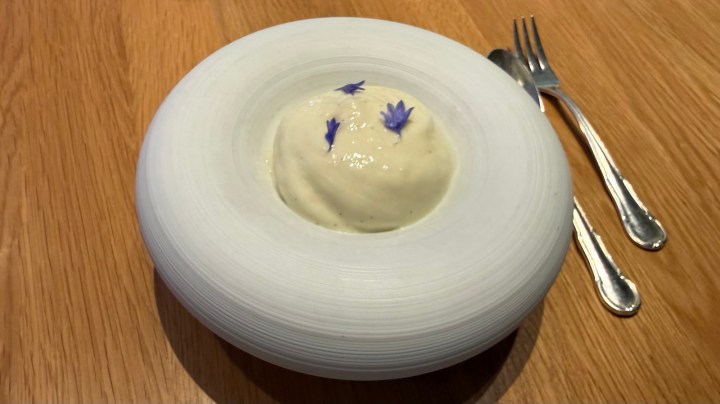
Although it is called a six-course menu, the last bite could easily have been considered a course on its own. The dish featured three layers: lukewarm North Sea crab meat at the bottom, a sorbet of coconut and lime leaf in the middle, and a lukewarm white asparagus mousse infused with vanilla on top, finished with a touch of caviar. The contrast between the temperatures and flavors was very pleasing. We were instructed to dig deep to include all layers in every spoonful, but the shape of the bowl meant the first bites were dominant in asparagus while the final bites were mostly crab. The Riesling paired better with the asparagus than with the crab, making the overall pairing experience a bit variable.
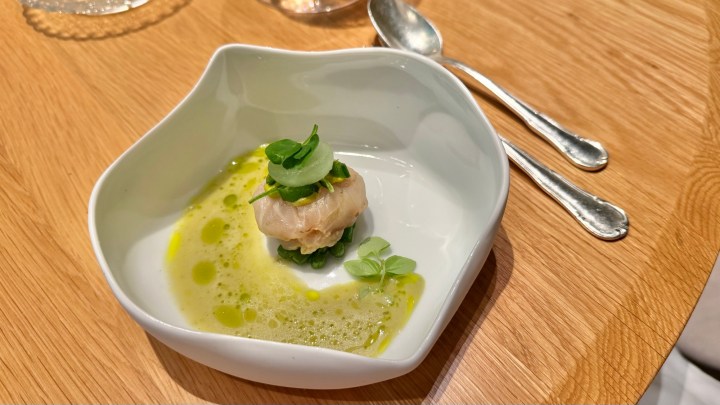
The first course of the menu was about the same size as the final bite, which underscored my previous point. It featured a wild branzino ceviche with a jalapeño curry and basil. Although the initial pours of the wine pairing were generous, the substantial size of that last bite, combined with a 15-minute pause before the first course arrived, meant we had very little wine left in our glasses to have with the dish. The service staff appeared quite busy at that moment, and since the empty glasses went unnoticed and the pairing was a bit less effective anyway, we decided to proceed without waiting to request a refill. Although the branzino had been announced as ceviche, I couldn’t really detect any citrus or other acidic flavor.
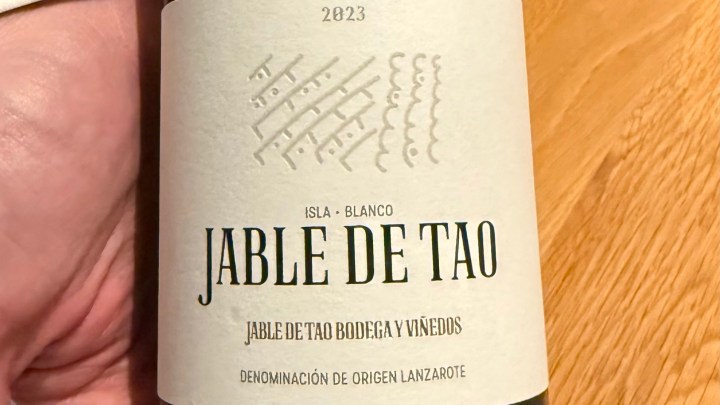
The next wine was a Malvasia Volcanica from Lanzarote, one of the Canary Islands. Having recently been on a wine trip to Tenerife, this volcanic style was a welcome and familiar sight. The wine offered an aroma reminiscent of a white Burgundy, but on the palate, the texture was distinctly more lean and mineral driven.
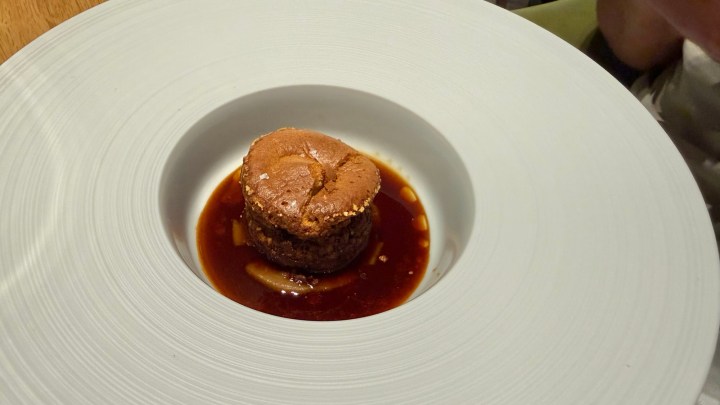
This was a good pairing for an excellent dish, a soufflé of a Cévennes onion with a caramelized jus and a cream of that same onion. The dish had great depth of flavor, which was remarkable for a preparation made almost entirely of onion, with just a touch of Beemster cheese added to enhance the flavor.
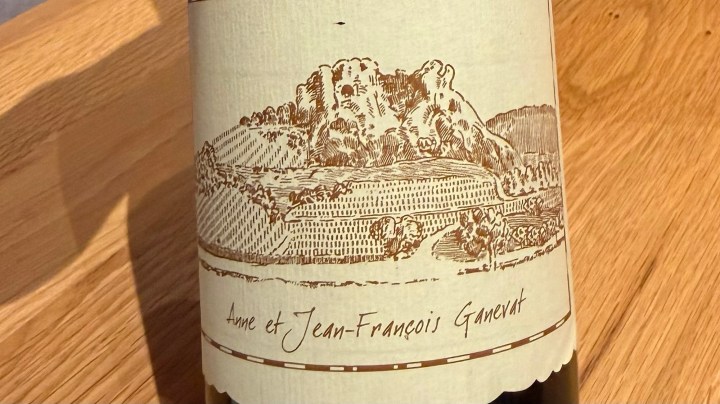
The next wine was a Chardonnay from the Jura by cult winemaker Jean-François Ganevat. The Les Cèdres 2016 had been aged for 36 months in neutral oak barrels followed by many years of bottle aging. In the Jura, wines are produced in both an oxidative sous voile style, similar to Fino Sherry, and a non-oxidative ouillé style. Fortunately, this wine was crafted in the non-oxidative style. Thanks to the extended aging process, the vibrant, electric acidity that this wine is known for was beautifully balanced by a certain richness. Still, it was not a wine I would enjoy by itself.
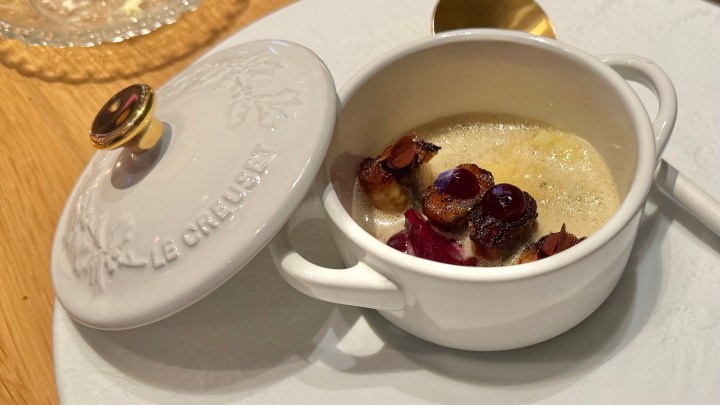
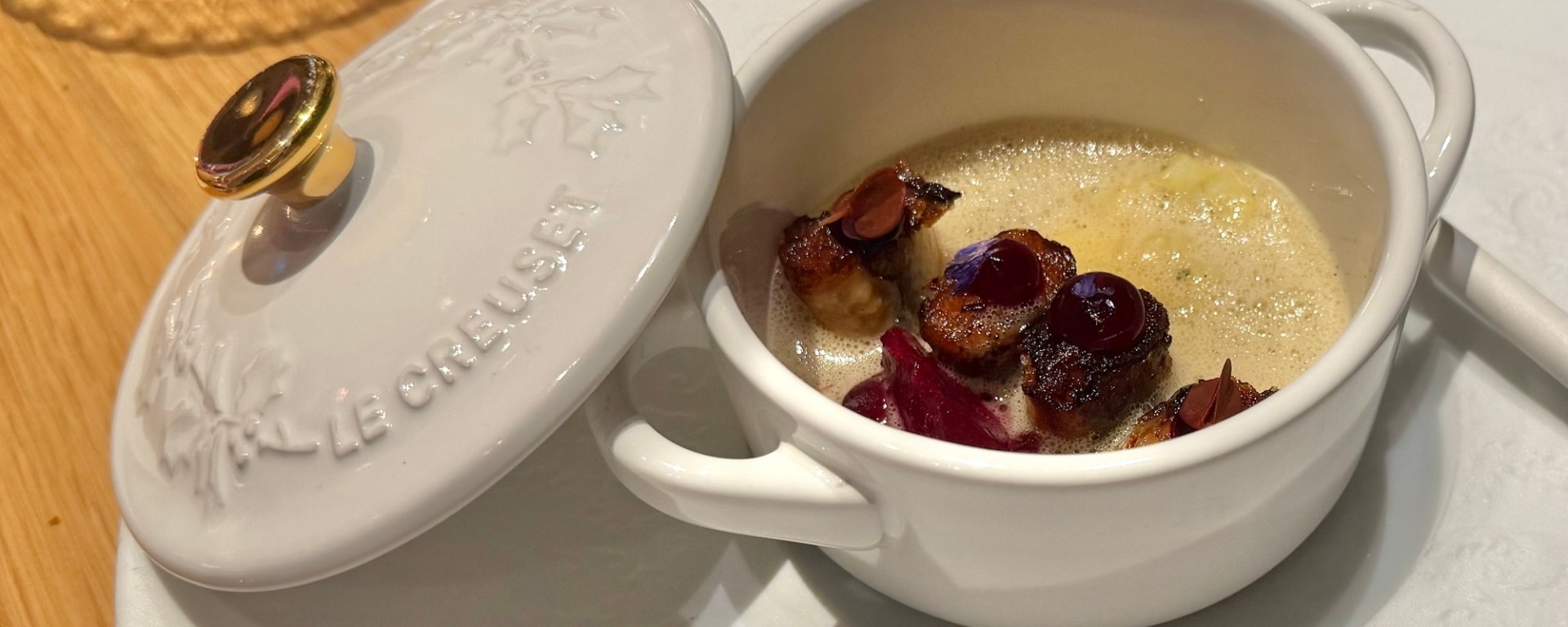
The wine was however a very good pairing for the “rechtop in het pannetje” (upright in the little pan), a traditional stewed eel dish from the chef’s hometown of Volendam. For this recipe, the eel is sliced into sections that are placed upright in the pan and stewed with vinegar, black pepper, and butter. In the restaurant version, the eel was fileted and served with the traditional side of beetroot. Both the wine and the dish possessed great depth of flavor, offering a wonderful balance between creaminess and acidity.
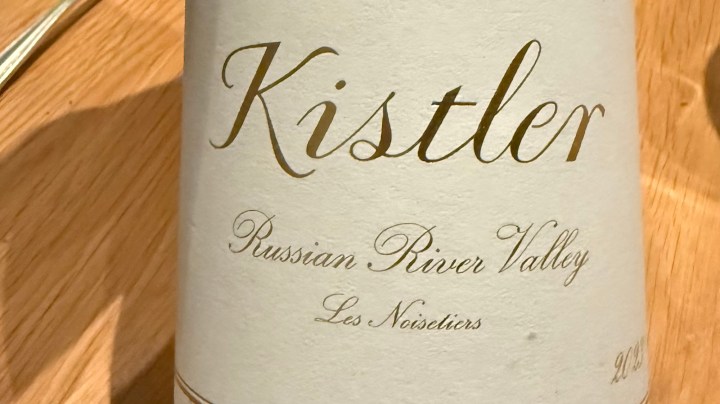
The next wine was a 2023 Les Noisetiers Russian River Valley Chardonnay by Kistler, an excellent Chardonnay from California’s Sonoma Coast.
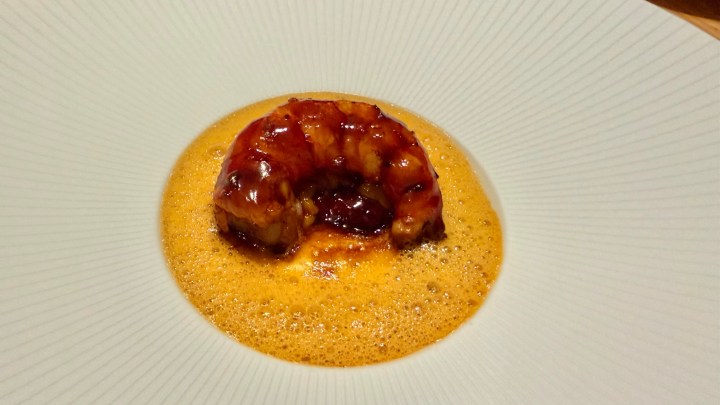
This was a very good pairing for the Carabinero shrimp with confit of Iberico pork cheek and XO sauce. The shrimp and pork offered a very different but perfect texture and flavor. The sauce bridged the two components, though I did not quite recognize the flavor profile as the traditional XO shellfish sauce from Hong Kong, as it tasted more like butter. A fresh element, such as the chilies found in a traditional XO sauce, would have brightened the dish nicely.
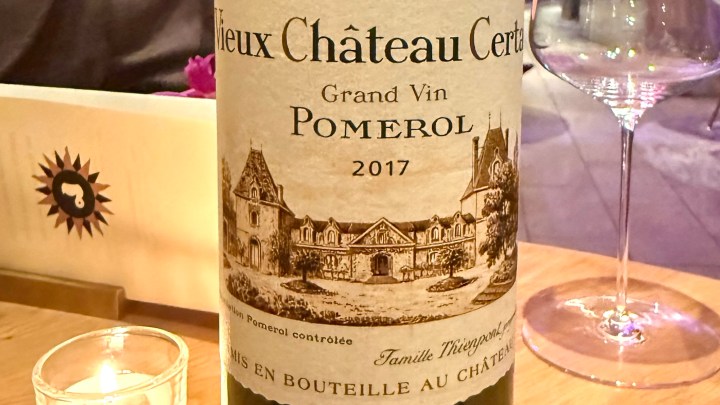
One of the wines served with the main course was a real treat: the Vieux Château Certan Pomerol 2017. This is a blend of 80% Merlot, 15% Cabernet Franc, and 5% Cabernet Sauvignon. Although the 2017 vintage does not have an outstanding reputation overall in Bordeaux, this bottle was drinking at its absolute peak, showing beautiful, complex berry fruit, a full body, and velvety tannins.
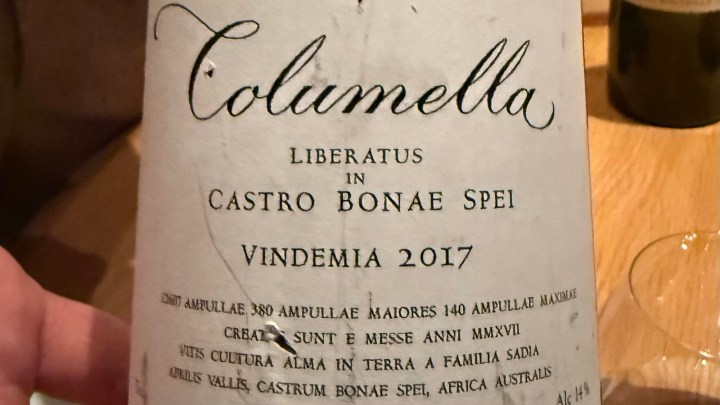
The other wine served with the main course was also outstanding: the Columella 2017 by Sadie Family Wines from Swartland, South Africa. This is a blend of Syrah, Mourvèdre, Grenache, Carignan, Cinsaut, and Tinta Barocca, aged for twelve months in French oak, of which only 5% was new. The wine was remarkably elegant, featuring beautiful fruit aromas.
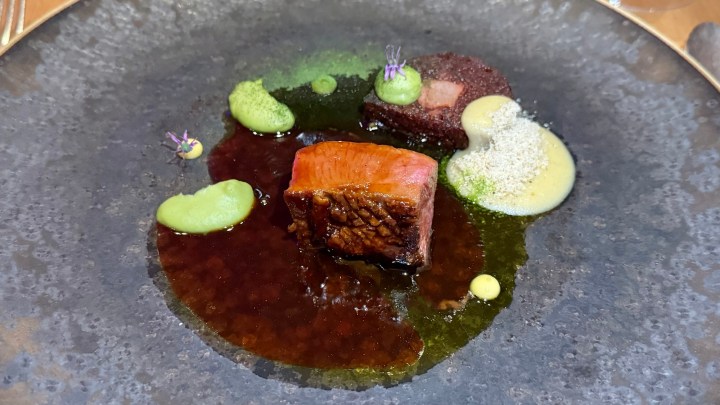
Both wines were great, but the Pomerol was the better pairing with the main course of locally sourced lamb. The dish included lamb saddle and what was called a terrine, though it resembled pulled meat, made from the neck with a piece of tongue. It was served with a cream of wild garlic, a sauce of Oudwijker Fiore cheese, and a lamb jus infused with cumin. While the saddle was exceptionally tender and juicy with a crispy fat cap, the true star of the dish was the delicious terrine.
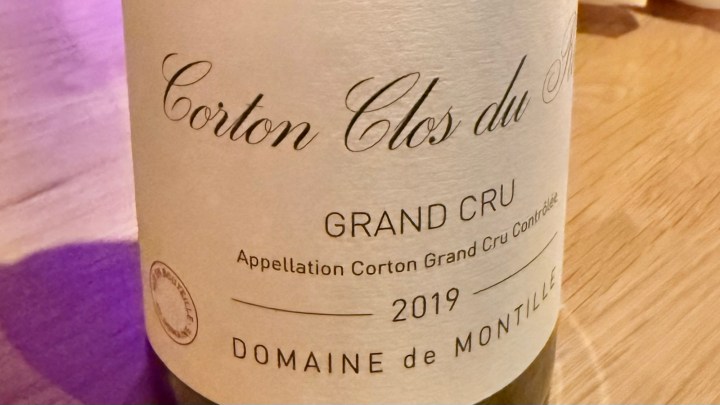
We were asked if we wanted to add the cheese course to our menu, to which I responded as always that I would like a selection of cheeses that pair well with a single wine. Who can say no to the Corton Clos du Roi Grand Cru 2019 by Domaine de Montille that Jeffrey suggested? I certainly can’t.
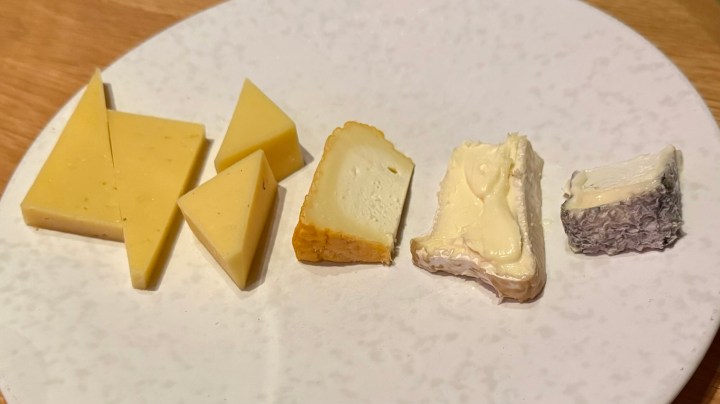
It was incredibly elegant and another absolute treat. It proved a bit tricky to find cheeses on the cart that actually worked with the wine, and a few of the initial suggestions, like a soft goat cheese and a blue cheese, clashed terribly. In the end, however, we managed to find some successful combinations.
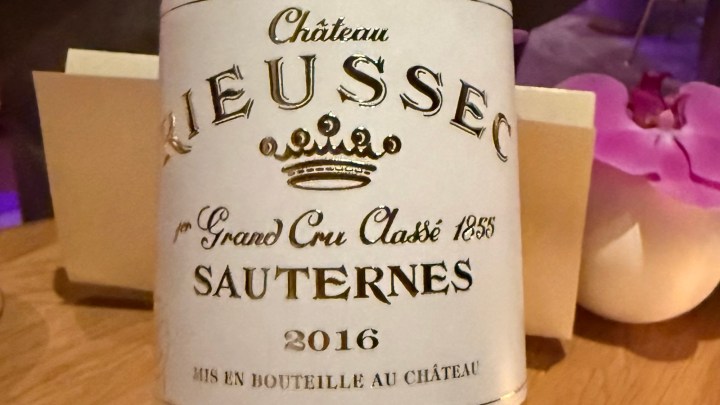
The dessert wine was a Château Rieussec Sauternes 2016, another treat that was at its peak drinking and just starting to show some tertiary notes like a hint of saffron.
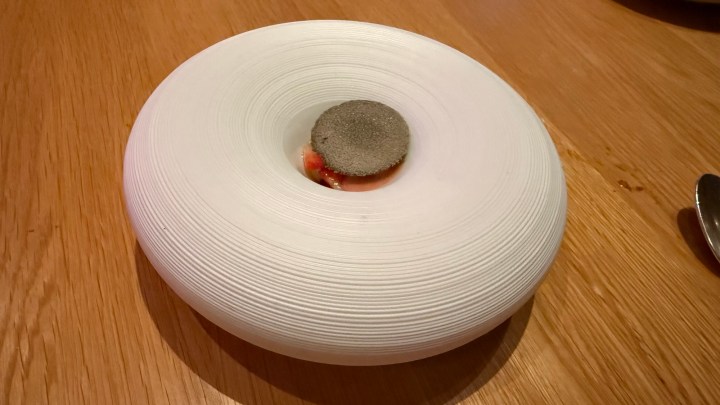
The pre-dessert was a strawberry sorbet with a cream of white chocolate and fennel, with licorice caramel.
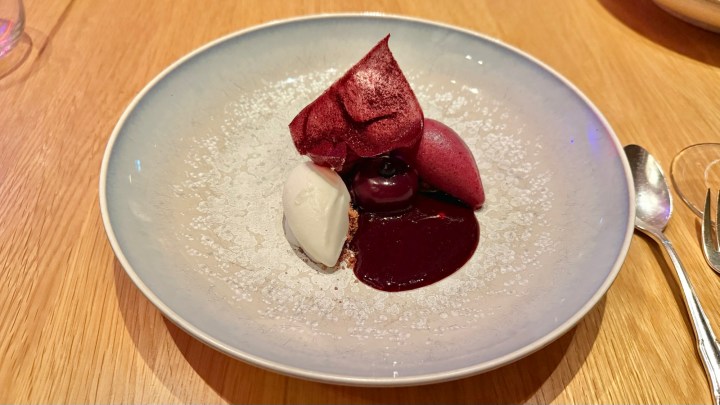
The dessert was cottage cheese from the Noorderhoeve, a nearby farm and important source of produce for the restaurant. It was served with spruce tip oil, blueberries, and pine oil sourced from the dunes at Schoorl. Both the dessert and the wine were delicious, but I could not help but wonder if a red dessert wine would have been a superior pairing.
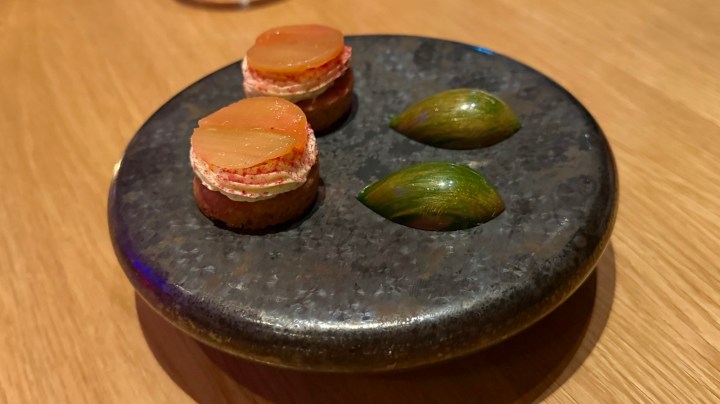
Tea or coffee was served with some nice petit fours.
The food at Merlet was excellent. The chef has a distinct, individual style and, with the exception of the Carabinero and Iberico dish, relies heavily on locally sourced ingredients and truly makes them shine. While we enjoyed some preparations more than others, every single course was good, with the crab, onion, eel, and lamb standing out as the absolute highlights. The Michelin star is certainly well deserved.
As I mentioned in the introduction, my rule of thumb is that for a wine pairing to match the caliber of the food, it typically needs to cost about as much as the menu itself. Because of the remarkably reasonable wine pricing at Merlet, the premium wine pairing here actually operates at an even higher level than the food, outshining what is offered at most three Michelin star restaurants I have visited. For a wine lover, dining here was an absolute joy. The wine selection itself was spectacular, featuring truly outstanding bottles, while the pairings, though perfectly enjoyable, didn’t always create that magical 1+1=3 synergy I look for in fine dining.
The service was excellent as well. The evening was perfectly paced, and each wine was served right before the corresponding dish arrived. The only minor hiccup in this timing occurred when a single wine was tasked with pairing across two separate courses.
I will definitely be back!


Reading this I am wondrously glad you found this place and that two husbands were willing to ‘do’ a birthday favour and ferry you on site 🙂 ! Scrolling back and forth – oh, how I would love to be sitting there overlooking the dunes . . . besides the interesting food, do like all their crockery . . . . . and, could you please pass that eel in the pot thru’ the screen . . . pretty please 🙂 ! And next time, find a place with beds close by and have the four of you at the table !
LikeLiked by 1 person