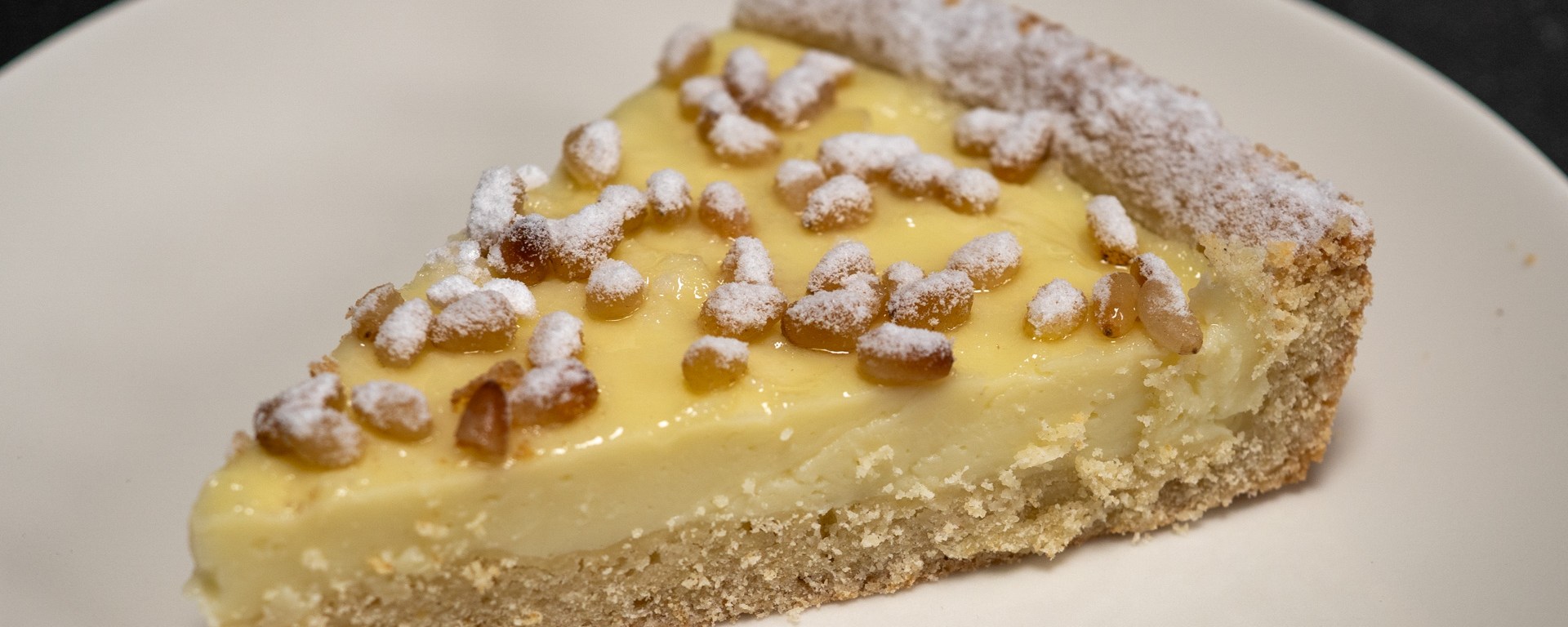
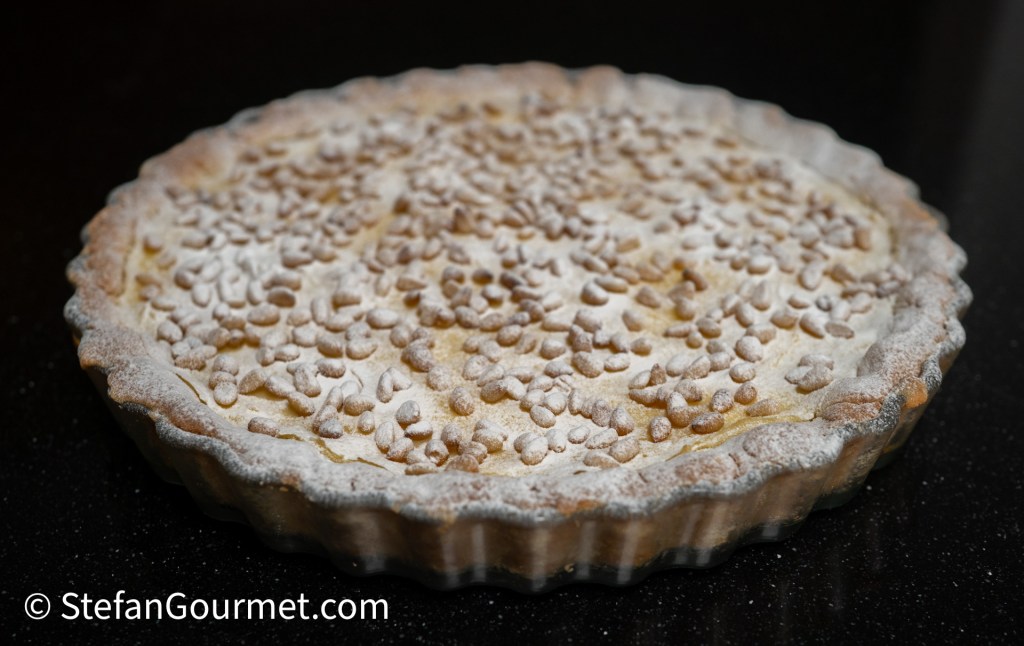
One of the most classic Italian desserts is Torta della Nonna, or grandmother’s cake. It is a simple pie made from sweet shortcrust pastry filled with pastry cream, with lemon zest infusing both the pastry and the cream, and topped with pine nuts. Originating in Tuscany, it was originally named simply cake with pine nuts, but after World War II, trattorie promoted it under the name Torta della Nonna to evoke a sense of heritage and home cooking. Today, it has spread throughout Italy and into Italian restaurants worldwide, much like Veneto’s Tiramisù.
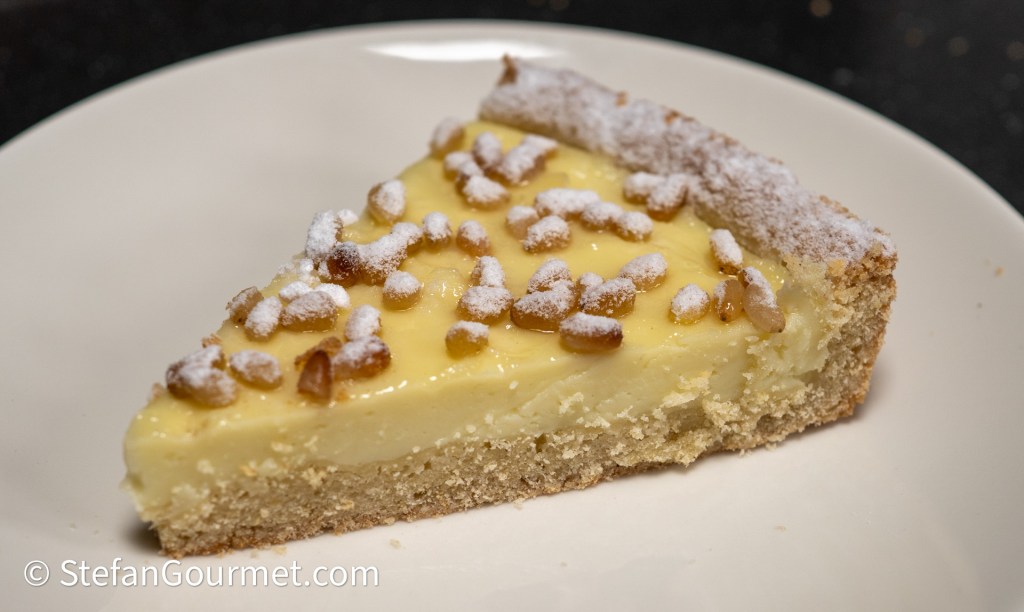
As with so many Italian classics, its beauty lies in its simplicity. The bright lemon flavor pairs seamlessly with the delicate nuttiness of the pine nuts, while the smooth cream offers a delightful contrast in texture to the crisp pastry. It can be made with a top crust, but I believe leaving it open offers a better ratio between pastry and filling.
Ingredients
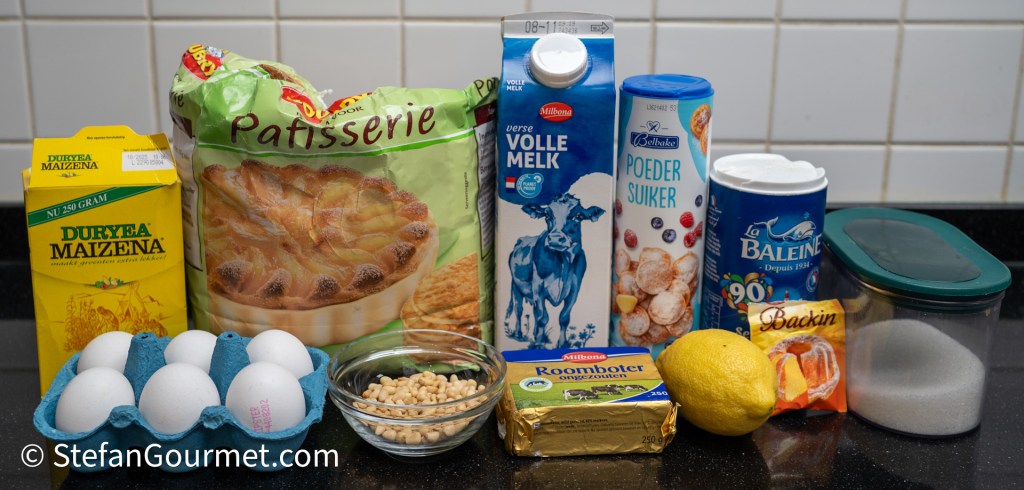
For the pastry
- 250 grams (1 2/3 cup) cake flour, divided
- 125 grams (9 Tbsp) cold unsalted butter, plus more for greasing the pie dish
- 75 grams (6 Tbsp) caster sugar
- grated zest of 1/2 untreated lemon
- 1 egg
- pinch of salt
- 1/2 tsp baking powder
For the pastry cream
- 500 ml (2 cups) whole milk
- 45 grams (3 Tbsp) cornstarch
- 100 grams (1/2 cup) caster sugar
- 5 egg yolks
- peel of 1/2 untreated lemon
To finish
- 50 grams (5 Tbsp) pine nuts
- icing sugar
Instructions
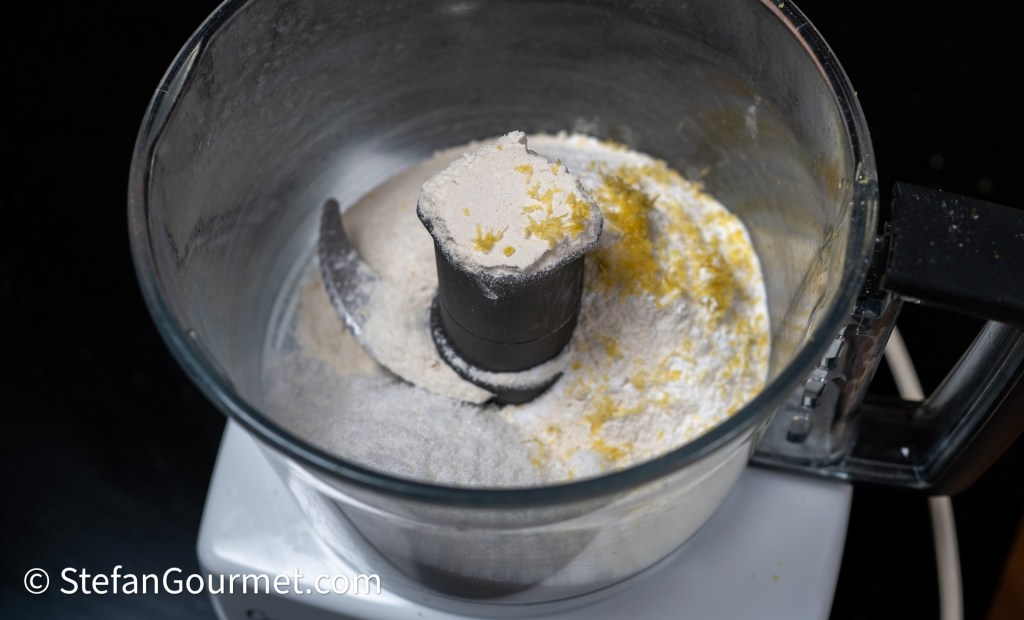
Place 180 grams cake flour, 75 grams caster sugar, a pinch of salt, 1/2 teaspoon baking powder, and the grated zest of half a lemon in a food processor, and process until well mixed. Mixing the dry ingredients first ensures they are well distributed within the dough.
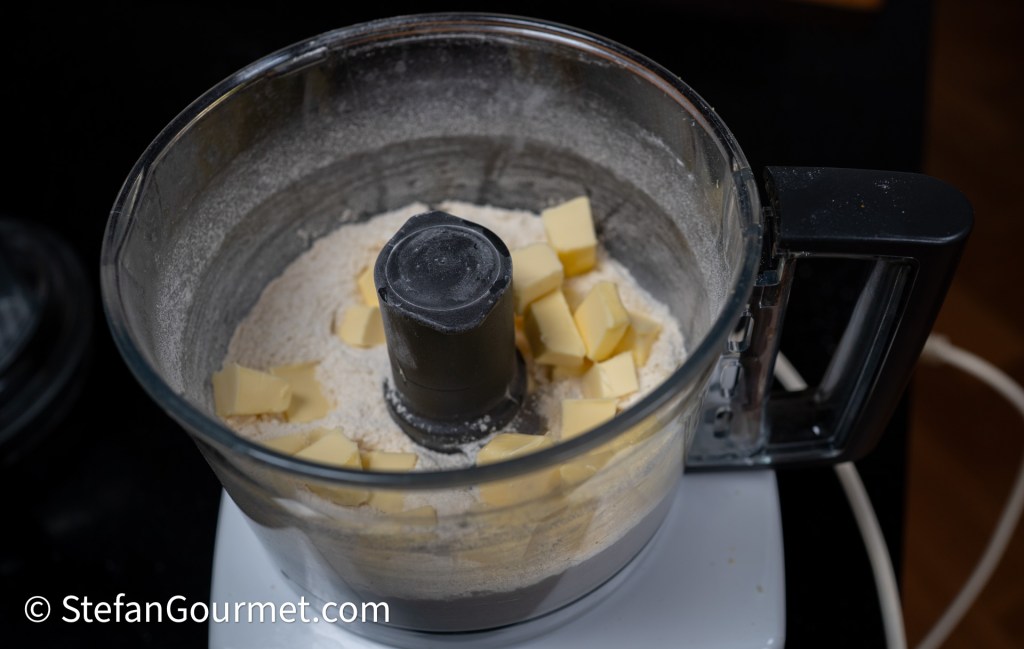
Add 125 grams of cold butter in cubes. Using cold butter will keep the pastry solid and easier to roll out and transfer into the pie dish.
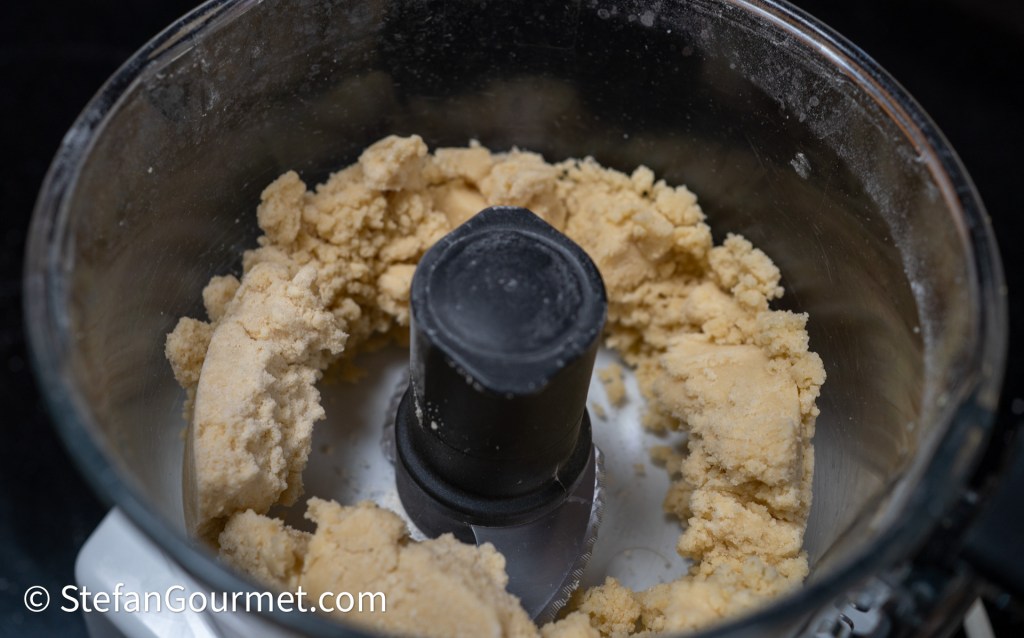
Process until it looks like moist sand.
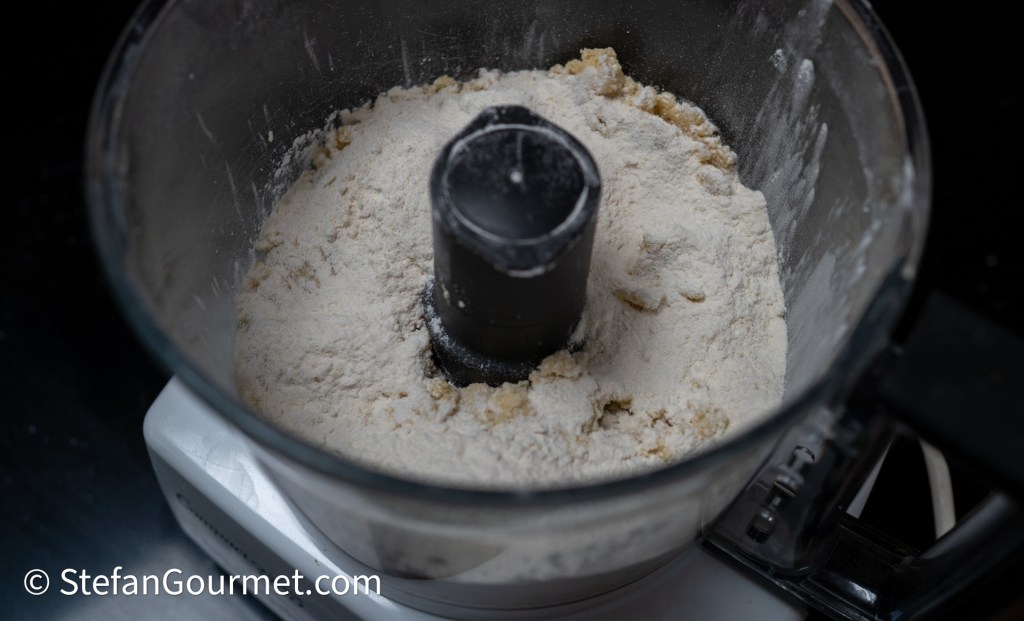
Press down with a spatula and sprinkle evenly with the remaining 70 grams of pastry flour.
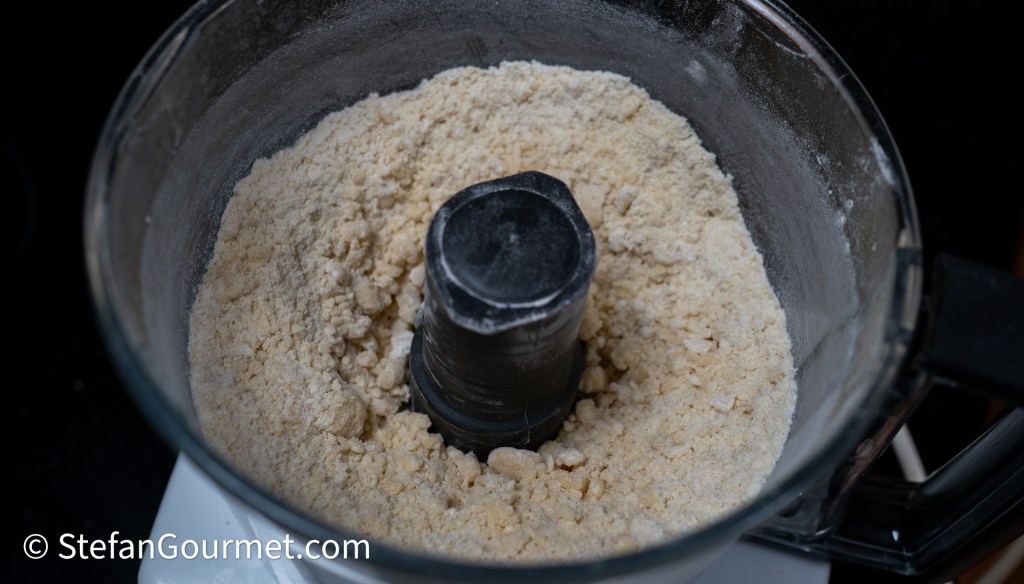
Process a few times with the “pulse” button to get small pieces of dough surrounded by flour.
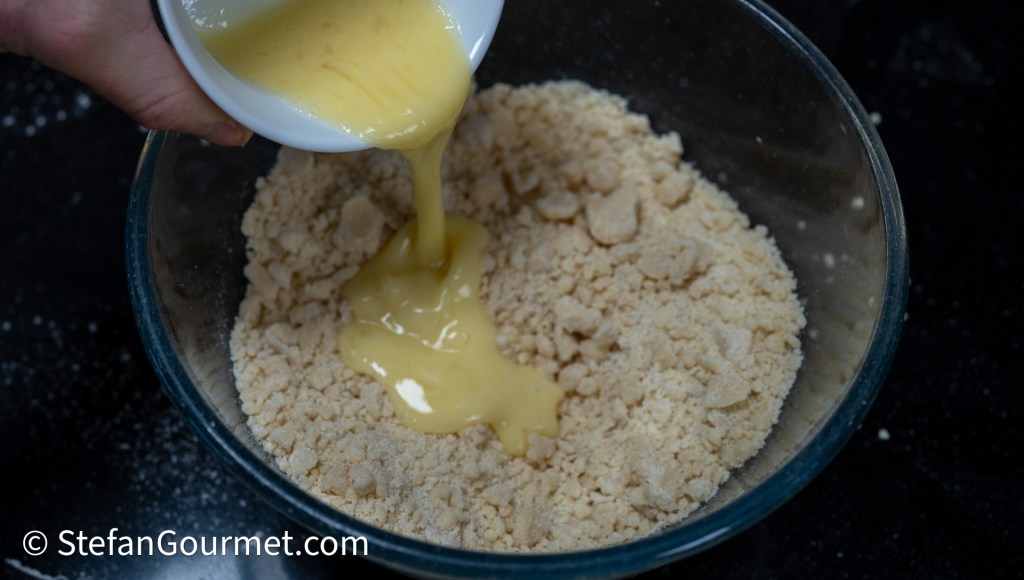
Transfer to a bowl and add a beaten egg.
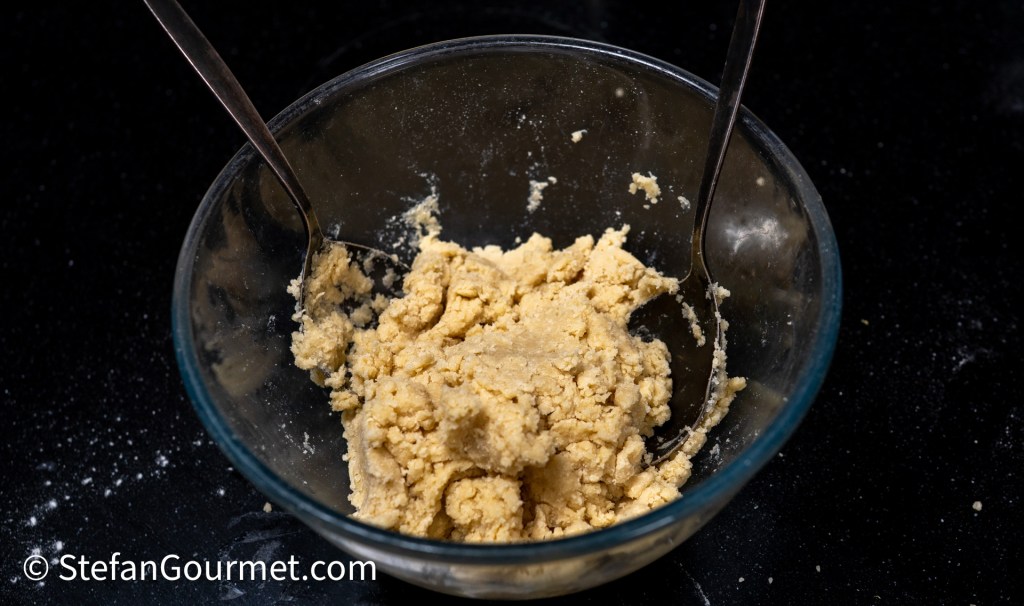
Stir with large spoons until the dough comes together mostly. By using spoons instead of your hands, you keep the dough cold.
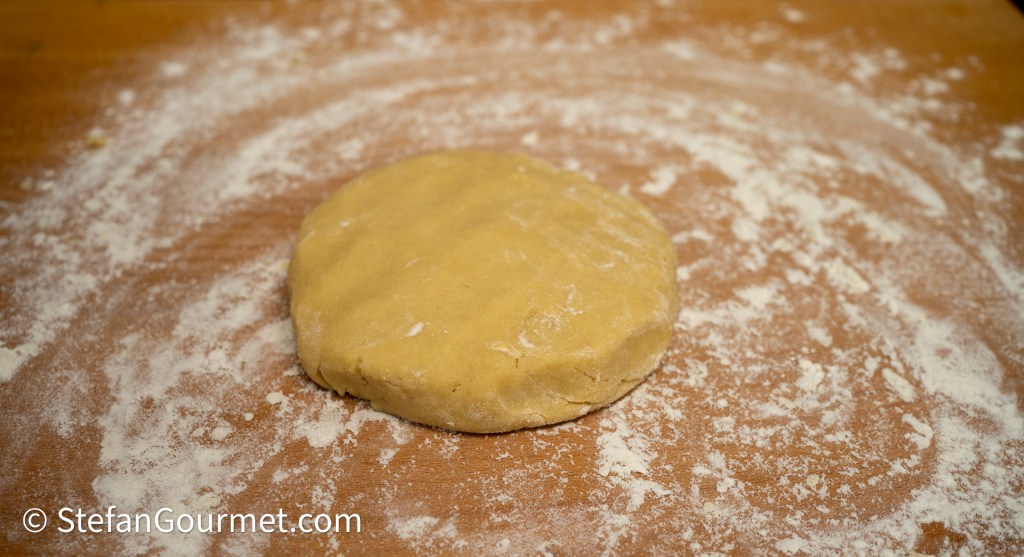
Sprinkle a wooden work surface with flour and dump the contents of the bowl onto that surface. Quickly shape it into a thick disc with your hands, handling it as little as possible to prevent warming up the dough.
If the dough is too soft, wrap it in cling film and refrigerate it to firm up before rolling it out.
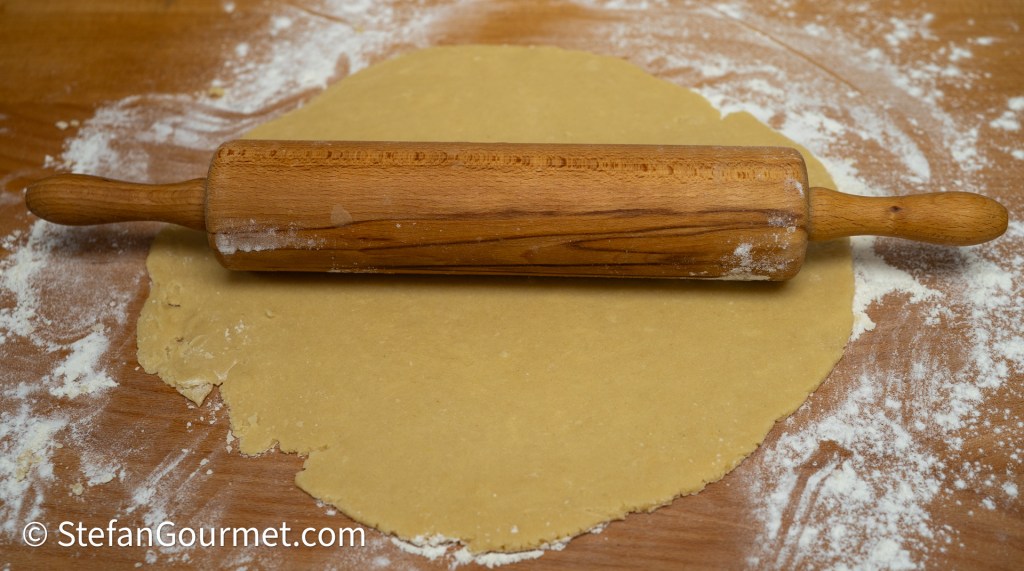
Roll out the dough into a circle with even thickness that is big enough to line the bottom and sides of a pie shape (check by holding the shape above the dough). It may be necessary to sprinkle the rolling pin or the top of the pastry with a bit of flour to prevent it from getting stuck to the rolling pin. To roll out in a circle, roll out only horizontally and vertically, but not diagonally. The latter will result in a square rather than a round shape.
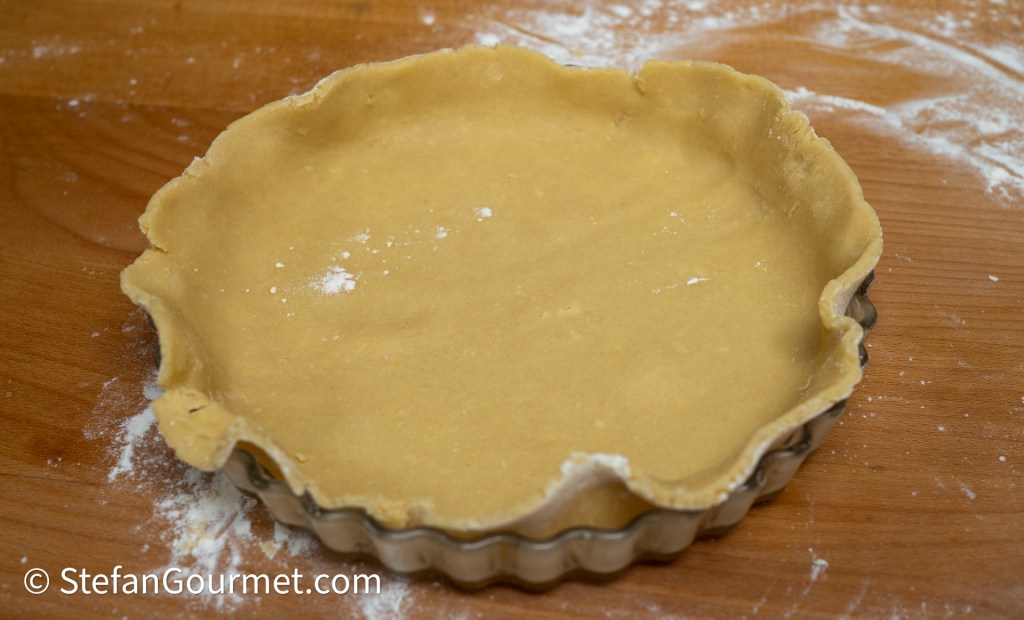
Grease a 26 cm (10.5″) pie dish with butter. Lift the dough with a palette knife and transfer it to the pie dish. If the dough has become too soft, it will break. If that happens, either press it into an even layer in the pie dish using your fingers, or return it to the work surface, shape it into a thick disc, wrap it in cling film, and refrigerate until firm before trying again.
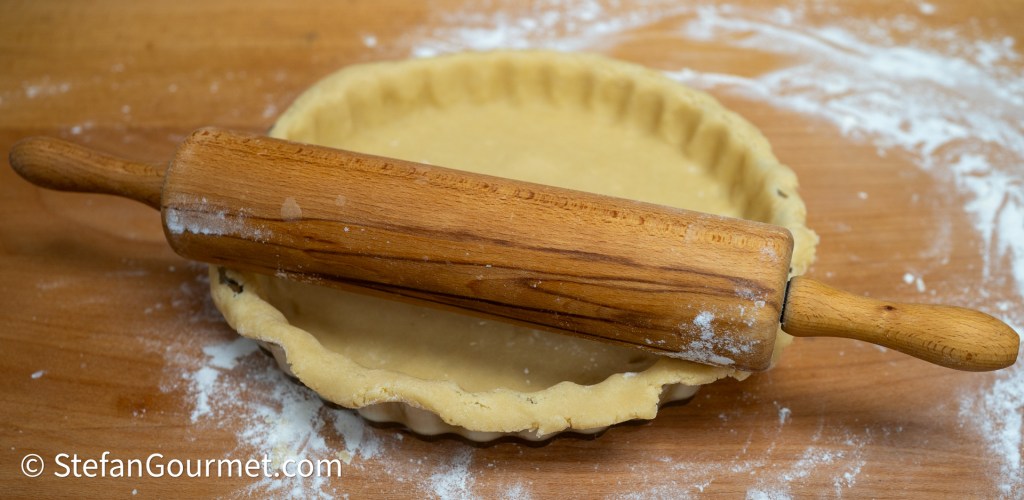
Press the rolled-out dough into the pie dish with your fingers, making sure to press into every curve. Pass the rolling pin over the top of the dish to trim any excess dough.
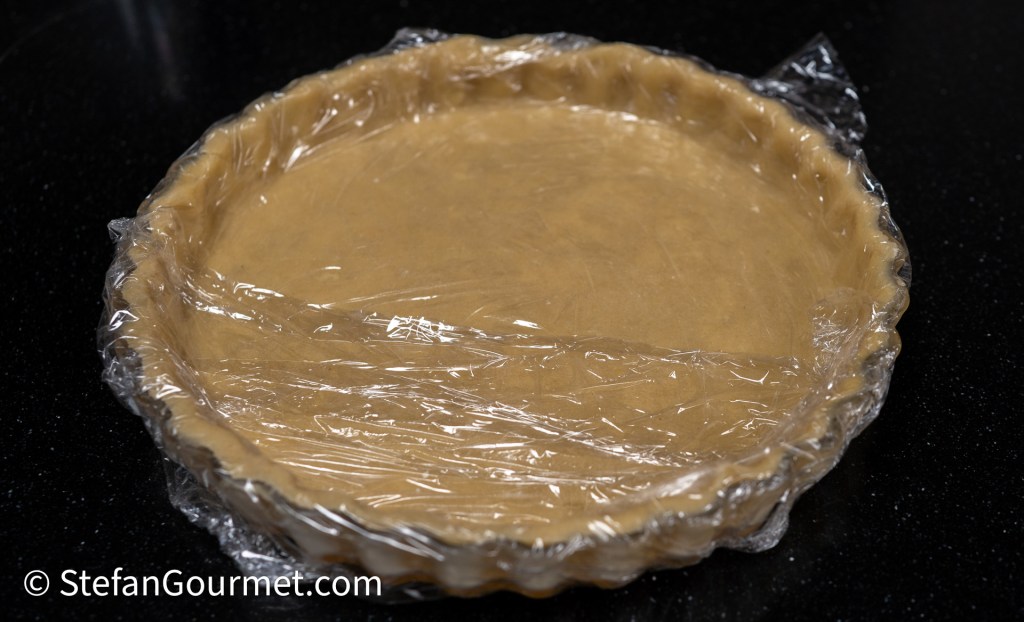
Cover the pie shape with cling film and refrigerate while you make the pastry cream.
Preheat the oven to 180°C/350°F.
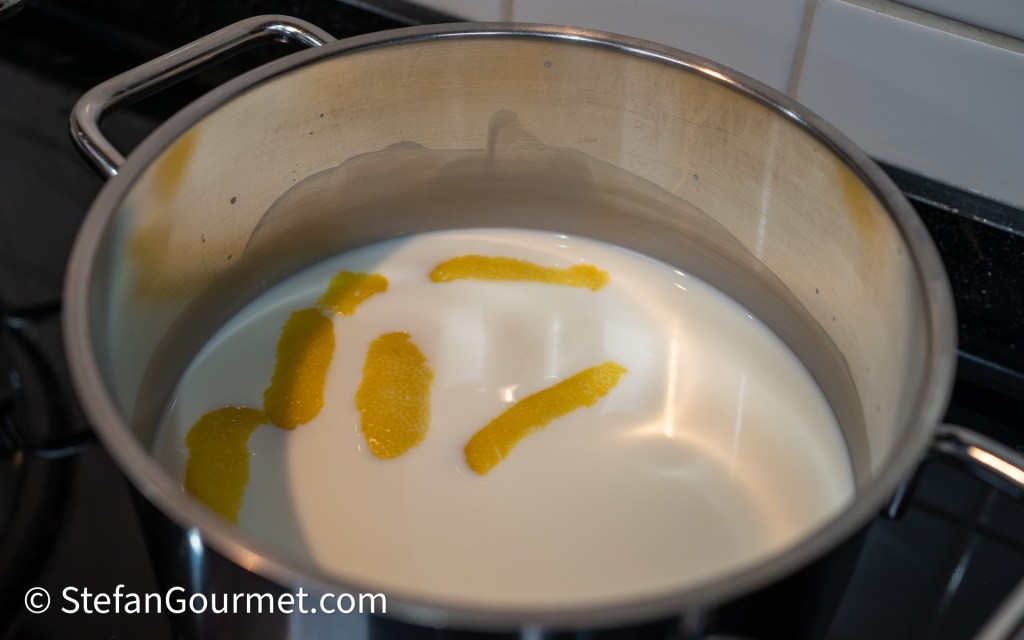
For the pastry cream, use a vegetable peeler to shave the yellow peel from the lemon, taking as little of the bitter white pith as possible. If necessary, trim any remaining pith from the strips with a sharp paring knife. Place the lemon peel in a saucepan with 500 ml of milk and set over medium-high heat. Remove from the heat just before it reaches a boil and let the peel steep in the hot milk to infuse its flavor.
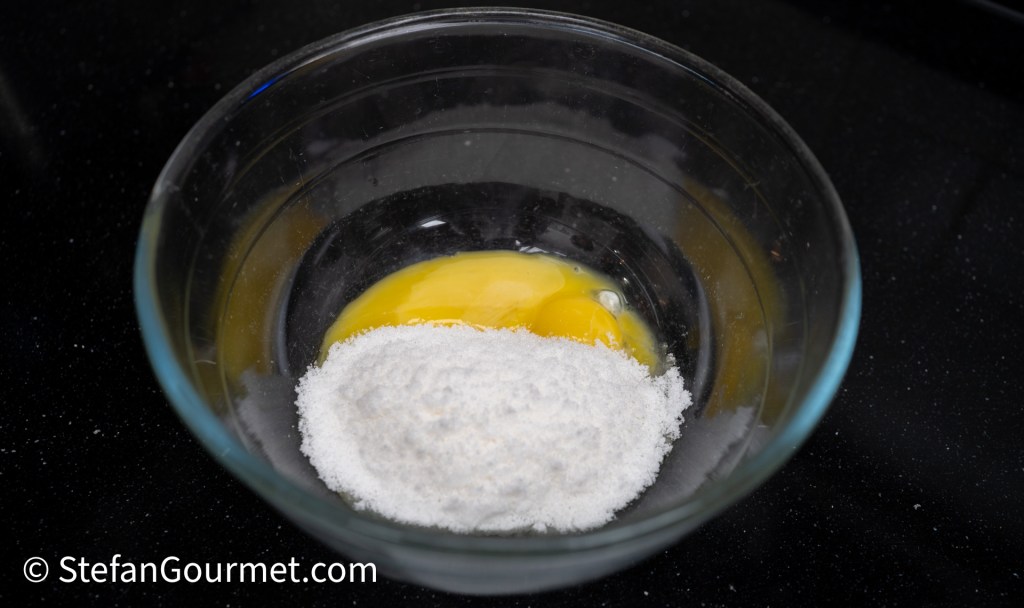
In the meantime, combine 5 egg yolks and 100 grams of caster sugar in a large bowl.
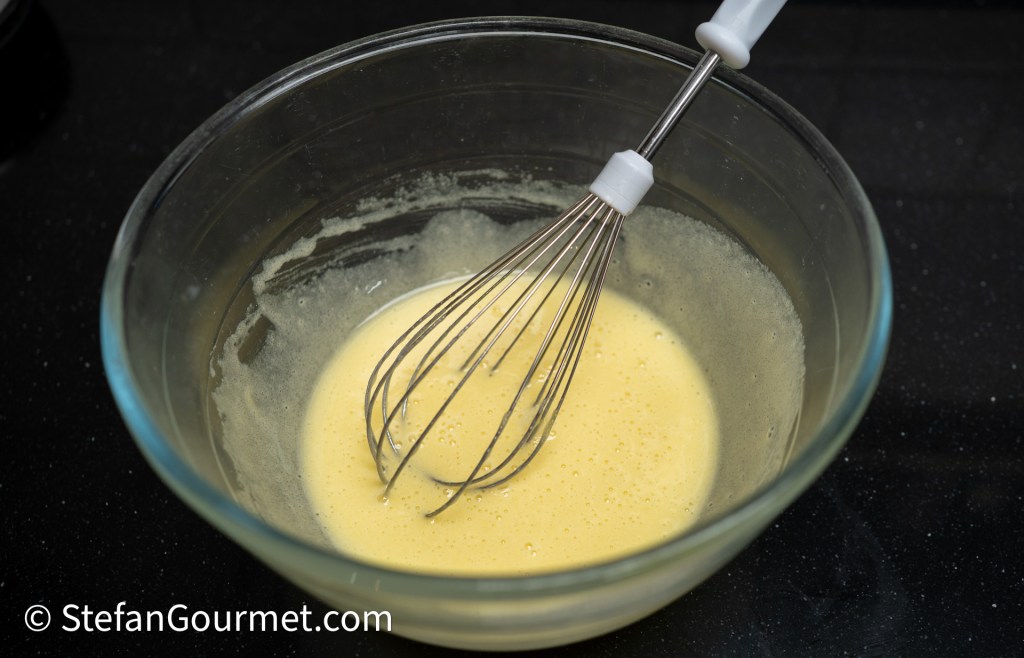
Whisk until the mixture turns pale and thick.
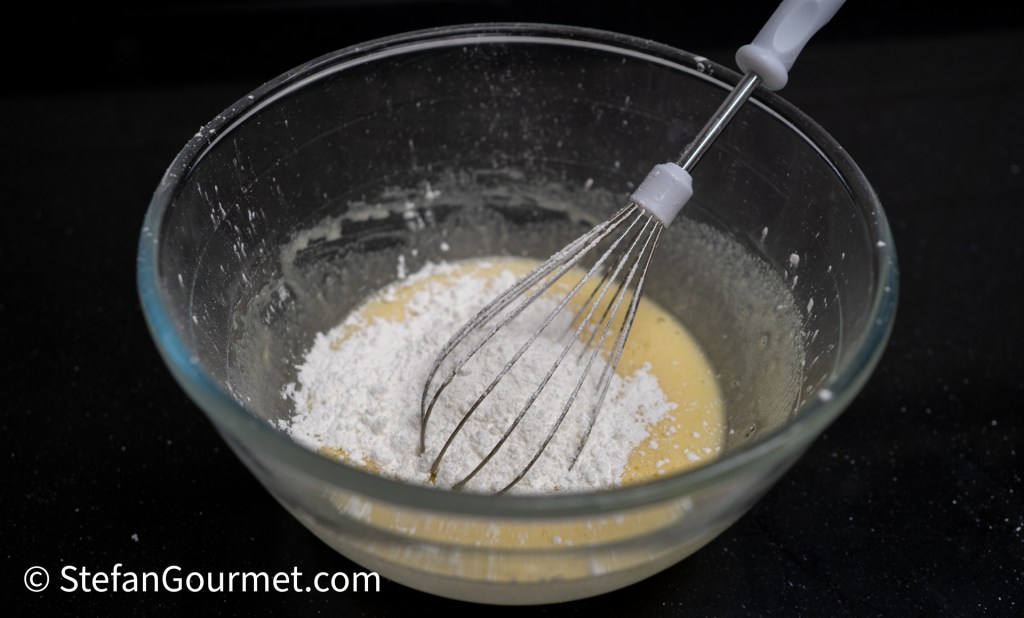
Add 45 grams of cornstarch.
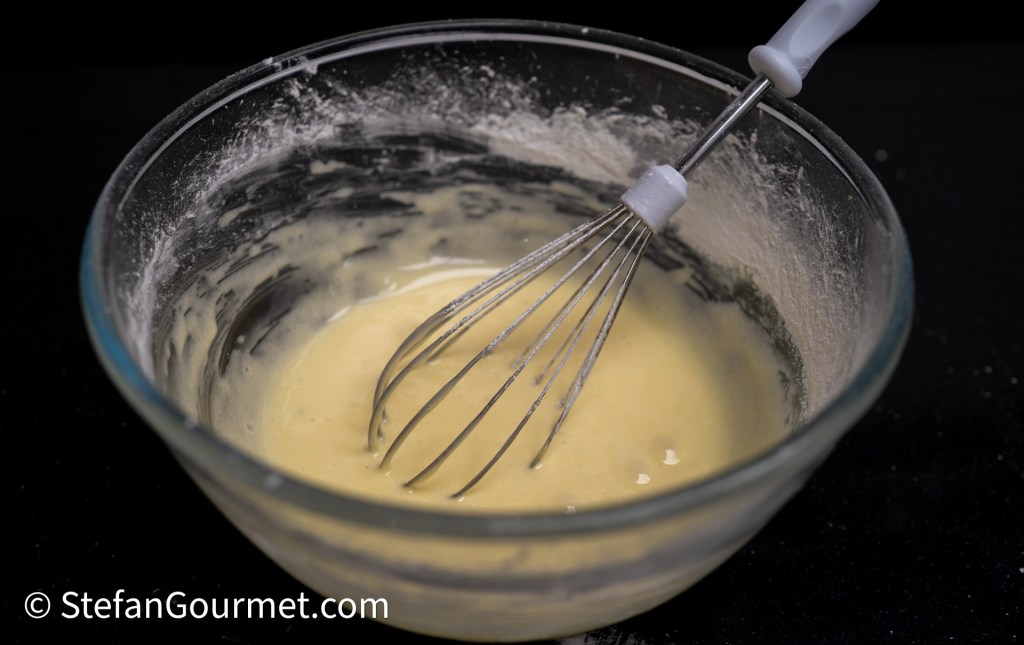
Whisk until fully incorporated.
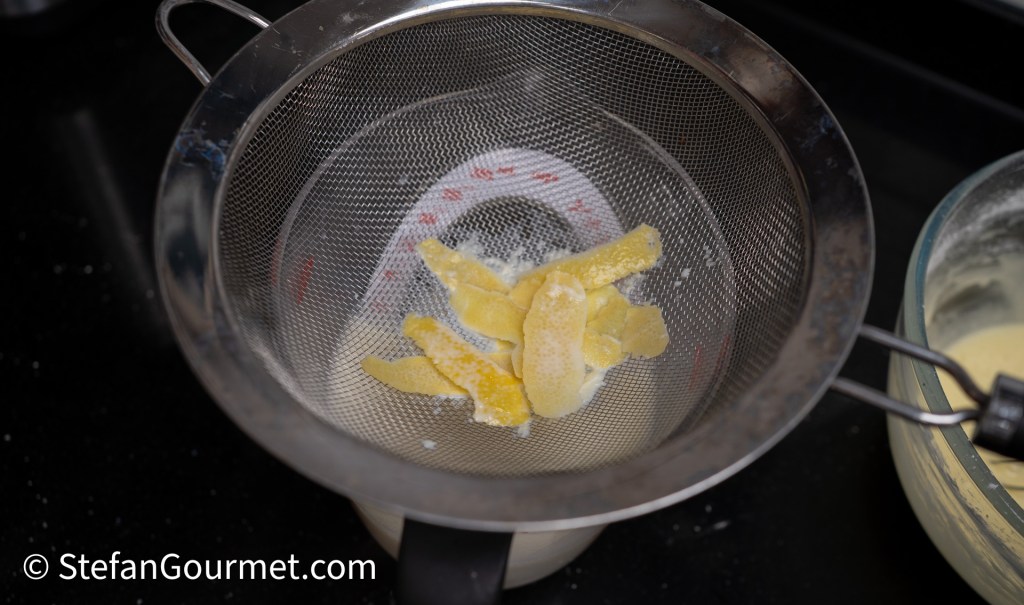
Strain the hot milk to remove the lemon peel.
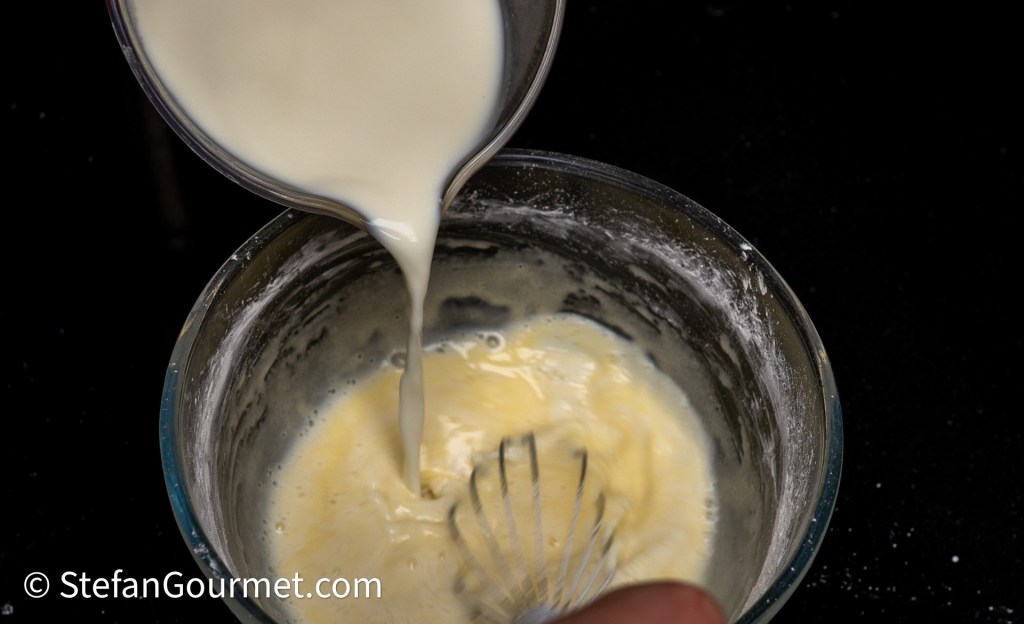
Pour it into the egg yolk mixture in a slow, steady stream while whisking continuously.
This process is called tempering. It gradually raises the temperature of the egg yolks without cooking them, preventing ending up with scrambled eggs. You could still end up with scrambled eggs if you tried this with milk just off the boil. Whisking the egg yolks with the sugar while the milk steeps allows time for the lemon flavor to infuse the milk and for the milk to cool sufficiently before you add it to the yolks.
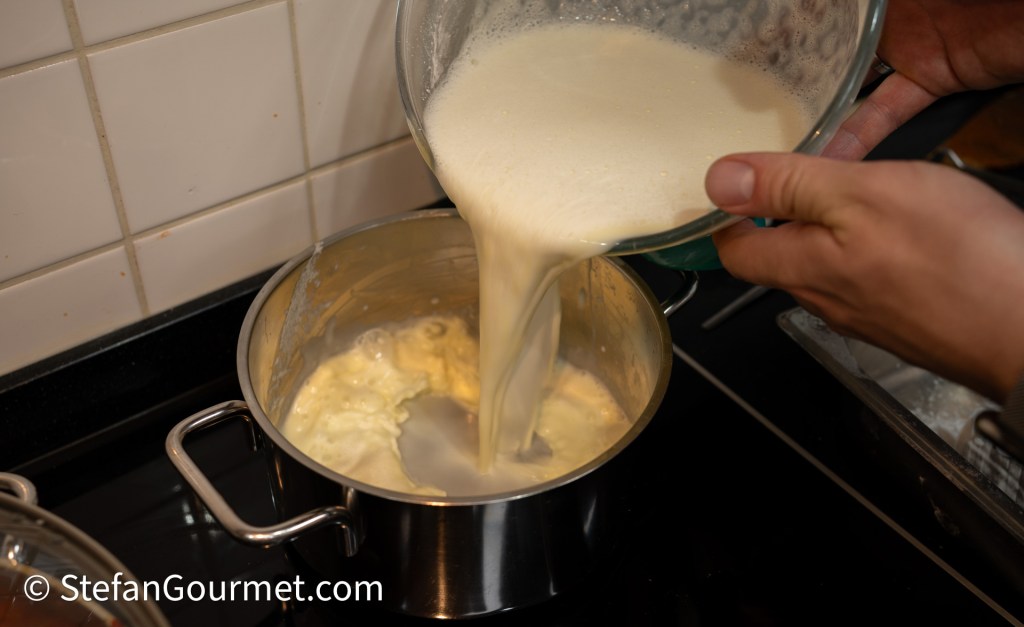
Once combined, return the entire mixture to the saucepan.
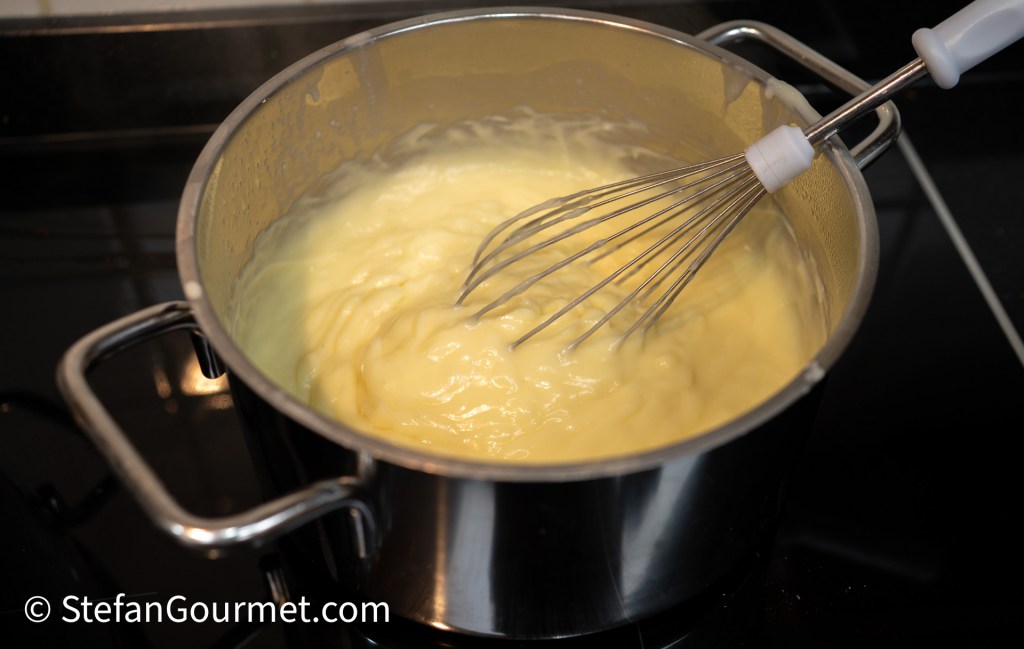
Cook over medium heat, stirring constantly with a spatula across the bottom of the pan to ensure it does not scorch. Keep stirring until the cream thickens; this takes a few minutes, transitioning rapidly from a liquid state to a thick consistency. As soon as it thickens, remove the saucepan from the heat immediately and whisk vigorously until smooth.
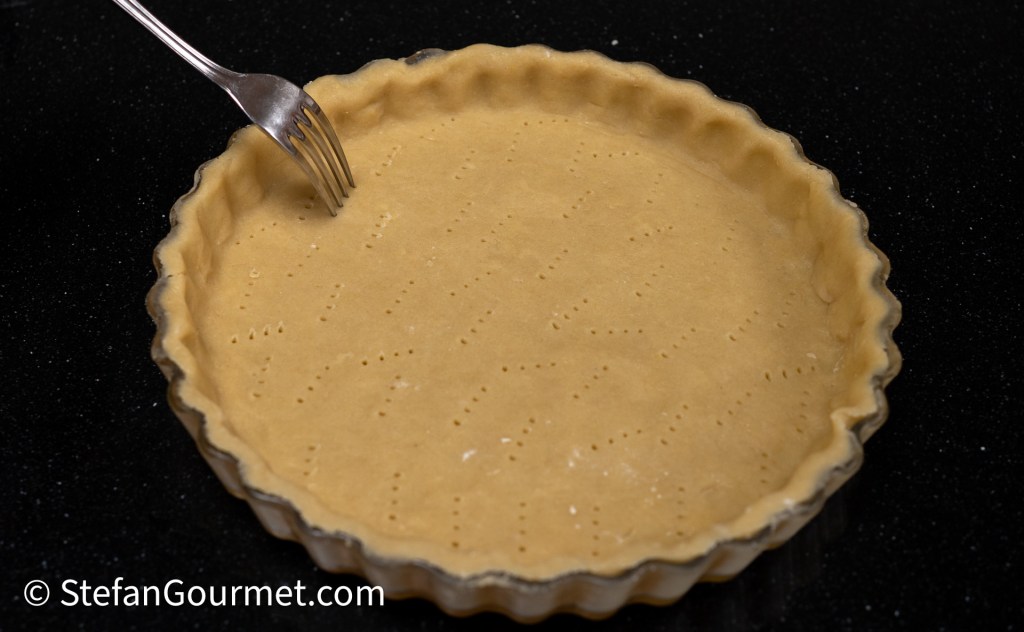
Take the prepared pie dish out of the refrigerator and remove the cling film. Prick the pastry crust all over with a fork to prevent air bubbles from forming underneath.
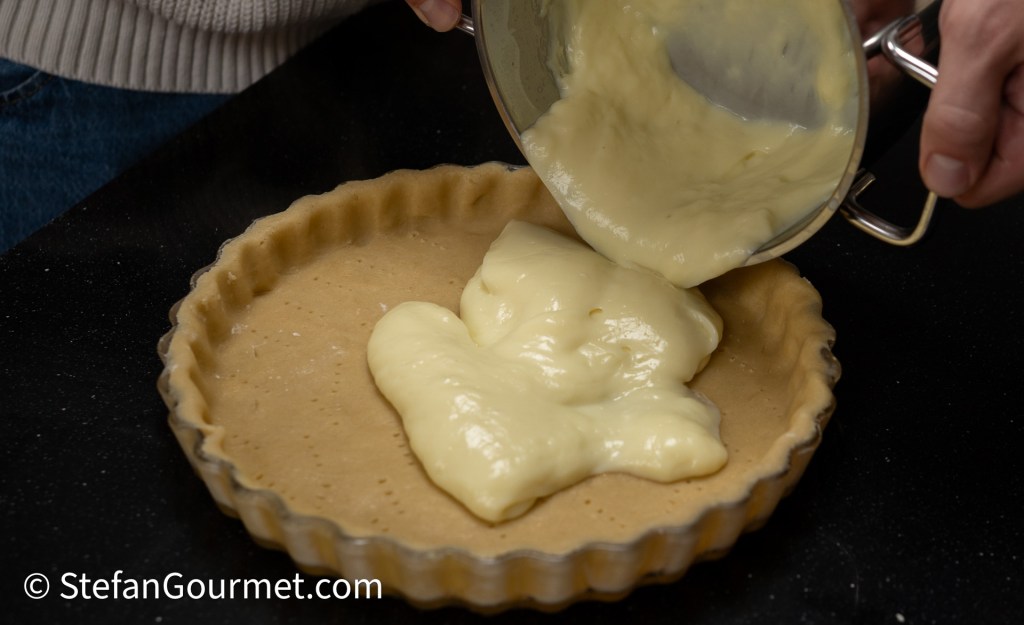
Pour the pastry cream into the pie crust while it is still hot…
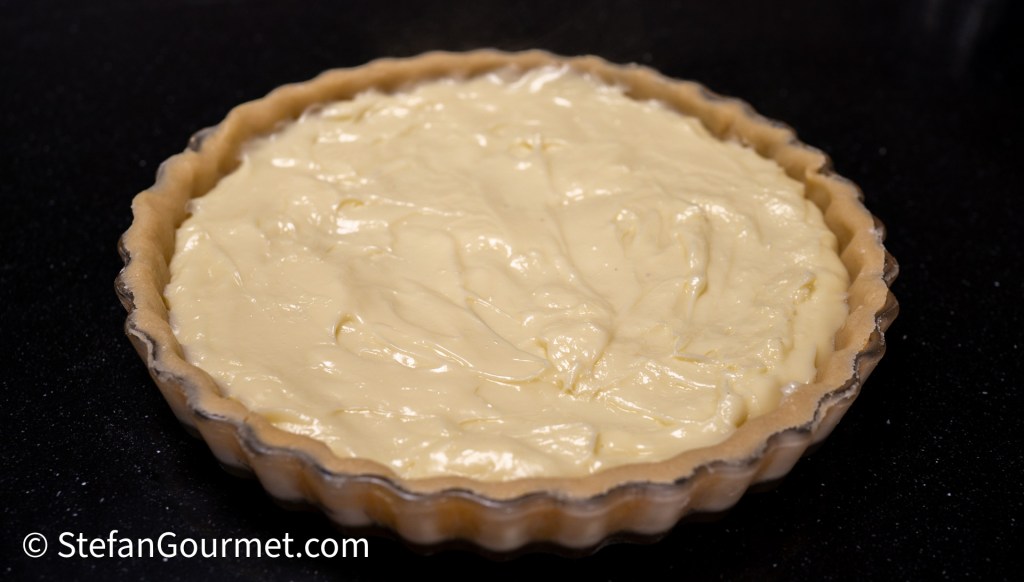
…and smooth the top with a spatula.
Torta della Nonna is traditionally baked in a single stage without blind baking the pastry shell. Unlike many French tarts or fruit pies that rely on a pre-baked base to prevent a soggy bottom, Torta della Nonna relies on a pastry enriched with sugar and a touch of baking powder. Because the filling is a thick, starch-bound pastry cream rather than a wet custard or fruit mixture, it does not seep into the dough. This allows the bottom crust to cook through and bake crisp right along with the cream filling.
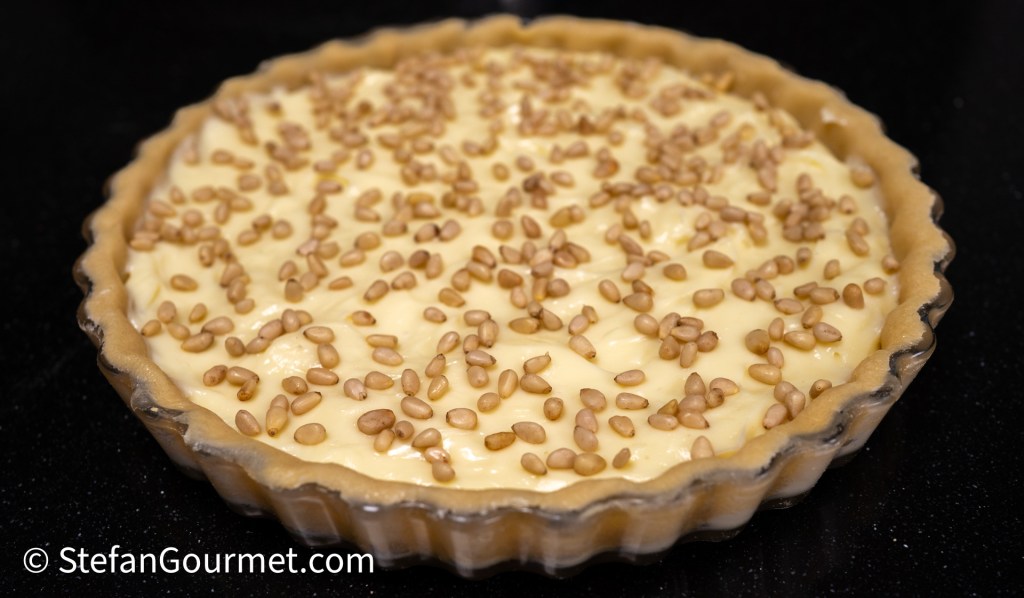
Sprinkle 50 grams of pine nuts evenly over the cream.
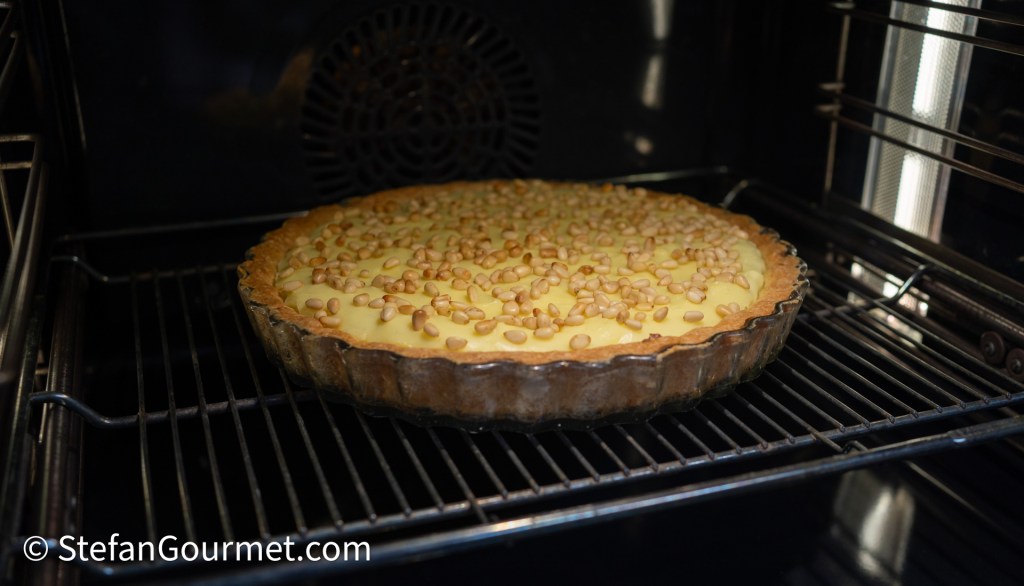
Bake the pie using conventional top-and-bottom heat rather than a fan-forced (convection) setting for about 35 minutes at 180°C/350°F, until the pine nuts are lightly toasted, the cream has set, and the pastry is golden brown.
Pine nuts on their own normally toast in just 7 to 8 minutes, but they will not burn during this 35-minute bake. As the pastry cream cooks, it continually releases evaporating moisture. In a conventional oven without a fan to blow that moisture away, the rising steam forms a protective, humid layer over the pie. This keeps the surface cool enough for the pine nuts to toast slowly and evenly to a golden finish without scorching.
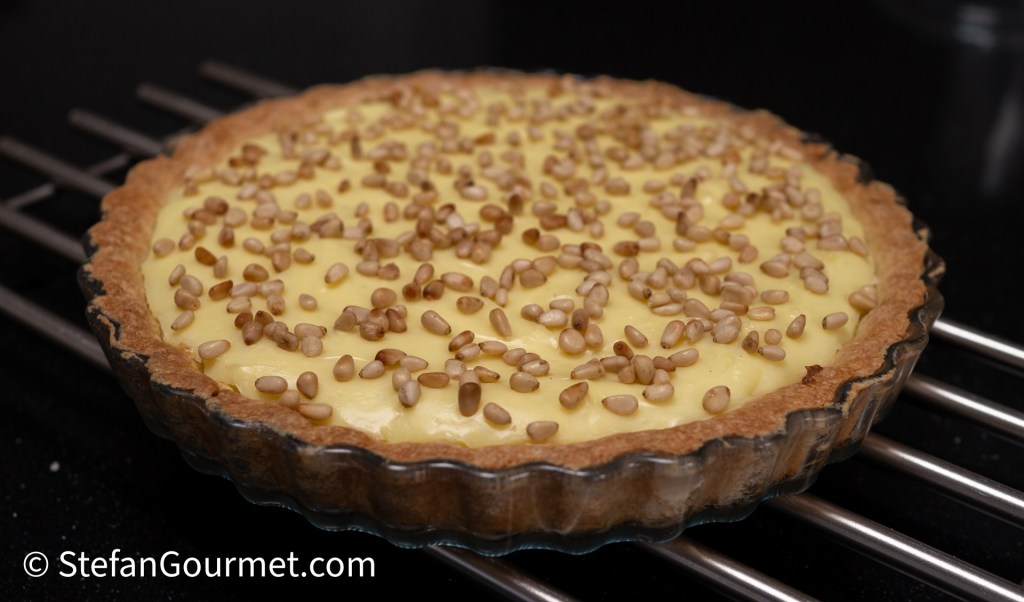
Allow the pie to cool completely to room temperature. Cover it with plastic wrap and chill in the refrigerator.
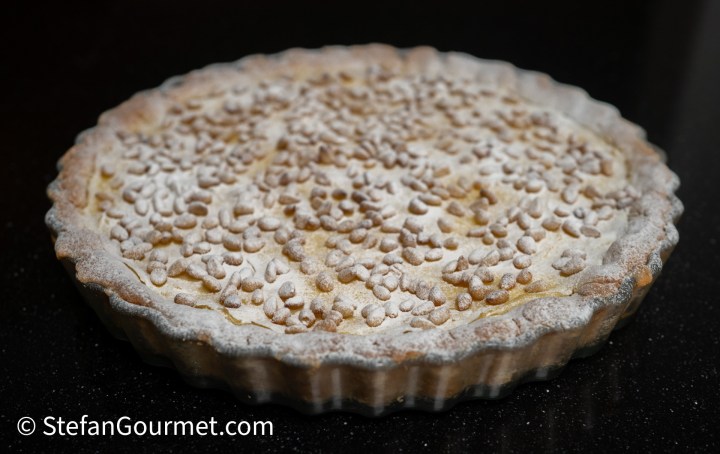
Remove it from the fridge half an hour before serving to let it come to temperature. Dust with icing sugar just before serving, as the sugar will dissolve into the top layer if applied too early.
Wine pairing
This is excellent with Moscato d’Asti.


This looks lovely, and would be at home on any table, plain or fancy!
LikeLiked by 1 person