When selecting restaurants in Italy, I primarily rely on the Gambero Rosso “Ristoranti d’Italia” guide. They award one, two, or three gamberi (shrimp) to trattorie and one, two, or three forchette (forks) to restaurants. Whenever I am on vacation in Italy, I try to include as many tre gamberi and tre forchette in my itinerary as possible. Despite the Gambero Rosso’s categorization, there is no clear-cut definition distinguishing a trattoria from a restaurant. Generally, a trattoria is more informal and affordable, serving simple dishes closer to home cooking, but many establishments labeled as ristoranti fit that same description. Trattorie are also frequently called osterie; in fact, the Slow Food list of traditional spots serving local food is titled “Osterie d’Italia.” Adding to the confusion, several fine dining icons use “Osteria” in their name, including three-Michelin-star venues like Osteria Francescana.
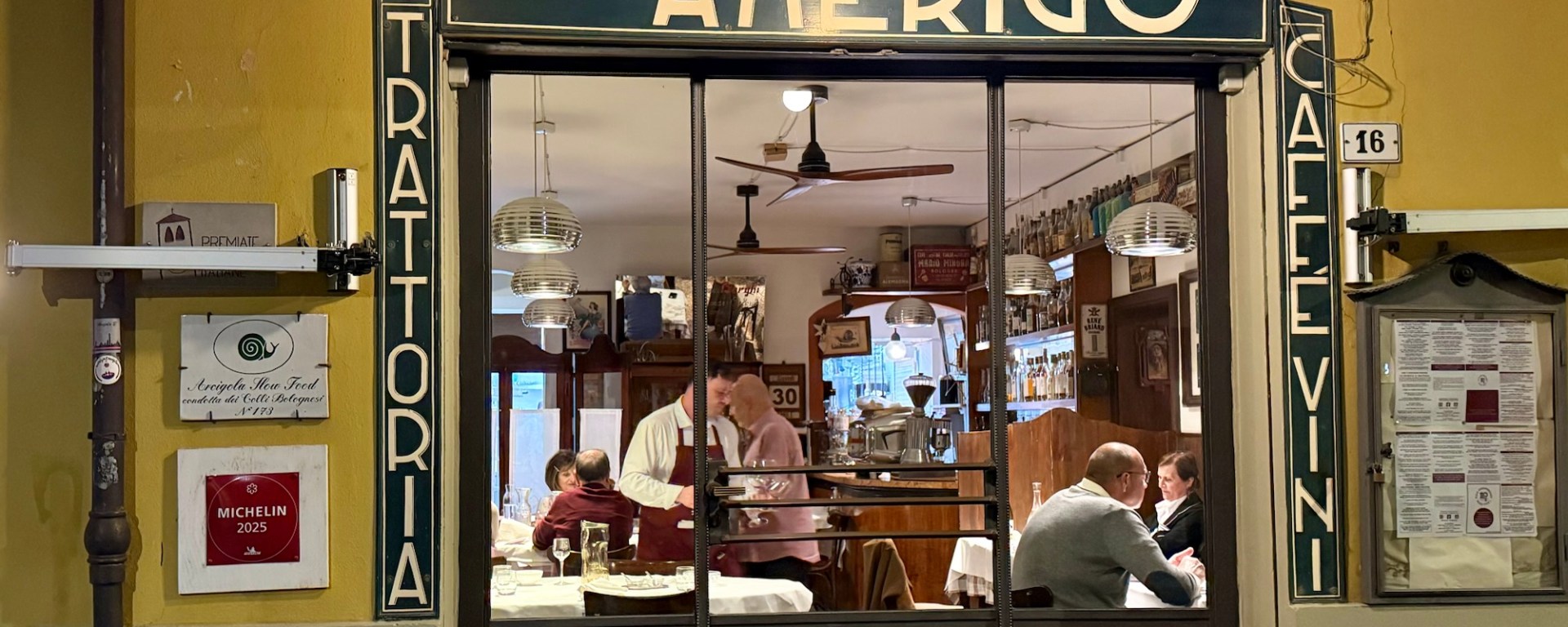
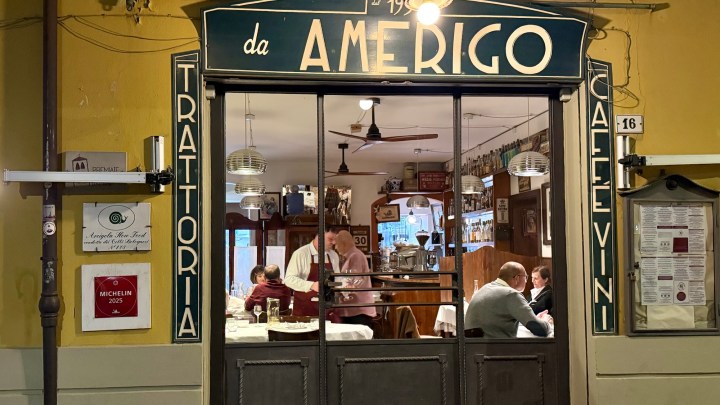
I rarely consult the Michelin Guide when searching for Italian restaurants. I booked Trattoria da Amerigo—which even has “trattoria” in the name—specifically because it holds three gamberi. I was utterly surprised when we arrived and noticed a Michelin shield for one star by the door. Kees was wearing shorts, as he only dons long trousers for fancy restaurants. As it turns out, Trattoria da Amerigo has held a Michelin star since 1998. This is a remarkable achievement for an establishment that remains true to the traditions of a local trattoria rather than shifting toward fine dining. Once we stepped inside, Kees’ hesitation about his attire vanished completely; despite the star, this was first and foremost a trattoria.
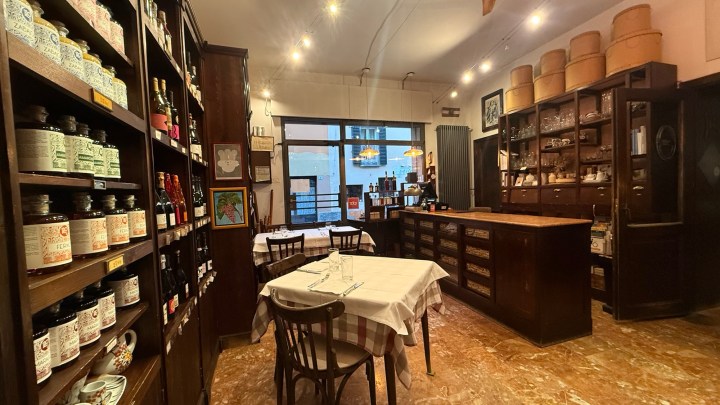
The restaurant has several smaller dining rooms with a decor that perfectly suits the “dal 1934” tradition. An extensive a la carte menu is available, alongside two set options: a four-course menu (antipasto, primo, secondo, dolce) where you choose from three options for each course for 55 euros, and a set seasonal five course menu featuring two primi for 70 euros. We opted for the seasonal menu. A pairing of three regional wines was offered for 20 euros, which we extended with an additional glass to ensure a pairing for every course. The restaurant also maintains an extensive list of regional wines priced at approximately 20 euros per bottle.
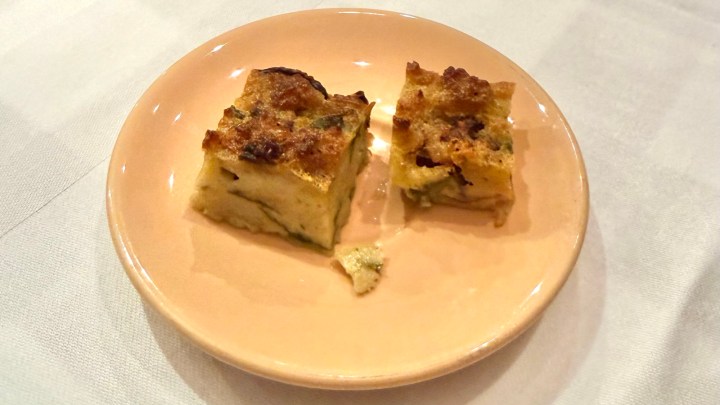
A piece of bread and asparagus pudding was served as amuse bouche, very creamy and flavorful.
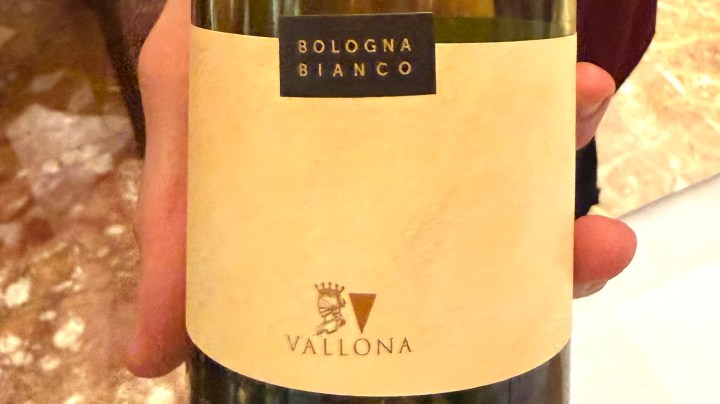
The first wine was a Colli Bolognesi DOC blend of Sauvignon Blanc, Chardonnay, and Petit Manseng, fresh and aromatic.
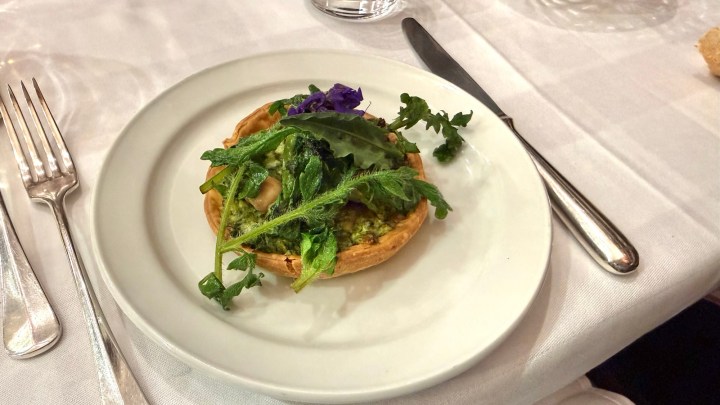
It was a good pairing for the antipasto of a whole wheat tartlet with ricotta, wild mushrooms, and wild herbs.
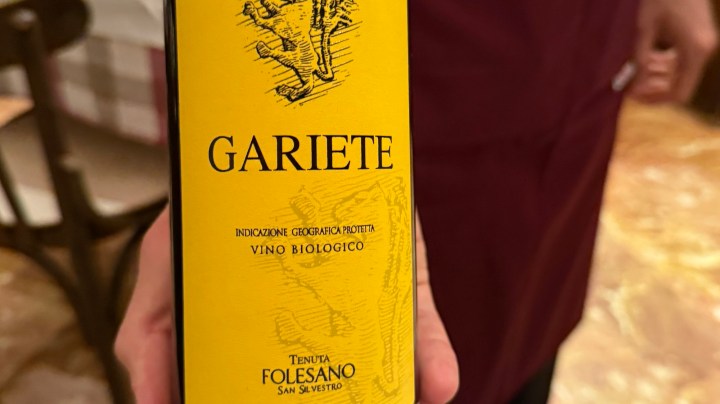
The second wine was an Albana from Emilia, a grape variety that is mostly known from the neighboring Romagna.
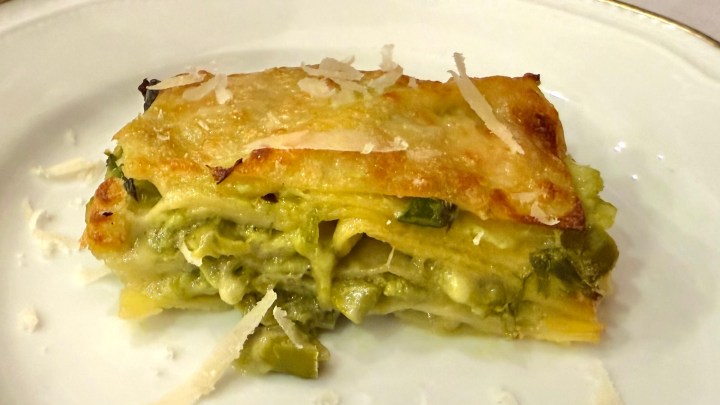
It was a good pairing for the green asparagus lasagna. The lasagna was not made with besciamella but just with sautéed asparagus and parmigiano between a lot of layers of very thin pasta, making this is a very elegant lasagna.
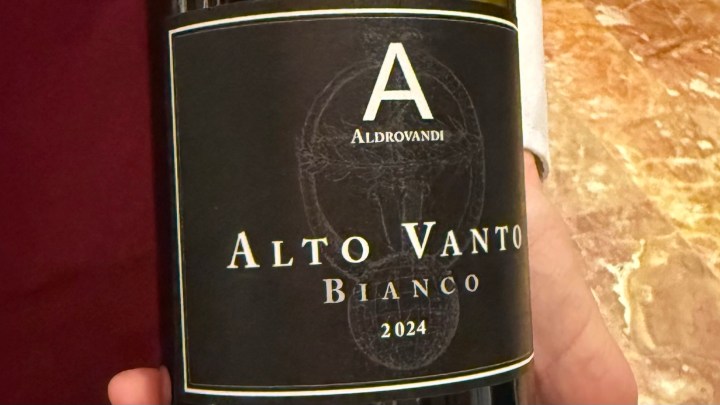
In the regular pairing the same Albana would also be paired with the next primo, but we added an additional wine, a Pignoletto from Colli Bolognesi that had been aged for two years in barriques. Pignoletto is a local grape variety from his area.
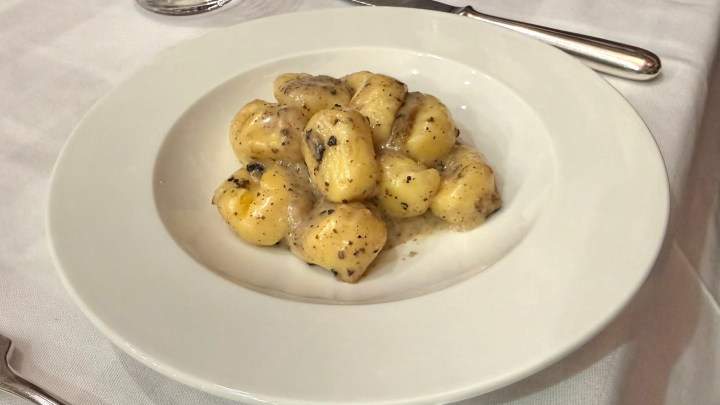
It was a very good pairing for the potato gnocchi with two kinds of black truffle: Scorzone (black summer truffle) and Marzuolo (small white truffle). This was the star of the meal with a very complex and elegant truffle flavor. Truffle can sometimes provide too strong of an aroma, but this was wonderful. I am glad we added the extra wine, because I think the very dry Albana would not have worked as well with the creaminess of this dish.
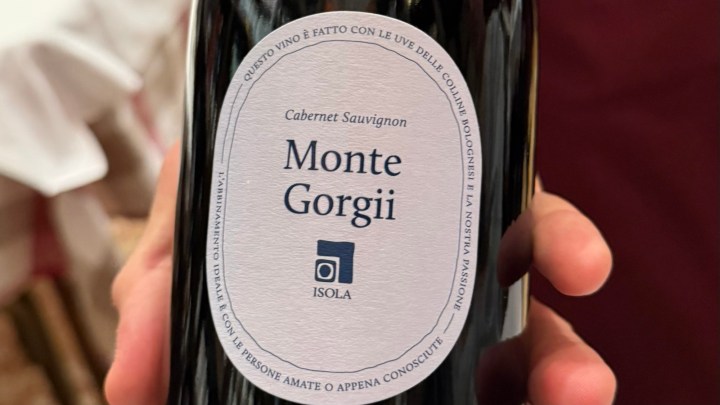
The next wine was also from the Colli Bolognesi, a Cabernet Sauvignon, very fruity and with the high acidity of the variety.
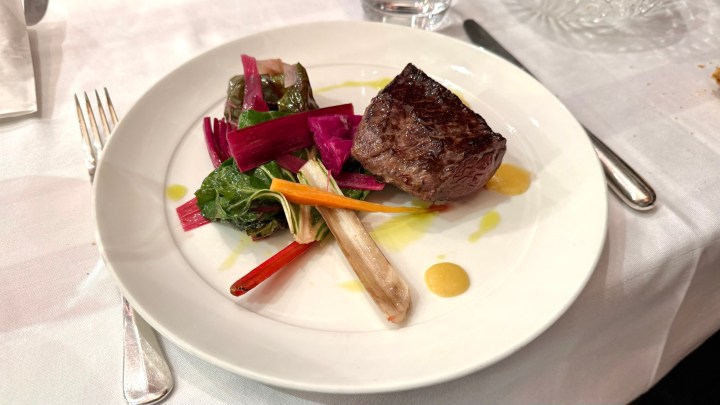
It was a good pairing for the lightly smoked venison with local chard and citrus sauce…
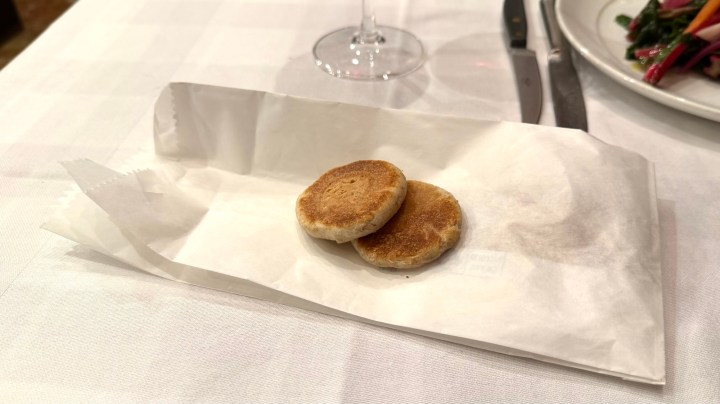
…and a side of tigelle. Tigelle, also known as crescentine, are a traditional disc-shaped bread from the Apennines of Emilia-Romagna. The name refers to the terracotta discs originally used to cook the bread. These discs were stacked in a pile, alternating a hot clay tile, a chestnut leaf, the dough, and another leaf. The venison was indeed only very lightly smoked, and this was the most rustic dish of the evening.
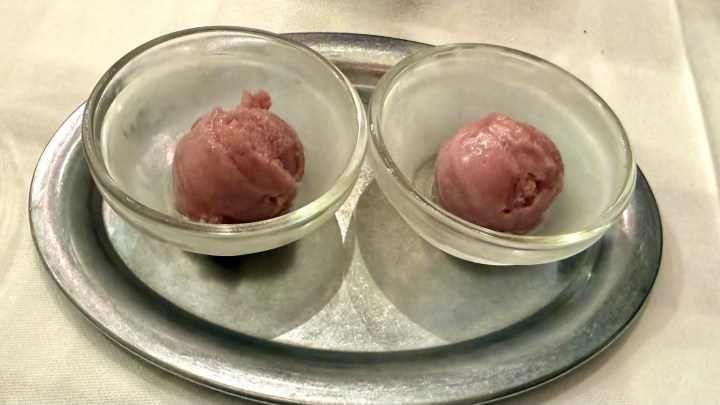
The pre-dessert was a Lambrusco sorbet.
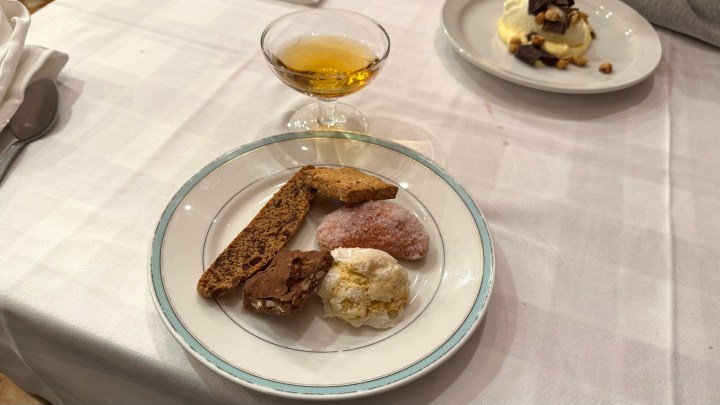
For dessert we could select any dessert from the a la carte menu. I picked biscuits with Malvasia del Monticino, a dessert wine. The various biscuits were very nice, especially the one filled with amarena cherries.
This was by far the most affordable Michelin starred dinner I have enjoyed in ages, and truly more of a trattoria experience than a fine dining one. It is quite similar to Mirasole, yet more refined and elegant. The food was excellent with great flavor. It was a pleasure to try wines from the Colli Bolognesi DOC. This is a mostly unknown wine region that does not feature much on the wine lists of restaurants in the city of Bologna, despite the name of the appellation. I can see why Amerigo has earned and maintained a Michelin star for all these years, though it is certainly different from a conventional Michelin star dining experience.


I would have liked to be there – truly! I have sampled my way up-and-down twice, actually love the totally no-nonsense-approach and . . . please may I have the wheat tartlet and the lasagna and, feeling almost full already, perhaps the gnocchi as well . . . and the costs seem more than fair . . . am so happy for you . . .
LikeLiked by 1 person