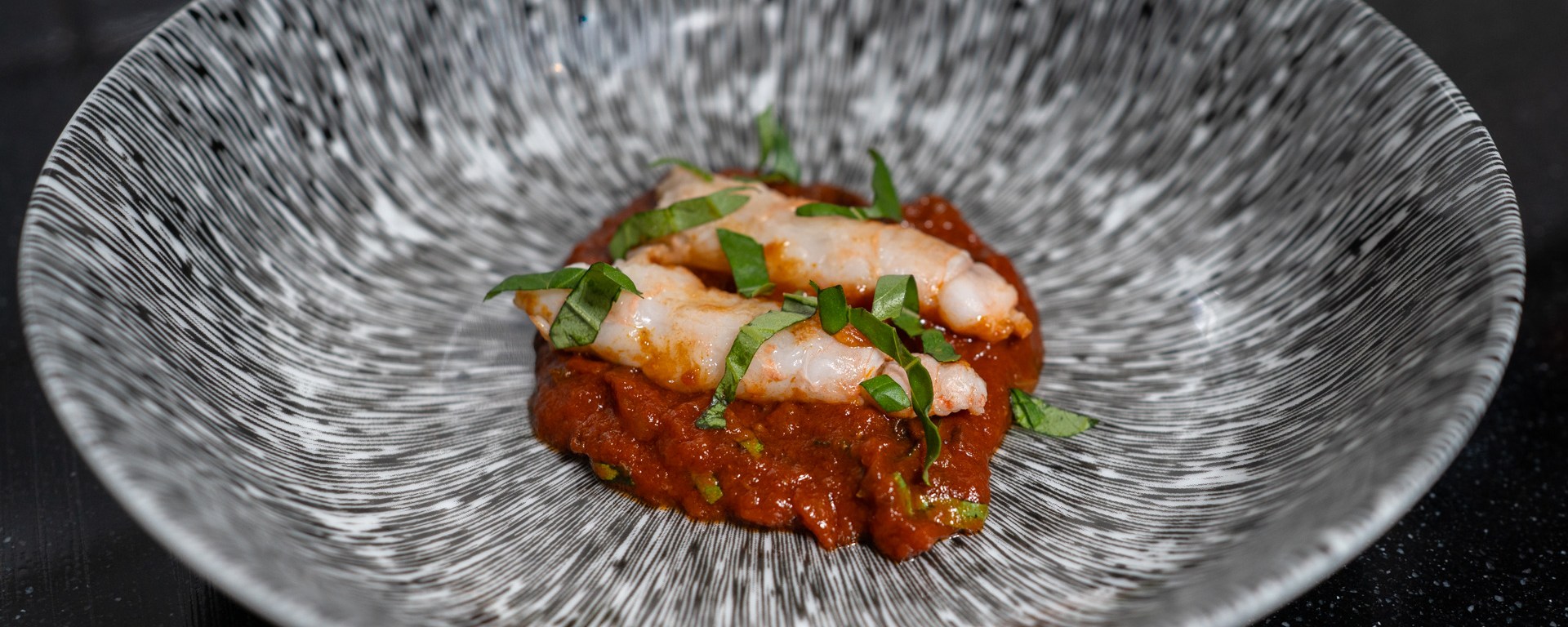
As you may have noticed, I am currently on vacation in Italy and enjoying this foodie heaven. Since I do not eat in blog-worthy restaurants every day and have more time for blogging than when I am at home, I am taking the opportunity to share some recipes that I prepared and photographed earlier but haven’t had the chance to post yet. In addition to photos of the ingredients, the preparation, and the finished dish, I also take photos to serve as notes for when I blog the recipes, sometimes months later. These might include scales showing the exact weight of ingredients or snapshots of notes I jotted down. This system allows me to blog a recipe from anywhere in the world with just my laptop.
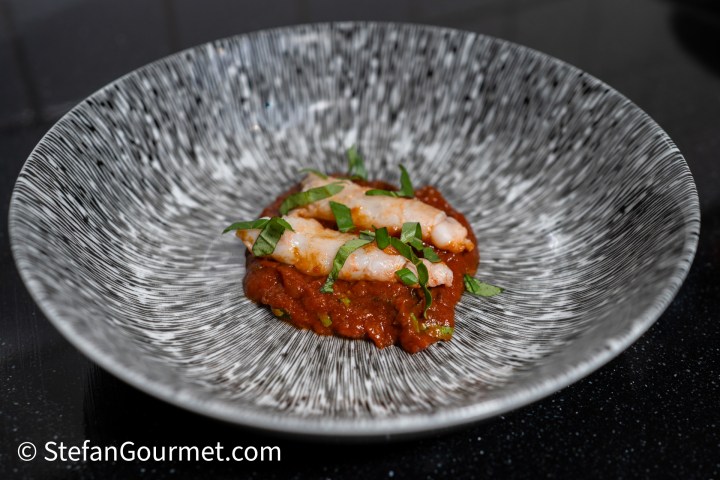
The recipe I am sharing today was inspired by a dish we had at Fred, a two Michelin starred restaurant in Rotterdam. I particularly liked the wine pairing with a clarete from Ribera del Duero in Spain. This is a rosé produced as a by-product of full-bodied red wine; the juice that runs free during crushing is removed to concentrate the remaining must for the red wine. Although this is a rare wine, I managed to order a few bottles of the same wine directly from Spain and decided to create a similar dish. I never try to copy a Michelin starred dish exactly; instead, I use the main idea to create my own version with a better effort-to-flavor ratio than the original. Often that works out very well, as it did in this case.
As always, I aim to extract as much flavor from the ingredients as possible. I use the heads and shells of the langoustines to make a stock, which I reduce into a bisque and add to a flavorful tomato sauce further enhanced by capers, anchovies, and olives. Since langoustines are among the most fragile proteins and can easily be overcooked, I use only the residual heat of the tomato sauce to cook them. I was very pleased with the result, which paired beautifully with the clarete. I am confident you could also pair this with a full-bodied white wine, such as a high-quality Vermentino from Sardinia, though a regular light rosé would not work.
This is a great recipe for a dinner party at home because it can be prepared almost completely in advance, feels original, and delivers a flavor bomb that is easy to present beautifully. Because this is such a strongly flavored dish, two or three langoustines per serving are sufficient. You could also serve a single langoustine as an amuse-bouche.
Ingredients
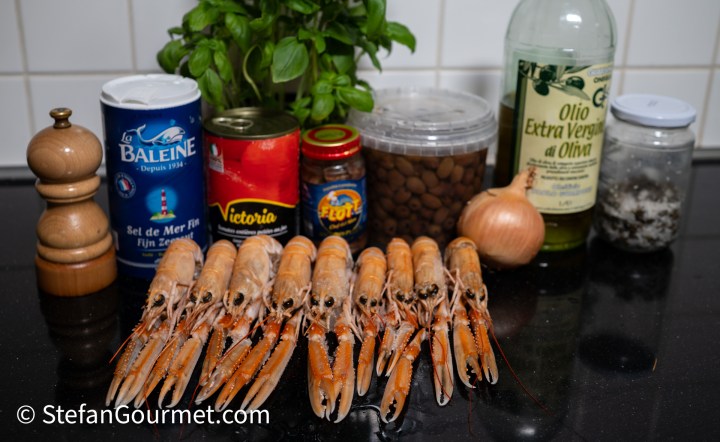
Serves 4 to 8 as an appetizer (or 12-16 as an amuse bouche)
- 2-3 medium langoustines per serving (or 1 as amuse bouche), 12-16 langoustines in total
- 75 grams (1/2 cup) minced onion
- 1/2 Tbsp minced salted capers (soaked in water, rinsed, and dried with paper towels)
- 1/2 Tbsp minced anchovy fillets
- 1/2 Tbsp minced black or purple olives
- 60 ml (1/4 cup) dry white wine
- 500 ml (2 cups) sieved tomatoes
- fresh basil or flat leaf parsley
- salt and freshly ground black pepper
- 2 Tbsp extra virgin olive oil
- crusty Italian bread, to mop up the sauce
Instructions
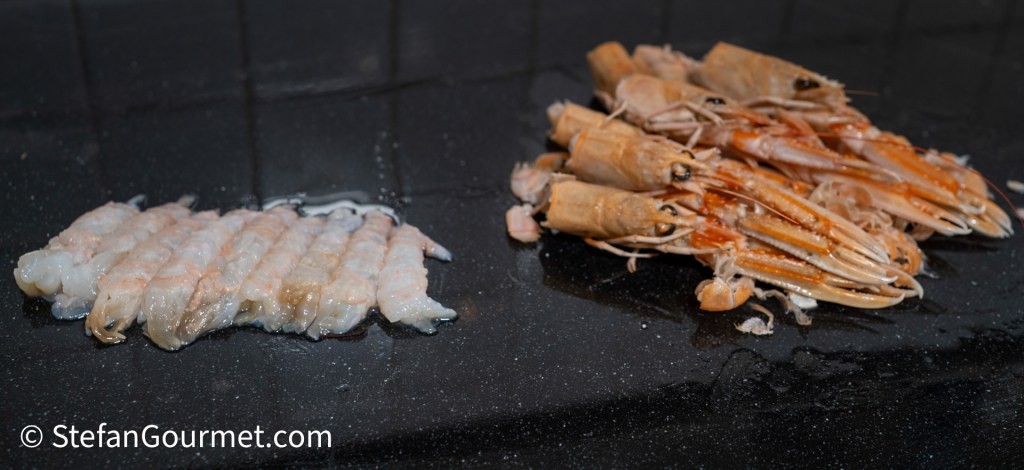
Preheat the oven to 190C/375F. Peel the langoustines, reserving the heads and shells for the bisque.
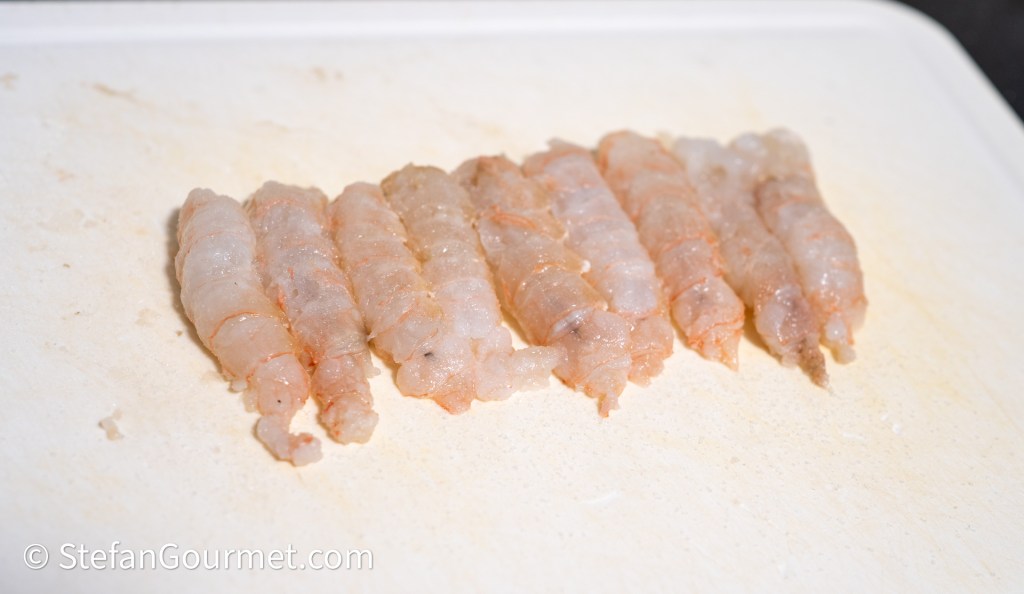
You can usually remove the vein by pulling with your fingers or pincers, avoiding the need to cut them open. Season the langoustine meat lightly with salt on both sides; this firms up the meat and helps the langoustine flavor shine through despite the strongly flavored sauce. Cover and refrigerate them until you are ready to finish the dish.
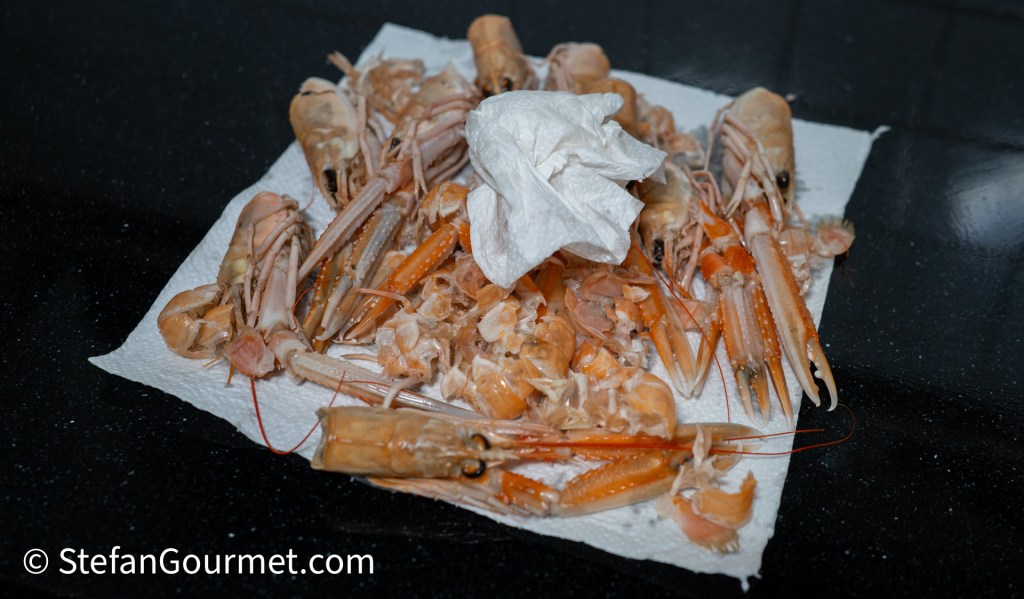
Pat the heads and shells dry with paper towels.
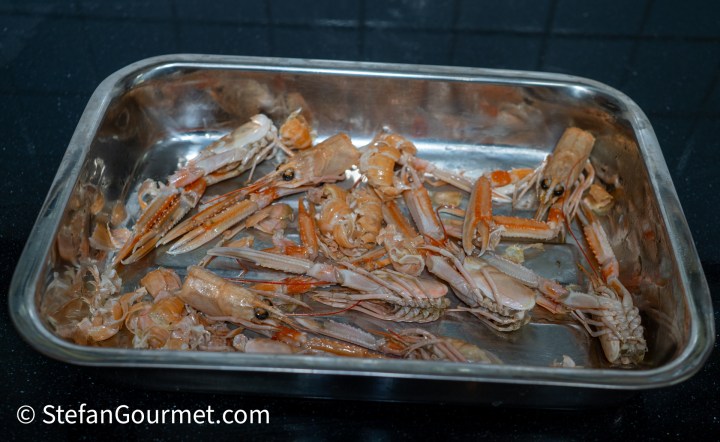
Place them in an oven dish and roast for 30 minutes at 190°C/375°F (fan forced) or until the shells have browned slightly. Roasting the shells increases the depth of flavor significantly.
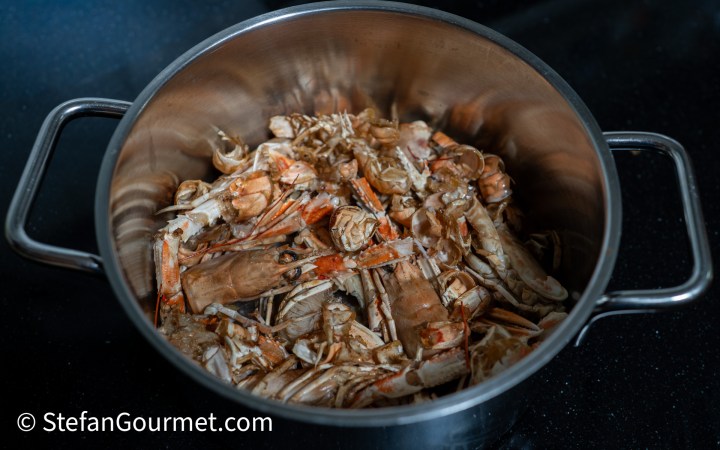
After roasting, transfer the heads and shells to a pot in which they fit snugly; this maximizes the concentration of the stock by using the minimum amount of water required. Break the claws to release the flavors from inside. You can likely do this by hand after roasting, but otherwise use a cleaver.
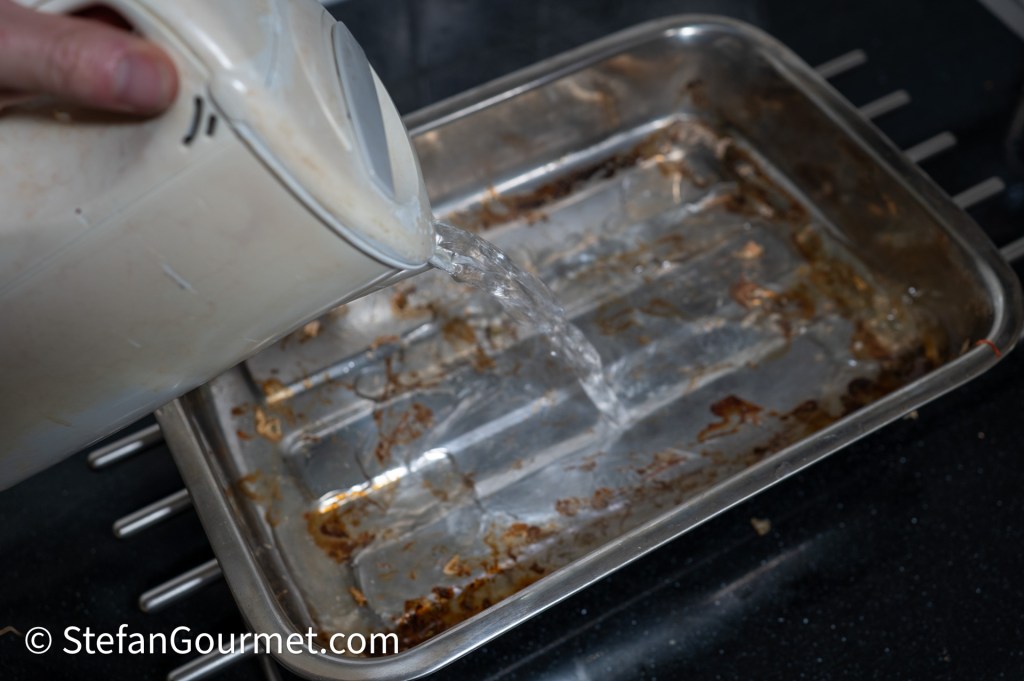
Deglaze the oven dish with boiling water.
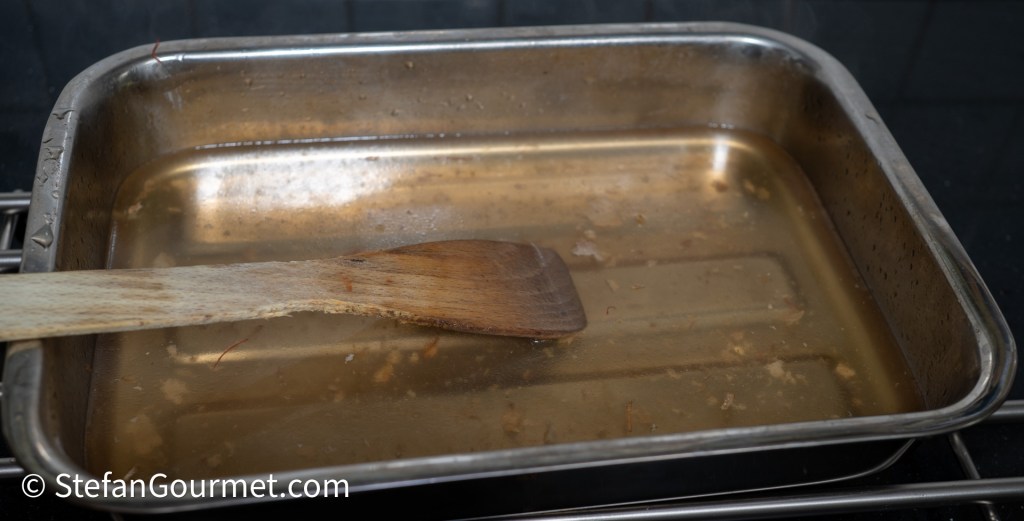
Scrape with a wooden spatula to get all of the flavor from the oven dish into the water.
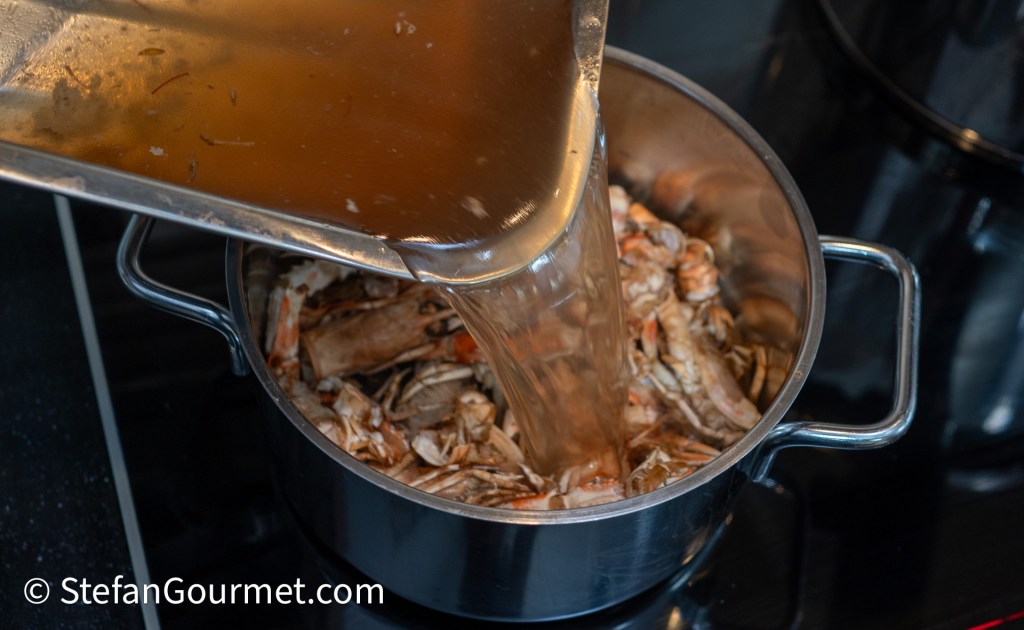
Cover the heads and shells with that water.
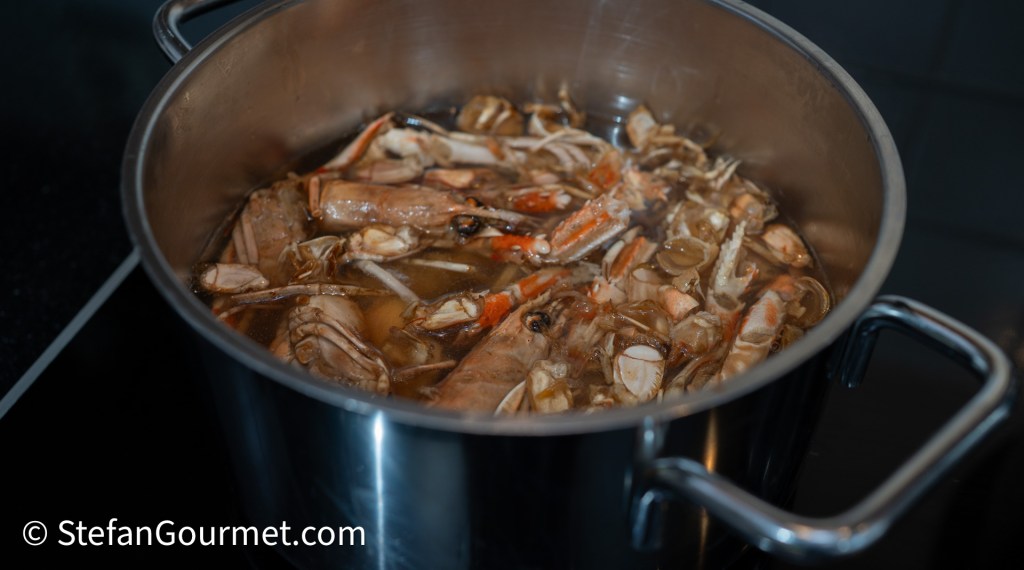
Add more water as necessary to just cover them.
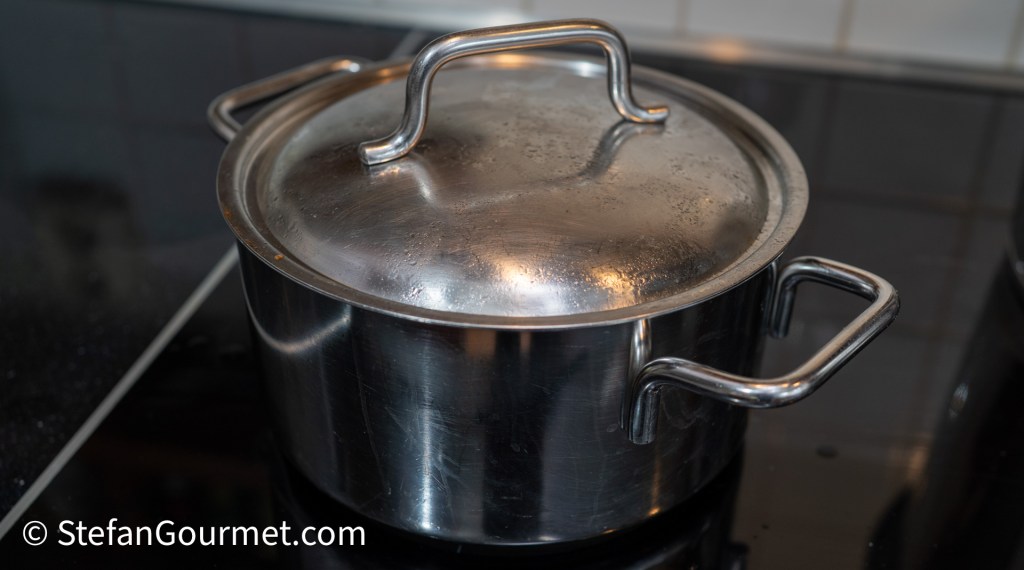
Cover the pan, bring to a boil, and simmer for 20 minutes.
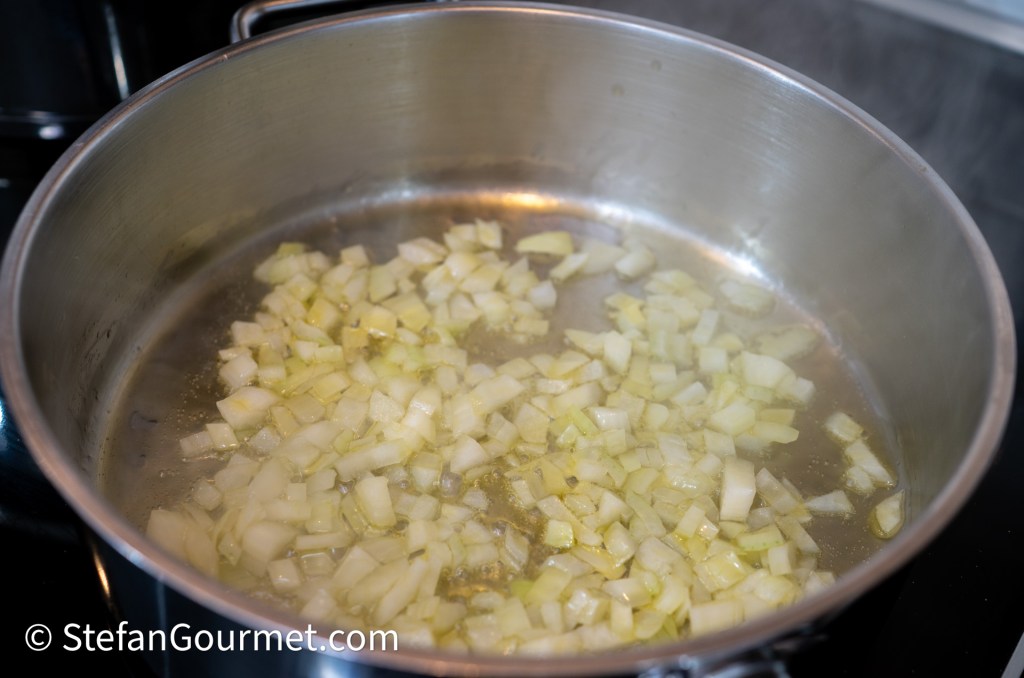
Start the sauce while the langoustine stock is simmering. Heat 2 tablespoons of olive oil in a frying pan suitable for tomato sauce (avoid carbon steel, as the acidity of the tomatoes will ruin the seasoning). Add 75 grams of minced onion.
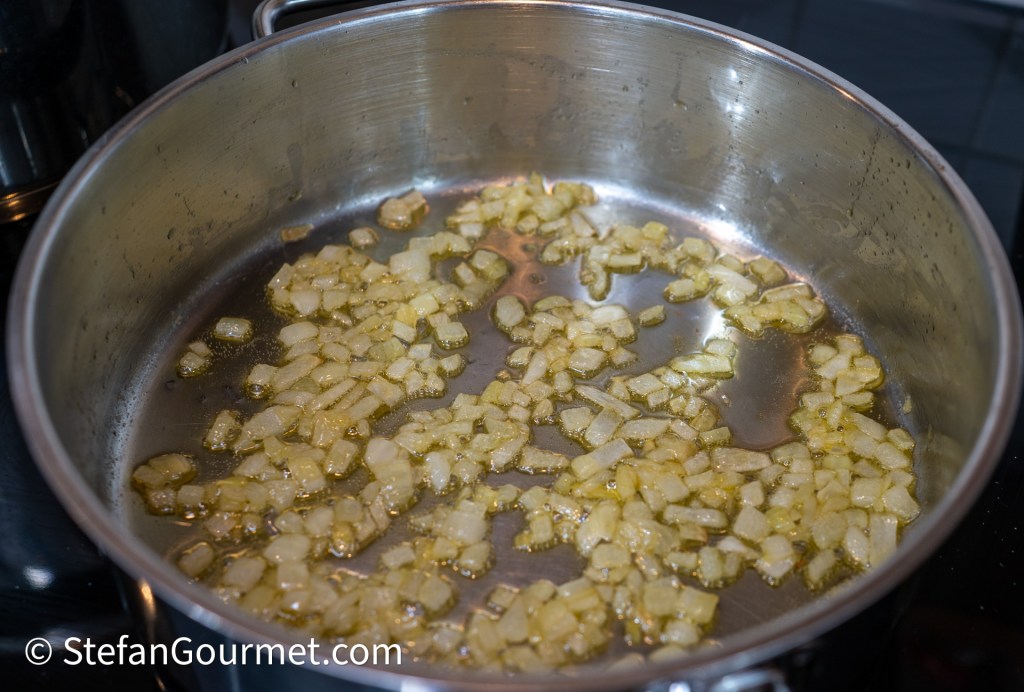
Sauté over medium heat until softened, about 10 minutes.
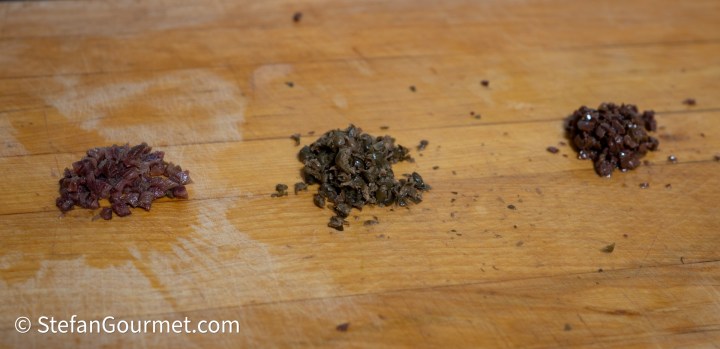
Mince half a tablespoon each of minced capers, minced anchovies, and minced black olives.
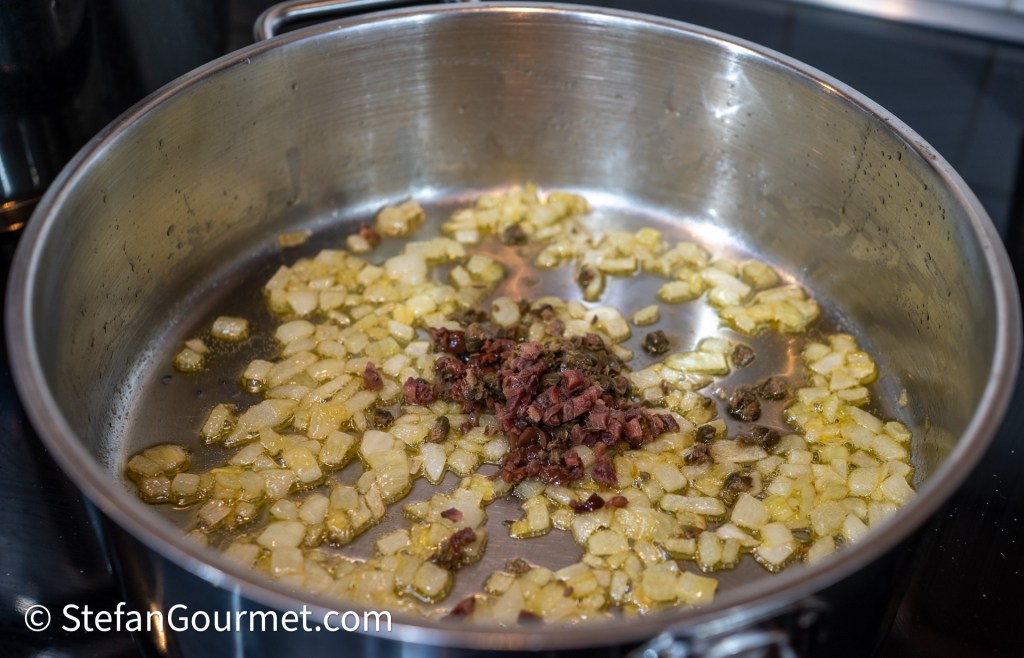
Add them to the onions, and stir until the anchovies have melted.
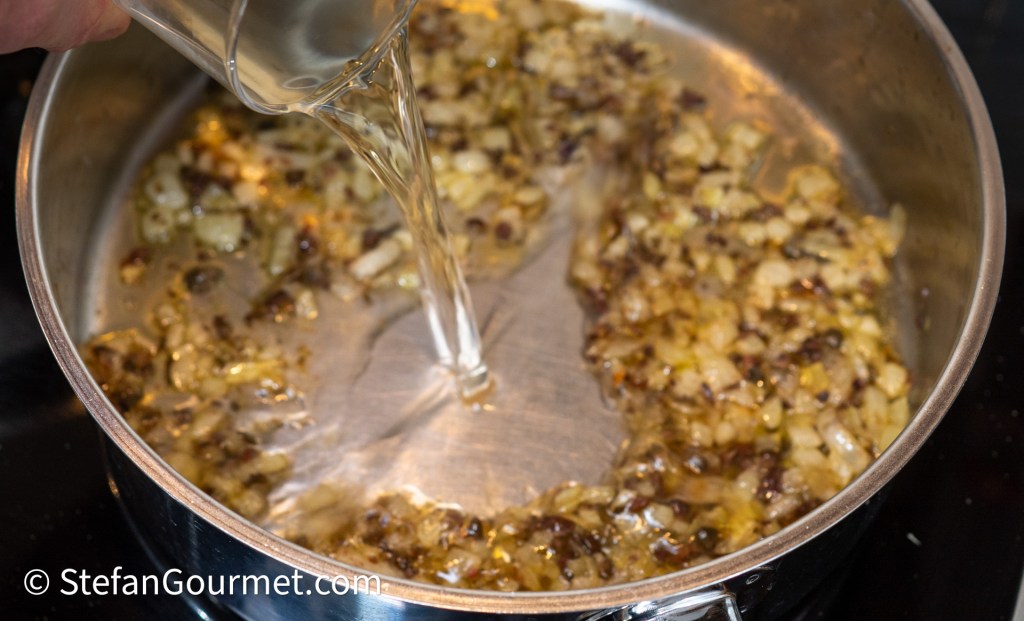
Deglaze with 60 ml of dry white wine and stir until the liquid has reduced by half to burn off the alcohol.
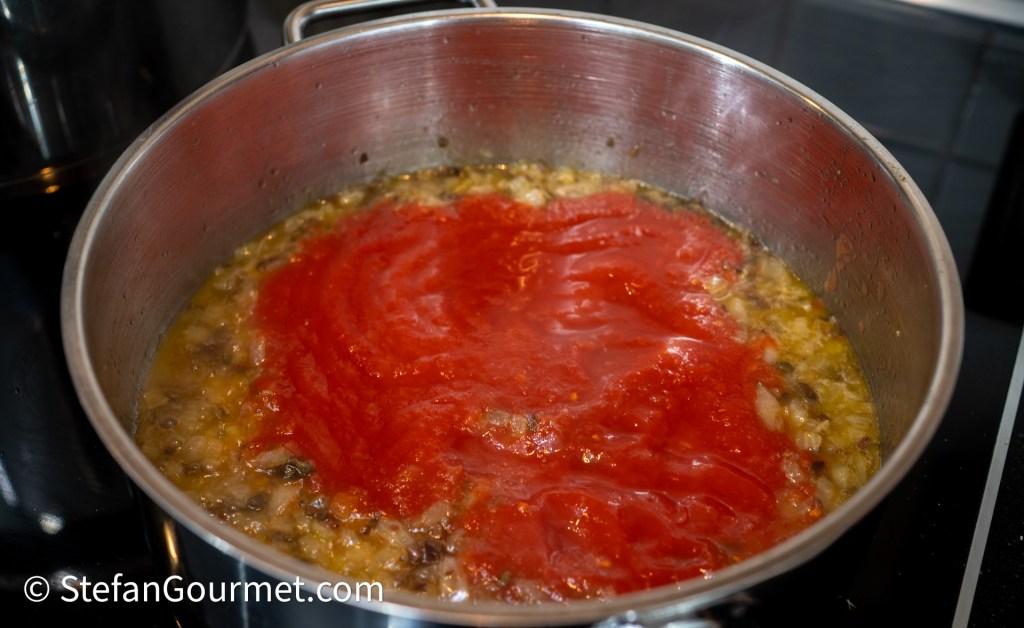
Add 500 ml of sieved tomatoes and season with freshly ground black pepper.
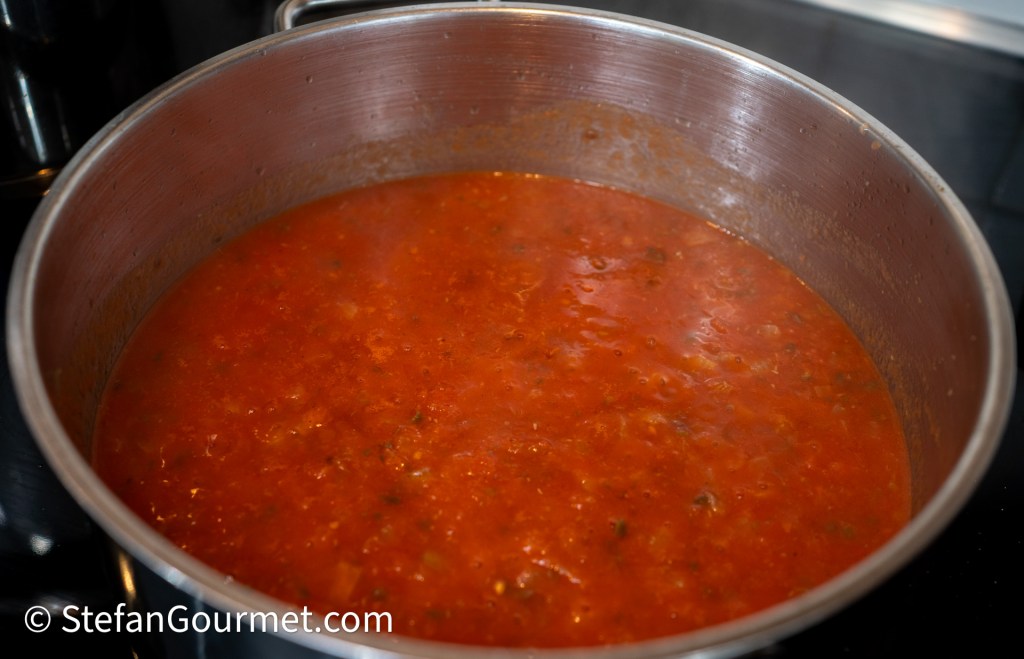
Stir and bring to a boil, then simmer the sauce until it has thickened.
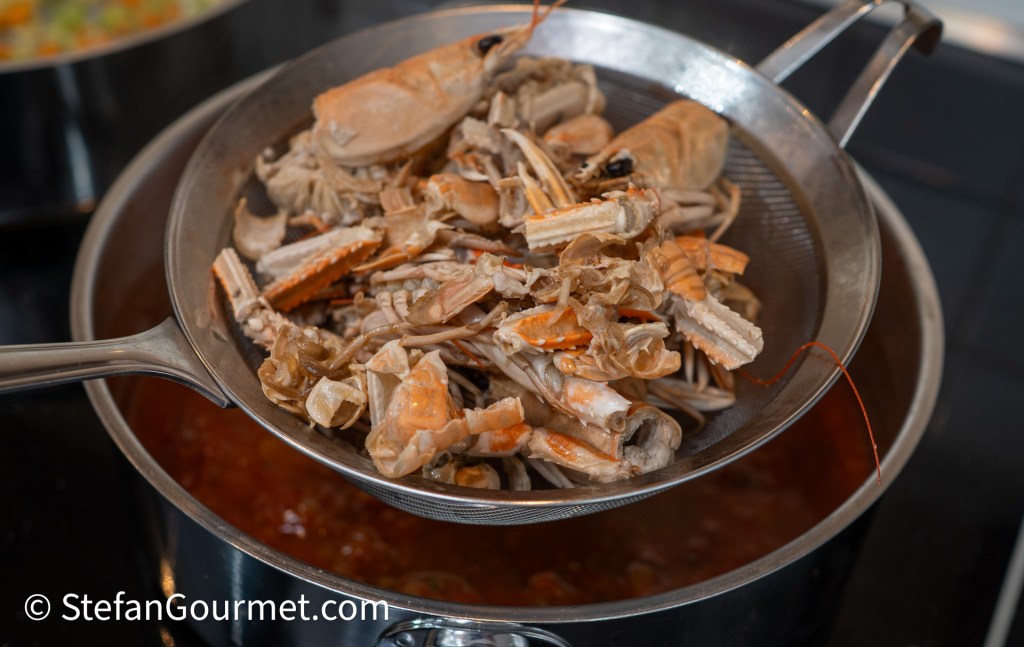
Once the langoustine stock has simmered for 20 minutes, strain it through a fine sieve directly into the tomato sauce.
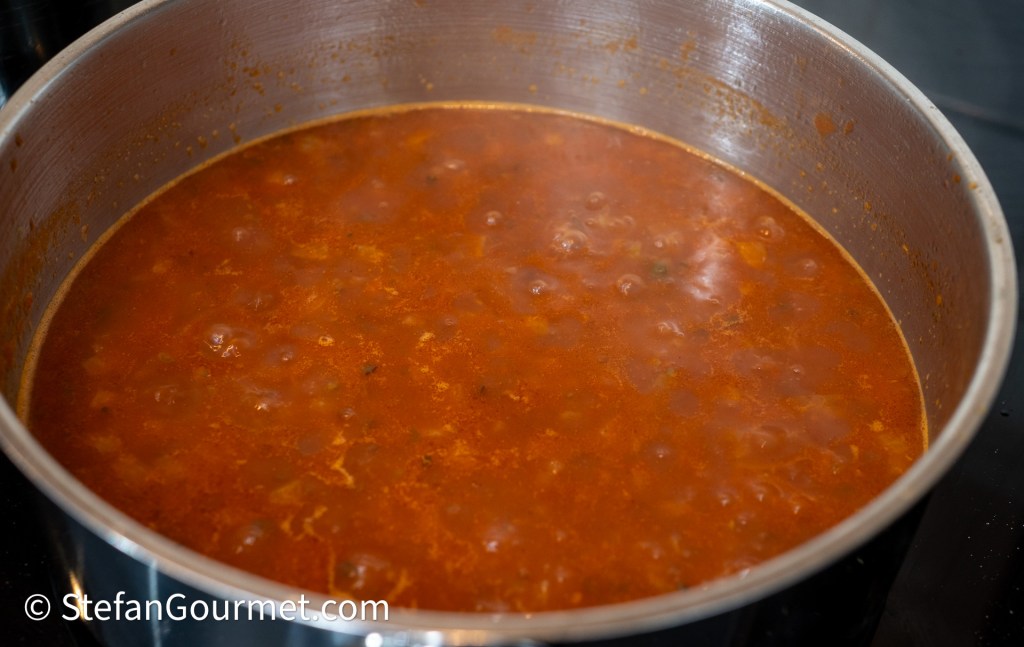
Continue simmering the sauce until it is thick, which you can check by drawing a path in the sauce.
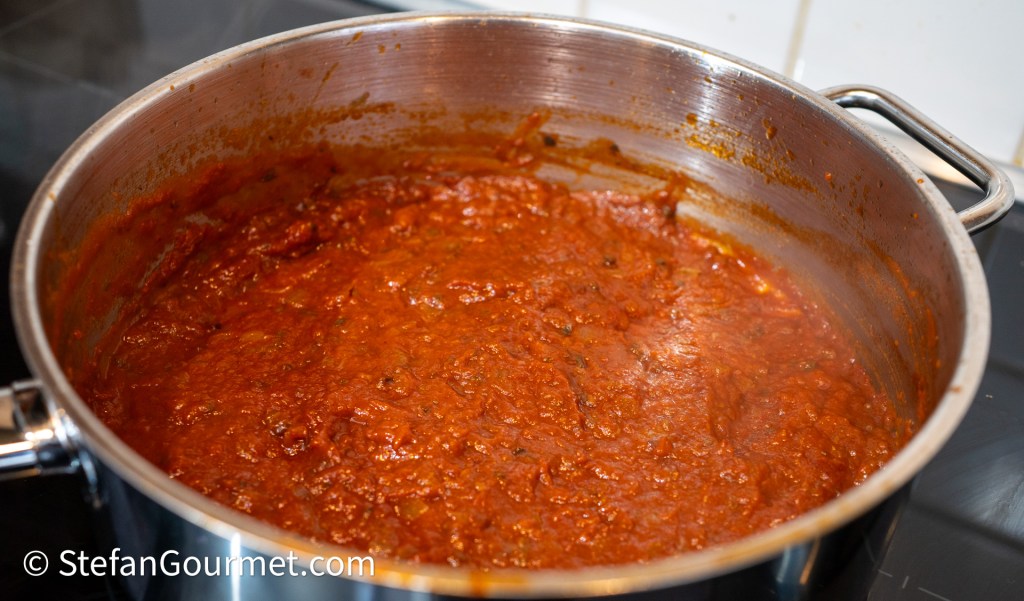
It is ready when it no longer looks watery, ensuring the sauce won’t bleed on the plate. Taste and adjust the seasoning with salt and pepper. Salt may not be needed, as the stock, olives, capers, and anchovies are already quite salty. The dish can be prepared up to this point in advance.
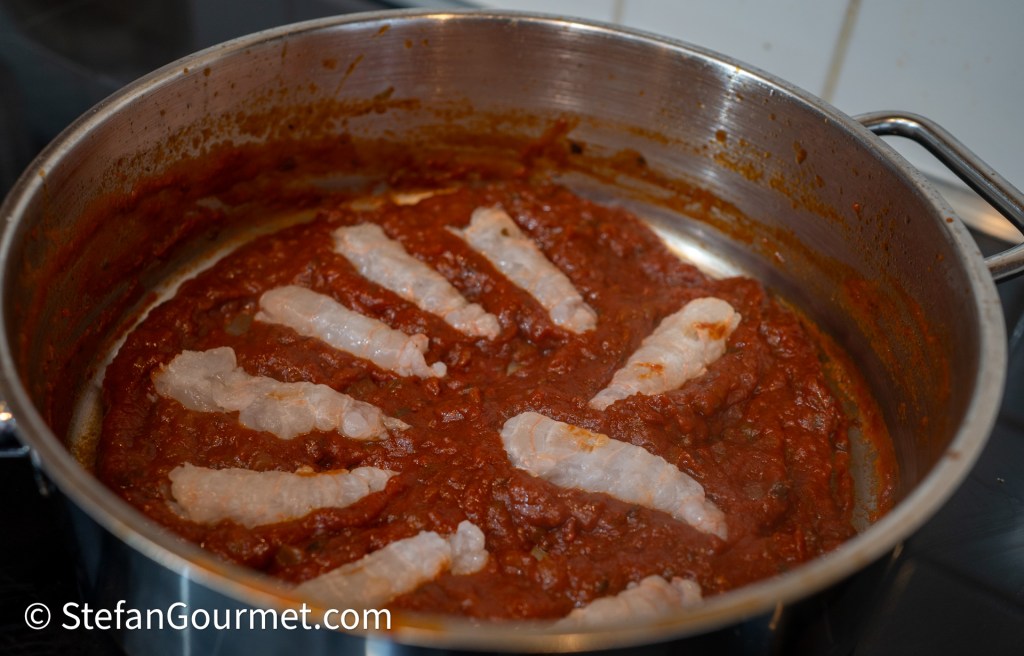
To finish, bring the sauce to a boil, then turn off the heat and place the langoustines in the sauce.
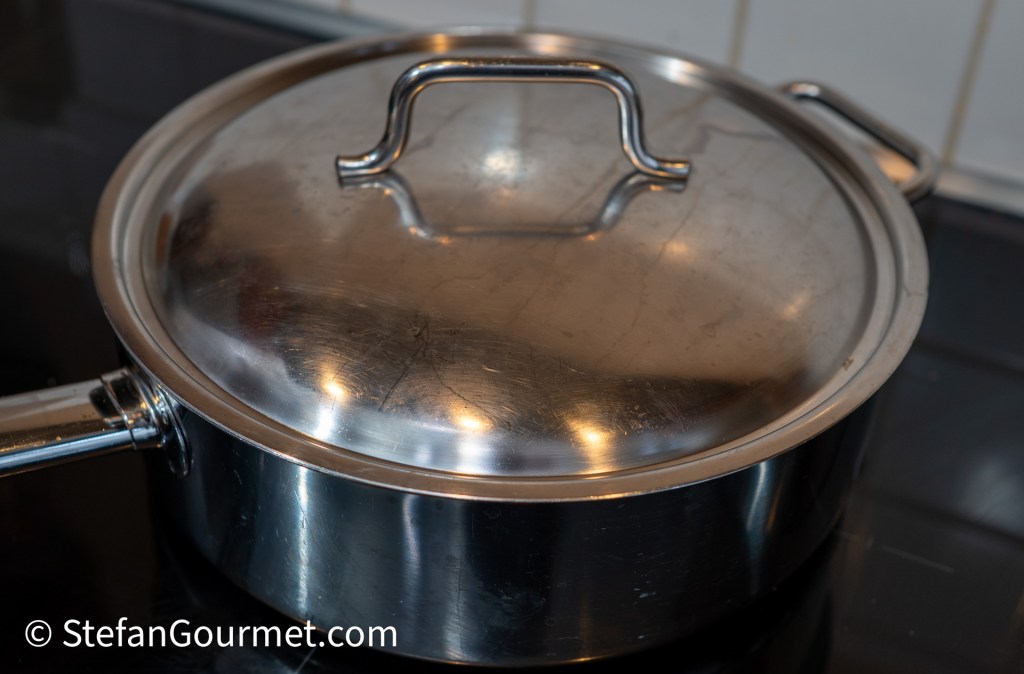
Cover the pan and allow the residual heat to cook the langoustines for 2-3 minutes. Turn the langoustines and cook for another 2-3 minutes.
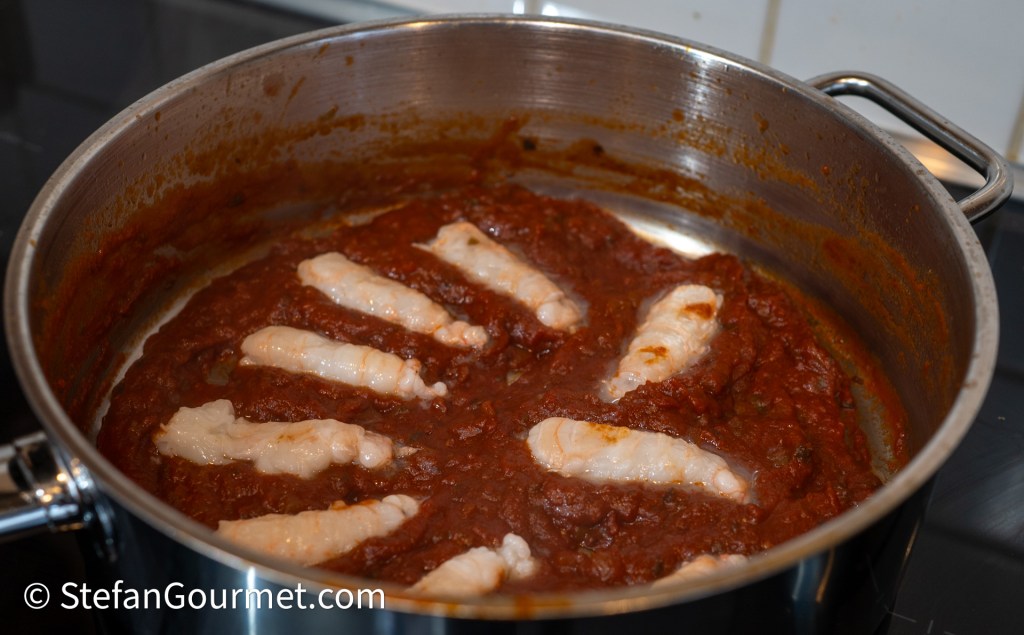
This method guarantees a creamy texture, whereas boiling would result in a dry and crumbly texture.
Remove the langoustines from the pan and place them on preheated plates. Bring the sauce back to a boil once the langoustines are removed, then spoon it onto the plates. Garnish with fresh basil or flat leaf parsley and serve at once with good white bread to mop up any sauce left on the plate.
Wine pairing
As mentioned in the introduction, this dish paired successfully with the Pícaro del Águila Clarete from Ribera del Duero. It could also be paired with a full-bodied dry white wine, such as a Vermentino di Gallura Superiore DOCG from Sardinia. A regular Vermentino di Sardegna DOC would likely lack the flavor intensity required to stand up to the robust sauce.


Do hope you were sitting outside in the warm Italian sunshine with a glass of dry white or a cup of your favourite ristretto whilst putting this together. A simple looking but quite unusual offering as far as I am concerned taking into account the need to balance the langoustine flavour with a sauce of such definite tastes. I would never have thought of mincing the capers, anchovies and olives or achieving a ‘sauce’ of the consistency you have shown. It looks fabulous, can be tasted thru’ the screen and greedy me would definitely prefer it as an appetizer . . . thank you :)!
LikeLiked by 1 person
This is such a lovely dish! I definitely see it paired with a red.
LikeLiked by 1 person
A very light and slightly chilled red might work.
LikeLiked by 1 person