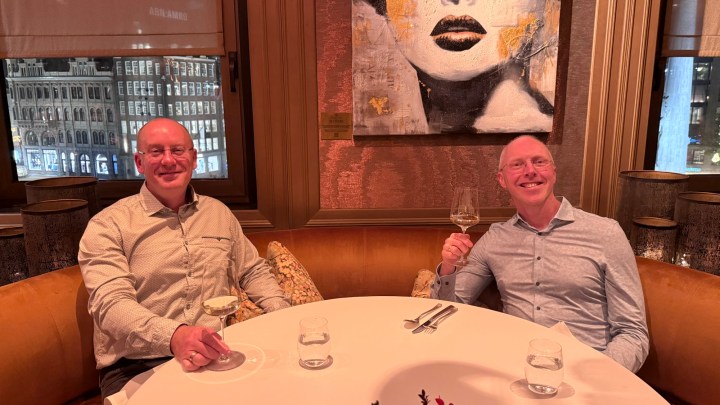
For my friend Robert’s birthday, we dined at restaurant Bougainville, located inside hotel TwentySeven within a historic building on Dam Square in Amsterdam. Under Executive Chef Tim Golsteijn, the restaurant has held a Michelin star since 2019. Maître and sommelier Ronald Opten led the team to win Gault & Millau’s best wine list award in 2025. The standard chef’s menu is titled the World Discovery Experience, priced at 199 euros for 6 courses, or 249 euros with A5 Wagyu. They also offer a Botanical Experience for 179 euros, alongside optional additions like oysters, caviar, cheese, or the chef’s signature dessert. The wine experience is different from other restaurants in that the wines are served without showing the bottle, and are explained only after experiencing the wine with the dish. So this is also how I am going to structure my account of our experience at Bougainville. The wine experience is priced at 15 euros per glass.
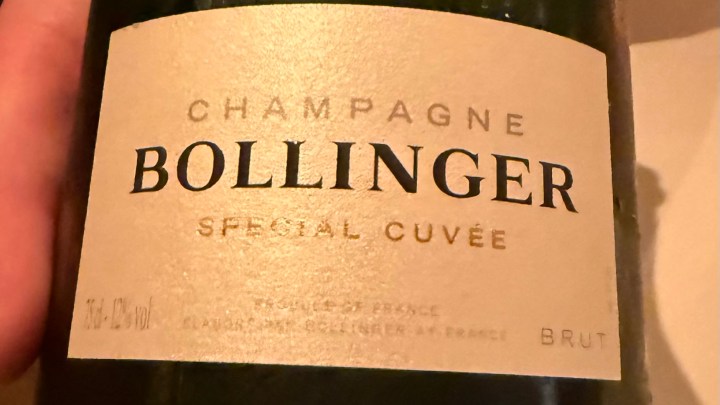
We started with a glass of the house champagne, the Bollinger Special Cuvée.
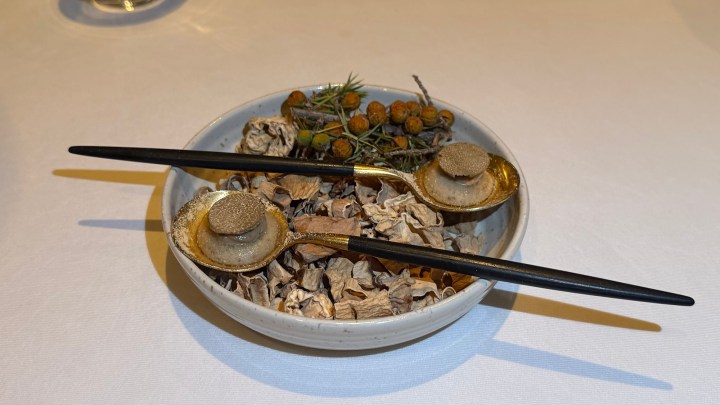
The amuse bouche featured mushrooms…
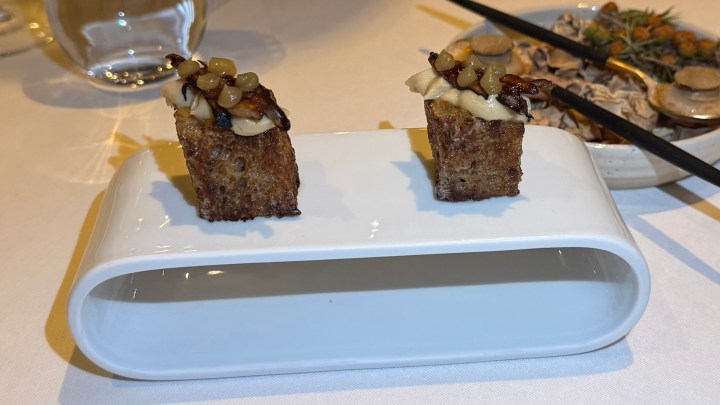
…sourdough bread with onion…
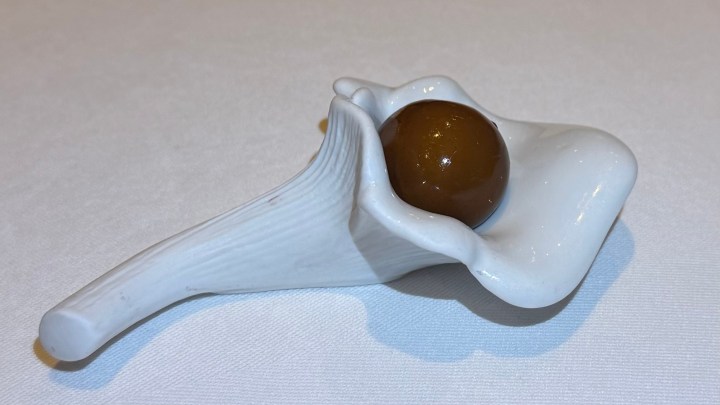
…foie gras with licorice…
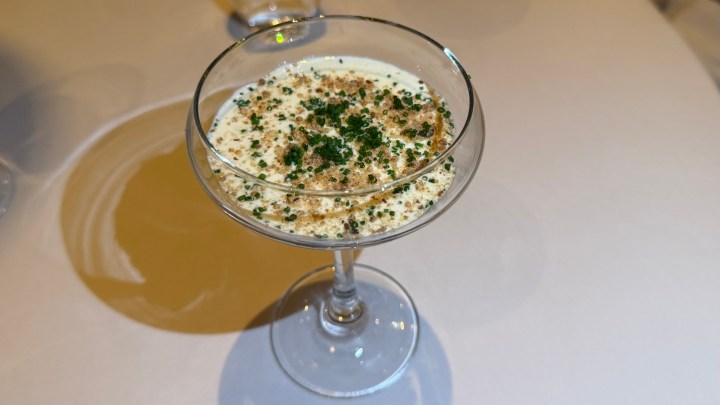
…and a gel version of French onion soup with onion crumble.
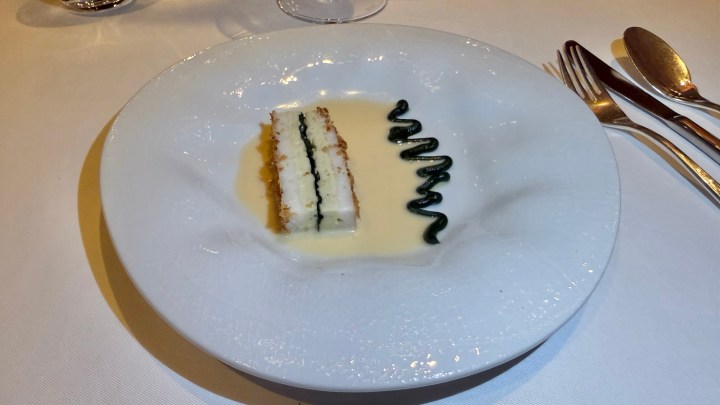
The first course was sole cooked at a low temperature, stuffed with a sole farce and cavolo nero, served with lemon balm, a beurre blanc sauce, and fennel seeds. Interestingly, the seeds tasted remarkably like cumin. The dish was served at room temperature. The wine showed appealing stone fruit aromas and accentuated the fennel notes beautifully.
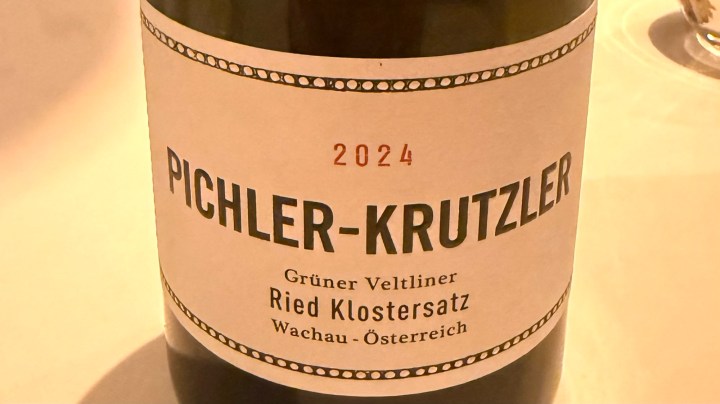
It turned out to be a single-vineyard Grüner Veltliner from the Wachau in Austria, crafted in a riper style than the more common expressions known for green apple fruit and high acidity. It was an excellent pairing for the dish.
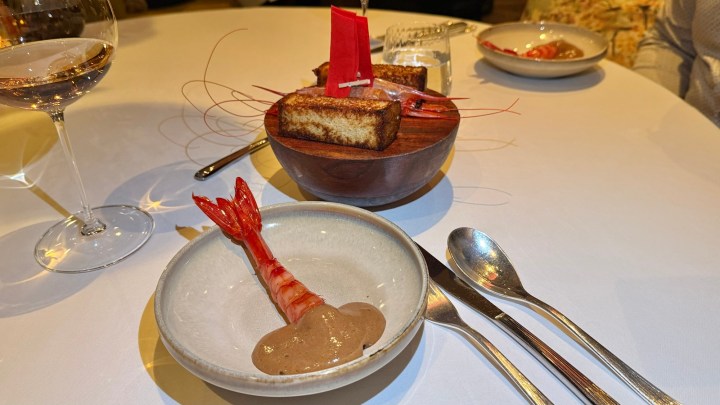
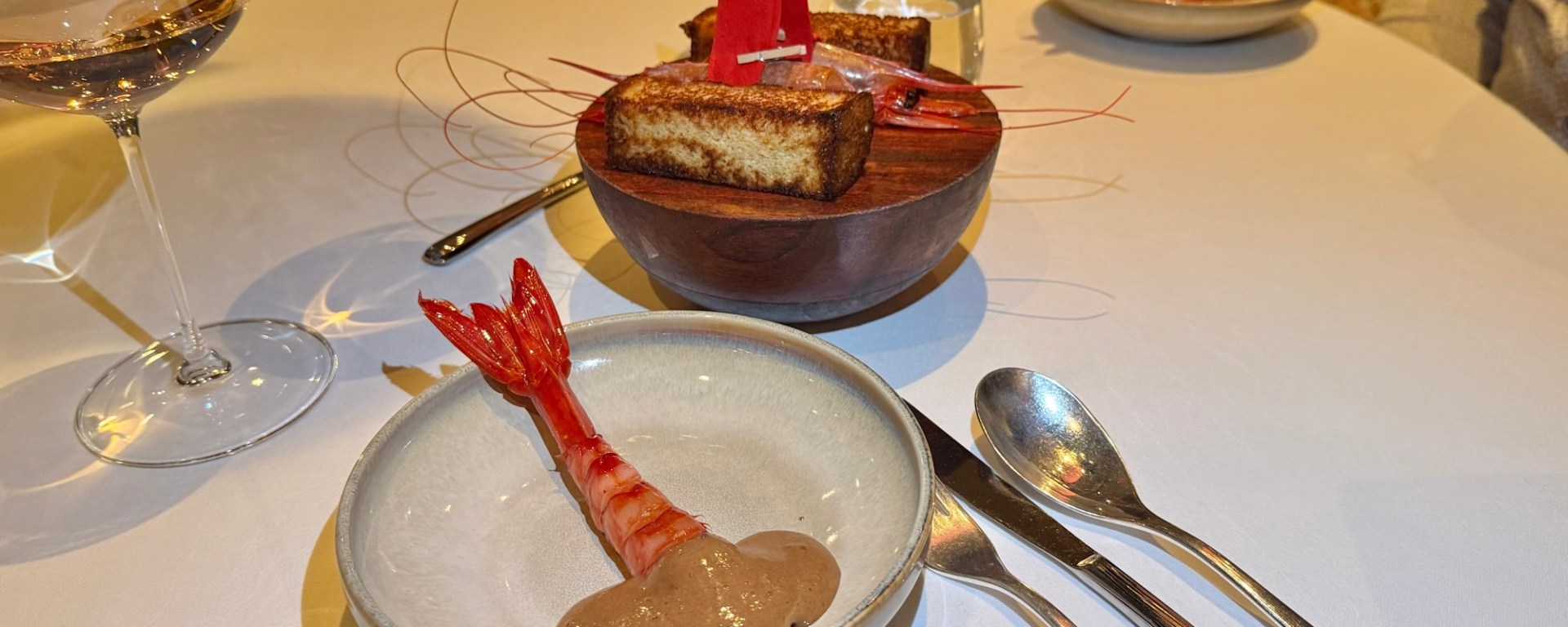
The next course featured a confit carabinero shrimp with suquet, a bisque-like sauce from Catalunya, sourdough toast, Jamón Iberico, and a Romesco sauce. The Romesco was served inside the shrimp head, intended to be spread onto the toast. The carabinero itself boasted a perfect texture. However, the Jamón was fully submerged in the suquet, making its presence difficult to detect. The suquet carried a pronounced burnt note. When I inquired, the team confirmed this was intentional rather than a kitchen error, representing a deliberate push to cross the thin line between intense caramelization and charred flavors.
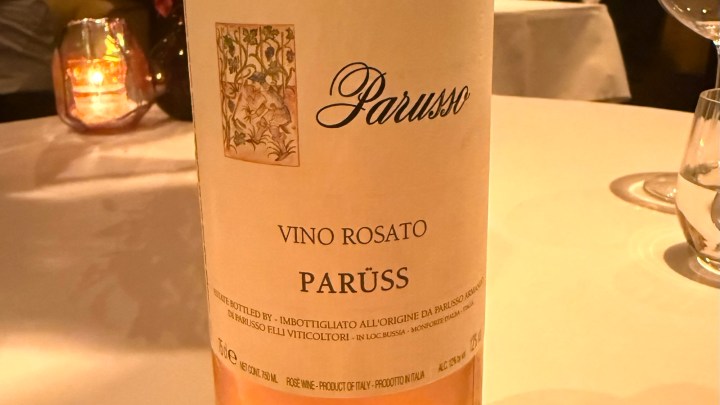
This paired very well with an excellent rosé crafted in the Provence style, yet offering slightly more texture. It was revealed to be a Nebbiolo rosé from the Armando Parusso estate in Monforte d’Alba, a producer famous for Barolo. He likely uses grapes for this rosé from younger vines or cooler microclimates unsuitable for high-quality Barolo, releasing it as a simple “vino rosato” outside of any formal appellation.
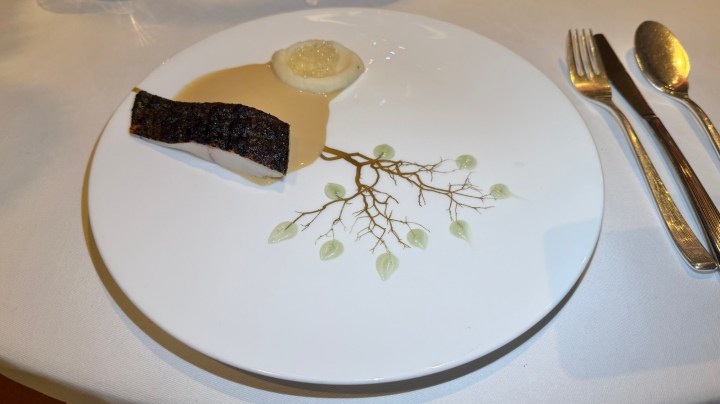
The third course was kingfish from a Japanese Binchotan grill with celeriac puree, elderflower pearls, a beurre blanc, and green tea ‘leaves’. The intricate presentation was a combination of a leafless tree that was already on the plate with the edible leaves painted on the branches. The skin of the kingfish was again over the line for me, but in this case it was easy to just peel off the skin to avoid eating it.
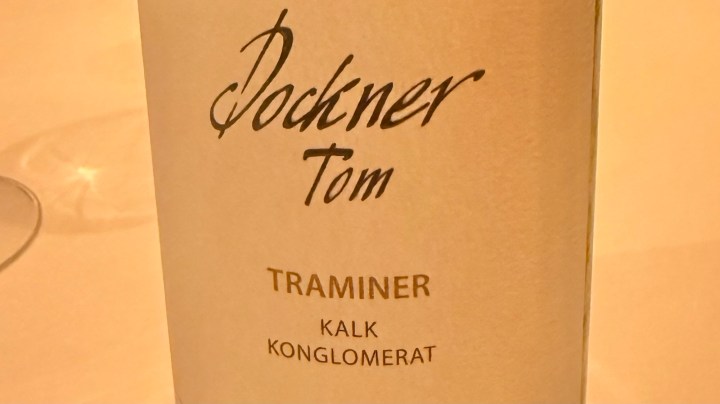
It was paired nicely with a yellow Traminer from Austria, a mutation of Gewurztraminer that is less aromatic.
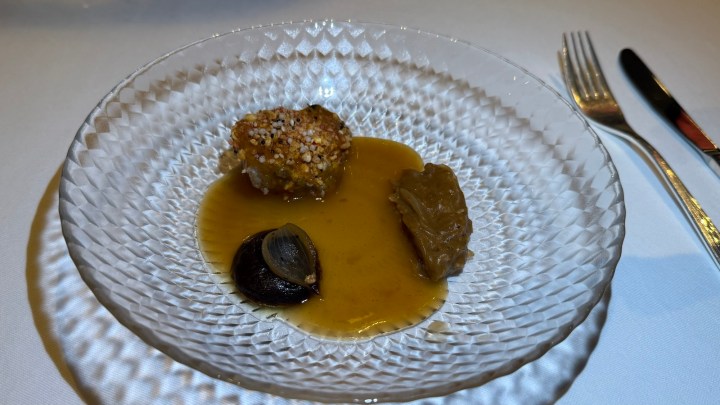
The next course was a glazed veal sweetbread with barbecued onion, jus from braised beef, and an apricot chutney.
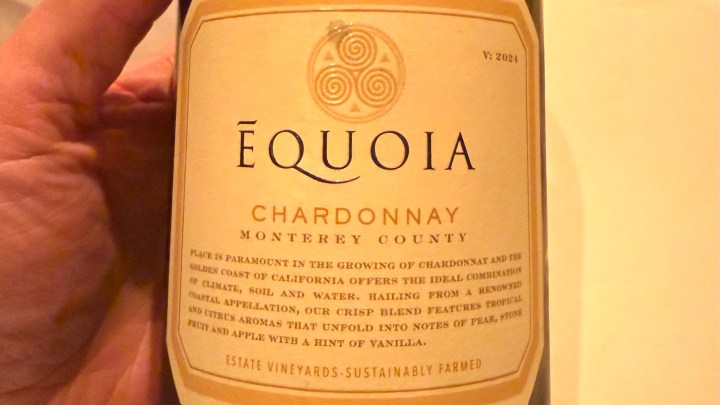
It was paired well with a Chardonnay from Monterey in California. The ripe style of this Chardonnay worked well with the sweet and creamy flavors of the dish.
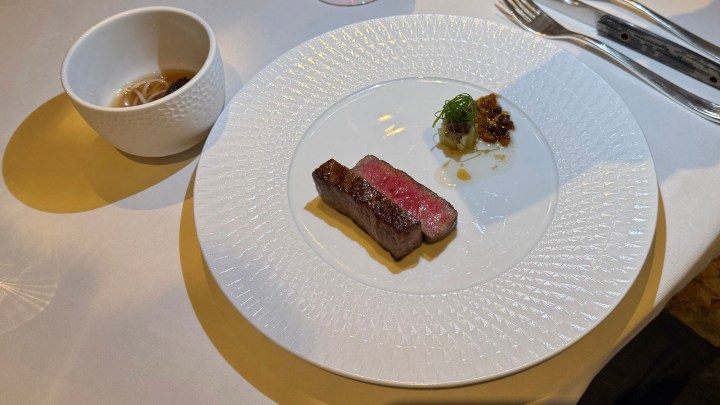
The Wagyu A5 sirloin steak was served with soba noodles and a Wagyu meatball in a ponzu broth on the side. The steak was cooked to a perfect medium rare, though it could have benefited from a touch more salt.
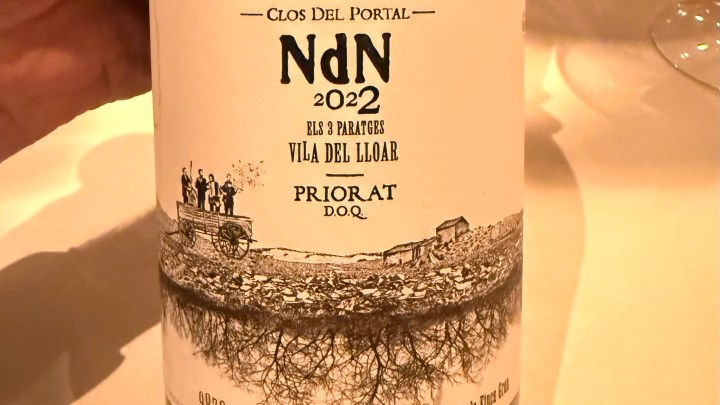
The dish was paired very well with a blend of Garnacha, Cariñena, and Syrah from Priorat in Spain. The wine offered velvety tannins and beautiful aromas and could handle the broth as well as the Wagyu.
No bread was served with the meal, but when we asked for it, some outstanding sourdough was served with a perfect crust, flavor, and texture.
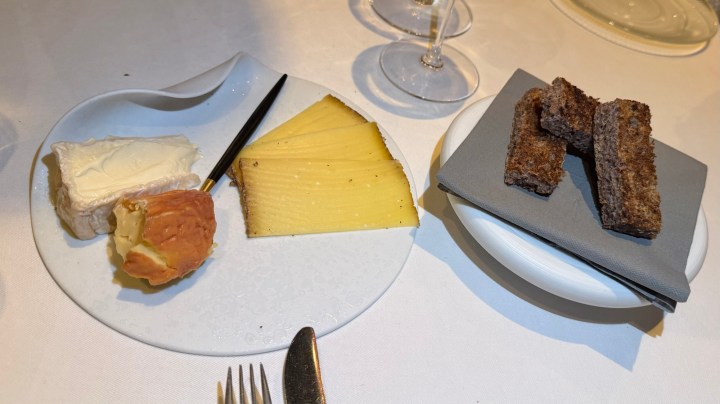
We decided to add a cheese course, which featured three exceptional cheeses from famous Alsatian affineur Bernard Antony: Brillat-Savarin, Comté, and Époisses.
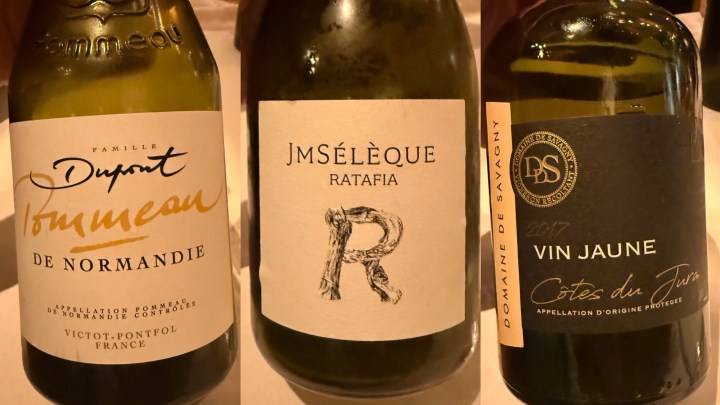
They were accompanied by three distinct pairings, though not strictly mapped one-to-one: a Pommeau from Normandy (apple juice fortified with Calvados and aged), a Ratafia (grape juice fortified with Marc and aged), and a Vin Jaune from the Jura. The Vin Jaune is aged for over six years under a veil of yeast, similar to flor in Sherry, but with added oxidation that yields rich nutty notes alongside the characteristic acetaldehyde profile of biological aging. It was a fantastic cheese experience presented just as I like it.
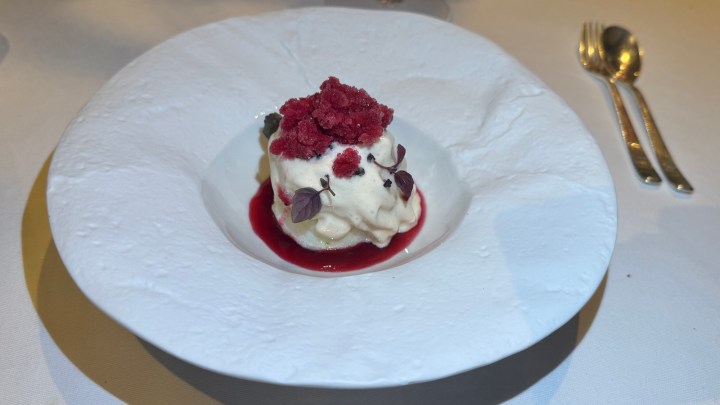
The dessert was Amaretto sour with apple and purple basil.
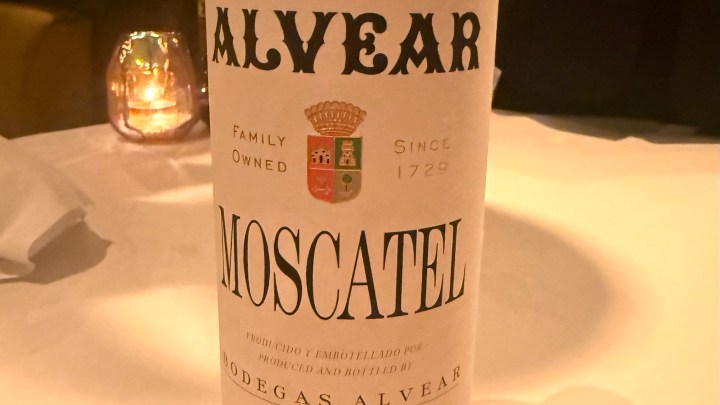
It was paired with a Moscatel from Spain, aged in a solera system.
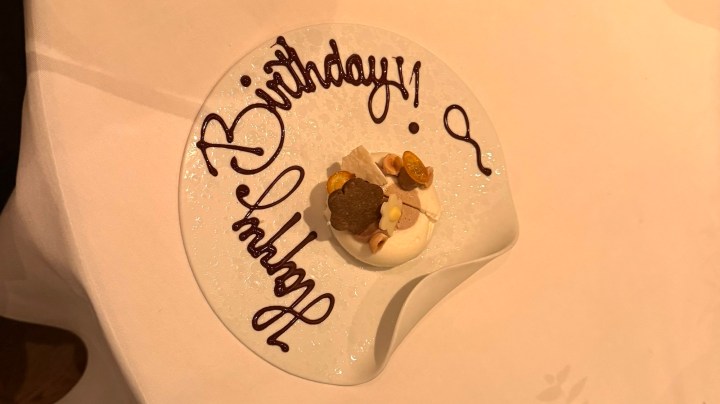
We had a very nice evening at Bougainville, thanks for the most part to the outstanding service and exceptional wine pairings. The wines were all of very high quality and paired exceptionally well with the food. The sommelier and chef selected the wines using a blind tasting protocol, and it clearly shows. While every dish was beautifully presented, the food on its own somehow did not quite hit the mark for me. This is more a matter of personal preference than a reflection of the quality of the cooking, as the chef clearly knows what he is doing. Ultimately, thanks to the excellent wines and engaging conversations with the sommelier, we thoroughly enjoyed the evening.

