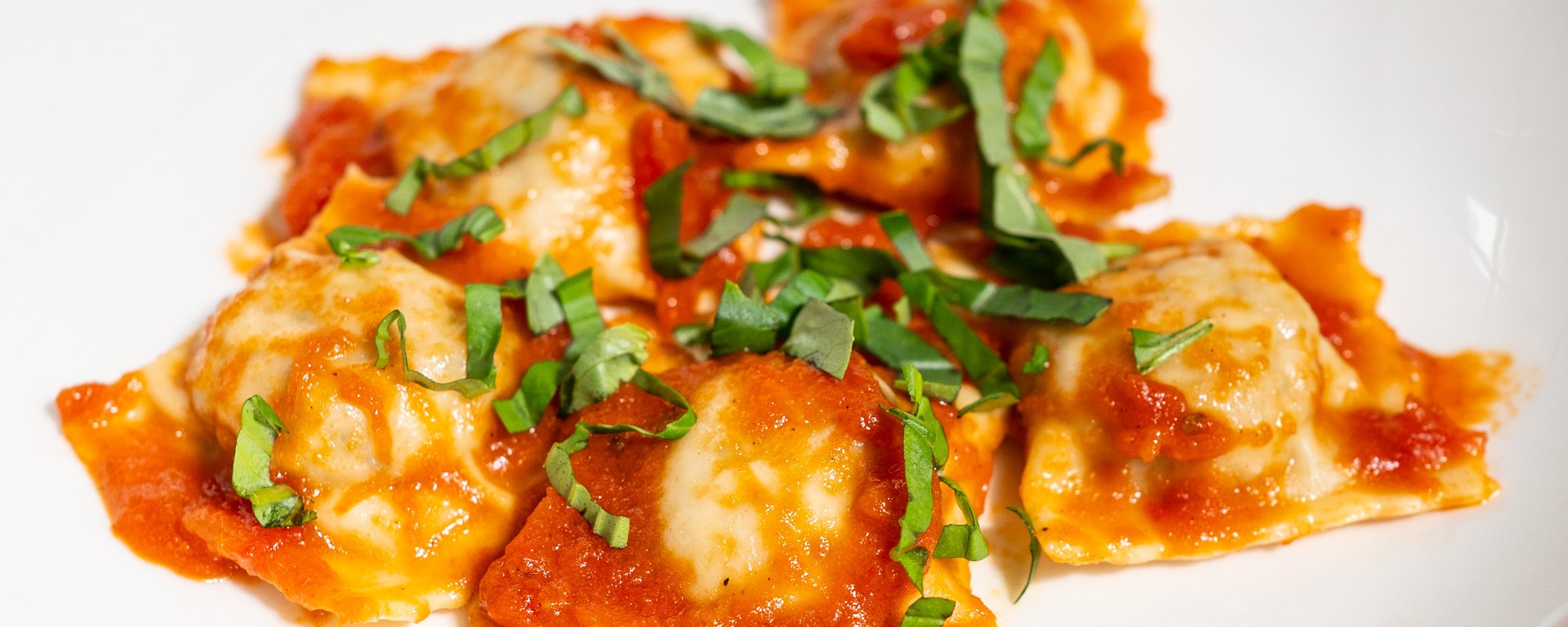
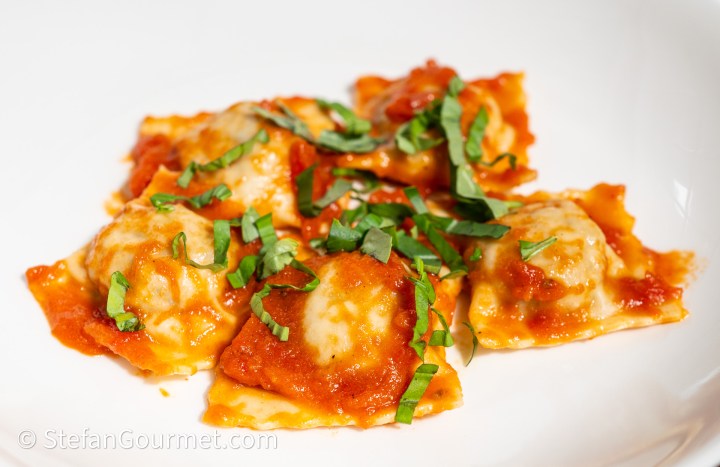
Ravioli are my signature dish, and they never fail to delight my guests. Once you have some practice, making them does not take as much time as you might think. Limiting the portion size to about six per person naturally forces your guests to savor each bite all the more. The best ravioli are delicate yet al dente, with the sauce and the filling perfectly complementing each other. While there are a few classics like spinach and ricotta or squash, ravioli also allow for a lot of creative freedom. Even when using more or less the same ingredients, there are many variables to play with.
Take the size and shape, for instance. I am using the word ravioli here as a generic term for bite-sized parcels of stuffed pasta, but the name changes according to the region and the shape to cappelletti, tortellini, or agnolotti. Making smaller ravioli means less filling for the same amount of pasta, and it requires more work since you will have to make more of them to finish the filling. The shape itself is mostly for looks, as most shapes do not provide a significantly different tasting experience.
I already have a recipe for shrimp ravioli on the blog from 2014 that features quite similar ingredients. Let me talk you through the similarities and differences between that version and this new one.
- Both versions use the shrimp heads and shells to make a stock that is reduced down to a shrimp syrup, which is essential for achieving a lot of shrimp flavor. However, in the 2014 recipe, I used all of that shrimp syrup for the filling, whereas in this new recipe, most of it goes into the tomato sauce. This balances the flavor intensity between the sauce and the filling, whereas in the 2014 recipe, the filling stood out compared to the creamy sauce.
- The texture of the filling is also completely different. The 2014 version relies on the protein coagulation of raw shrimp and egg whites for structure, creating a firm, bouncy bite. The new recipe uses bread to bind the moisture without tightening up, and just the egg yolk for richness, yielding a more tender and moist texture.
- Both recipes opt for fresh rather than canned tomatoes to ensure a fresher and more elegant tomato flavor that avoids overpowering the shrimp. That said, the older sauce is made more elegant and creamy by adding cream to soften the acidity of the fresh tomatoes, whereas the new recipe has more of a shrimp punch by adding more of the shrimp syrup. This also means that the wine pairing changes: instead of an oaked white to go with the cream, the new recipe will work better with an aromatic Vermentino from Sardinia.
- Finally, while both recipes utilize lemon zest, thyme, and garlic, for the new recipe I have replaced the cayenne pepper and parsley with black pepper and basil. Both versions are good, and you could mix and match all of these different variables to create a version to your own liking.
Ingredients
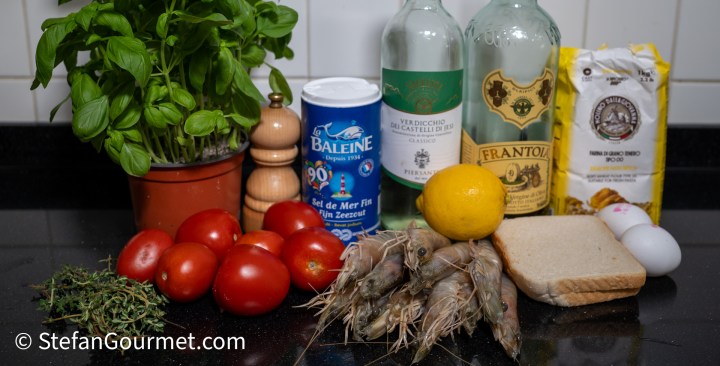
Makes about 25 ravioli
- 600 grams (1.3 lbs) shrimp with heads and shells
- 50 grams crustless stale white bread, diced
- 1 Tbsp fresh thyme leaves
- 1 egg yolk
- grated zest of 1 untreated lemon
- 500 grams (1.1 lbs) plum tomatoes
- 80 ml (1/3 cup) dry white wine
- salt and freshly ground black pepper
- extra virgin olive oil
- 1 garlic clove, thickly sliced
- fresh pasta dough made using 2 eggs and about 200 grams (1 1/3 cups) Italian 00 flour
- basil chiffonade
Instructions
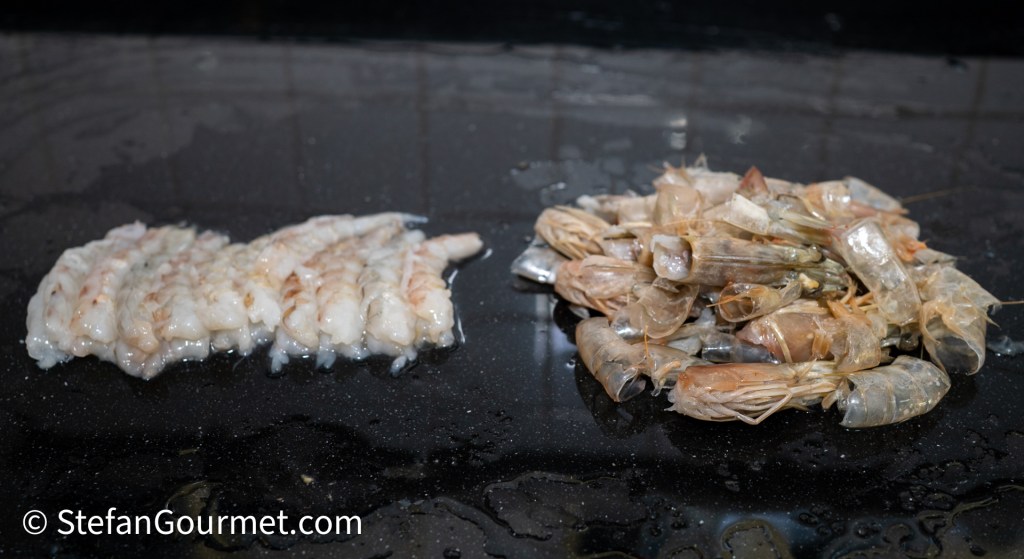
Peel and devein the shrimp, reserving the heads and shells.
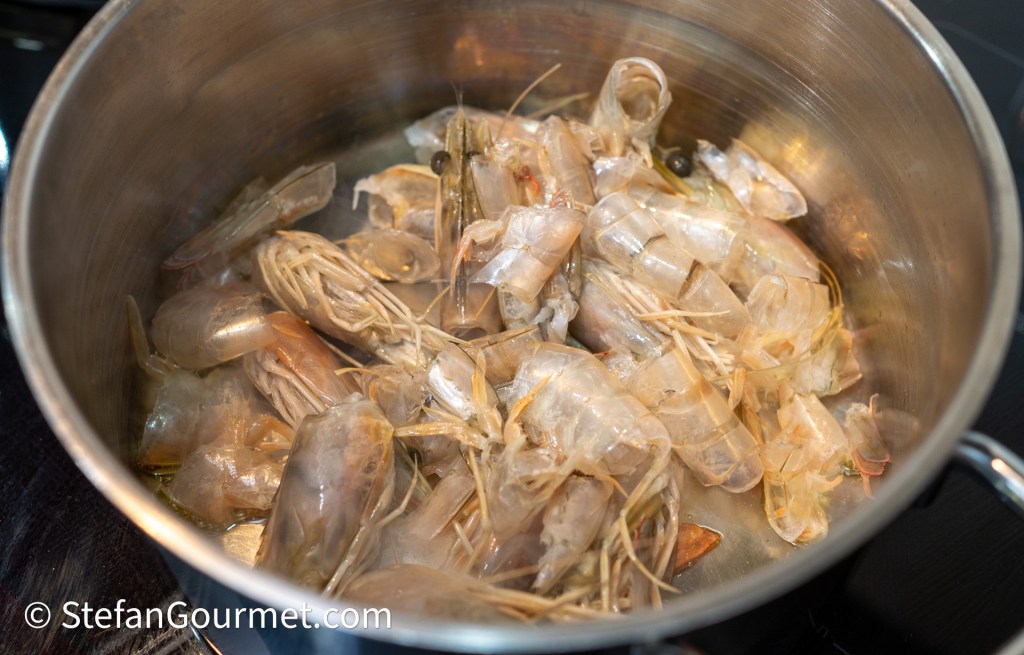
Heat a tablespoon of olive oil in a pan in which the heads and shells fit snugly in a single layer, add them…
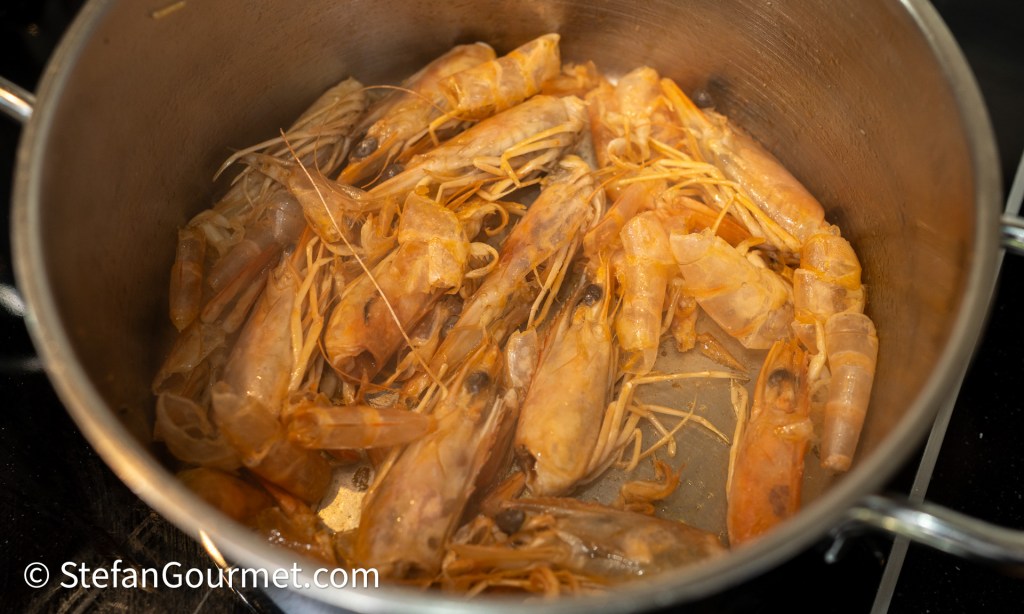
…and sauté over medium-high heat until the shells are pink. This deepens the flavor of the shrimp stock from the browning as well as the extraction of fat-soluble flavors into the olive oil.
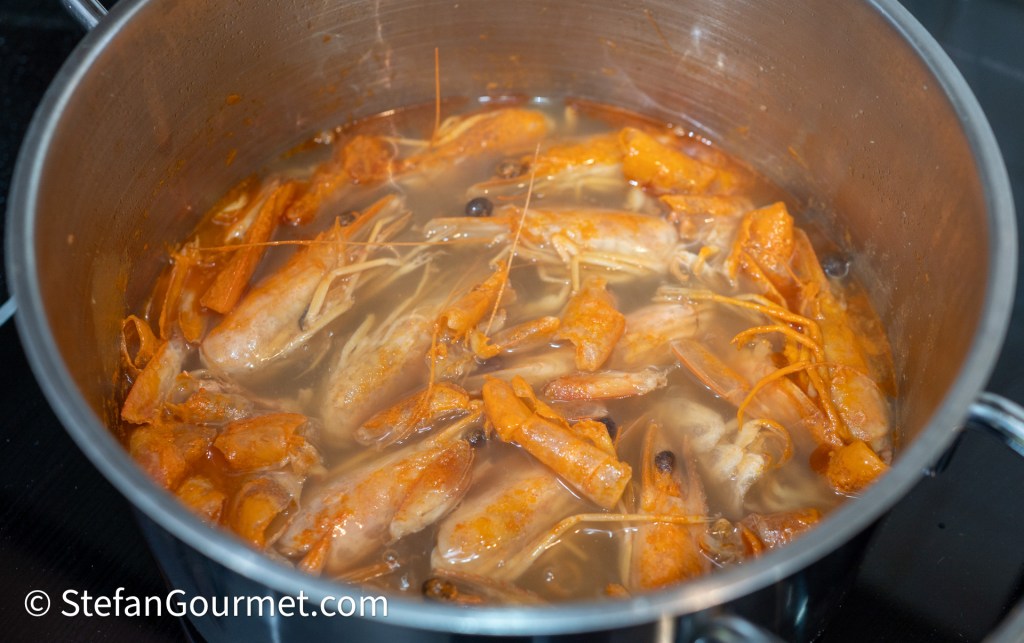
Barely cover with water, cover, and simmer for 20 minutes.
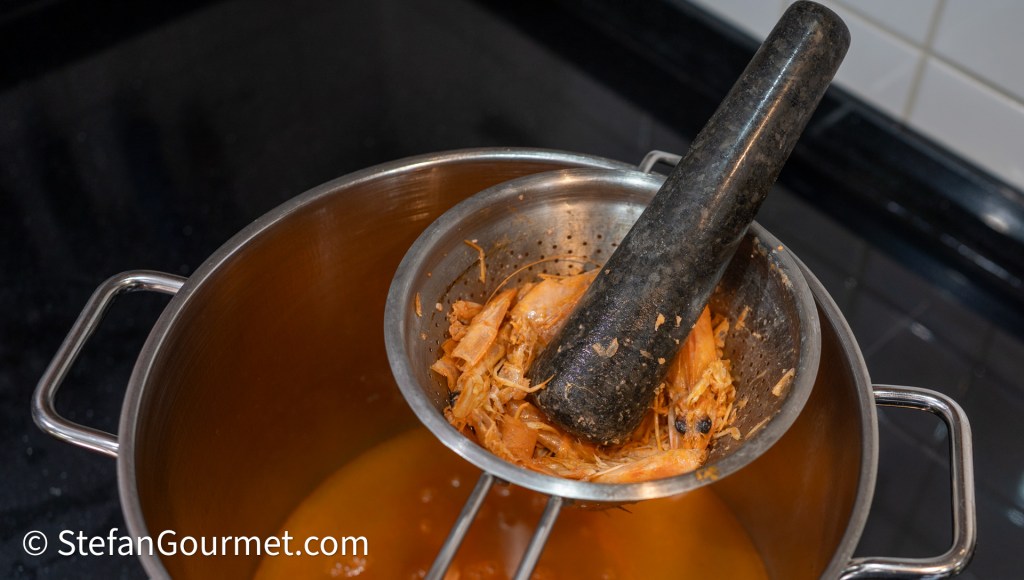
Then strain the stock through a fine sieve, squeezing as much liquid as possible out of the heads. For that last step, I like to use a chinois (a sturdy conical sieve) and a pestle.
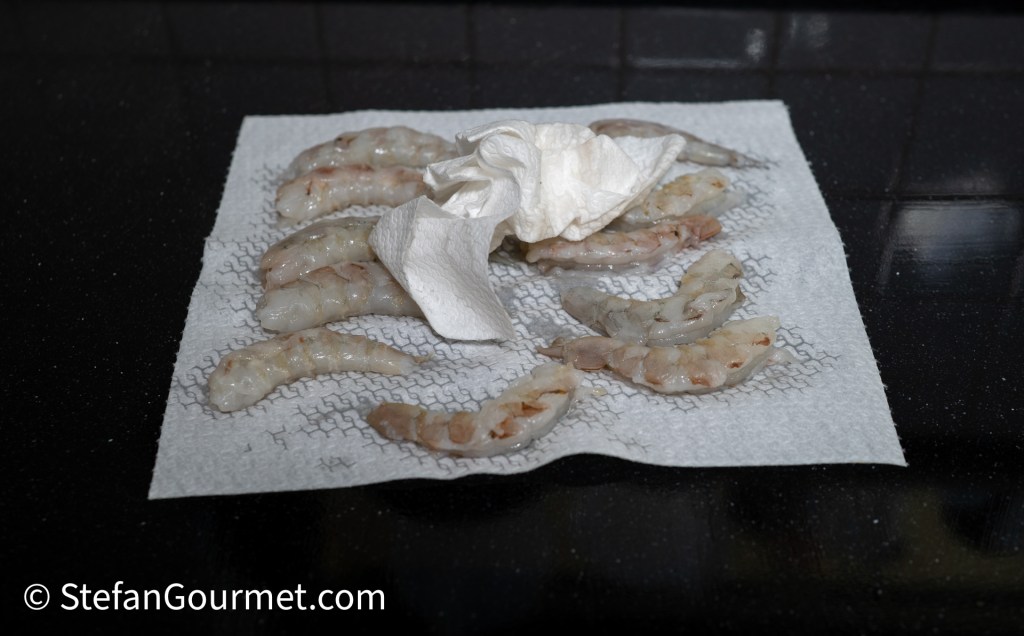
Pat the shrimp meat dry with paper towels.
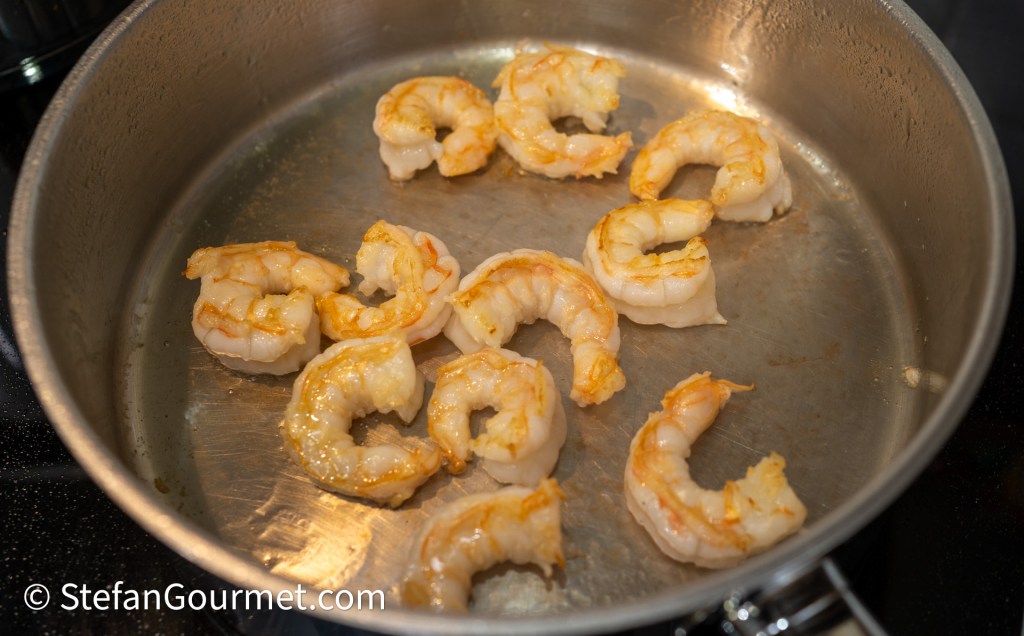
Heat a tablespoon of olive oil in a frying pan, add the shrimp in a single layer, and briefly sear them on both sides on very high heat.
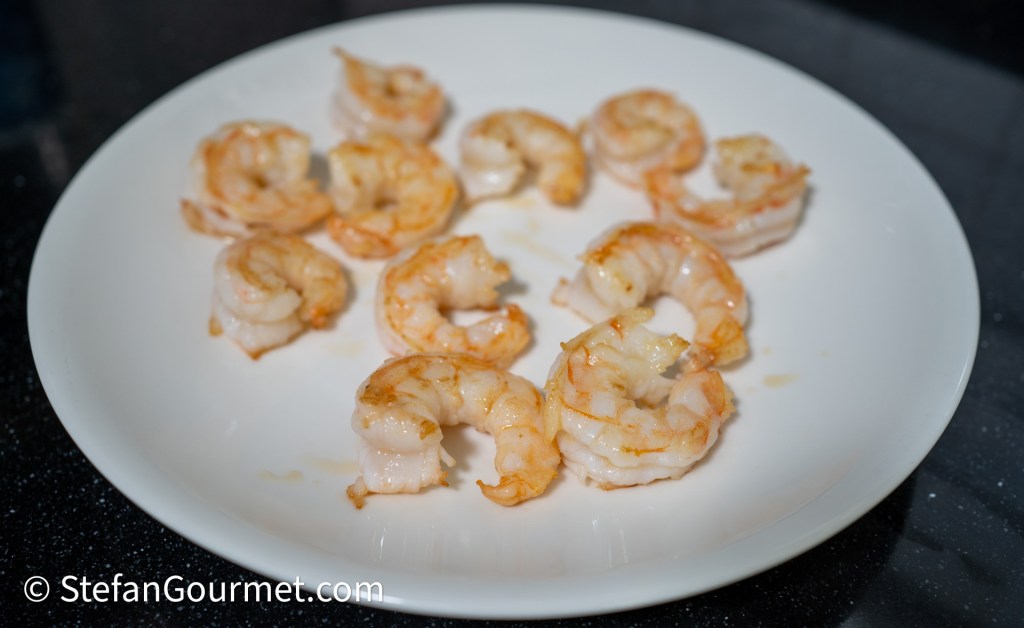
Then take the shrimp out of the pan and set aside on a plate to cool.
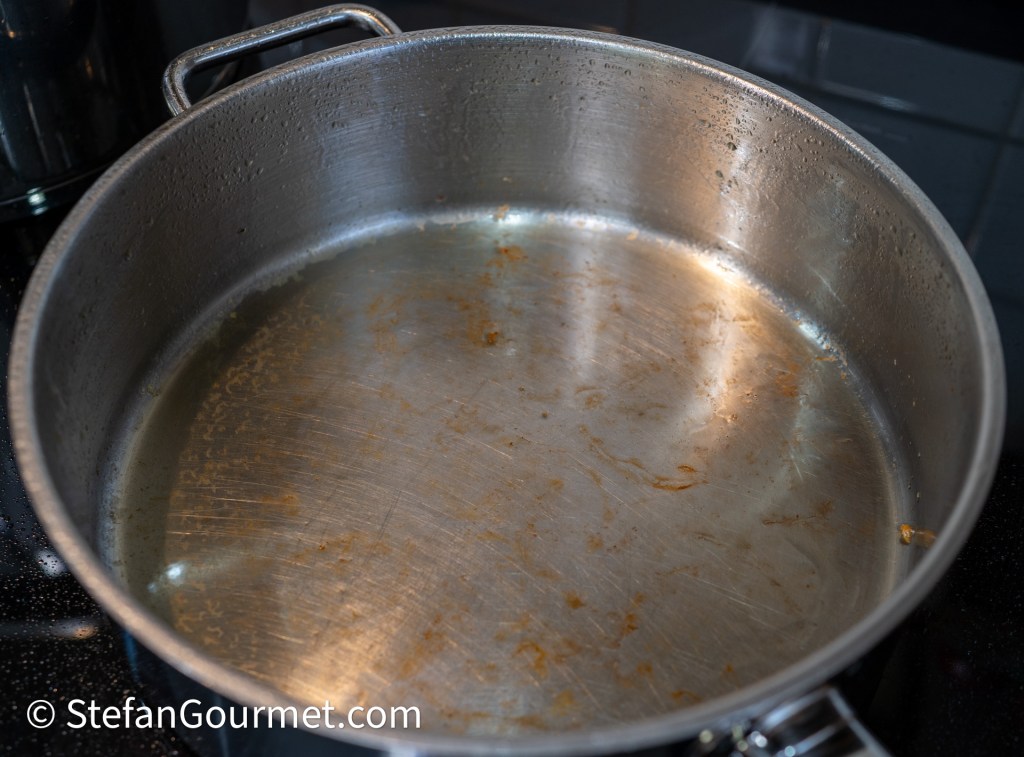
Deglaze the pan with 80 ml dry white wine.
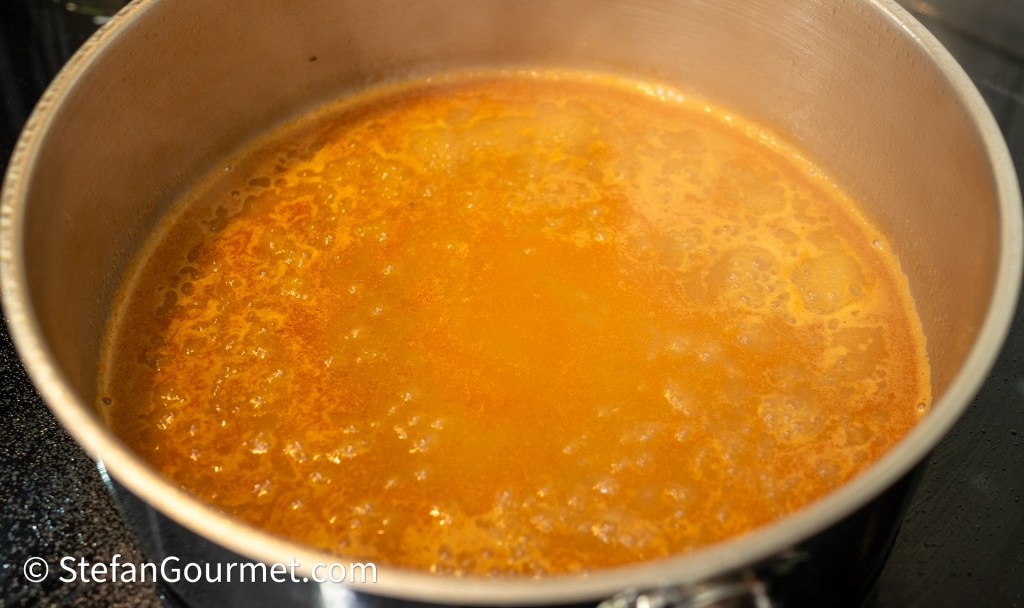
Then add the shrimp stock. Simmer the shrimp stock until it has been reduced to a thick syrup, watching it carefully as it thickens to prevent burning.
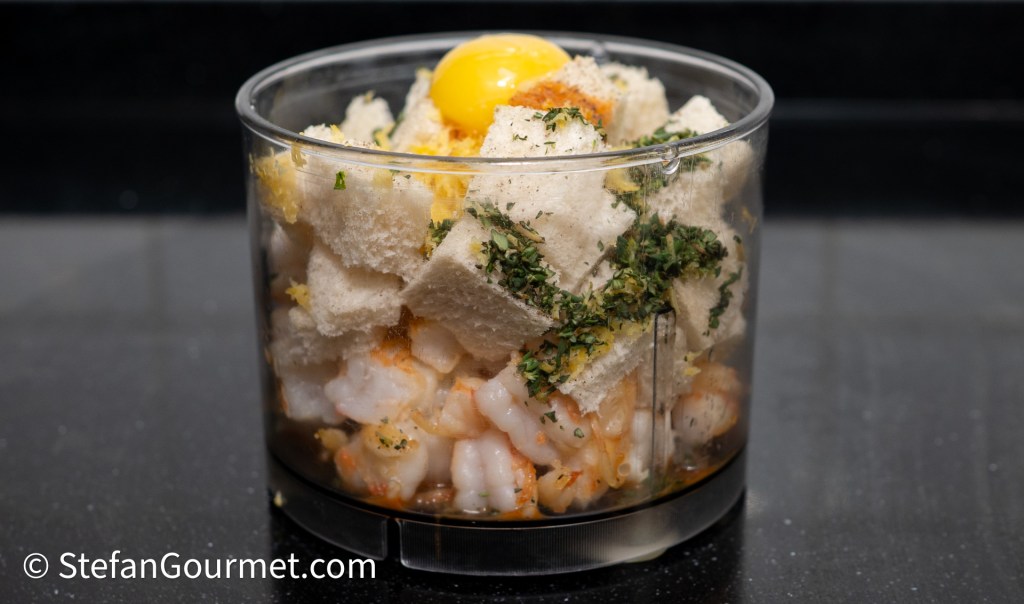
Roughly chop the seared shrimp, and place them in the bowl of a blender or food processor together with the grated zest of a lemon, a tablespoon of fresh thyme leaves, 50 grams of diced crustless white bread, an egg yolk…
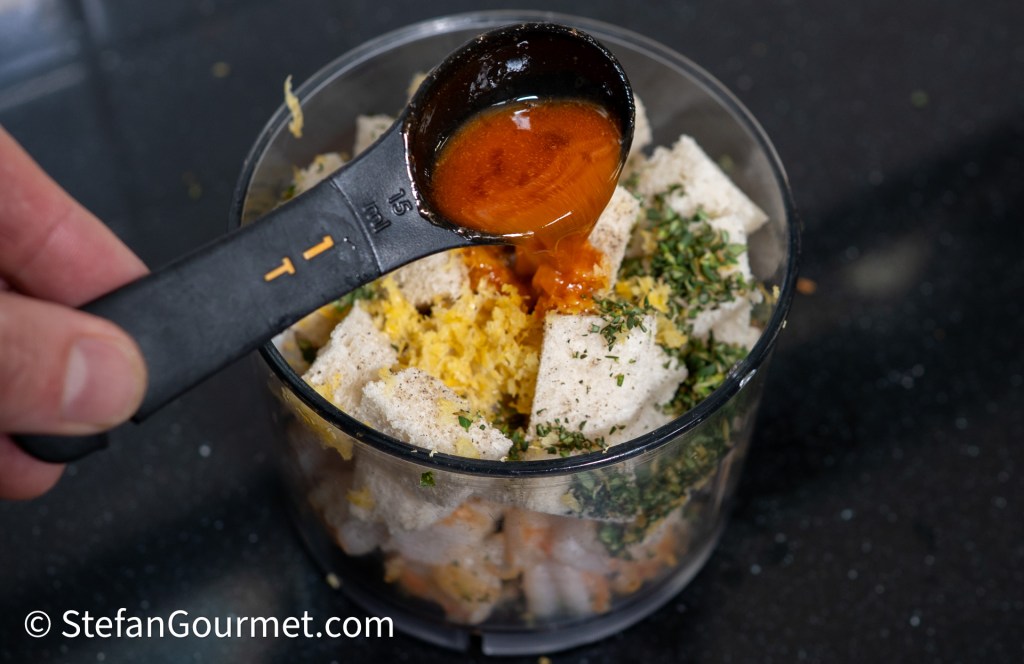
…and a tablespoon of the reduced shrimp syrup.
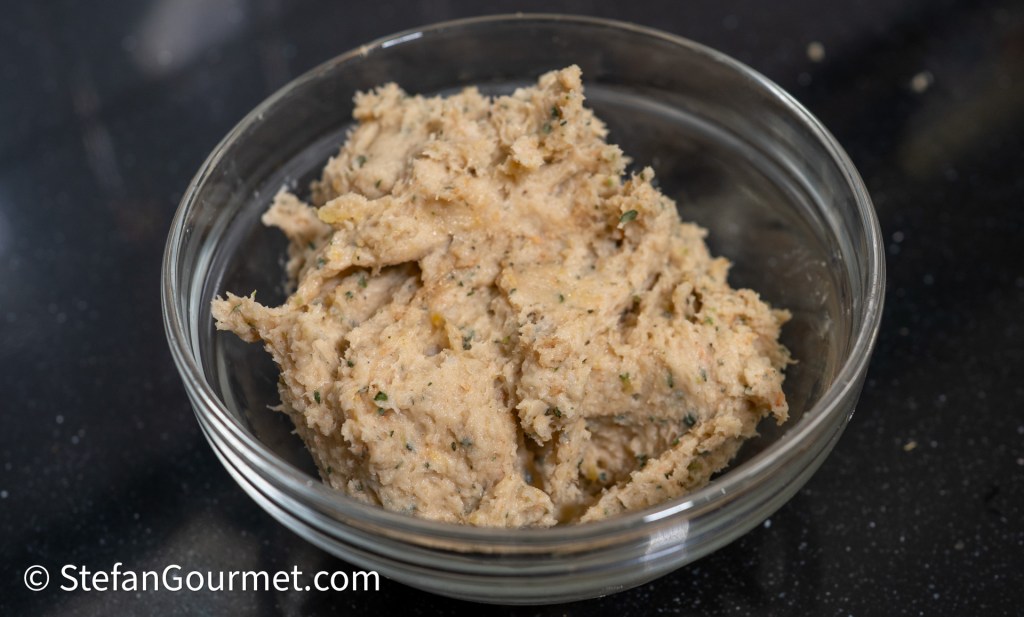
Process until smooth, scraping down the sides of the bowl as needed. Taste and adjust the seasoning of the filling with salt and freshly ground black pepper, remembering that ravioli filling always needs to be seasoned a bit more than you think when tasting it by itself. Let the filling firm up in the refrigerator.
Make fresh pasta dough using my instructions, and allow it to rest in the refrigerator for at least half an hour.
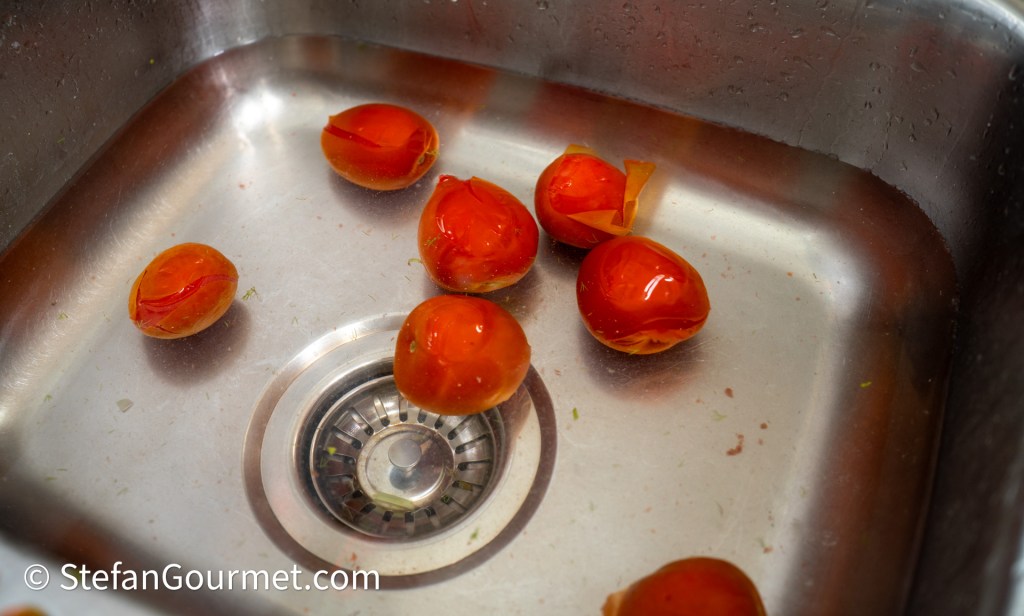
In the meantime, skin the tomatoes by scoring them and then submerging them in boiling water until the skin starts to peel away. As soon as that happens for a specific tomato, lift it out with a slotted spoon and plunge it into cold water to stop the cooking.
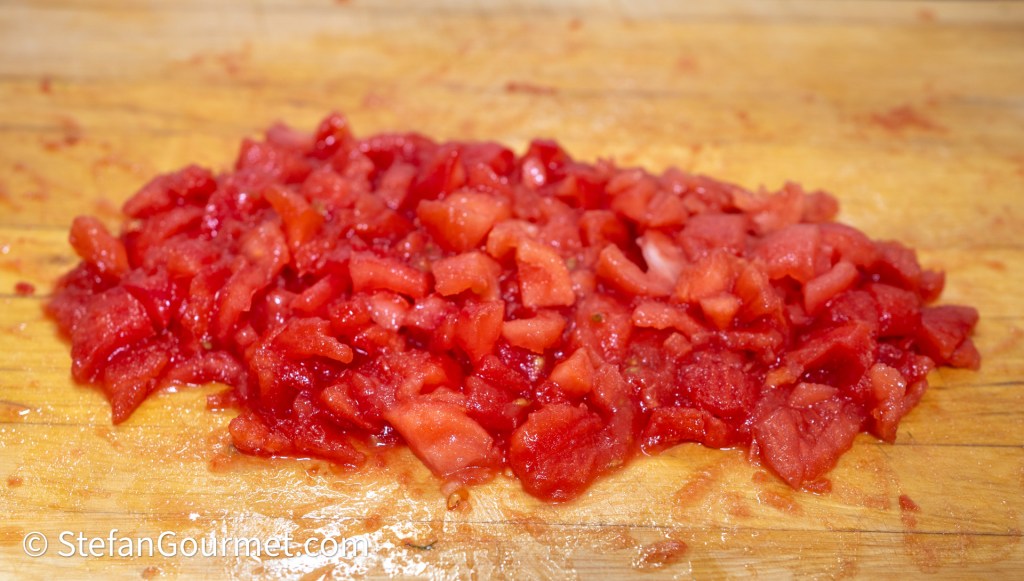
Remove the skins, then take out the seeds with your fingers, and dice the tomato flesh. Discard the green and white part where the stem was attached.
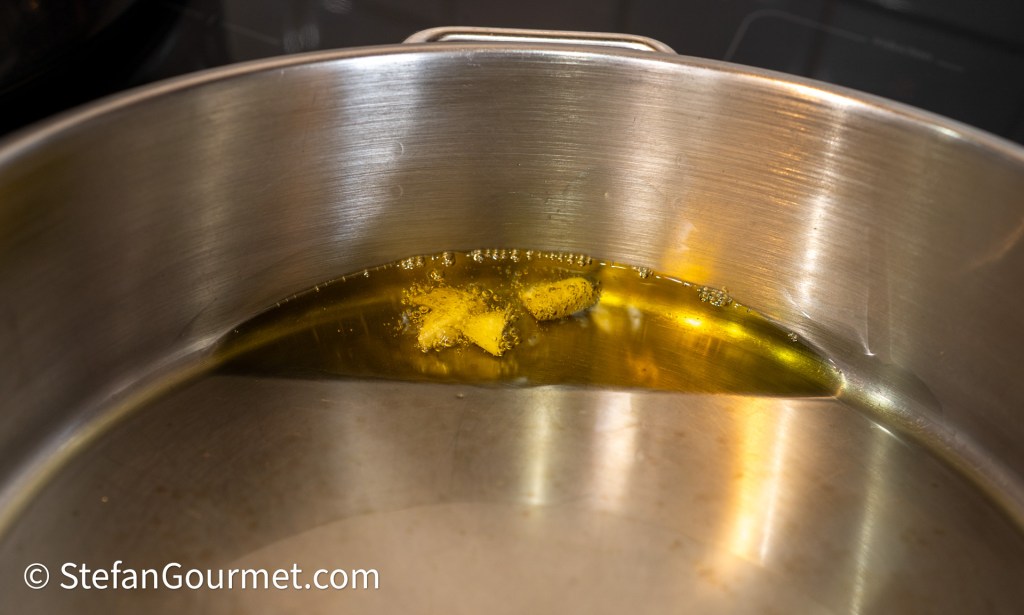
Heat two tablespoons of olive oil in a frying pan and add a thickly sliced garlic clove. Tilt the pan off the heat and let the garlic fry gently to flavor the olive oil. Remove the garlic as soon as it turns slightly golden.
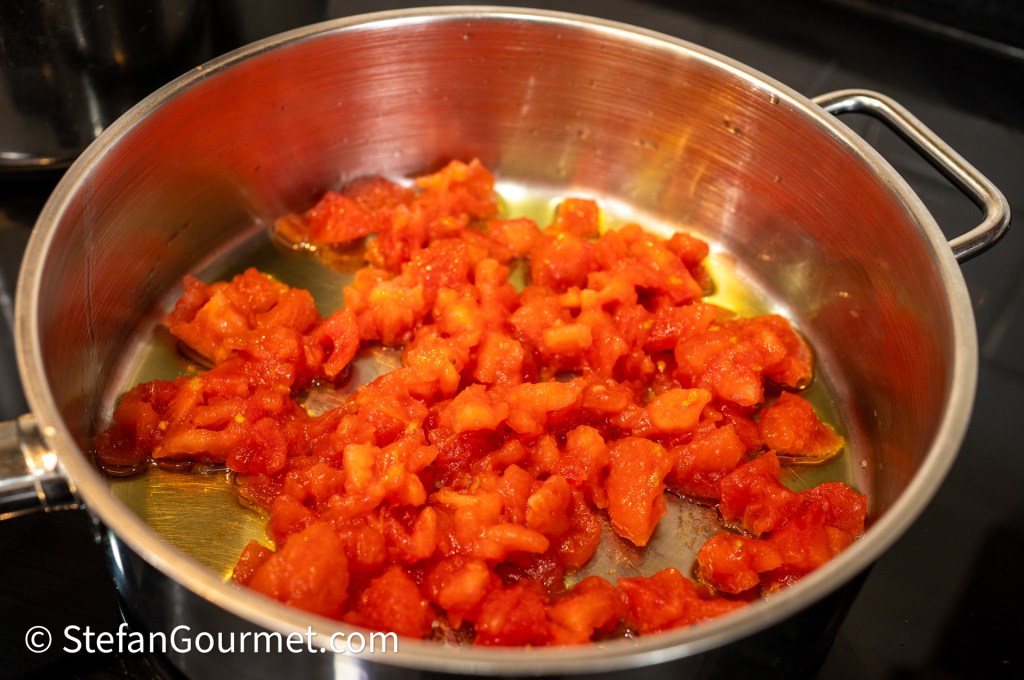
Add the diced tomatoes, season with salt and freshly ground black pepper…
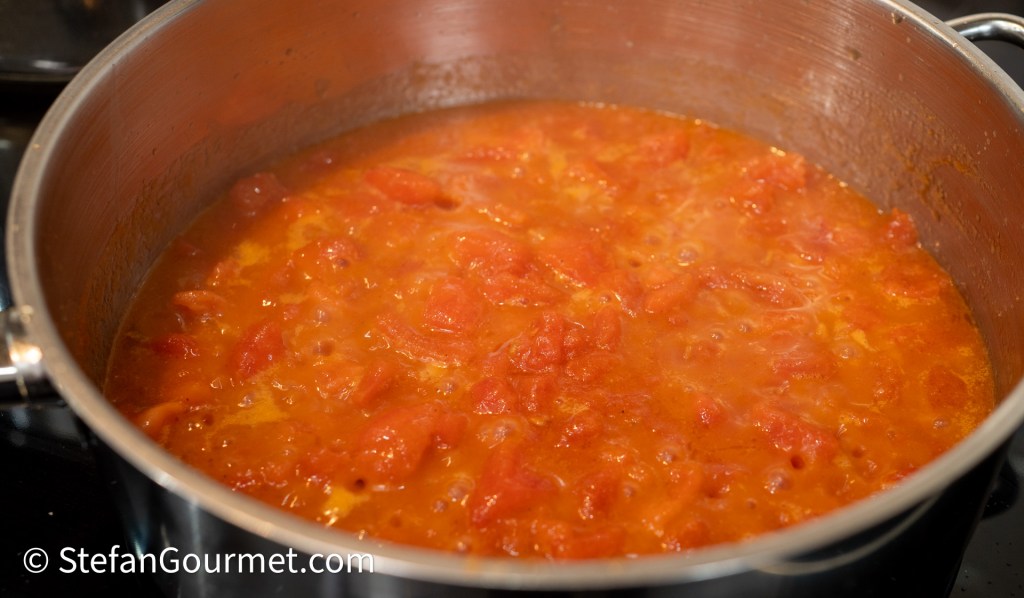
…and add the remaining reduced shrimp syrup.
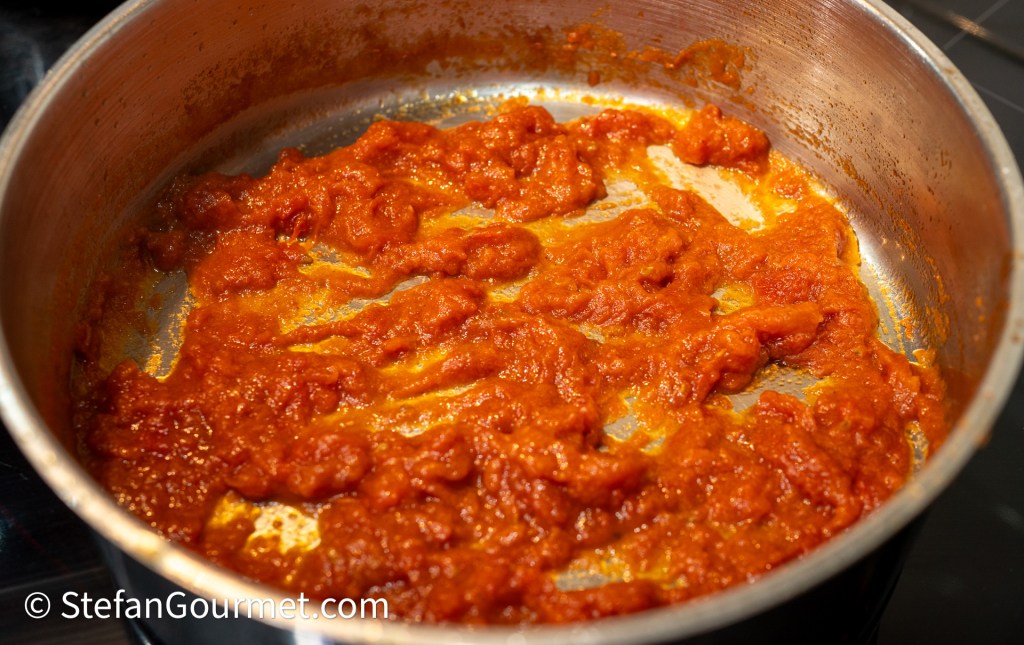
Simmer the tomato sauce, stirring regularly, until it is thick and chunky. Taste and adjust the seasoning if needed.
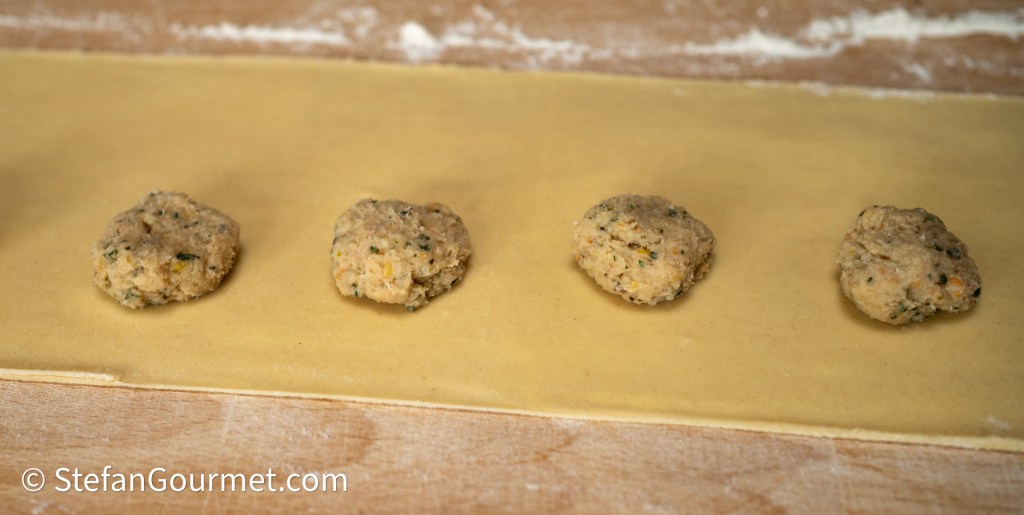
Make the ravioli according to my instructions.
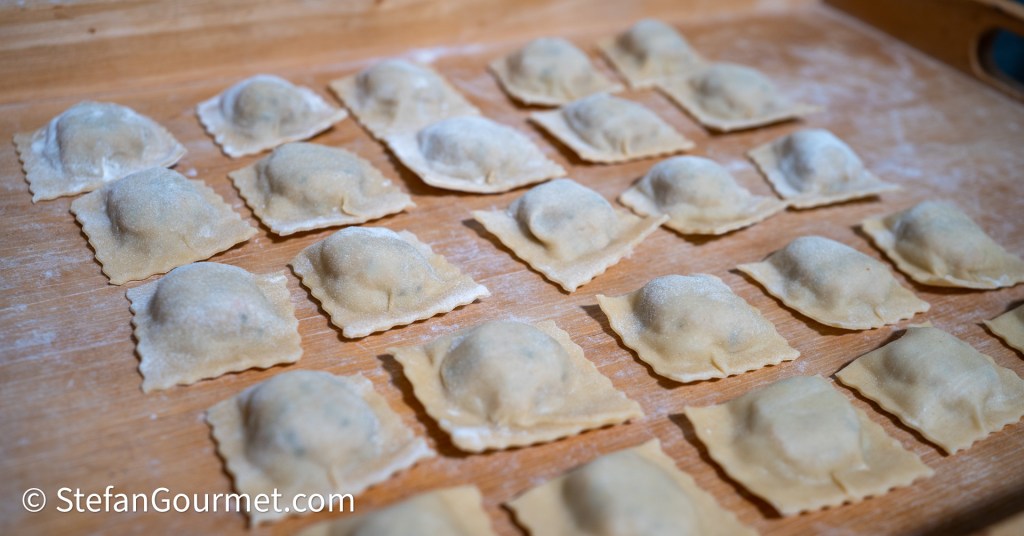
Everything up to this point can be prepared in advance.
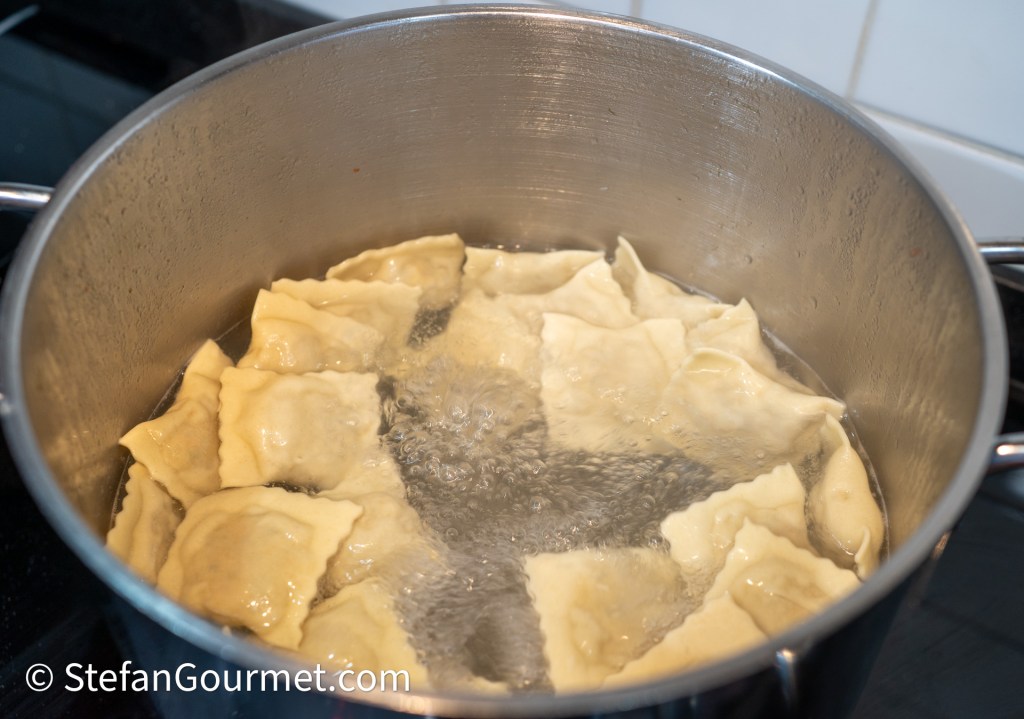
To finish and serve the ravioli, reheat the tomato sauce and bring a large pot of water to a boil. Add salt and the ravioli, and boil them for 2 minutes only.
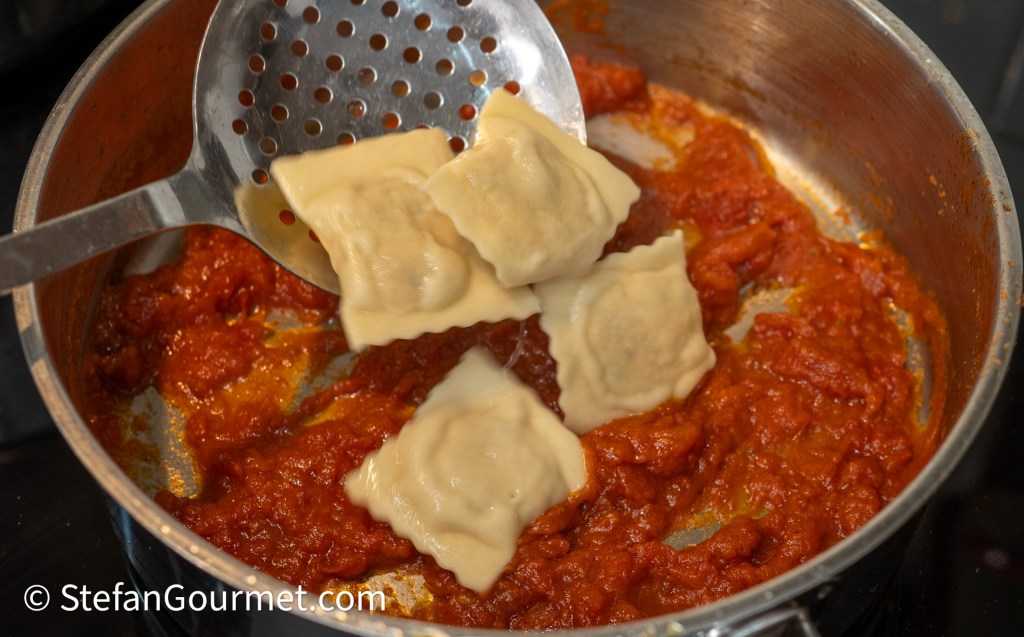
Take them out of the pot with a strainer and add them to the tomato sauce.
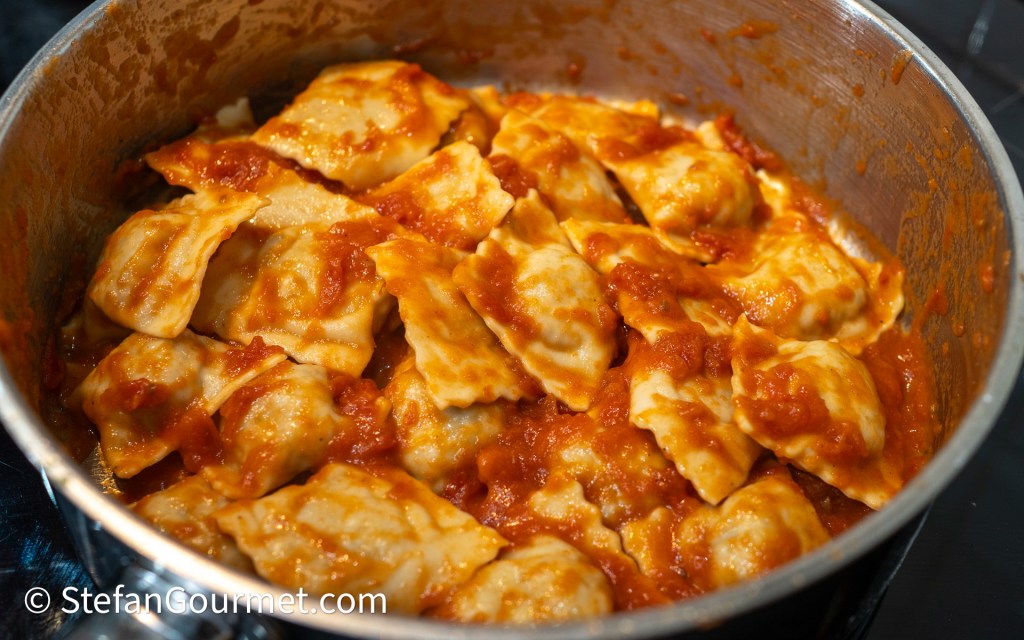
Gently toss the ravioli to cover them with the sauce.
Serve at once on preheated plates, garnished with basil chiffonade and a drizzle of the best extra virgin olive oil you have.
Wine pairing
As already mentioned in the introduction, this pairs very well with a good Vermentino from Sardinia. Other full-bodied Italian whites like a higher level of Verdicchio would also work.


Mmmmmm. They’re beautiful. That shrimp syrup is amazing!
LikeLiked by 1 person
Looks delicious, and I like moving the shrimp syrup to the sauce to spread out the lovely flavor.
LikeLiked by 1 person
A very inviting dish with a recipe to be put on file . . . and I did learn a few things quite frankly I did not know . . . oh, this is one of my favourite dishes also 🙂 !
LikeLiked by 1 person
A very inviting dish with a recipe to be put on file . . . and I did learn a few things quite frankly I did not know . . . oh, this is one of my favourite dishes also 🙂 !
LikeLike
Devo farli! Grazie anche per come spieghi nei minimi dettagli 🙂 Un saluto a te e Kees
LikeLiked by 1 person
I remember your fish ravioli when you invited us for dinner in 2020 (six years ago, it seems like yesterday!) they were delicious! I enjoyed helping you prepare them as our boys sat and chatted. What a wonderful evening it was. We adore shrimp and I have used them in dumplings but not ravioli; it’s about time to try it in ravioli.
LikeLiked by 1 person
Was that the branzino ravioli with pistachios and a sauce of langoustine and fresh tomatoes? That was certainly a wonderful evening, can’t believe it’s been 6 years already.
LikeLike
It’s only really breakfast time here but this recipe is already making my mouth drool! Stefan, I wonder if you knew about a technique regarding bisque making. Recently some fella on an Italian TV food programme said that one ought to remove the eyes of shell fish before making a bisque because they are bitter. Never heard of that before myself. Another ‘interesting’ technique I found out only yesterday was that when making an aubergine caponata it’s a good idea to dump the cut aubergine pieces into a bowl of ice-cold salted water – apparently the ice-cold business will later prevent the aubergines from absorbing the oil when being cooked. The aubergine pieces have to be dried properly afterwards of course, before being fried, that makes sense. Not sure about the ice cold water though …
LikeLike
Hi Jo, thanks for your thoughtful comment. I knew about removing the eyes before making seafood bisque and I actually always do that with fish. With shrimp I’ve never bothered as the eyes seem so tiny, but if you take all the eyes together it actually may make a difference so I’ll try that. Your instinct about the cold water is spot on! Adding any water (warm or ice cold) to the aubergines is going to have the opposite effect, as the best way to prevent absorbing oil is to keep the oil temperature as hot as possible. If the aubergine has absorbed the cold water and is cold itself, it will take much more heat out of the oil to heat up and cook the eggplant. Dry-salting the aubergine is therefore the way to go (and indeed, dry them properly before being fried). Most recipes for fried aubergine I’ve seen tell you to dry salt before, but some say to then rinse with cold water before drying. I don’t think that’s necessary and actually makes the aubergine more wet than needed (even if you dry them off after). If you just wipe them dry with paper towels, enough of the salt is wiped away to get the seasoning just right. Of course the amount of salt should be reasonable to make that approach work.
LikeLike