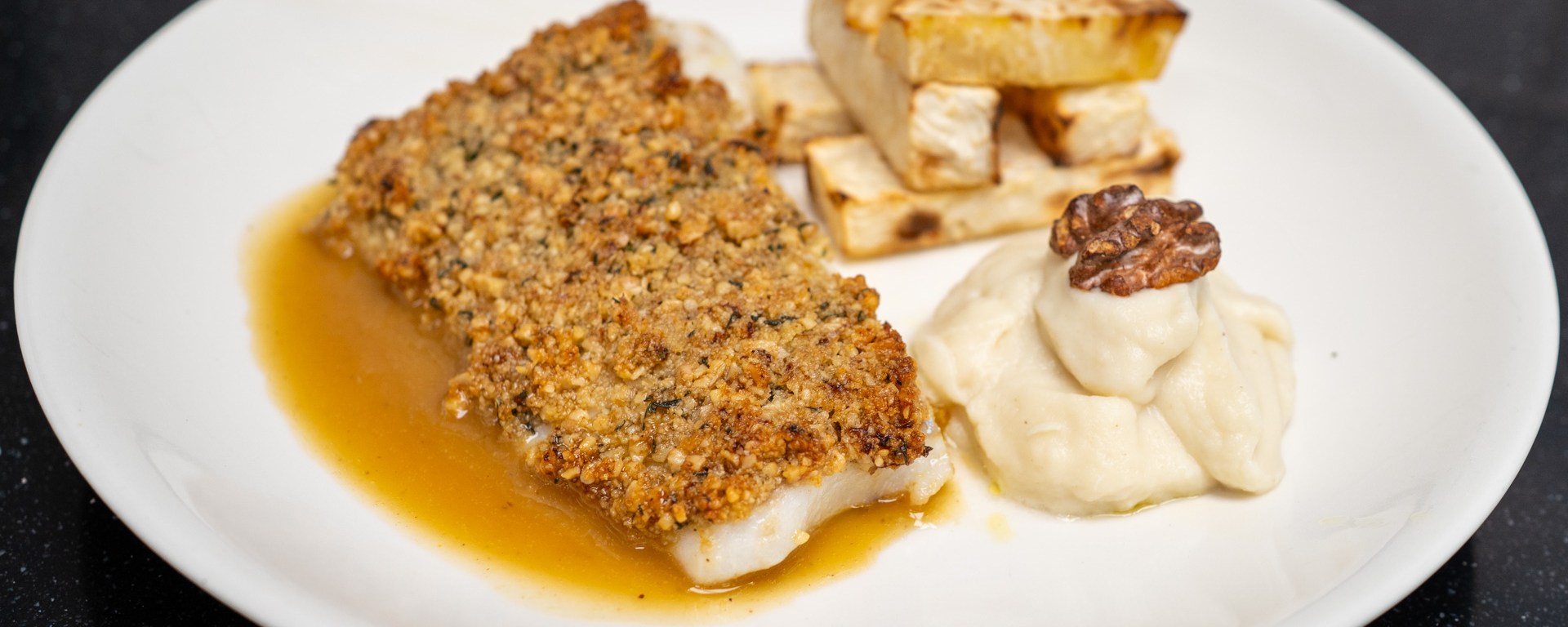
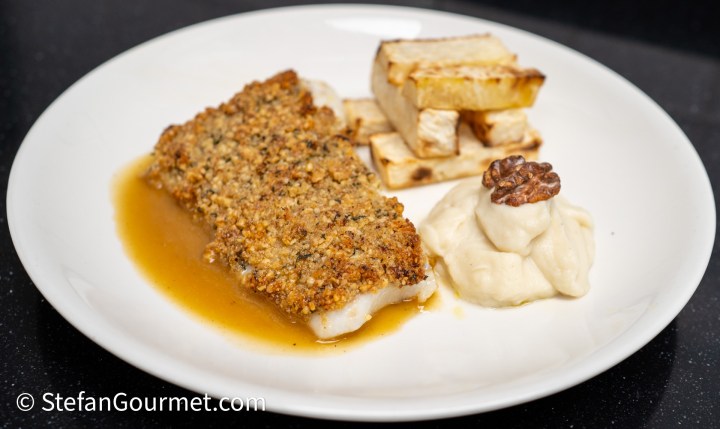
Some of my recipe ideas come from what you could fancily call transitive ingredient pairing. If A pairs with B, and B pairs with C, then A may go well with C. I wanted to prepare cod in a way that would work well with both an aged structured white wine and a delicate red wine. I first thought of cod with celeriac. As I often pair celeriac with walnuts, I decided to bake the cod with a walnut crust. I dry-brined the cod to enhance its flavor and improve its texture. When baked in the oven to an internal temperature of about 50°C/122°F, the cod yields succulent flakes that contrast nicely with the crunchy golden walnut crust. The walnuts bring an earthy, nutty richness, enhanced by savory Parmigiano-Reggiano and brightened by lemon zest and woodsy thyme to balance the depth. Celeriac anchors the dish in two distinct textures: a velvety celeriac purée provides creamy comfort, while roasted celeriac with caramelized edges adds bite. The plate is finished with a glossy reduction of fish stock and white wine, bridging the gap between the flavors of land and sea and tying the entire dish to the wine.
Ingredients
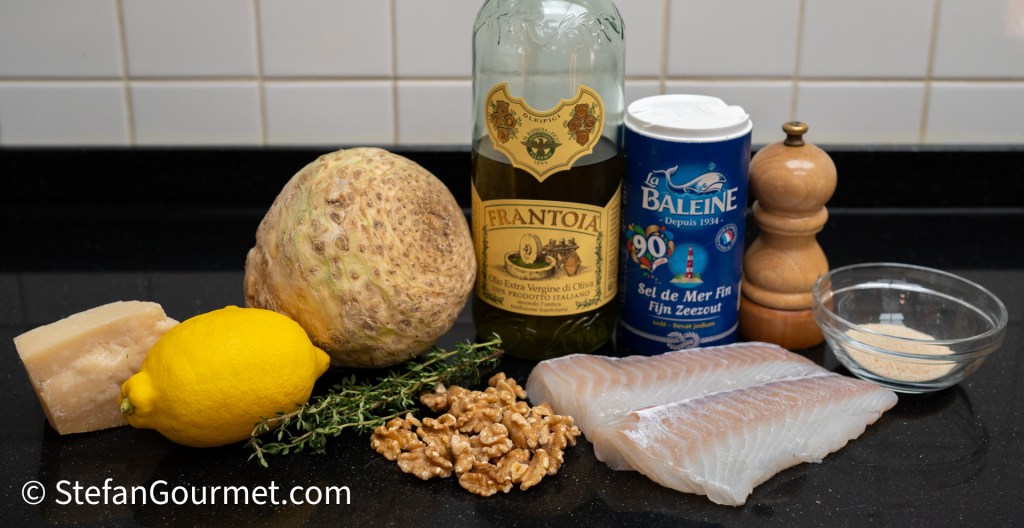
Serves 2 as a main course
- 300 grams (.66 lb) cod fillet, in two pieces
- 1/2 tsp table salt
- 35 grams walnuts + 2 whole walnuts for garnish
- 10 grams dried breadcrumbs
- 10 grams freshly grated parmigiano reggiano
- 1/2 Tbsp fresh thyme leaves
- 1/2 Tbsp freshly grated lemon zest
- freshly ground black pepper
- 2 Tbsp cold-pressed walnut oil (or substitute with extra virgin oil)
- extra virgin olive oil
- 400 grams (.9 lb) celeriac, weight after cleaning
- 500 ml (2 cups) homemade fish stock, preferably made from cod head and bones
- 60 ml (1/4 cup) dry white wine
- salt and freshly ground white pepper
- 1 Tbsp unsalted butter
Instructions
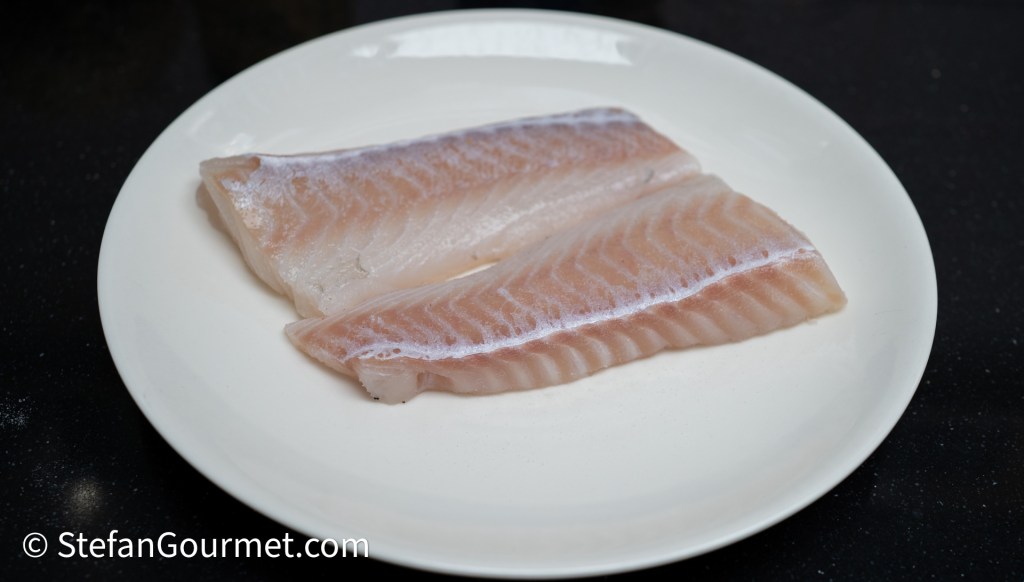
Divide the cod into serving pieces of 150 grams each. Pat them dry with paper towels and season with 1% of salt by weight on both sides. This is approximately 1/2 teaspoon of table salt for 300 grams. Cover with cling film and refrigerate for at least an hour to firm up the texture.

Roast the walnuts for 8 minutes at 180C/350F.
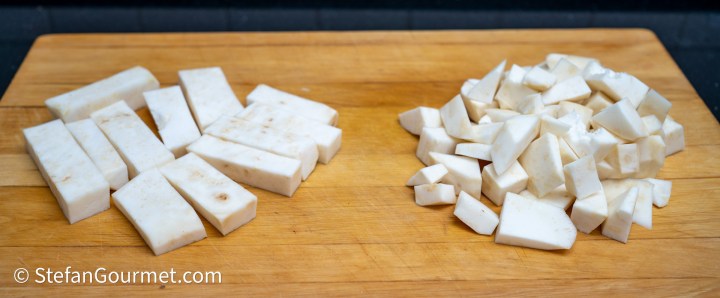
In the meantime, prepare the celeriac. Peel the celeriac. Cut about 200 grams of celeriac into even rectangular pieces for roasting. As a celeriac is round you will have a lot of trimmings, but that is alright because you can use those to make the puree. Chop 200 grams of celeriac trimmings for the puree.
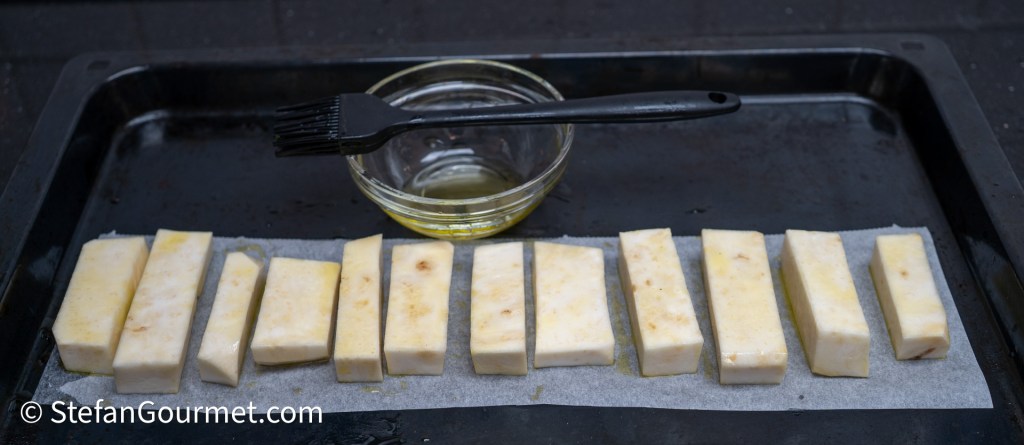
Preheat the oven to 225C/440F, not fan forced. Brush the rectangular pieces of celeriac lightly with olive oil on all sides and arrange them in a single layer on a baking sheet lined with oven paper, not touching each other.
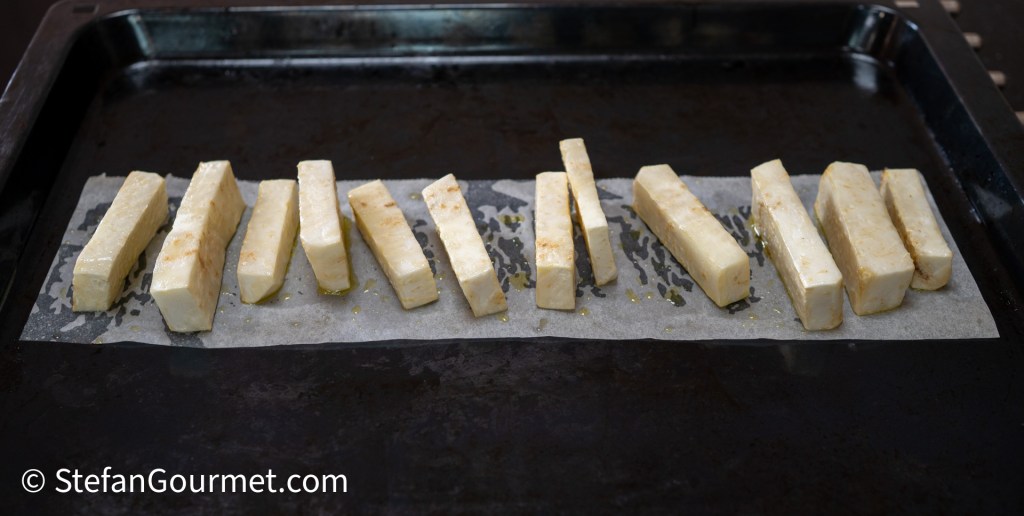
Roast the celeriac for 15 minutes at 225C/440F. then turn the pieces, and roast for another 10 minutes until only lightly golden.
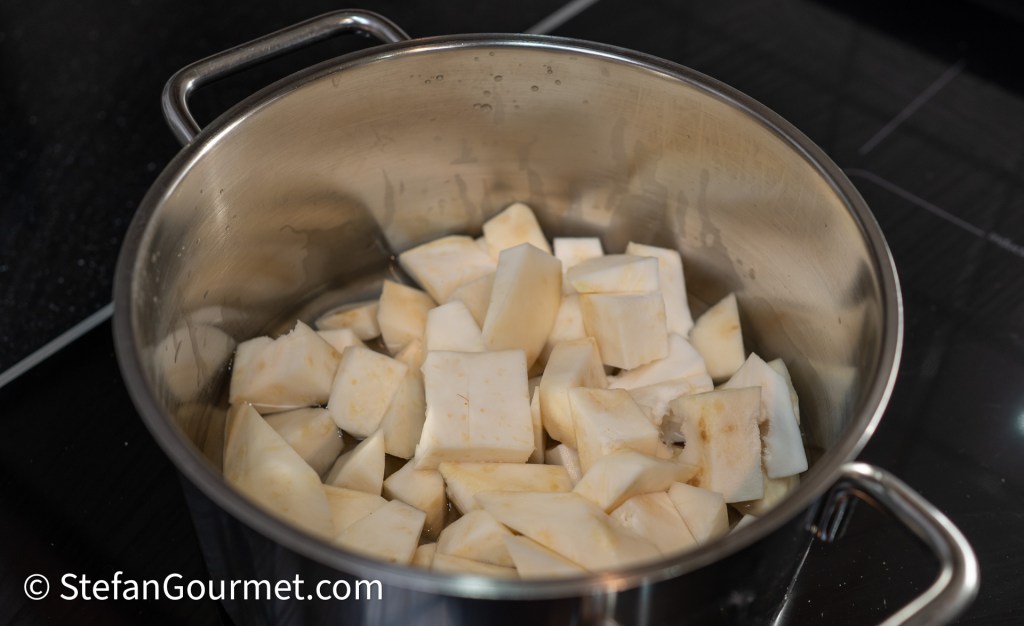
In the meantime, place the celeriac trimmings in a pot and add water to cover them for about half.
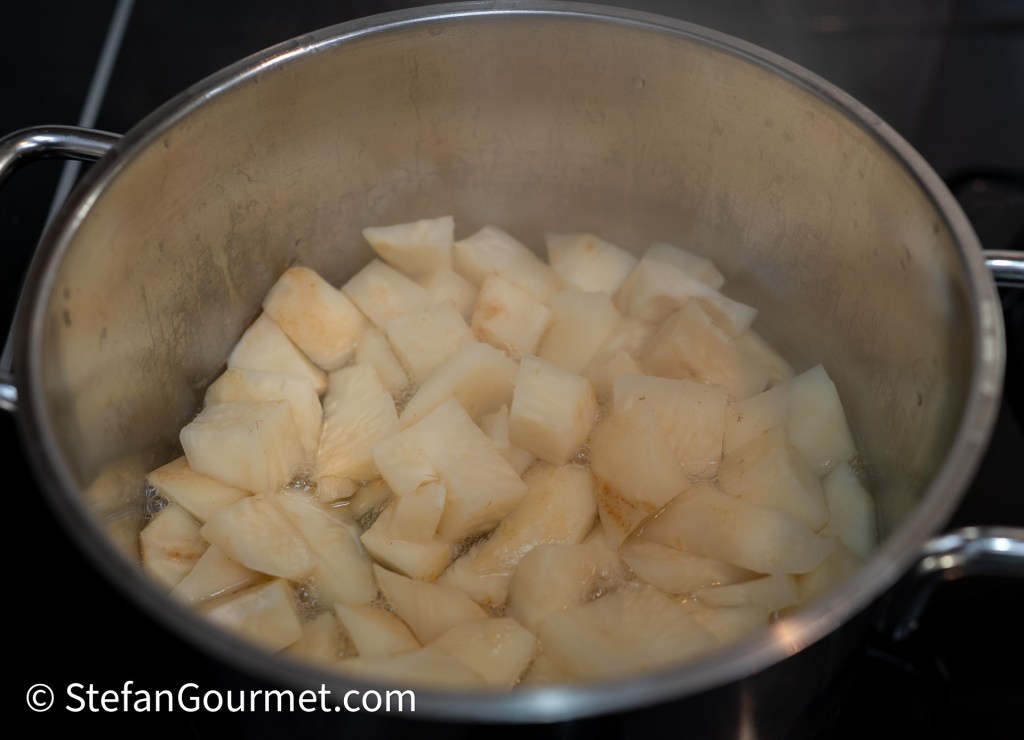
Cover and bring to a boil, then boil gently until the celeriac is tender, about 10-15 minutes.
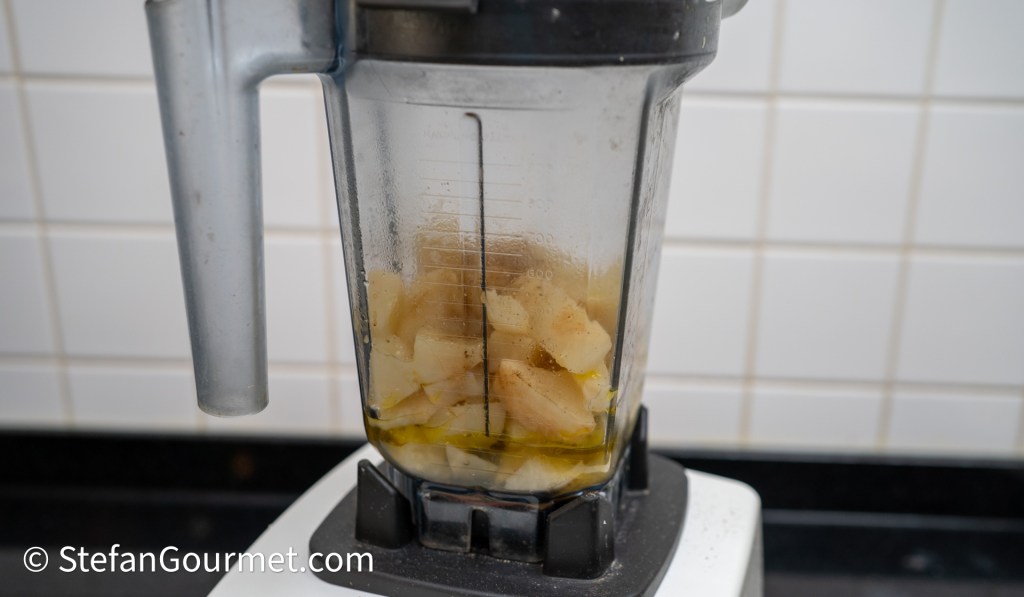
Let the cooked celeriac cool slightly and then place it in a blender with only some of the cooking water, some extra virgin olive oil, salt, and freshly ground white pepper.
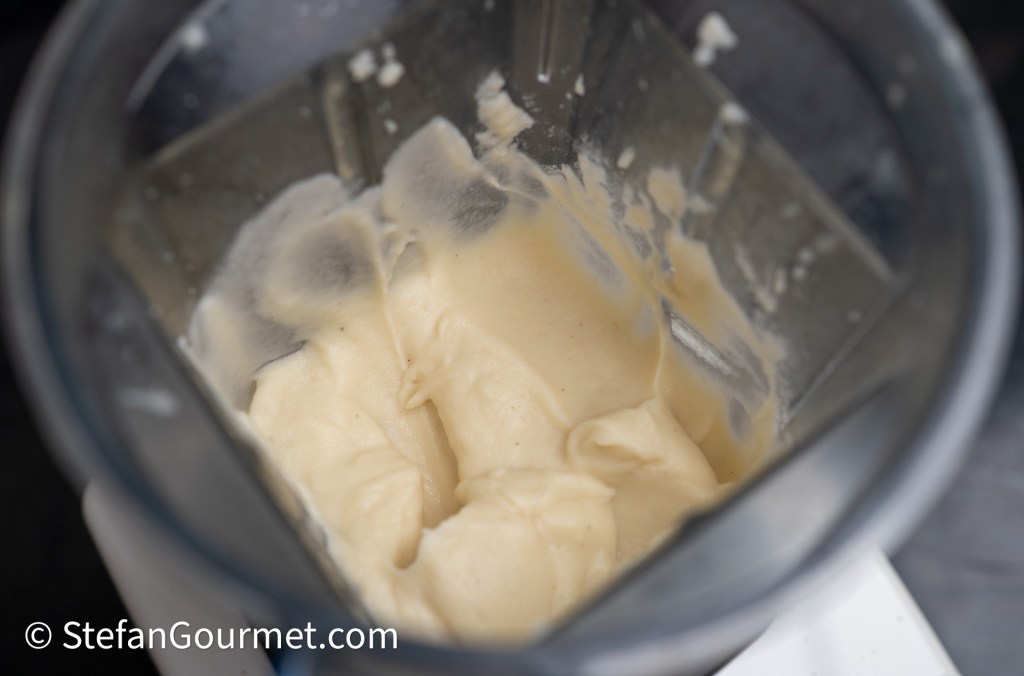
Process into a smooth puree, adding more cooking water as needed. The puree should be fluffy but not runny. Taste and adjust the seasoning with salt and freshly ground white pepper. Return the puree to the pot (removing any remaining cooking water first). If you added the ideal amount of water when boiling the celeriac, you will not discard any flavor. Keep warm over very low heat, stirring now and then to prevent scorching.
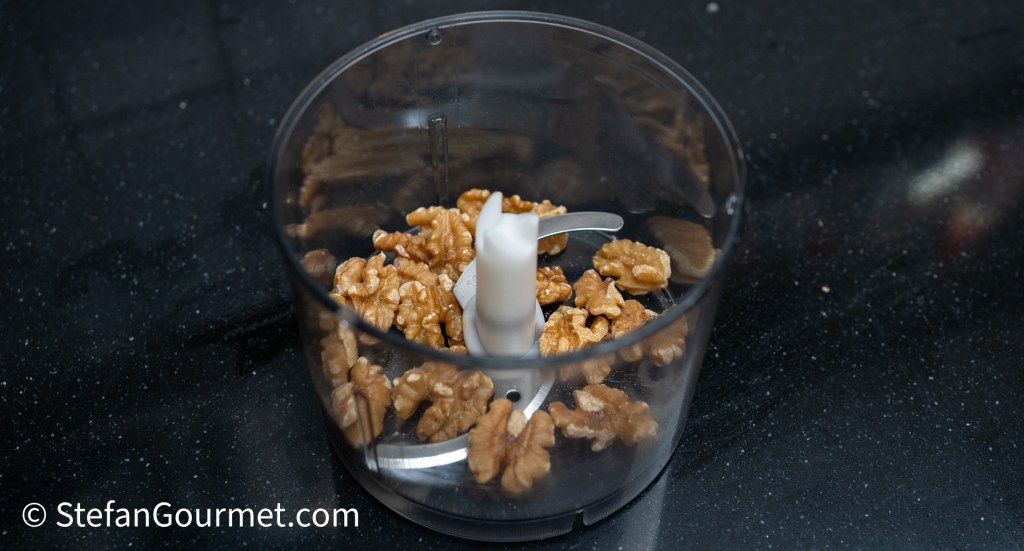
While the celeriac is roasting and boiling, grind 35 grams of the roasted walnuts…
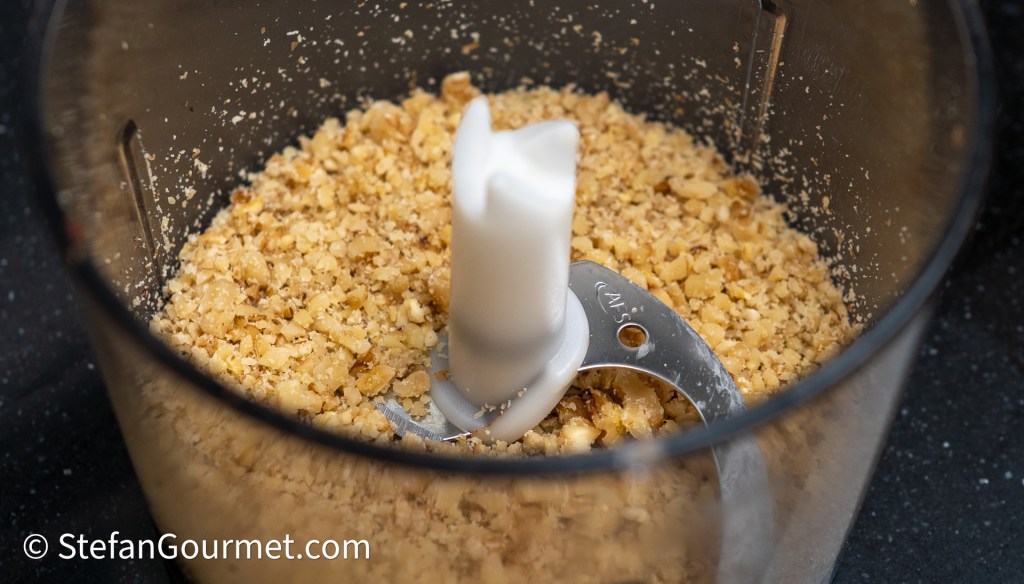
…into a coarse powder.
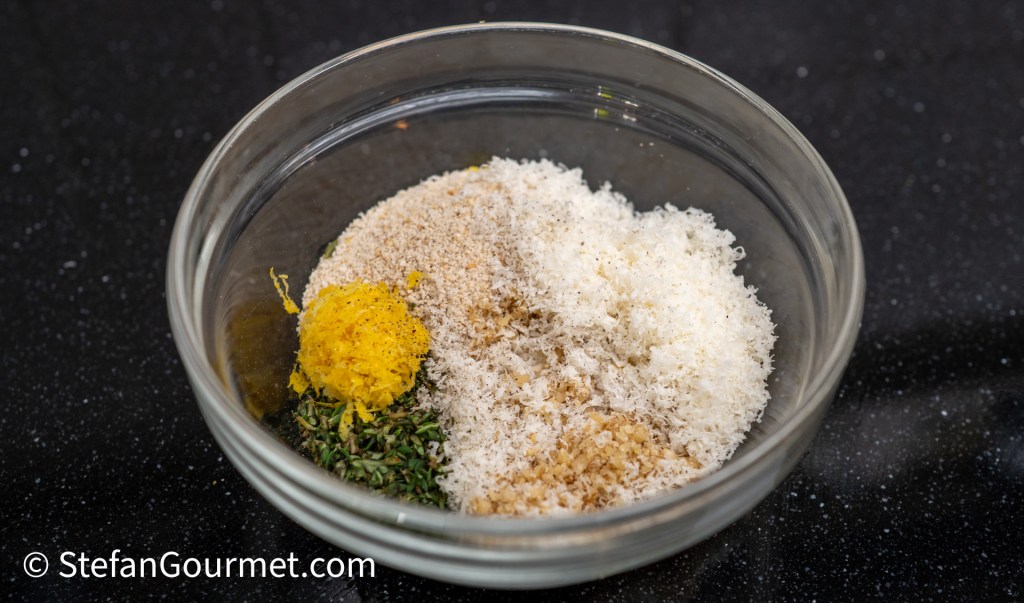
Place the ground walnuts in a bowl together with 10 grams dried breadcrumbs, 10 grams freshly grated parmigiano reggiano, 1/2 tablespoon fresh thyme leaves, 1/2 tablespoon freshly grated lemon zest, and freshly ground black pepper.
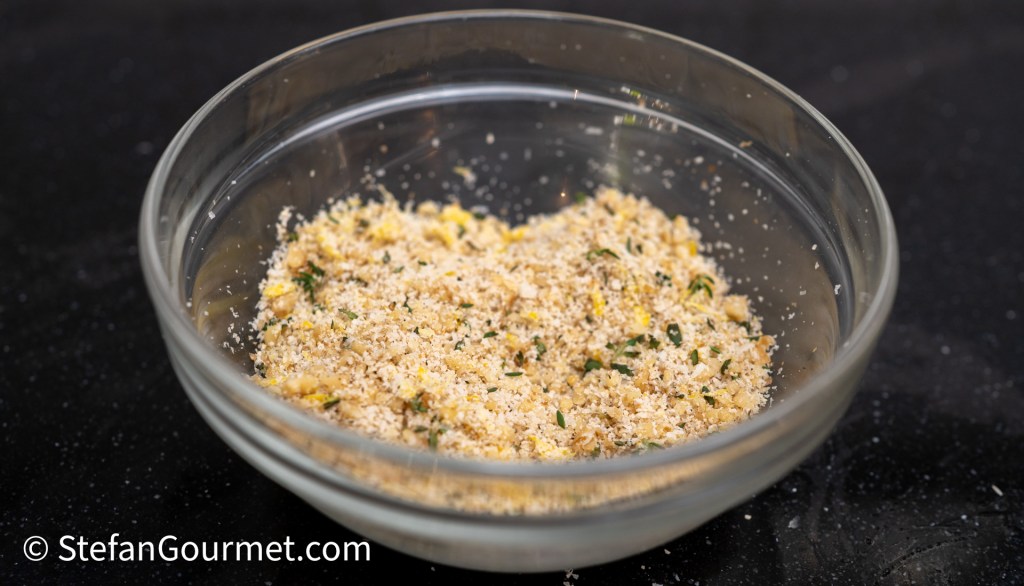
Stir until these dry ingredients have been mixed well, then add 2 tablespoons extra virgin olive oil or cold-pressed walnut oil.
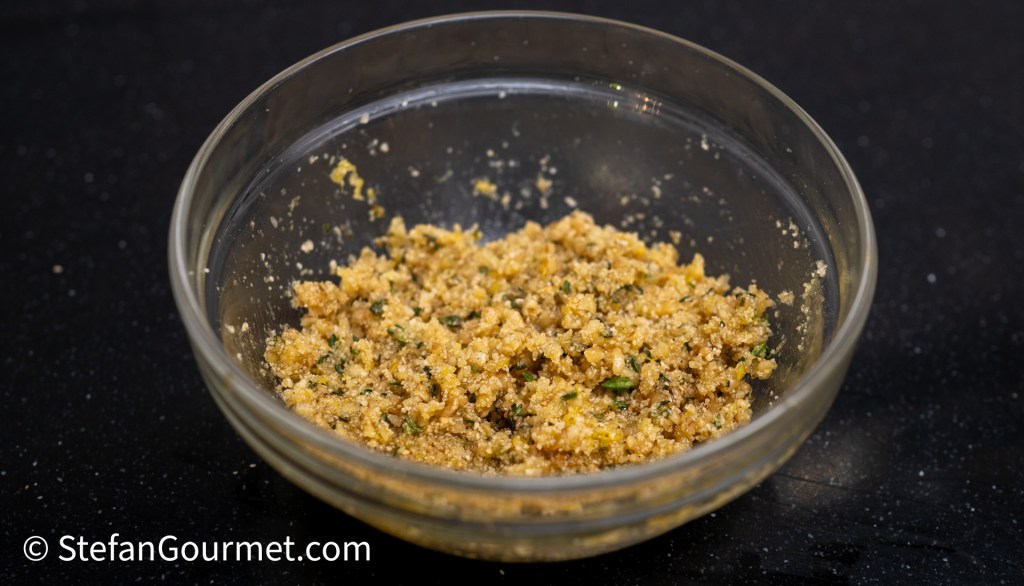
Stir until it is mixed well, adding a bit more oil if needed to get a moist but not wet mixture.
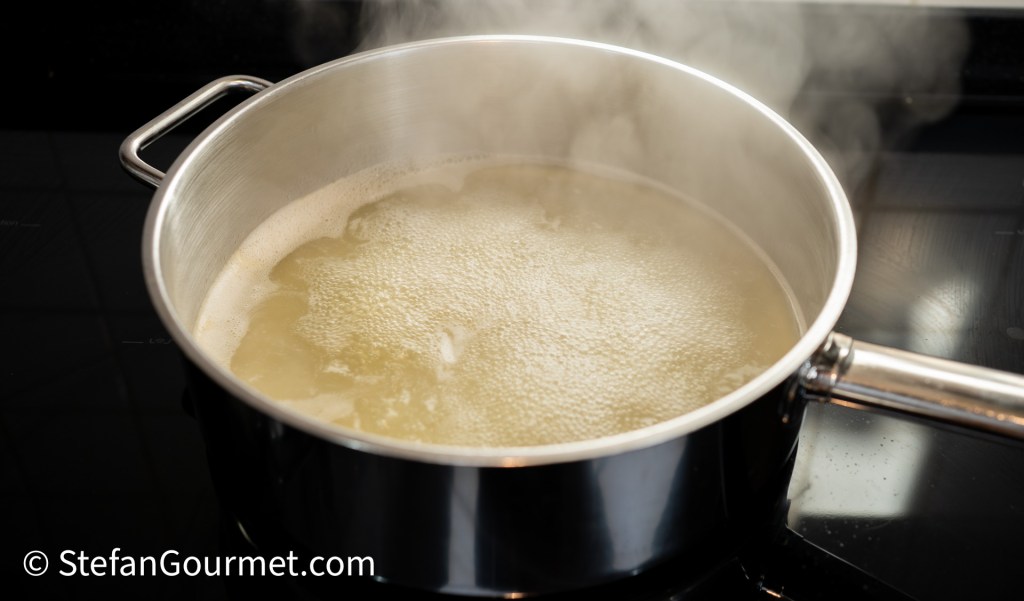
Bring 60 ml of dry white wine to a boil in a wide pan. Let it reduce by half, then add 500 ml of homemade fish stock. Bring to a boil and simmer…
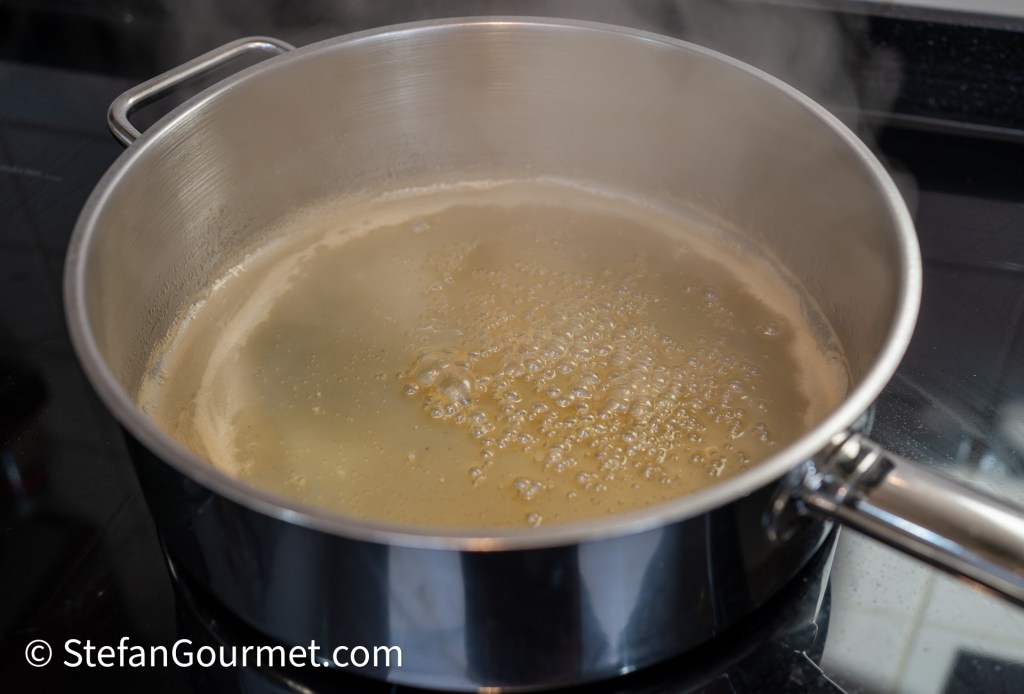
…until reduced to about 60 ml (4 tablespoons).
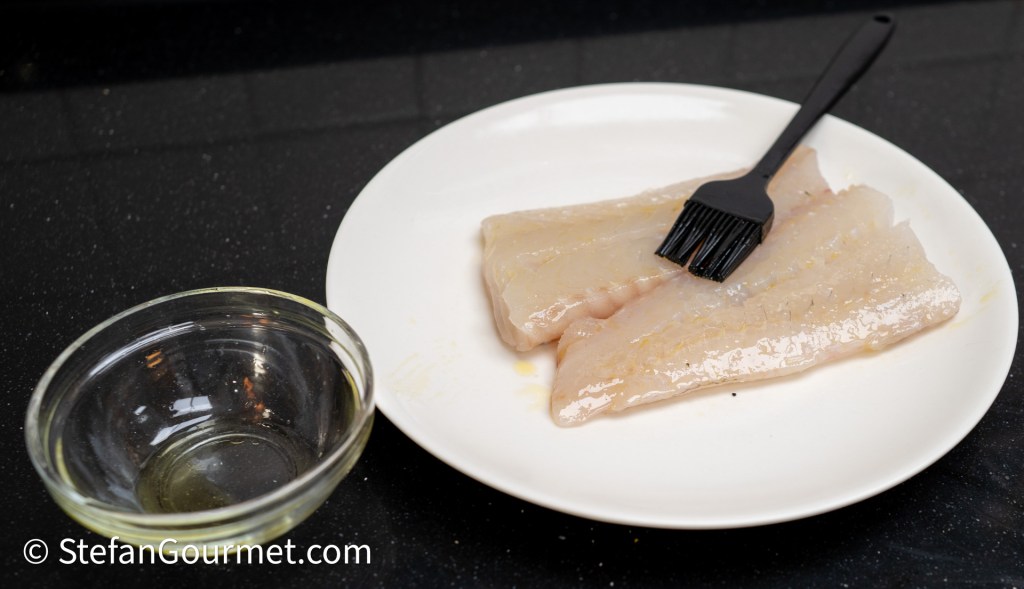
Take the cod out of the fridge, pat it dry with paper towels if needed, and brush lightly with olive oil on all sides.
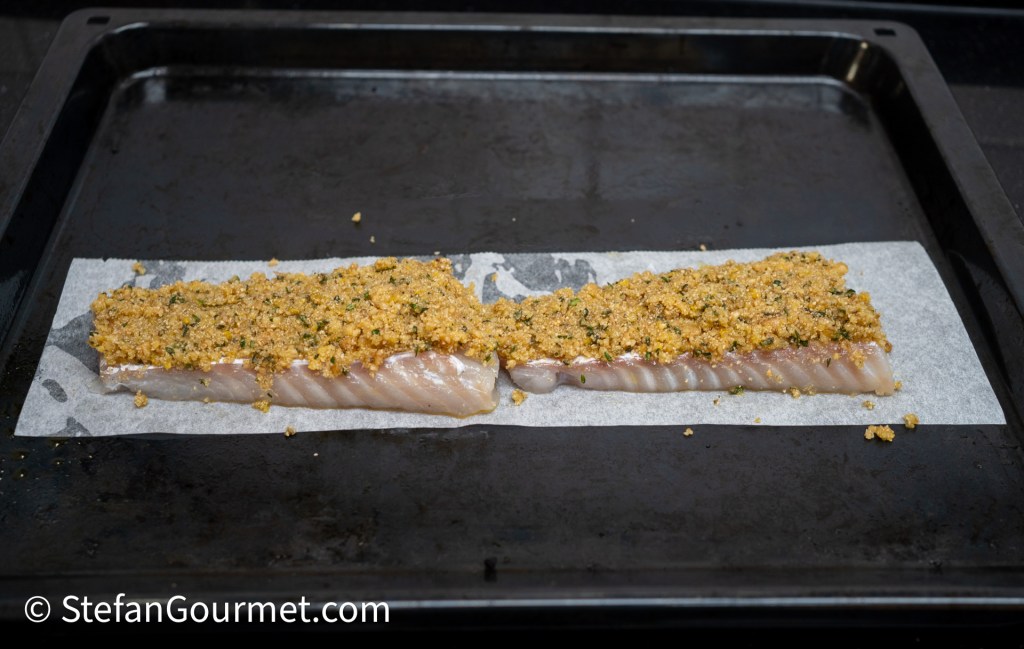
Place the cod on a baking sheet lined with oven paper. Spread out the walnut mixture on top of the cod in an even layer, pressing down with your fingers or a spoon. The top of the fish should be completely covered.
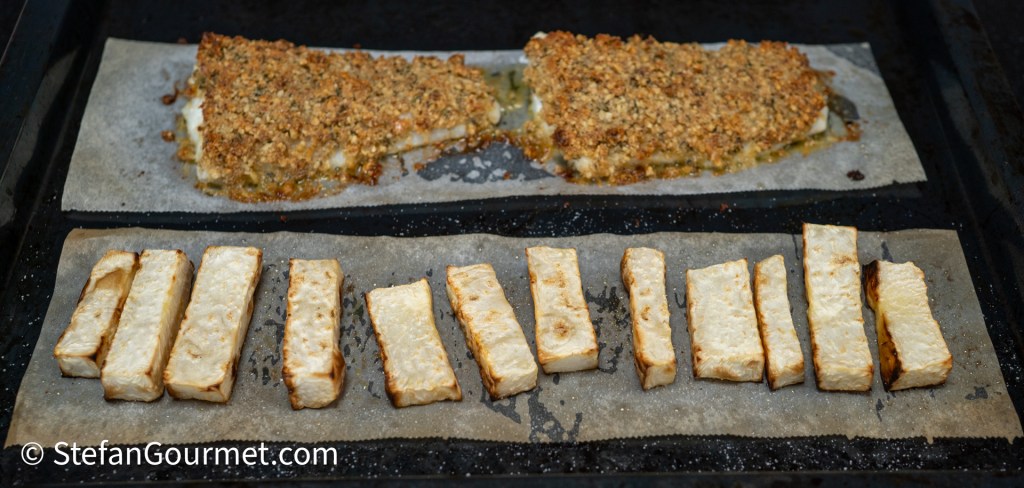
Place the celeriac that already has been roasted for 25 minutes on the same baking sheet as the cod, and bake them together for 10 minutes at 225C/440F. This time and temperature should result in a golden crust and tender juicy fish that is just cooked through with a core temperature of 50C/122F. If you want to be sure, apply a digital thermometer with a probe. This should also finish cooking the celeriac until tender with caramelized but not burnt edges. If you have two ovens, you could also bake them separately for more control. If you believe the celeriac is still undercooked, then roast the celeriac a bit longer before adding the cod. If you fear the celeriac might burn, start with the cod only and adding the celeriac only for the final 5 minutes of baking the cod.
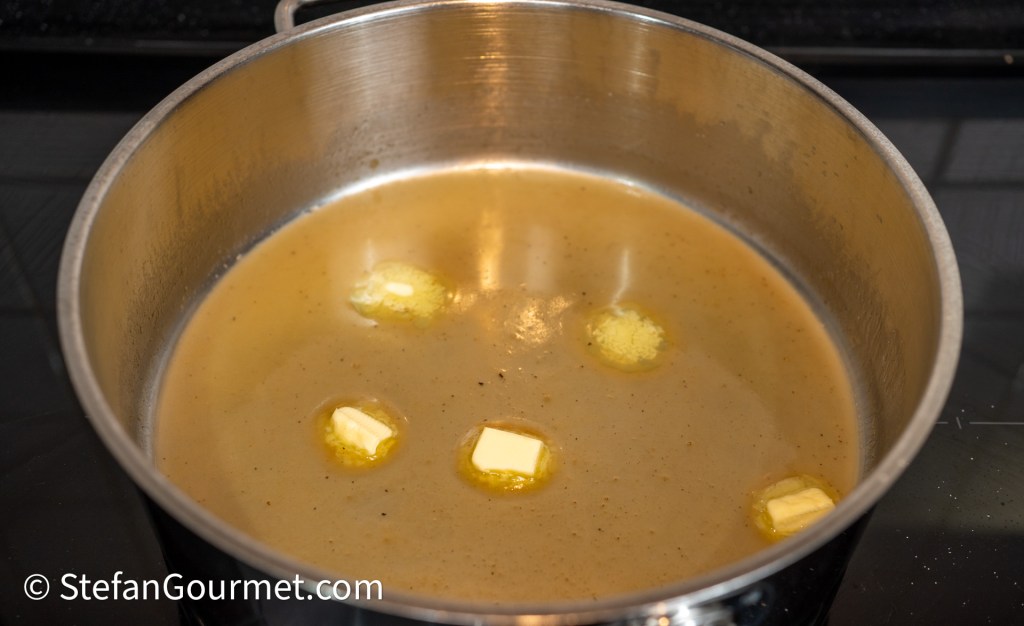
Taste and adjust the seasoning of the reduced fish stock with salt and freshly ground white pepper. Bring it close to the boiling point, then turn off the heat and add one tablespoon of cold unsalted butter in small pieces.
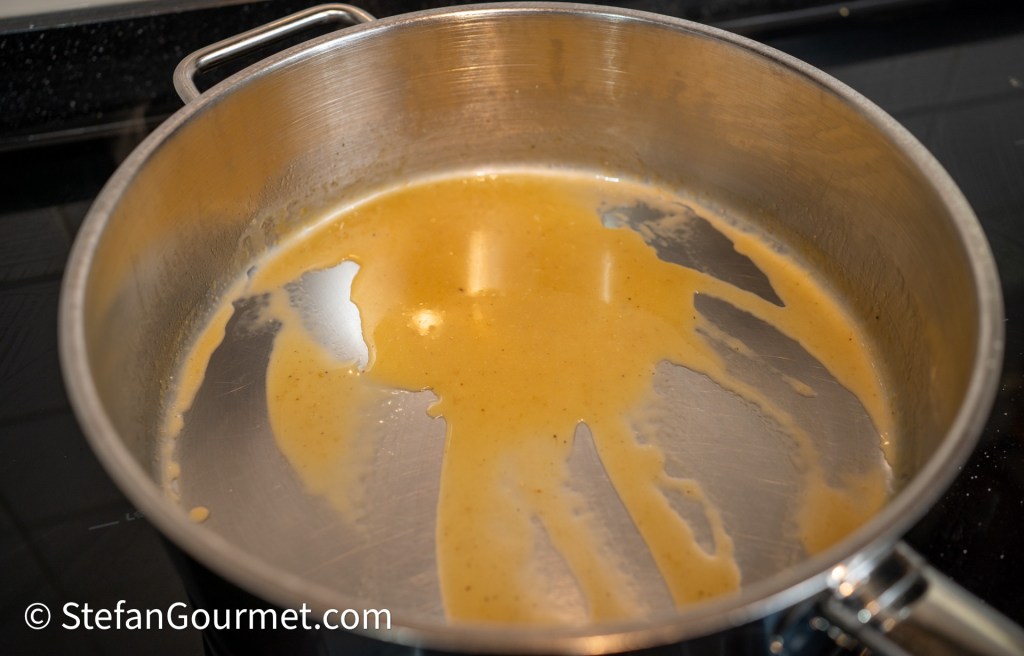
Whisk until the butter has melted and emulsified, thickening the sauce. It may be easier to transfer the reduced fish stock to a small saucepan before adding the butter.
Serve the cod with the roasted celeriac, celeriac puree, and jus on preheated plates. Garnish the celeriac puree with a whole roasted walnut.
Wine pairing
As mentioned in the introduction, this can be paired with either a structured full-bodied white or an elegant red wine, served a few degrees below room temperature.

